Filters

16 filtered results

Clear all filters
Favorites
With answer key
Interactive

16 filtered results

Difficulty Level

Grade


Enhance your child’s mathematical abilities with our "Understanding Fractions Adding Up to 100 with Regrouping Worksheets," designed specifically for ages 7-9! These engaging worksheets focus on teaching children the essential concepts of fraction addition, emphasizing regrouping techniques to solve problems effectively. With exercises tailored to meet diverse learning needs, your child will gain confidence in overcoming challenges while mastering fractions. Each worksheet incorporates colorful visuals and clear instructions, making learning engaging and fun. Ideal for classroom use or at-home practice, these resources not only build a strong foundational understanding but also promote critical thinking and problem-solving skills in young learners. Start exploring today!
Check out this FREE Trial Lesson on Adding up to 100 with Regrouping for age 7-9!

X

Favorites
With answer key
Interactive
  • 7-9
  • Understanding fractions
  • Adding up to 100 with Regrouping
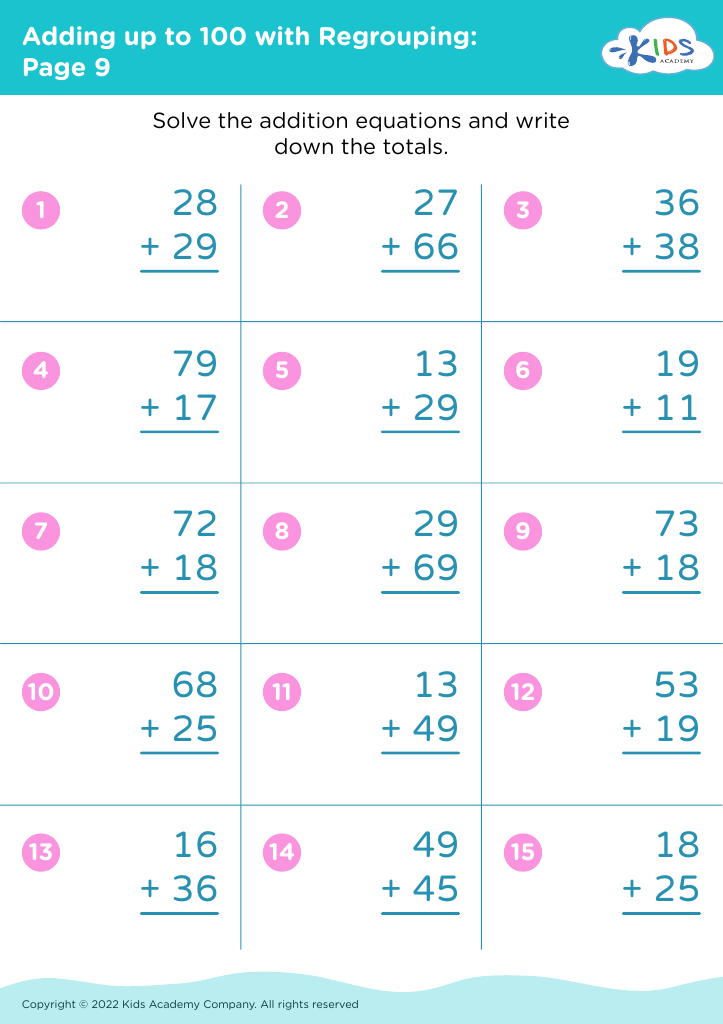
Adding up to 100 with Regrouping: Page 9
Worksheet
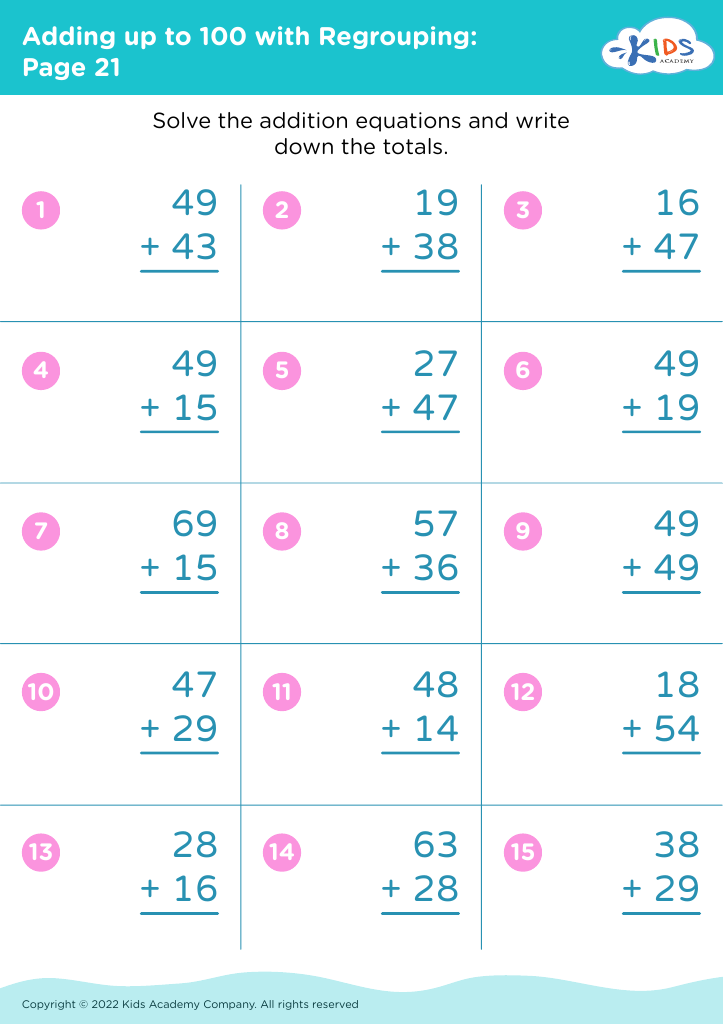
Adding up to 100 with Regrouping: Page 21
Worksheet
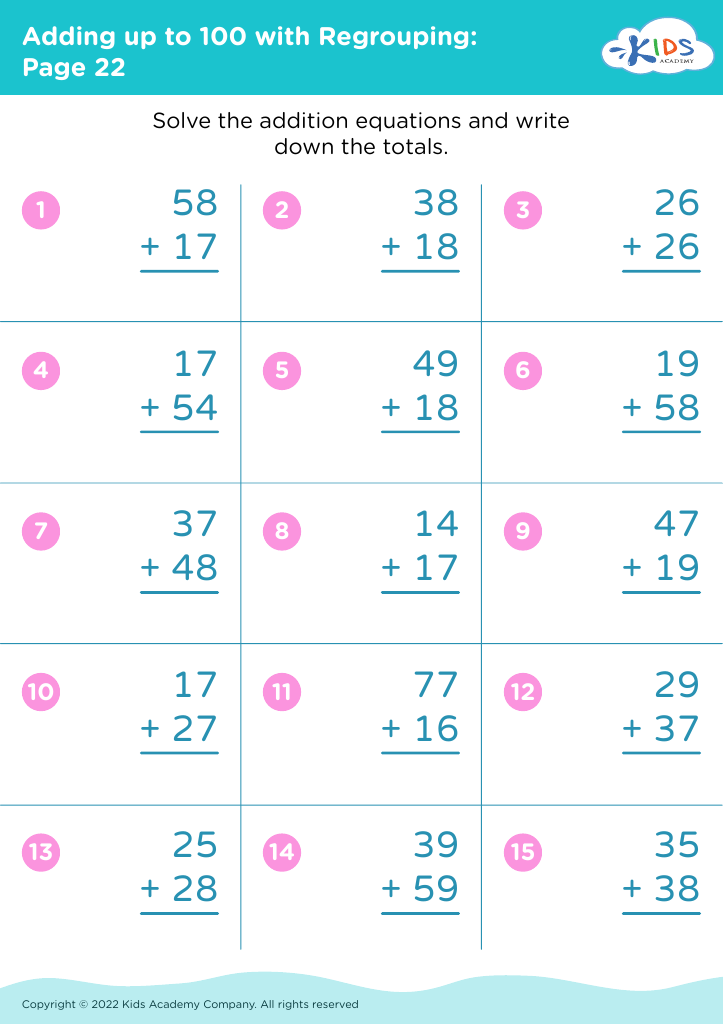
Adding up to 100 with Regrouping: Page 22
Worksheet
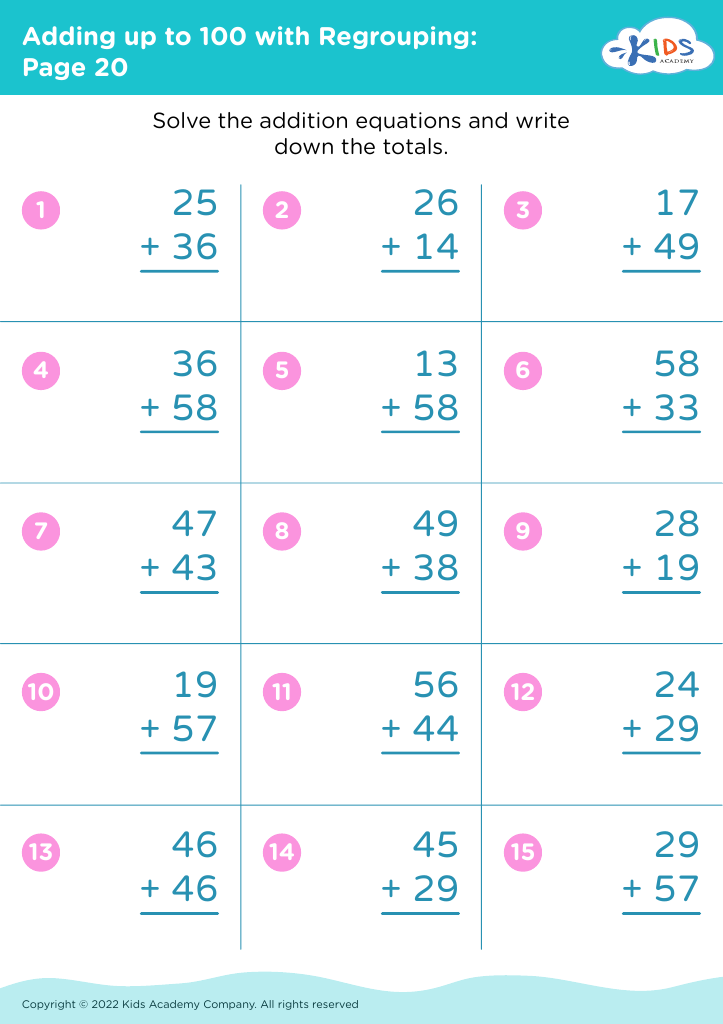
Adding up to 100 with Regrouping: Page 20
Worksheet
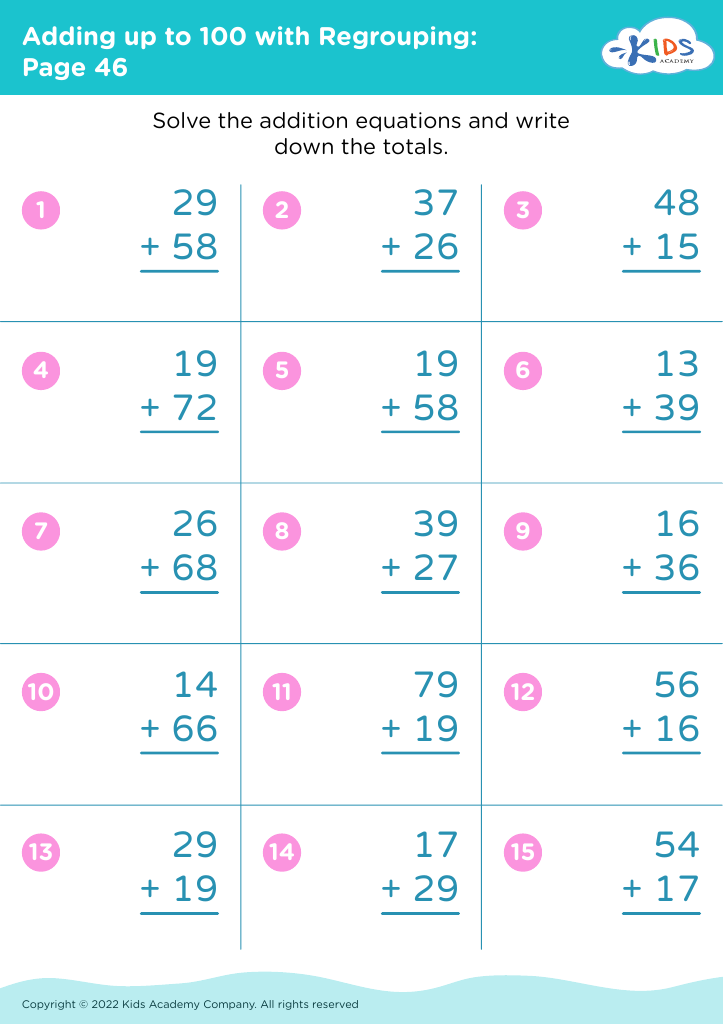
Adding up to 100 with Regrouping: Page 46
Worksheet
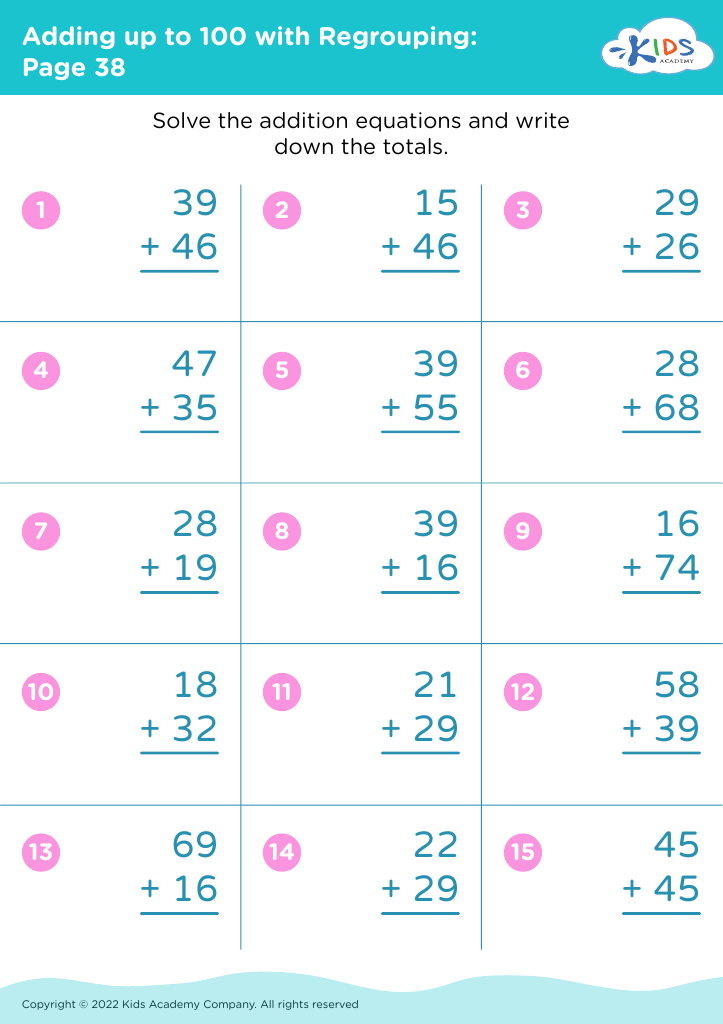
Adding up to 100 with Regrouping: Page 38
Worksheet
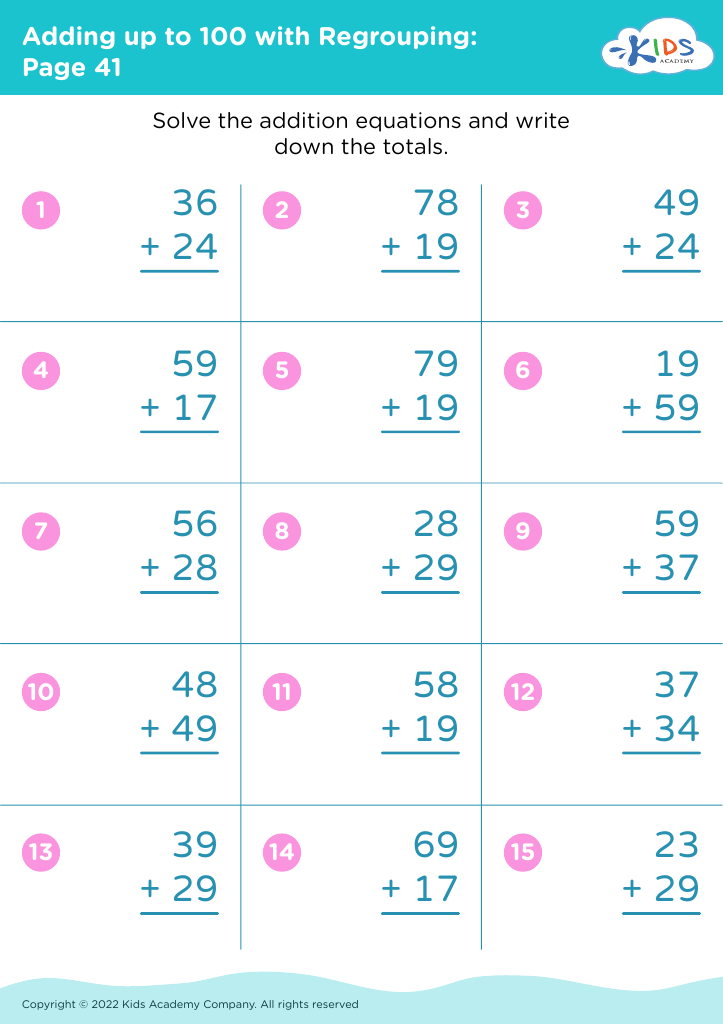
Adding up to 100 with Regrouping: Page 41
Worksheet
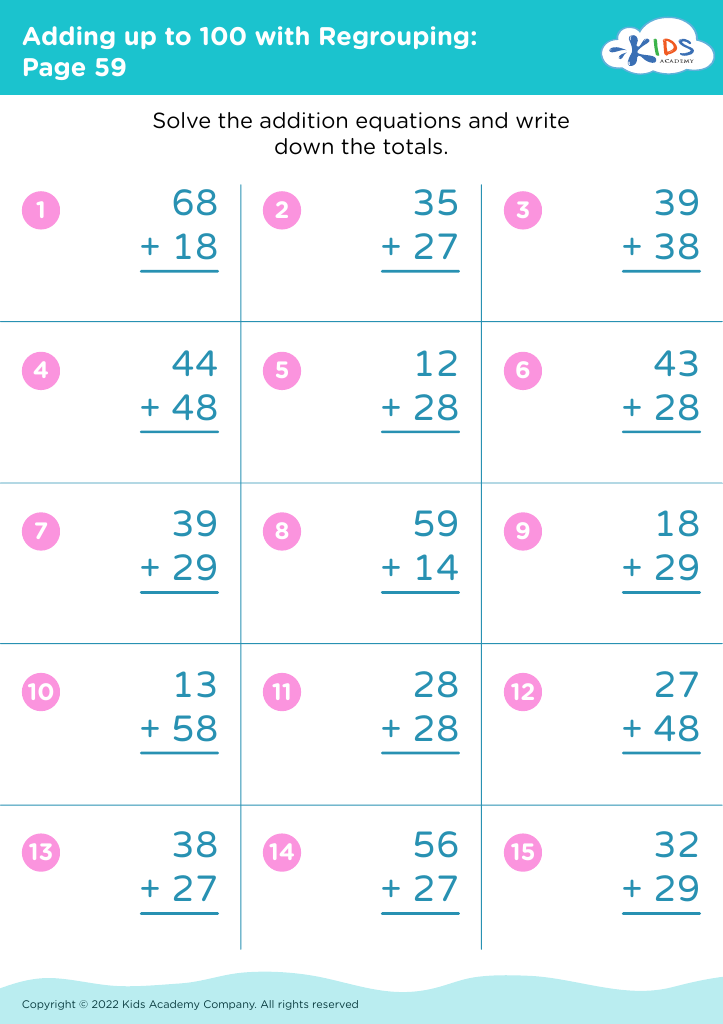
Adding up to 100 with Regrouping: Page 59
Worksheet
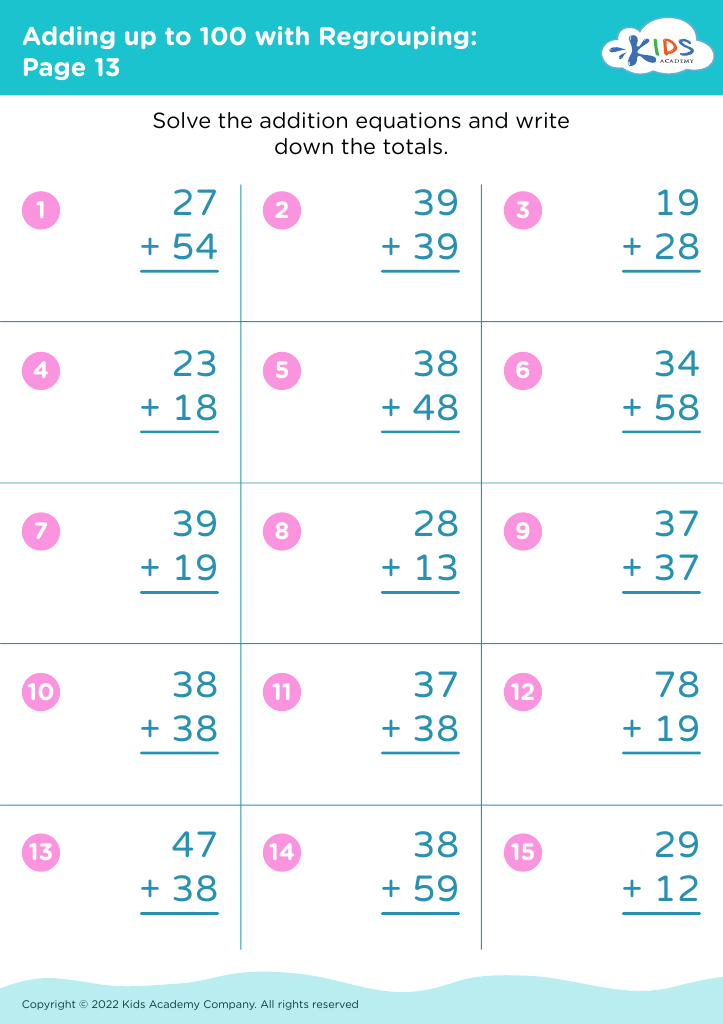
Adding up to 100 with Regrouping: Page 13
Worksheet
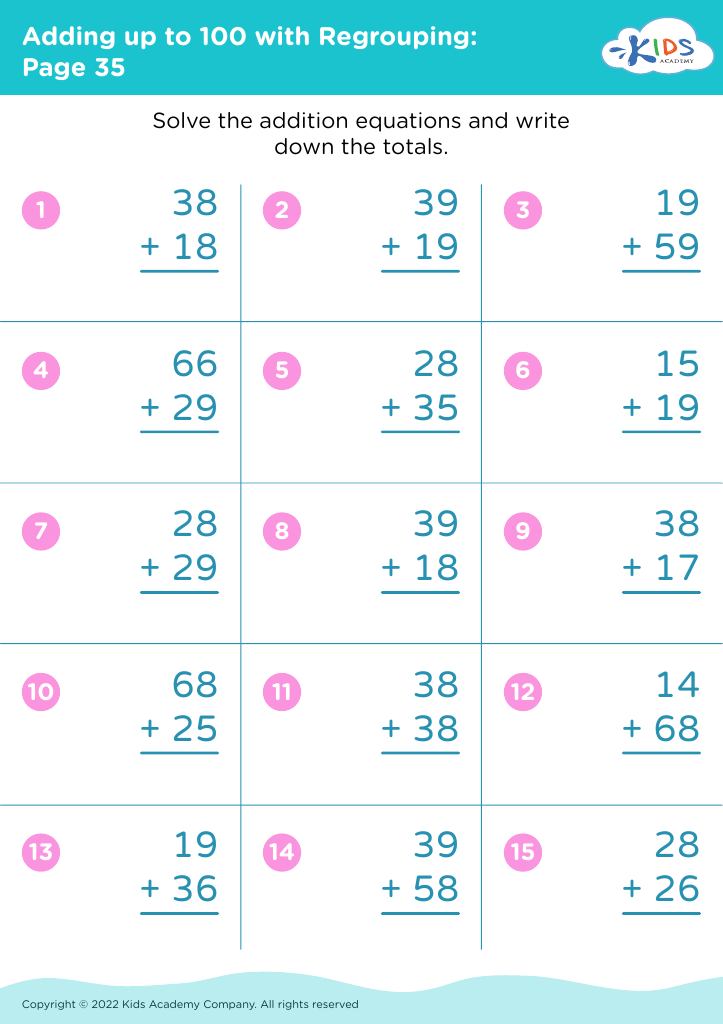
Adding up to 100 with Regrouping: Page 35
Worksheet
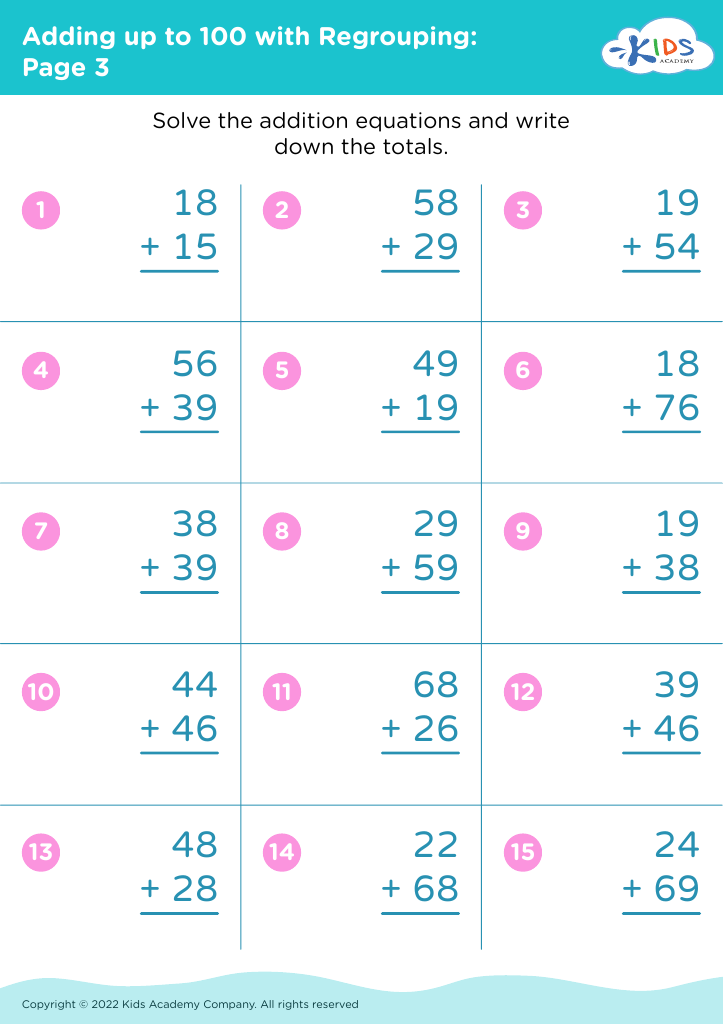
Adding up to 100 with Regrouping: Page 3
Worksheet
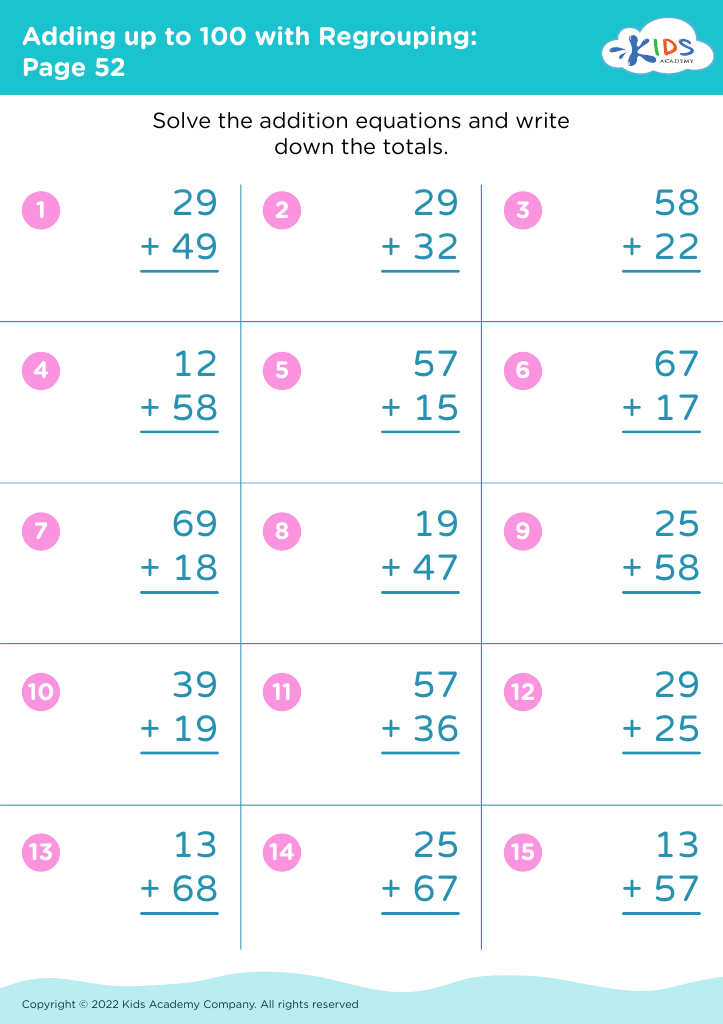
Adding up to 100 with Regrouping: Page 52
Worksheet
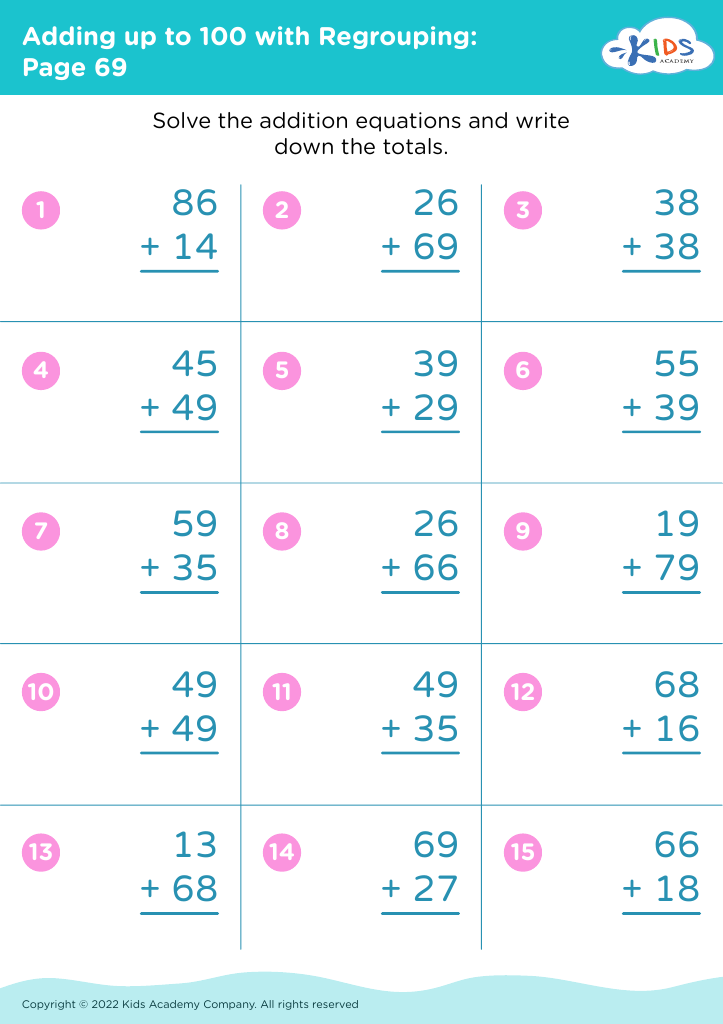
Adding up to 100 with Regrouping: Page 69
Worksheet
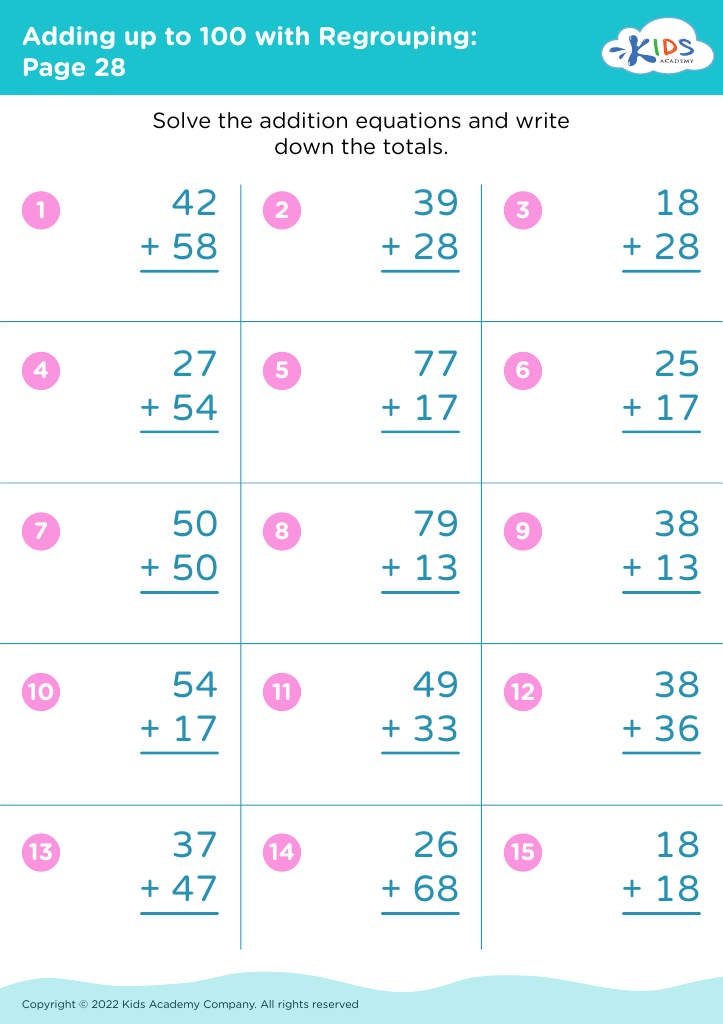
Adding up to 100 with Regrouping: Page 28
Worksheet
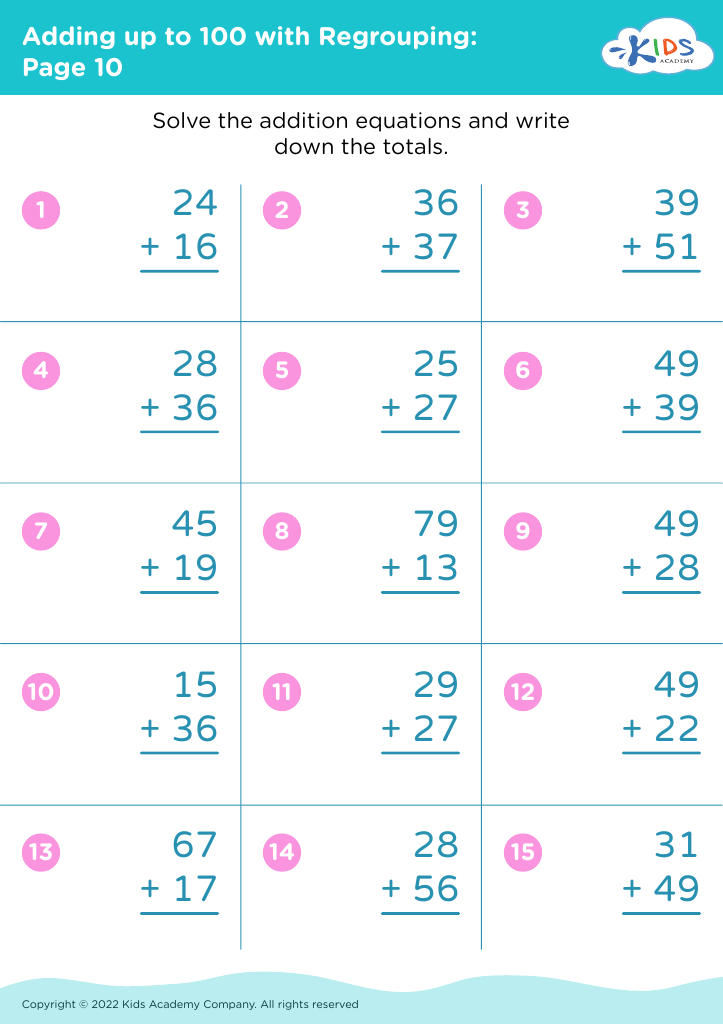
Adding up to 100 with Regrouping: Page 10
Worksheet
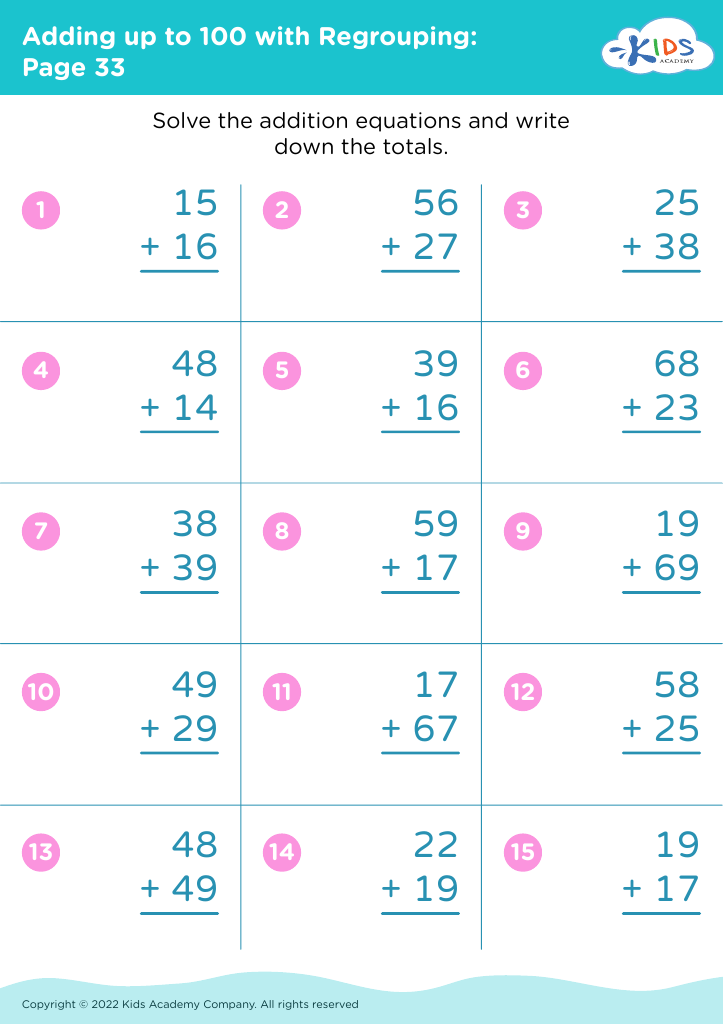
Adding up to 100 with Regrouping: Page 33
Worksheet


Understanding fractions, particularly the concept of adding fractions that sum up to 100 with regrouping, is crucial for students aged 7-9 for several reasons. Firstly, this concept establishes foundational mathematical skills that support future learning in mathematics. At this age, children are transitioning from simple arithmetic to more complex operations involving fractions, which enhances their number sense.

Fractions are a vital part of everyday life; they appear in cooking, budgeting, and dividing objects equally. By mastering the idea of regrouping fractions, students learn how to manage parts of a whole effectively, an essential skill in practical scenarios.

Moreover, a strong grasp of these concepts can boost a child's confidence in math. When students understand how to manipulate fractions, it reduces anxiety towards math and encourages a positive attitude, paving the way for academic resilience.

Additionally, teachers and parents play a key role in reinforcing these concepts through everyday situations and engaging activities. This collaboration fosters an enriching learning environment that supports analytical thinking, critical problem-solving skills, and encourages a love for mathematics. Ultimately, understanding fractions equips students with tools they need for both academic success and real-life applications.