Fine Motor Skills Adding up to 100 Without Regrouping Worksheets for Ages 7-9
4 filtered results
-
From - To
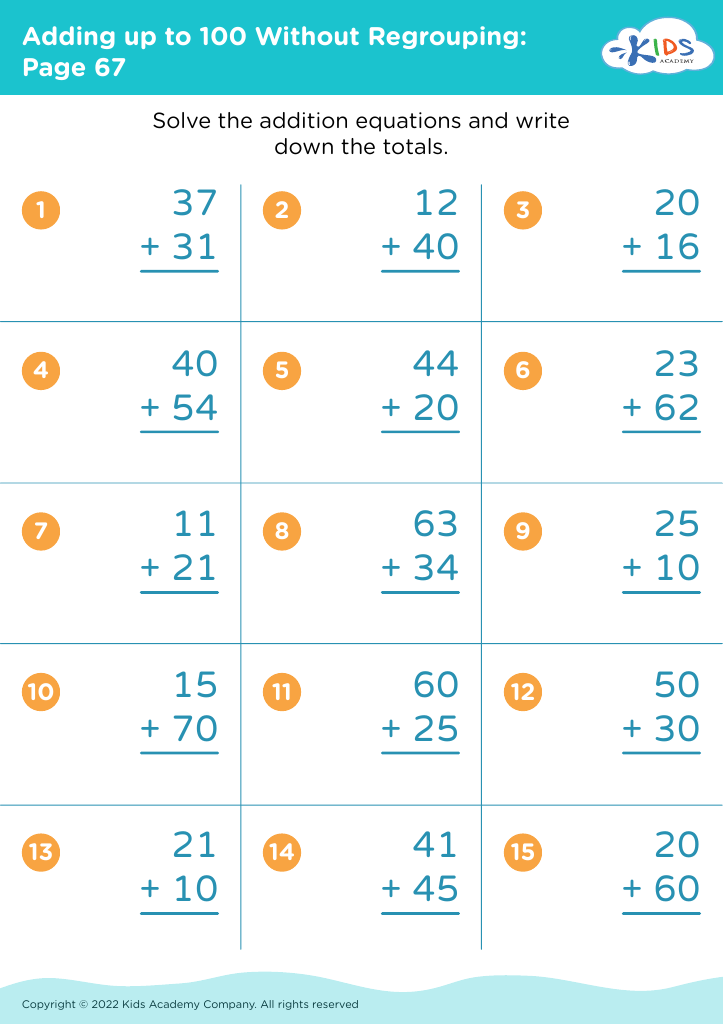
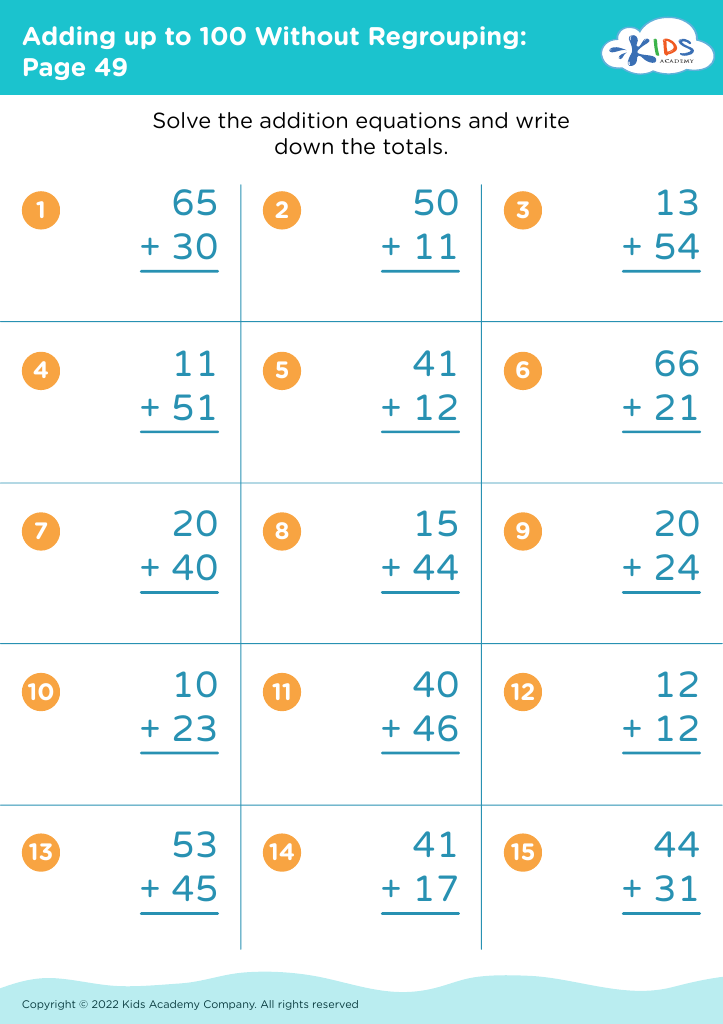
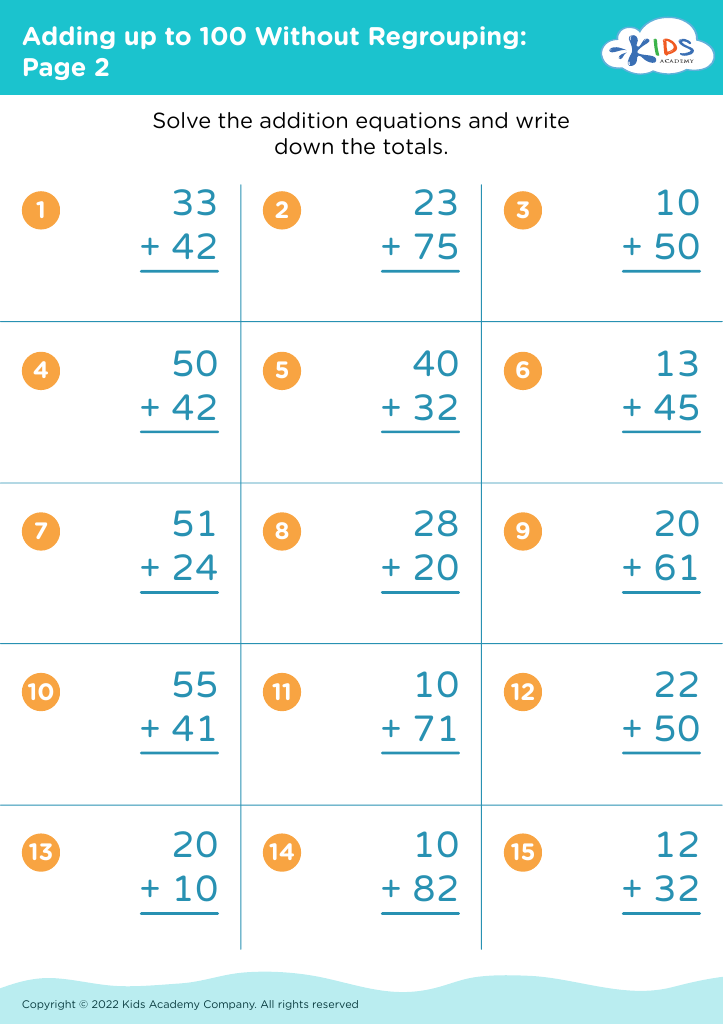
Enhance your child's mathematical and fine motor skills simultaneously with our "Fine Motor Skills Adding up to 100 Without Regrouping Worksheets" for ages 7-9. Tailored to young learners, these engaging and educational worksheets help children master addition up to 100 without regrouping. By incorporating activities that promote precision and control, children will also develop essential fine motor skills necessary for writing and everyday tasks. Designed for both classroom and home use, these worksheets offer a fun and interactive way to support your child's learning and development. Boost confidence and competence in math with our thoughtfully crafted resources.
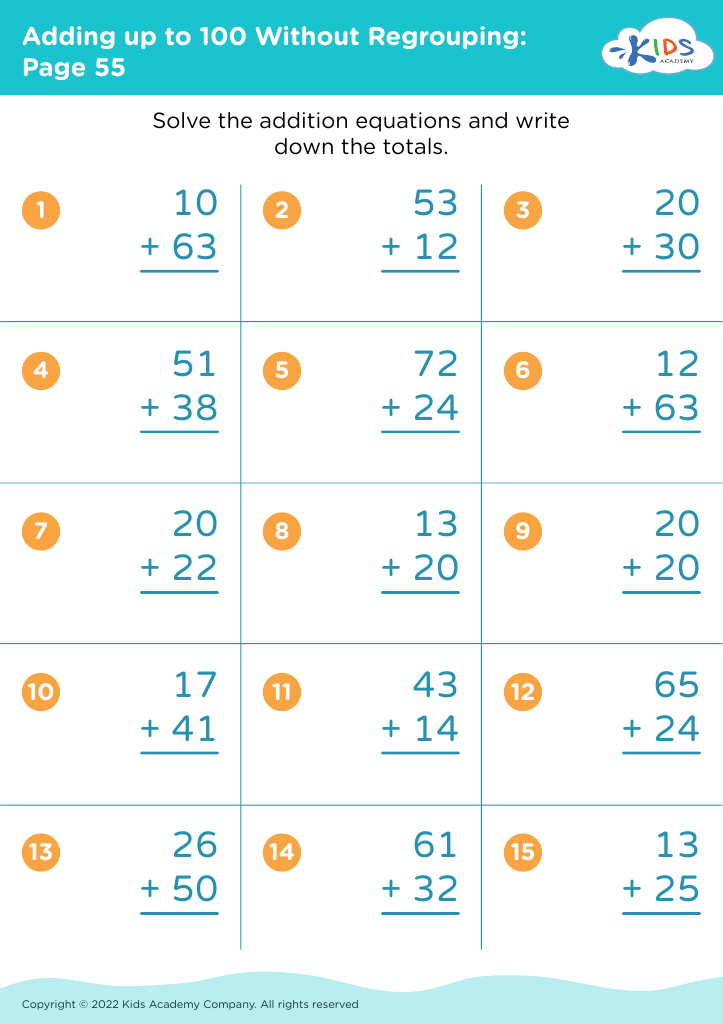




Fine motor skills are crucial for children aged 7-9 because they encompass the ability to control small muscle movements with precision, essential for tasks such as writing, buttoning clothes, and using utensils. Ensuring that children can perform these tasks confidently builds a foundation for their academic and daily life success.
Teaching children to add numbers up to 100 without regrouping enhances their cognitive development, boosting both fine motor and mathematical skills simultaneously. This specific mathematical skill requires children to manage multiple steps and understand numeral positioning, fostering mental clarity and orderliness. Holding pencils, accurately placing numbers, and clearly writing digits involve fine motor coordination, reinforcing these skills through repetitive yet engaging practice.
Engaging with addition exercises bolsters problem-solving abilities and confidence to tackle complex mathematical concepts in the future. It also nurtures patience, attention to detail, and methodical thinking, essential traits in any learning process. Teachers and parents can note progress in a child's ability to concentrate and complete tasks meticulously, both vital attributes beyond academic pursuits.
Supporting fine motor skills and addition without regrouping identifies and aids in averting potential learning hurdles. As children feel more confident in their capabilities, they are likely to be more motivated, ambitious, and successful in their educational journey. Investing in the development of these fundamental skills ensures a brighter, more competent future.