Identifying shapes Adding up to 100 Without Regrouping Worksheets for Ages 7-9
4 filtered results
-
From - To
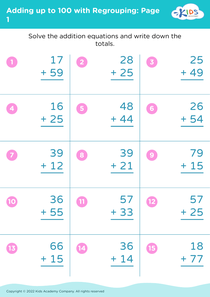
Explore our "Identifying Shapes Adding Up to 100 Without Regrouping Worksheets," specially designed for children aged 7-9. These engaging worksheets combine mathematics and geometry, allowing young learners to practice addition while reinforcing shape recognition skills. Each activity encourages kids to identify various shapes and apply their understanding to solve addition problems totaling 100, all without the need for regrouping. Perfect for enhancing critical thinking and problem-solving abilities, these worksheets offer a hands-on approach to learning. Whether at home or in the classroom, these fun, interactive exercises will make math enjoyable and help build essential foundational skills!
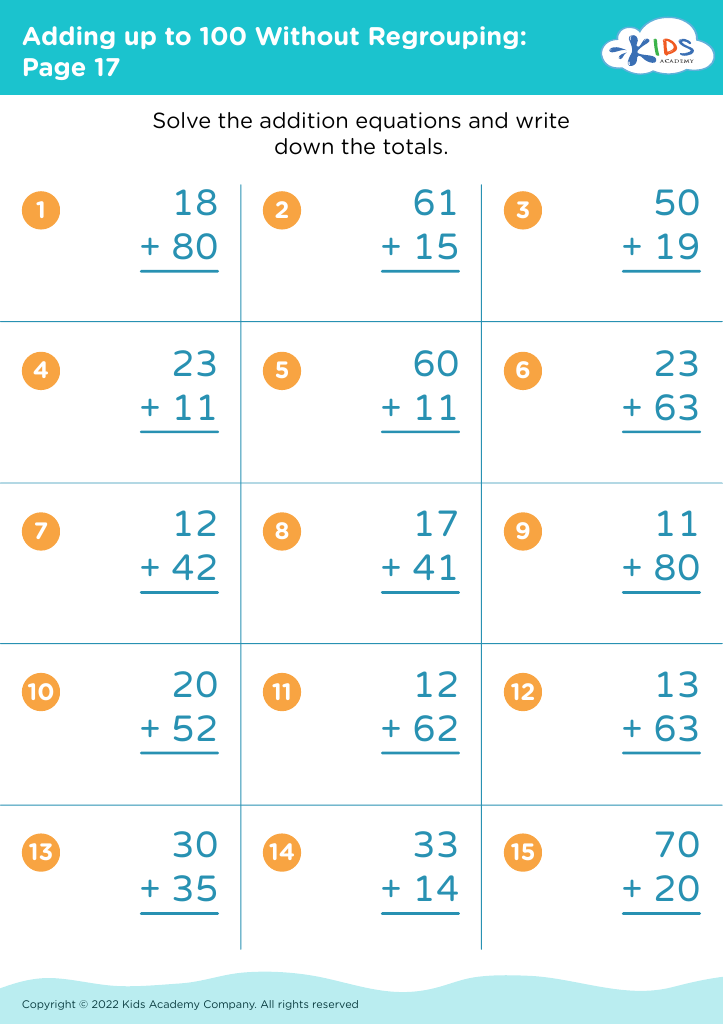
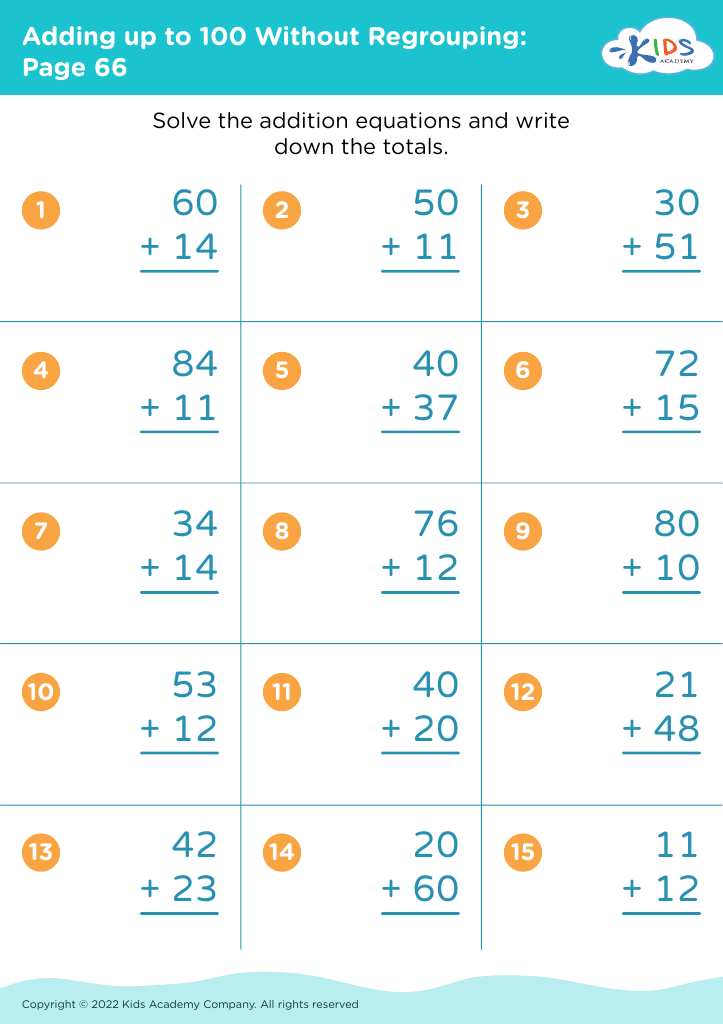
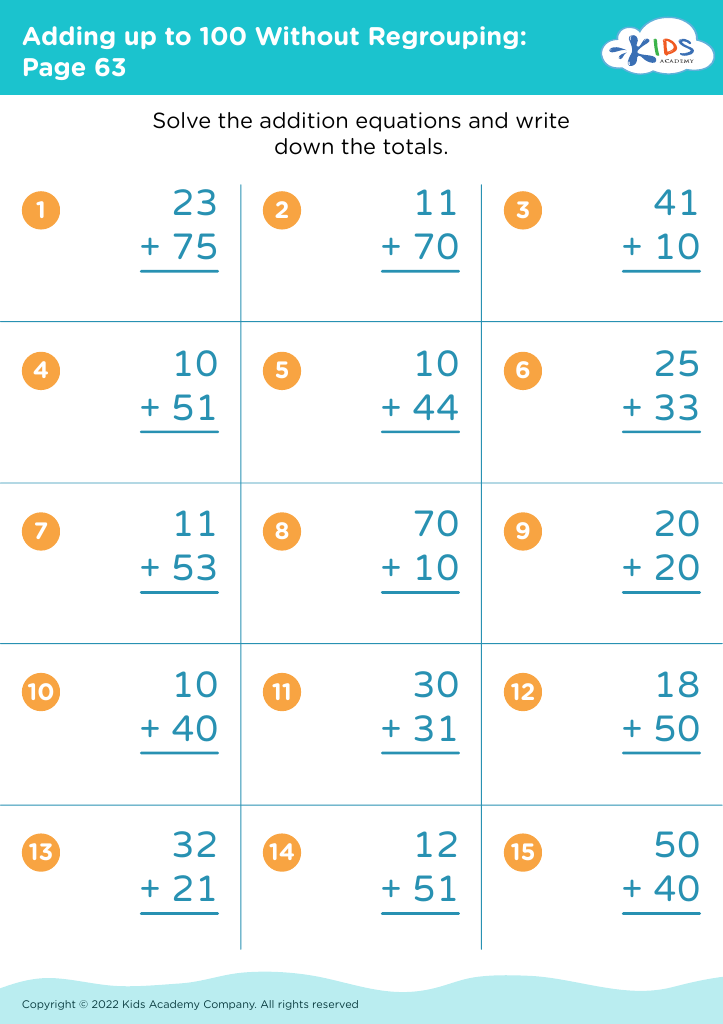
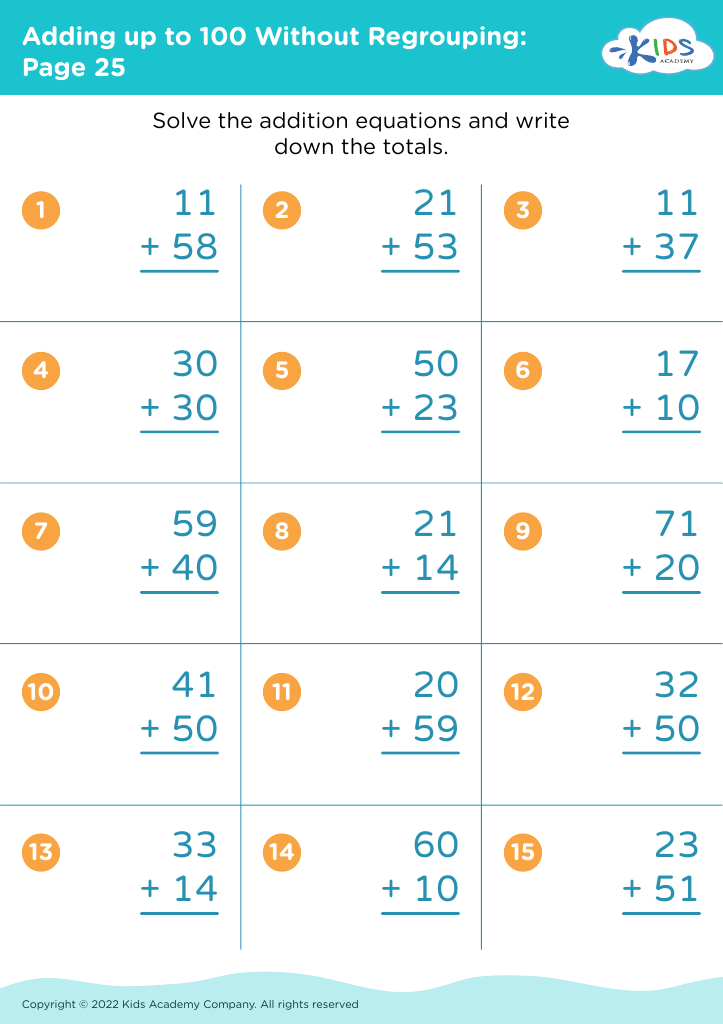




Identifying shapes and mastering addition skills, particularly adding up to 100 without regrouping, are crucial competencies for children aged 7-9. Understanding shapes cultivates spatial awareness and visual perception, which are foundational for geometry and daily problem-solving. When children can identify and relate to different shapes, they enhance their critical thinking and can better tackle more complex mathematical concepts later on.
On the other hand, the ability to add numbers up to 100 without regrouping reinforces mental math skills, contributing to their overall numerical fluency. This not only builds confidence but also lays the groundwork for more advanced arithmetic operations they'll encounter in higher grades, such as multiplication and division.
Moreover, these skills are interconnected; recognizing geometric patterns often involves numerical correlations, assisting children in understanding how math concepts are interrelated. Parents and teachers fostering these skills equip students to navigate real-world mathematical applications, laying a solid foundation for future academic and life success. Ultimately, prioritizing these skills can encourage a love for learning, promoting both cognitive development and positive self-esteem in young learners.