Reading comprehension Adding up to 100 Without Regrouping Worksheets for Ages 7-9
3 filtered results
-
From - To
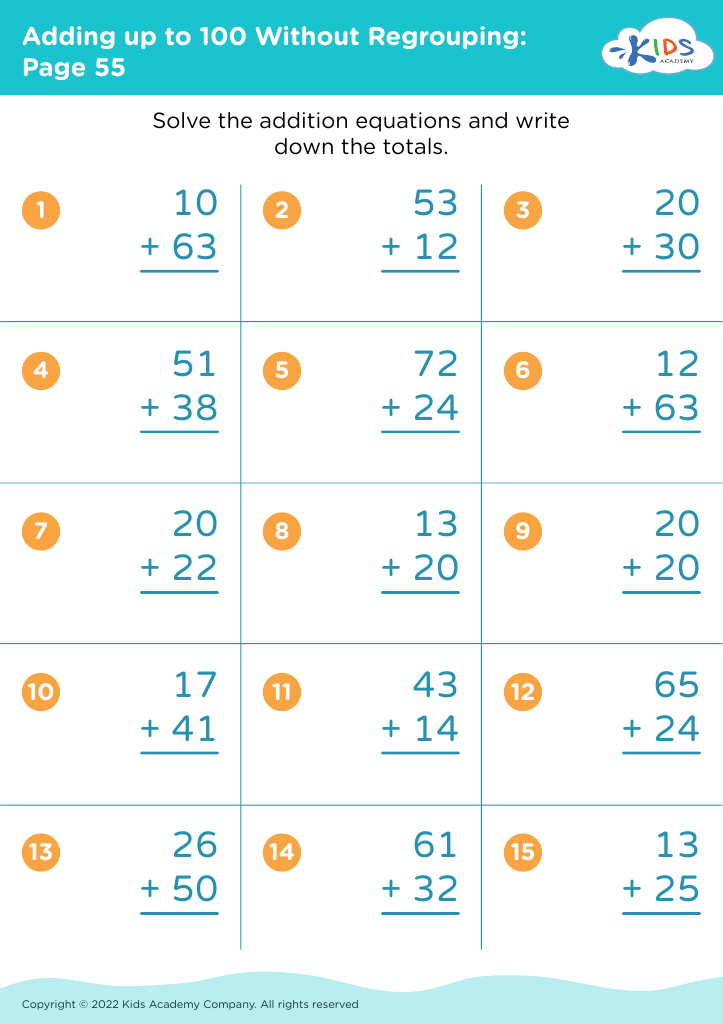
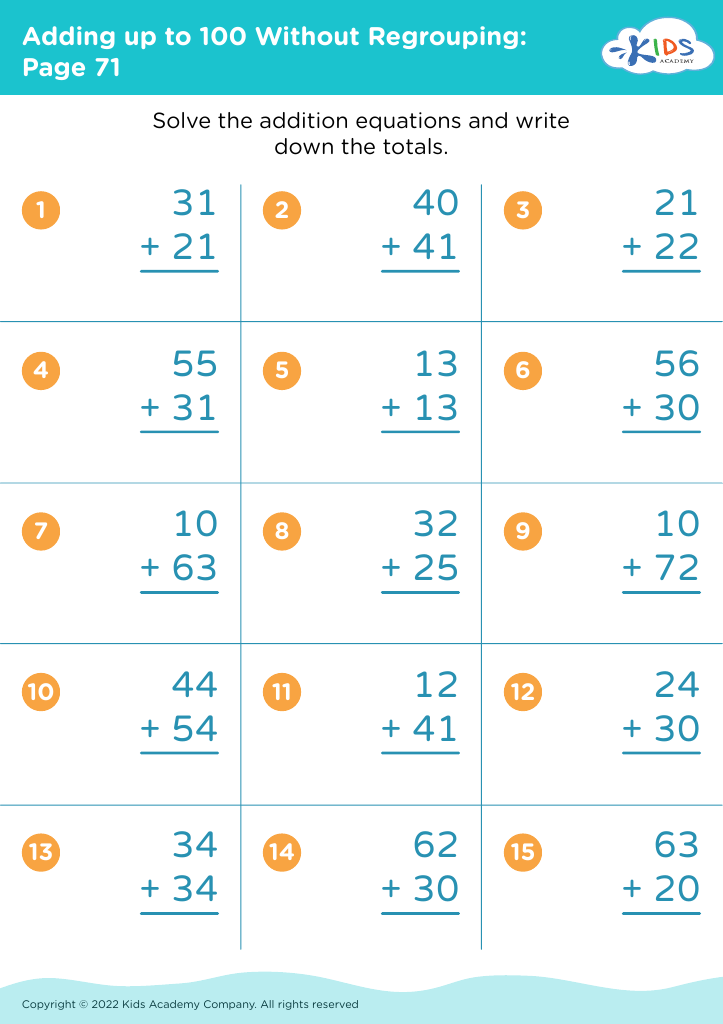
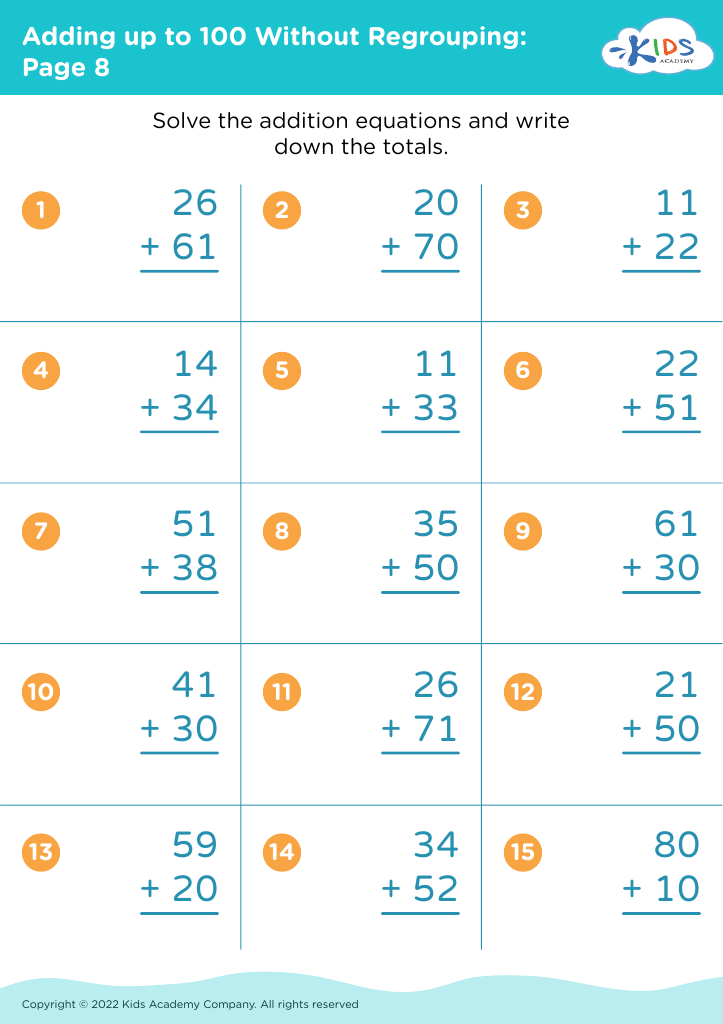
Enhance your child's reading comprehension and math skills with our engaging "Adding up to 100 Without Regrouping Worksheets" designed for ages 7-9. These worksheets provide an enjoyable way for young learners to practice simple addition while improving their ability to understand and process written information. Each activity is tailored to challenge your child’s critical thinking and foster a love for reading. By integrating math with reading comprehension, children will develop a well-rounded skill set that supports their academic growth. Download our worksheets today and watch your child gain confidence in both reading and math while having fun!




Reading comprehension is essential for children ages 7-9 as it forms the foundation for their overall academic success and critical thinking skills. At this developmental stage, kids not only are cultivating their reading abilities but are also making connections between texts and the world around them. Strong reading skills enhance their ability to understand instructions, engage with educational materials, and participate in discussions.
Moreover, when children develop a solid grasp of reading comprehension, it can significantly impact their mathematical learning, such as adding up to 100 without regrouping. Efficient comprehension skills enable them to understand word problems, identify key information, and apply mathematical concepts effectively. By grasping the context and requirements of a problem, they gain confidence in solving arithmetic challenges.
For parents and teachers, fostering these skills means providing resources and activities that integrate reading and math. Encouraging discussions about stories and problems fosters critical thinking. Ultimately, prioritizing reading comprehension empowers children to celebrate their successes in learning, with gains that extend beyond the classroom and affect future education pathways. Thus, both parents and teachers play a pivotal role in cultivating these essential skills, setting children up for long-term academic achievement.