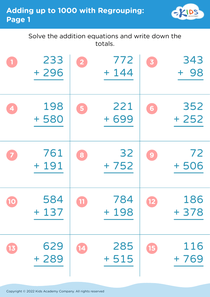
Problem-Solving Skills Adding up to 1000 Without Regrouping Worksheets for Ages 7-9
6 filtered results
-
From - To
Enhance your child's problem-solving skills with our engaging "Adding Up to 1000 Without Regrouping" worksheets, designed for ages 7-9. These creative worksheets provide an array of math problems that focus on addition, allowing young learners to practice and strengthen their understanding of numbers in a fun way. Perfect for classroom use or at-home learning, these activities build confidence and critical thinking as children tackle challenging equations without needing to regroup. Foster a love for math while developing essential problem-solving techniques that will benefit your child throughout their academic journey. Explore our collection today and watch their skills soar!
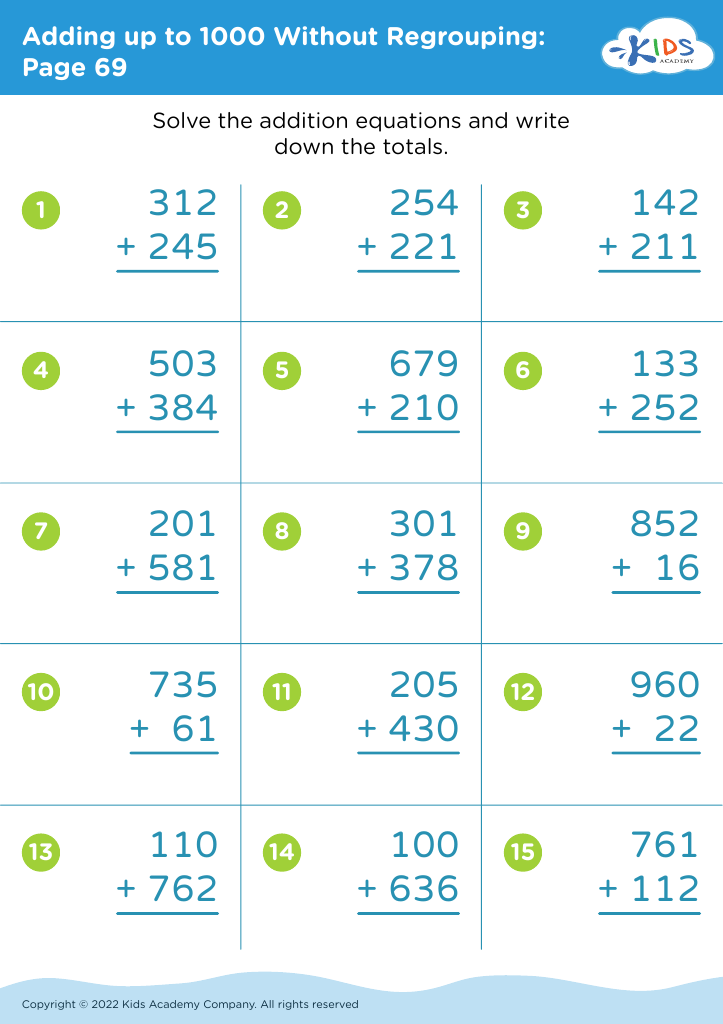
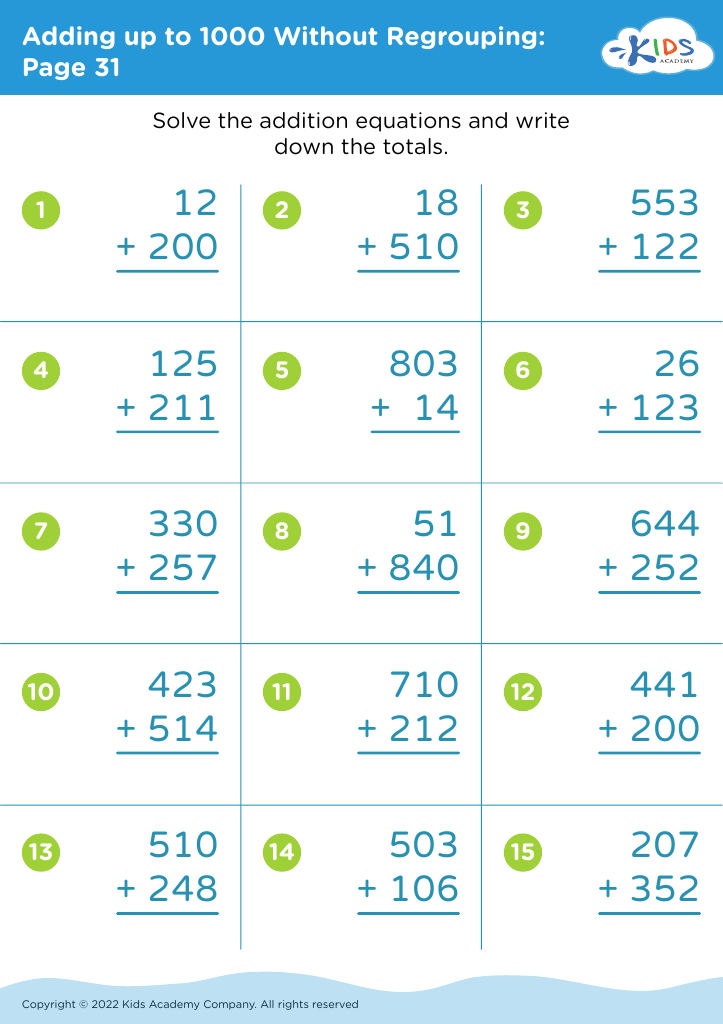
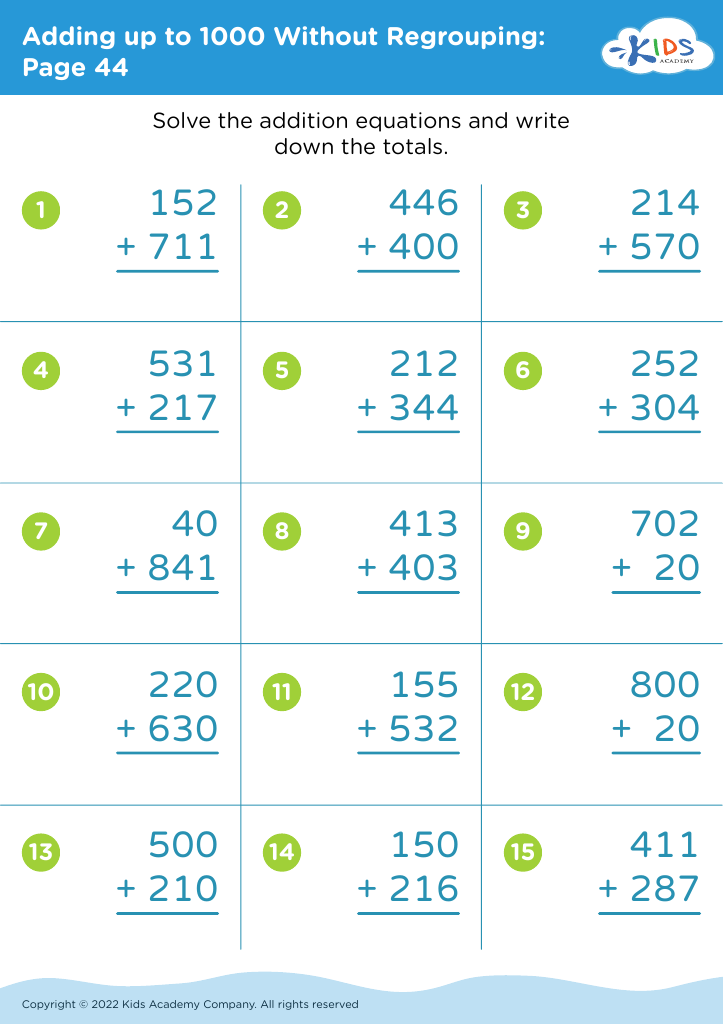
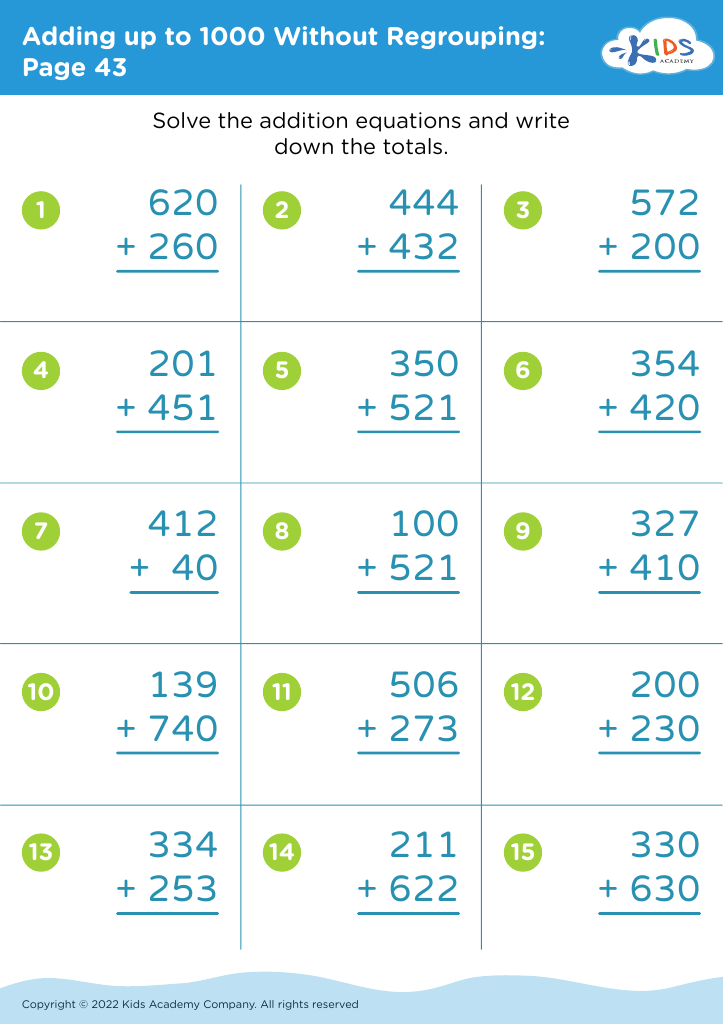
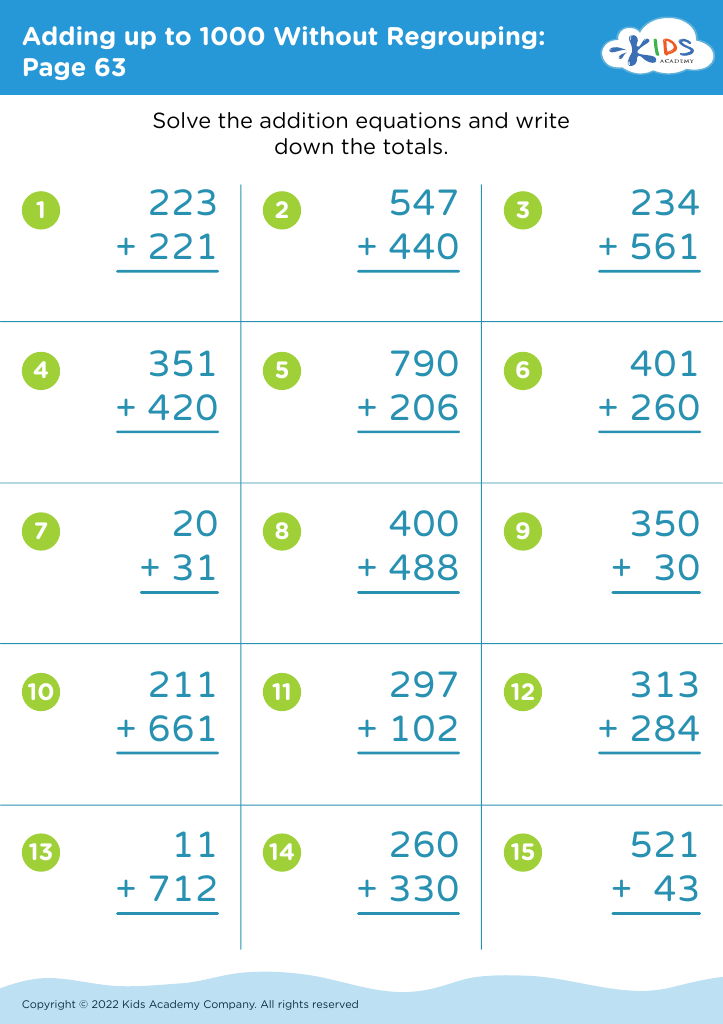
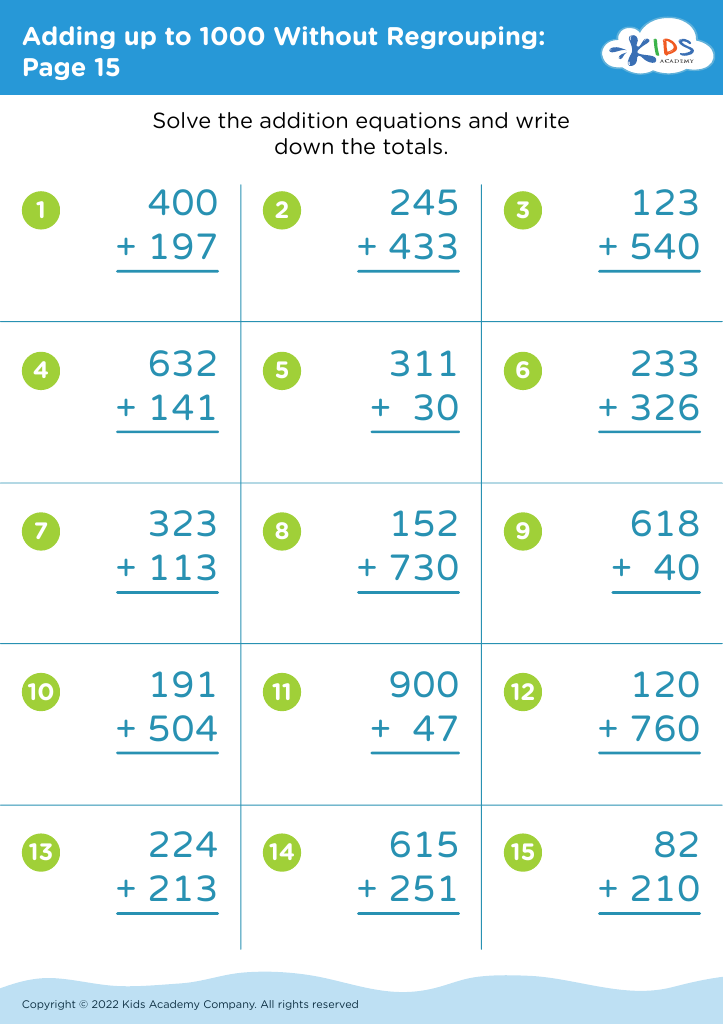


Parents and teachers should prioritize developing problem-solving skills in children ages 7-9, especially when it comes to adding numbers up to 1000 without regrouping. At this age, children are building foundational mathematical concepts that serve as critical building blocks for future learning. Strengthening these skills helps enhance their numerical fluency, enabling them to approach larger numbers with confidence and accuracy.
Problem-solving around this concept fosters critical thinking and reasoning abilities. Children learn to analyze various methods of addition, encouraging flexibility in their reasoning. As they practice, they develop perseverance, learning that exploration and trial-and-error are essential to finding solutions. This not only bolsters their math skills but also equips them with a resilient mindset adequate for academic challenges beyond mathematics.
Moreover, having well-developed problem-solving skills allows children to apply concepts in real-world scenarios, understanding the importance of math in everyday life. When children experience success in problem-solving, it boosts their confidence and encourages a positive attitude towards learning. Ultimately, cultivating these skills at a young age sets a strong foundation for lifelong analytical thinking and problem-solving capabilities, making them better prepared for the complex challenges of the future.