Understanding fractions Adding up to 1000 Without Regrouping Worksheets for Ages 7-9
13 filtered results
-
From - To
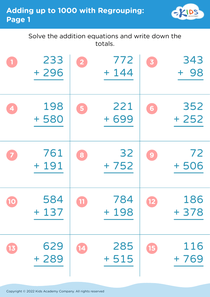
Introducing our "Understanding Fractions: Adding Up to 1000 Without Regrouping" worksheets, designed specifically for children ages 7-9! These user-friendly worksheets introduce young learners to the essential skill of adding fractions, reinforcing their understanding of numbers and basic arithmetic concepts. With fun, engaging exercises that avoid regrouping, your child will gain confidence as they work through a variety of fraction problems. Our worksheets allow kids to practice their skills in a supportive environment, making math enjoyable and accessible. Perfect for classroom use or at-home learning, these resources provide a solid foundation for mathematical success. Start enhancing your child's fraction knowledge today!
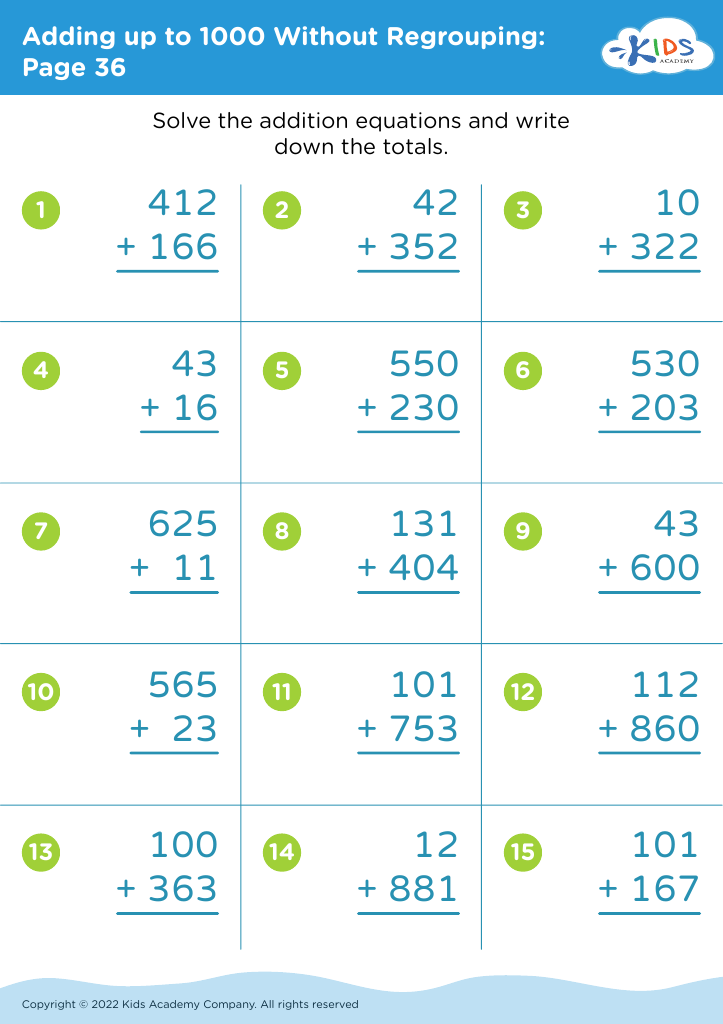
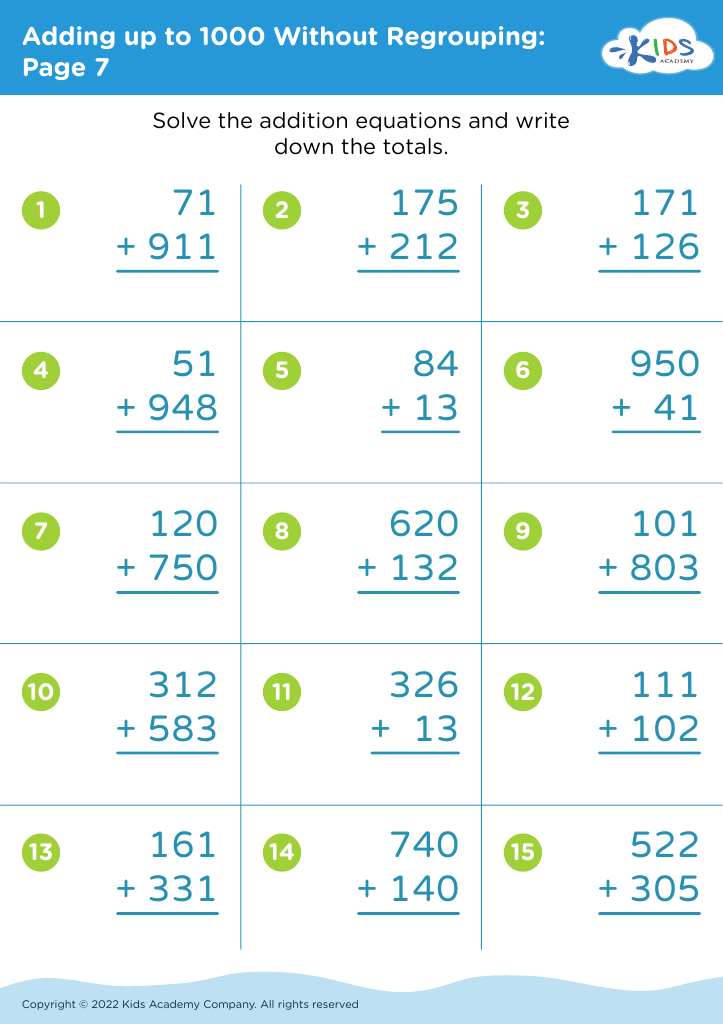
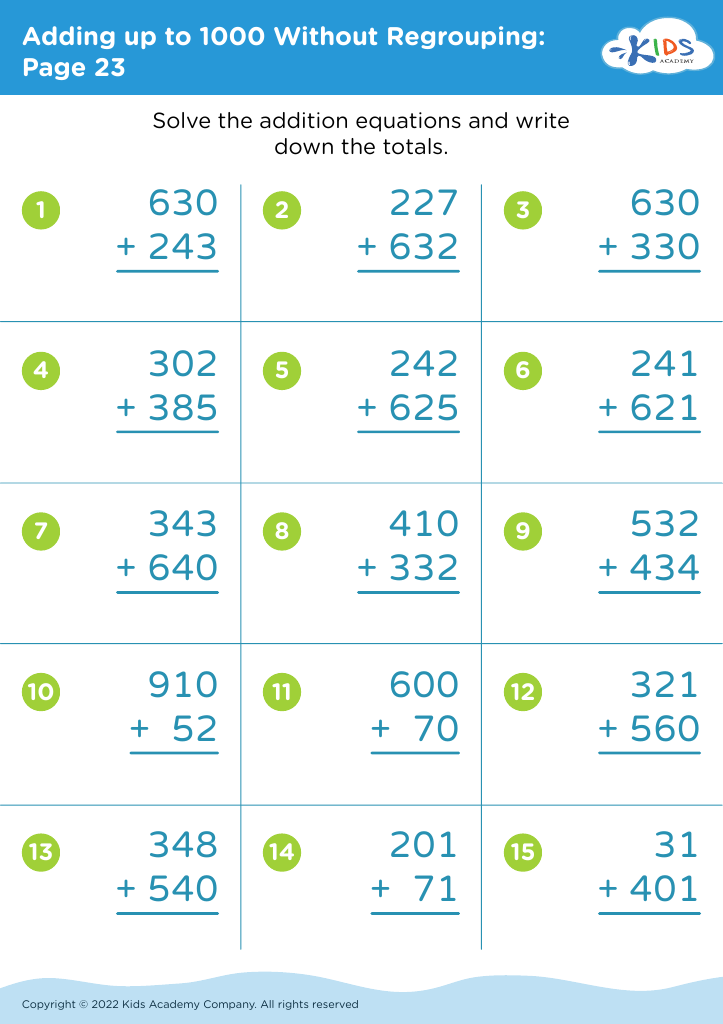
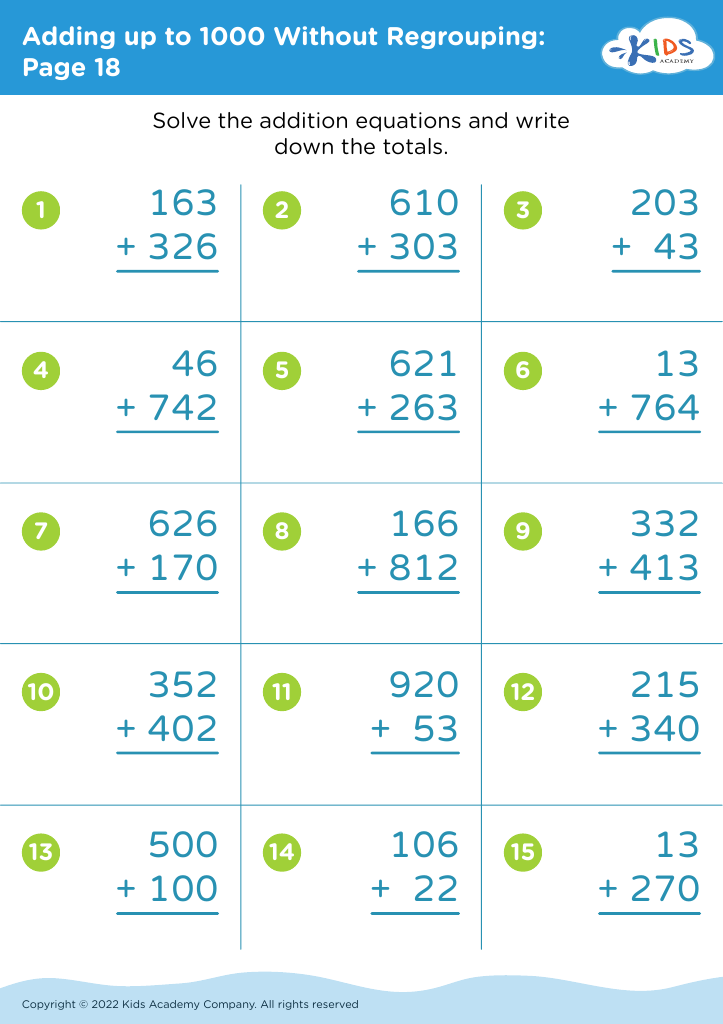
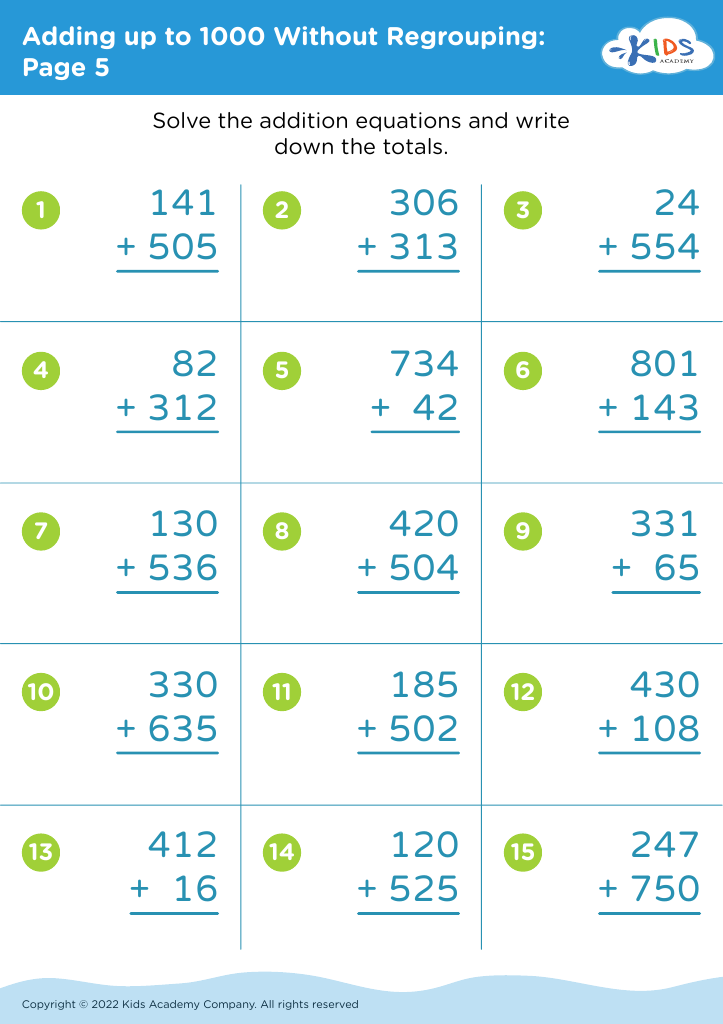
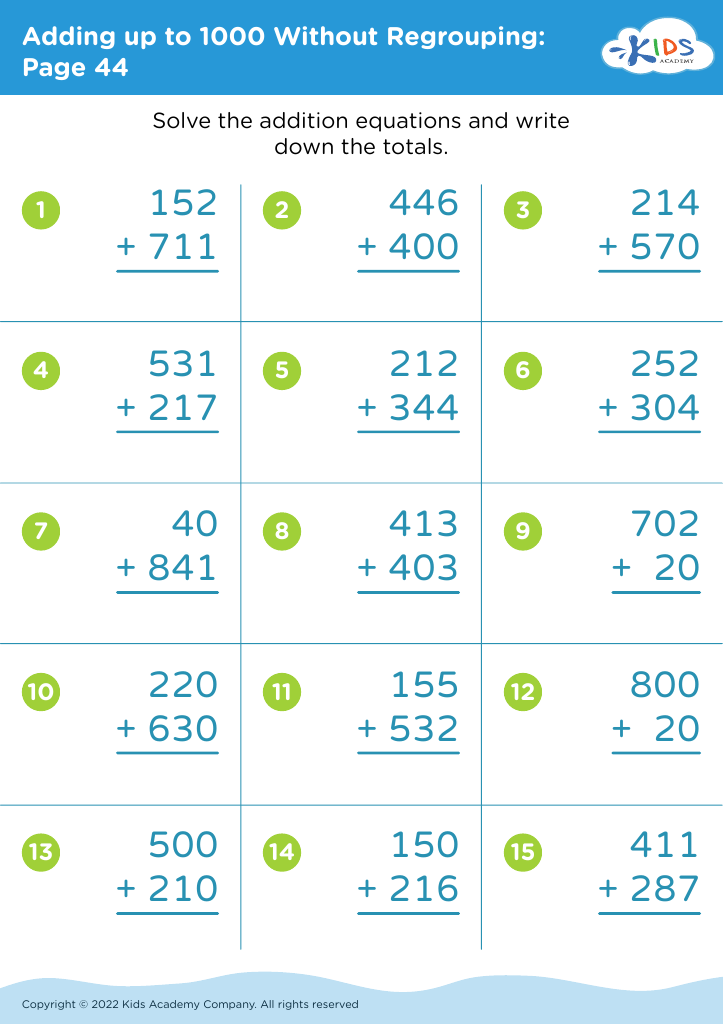
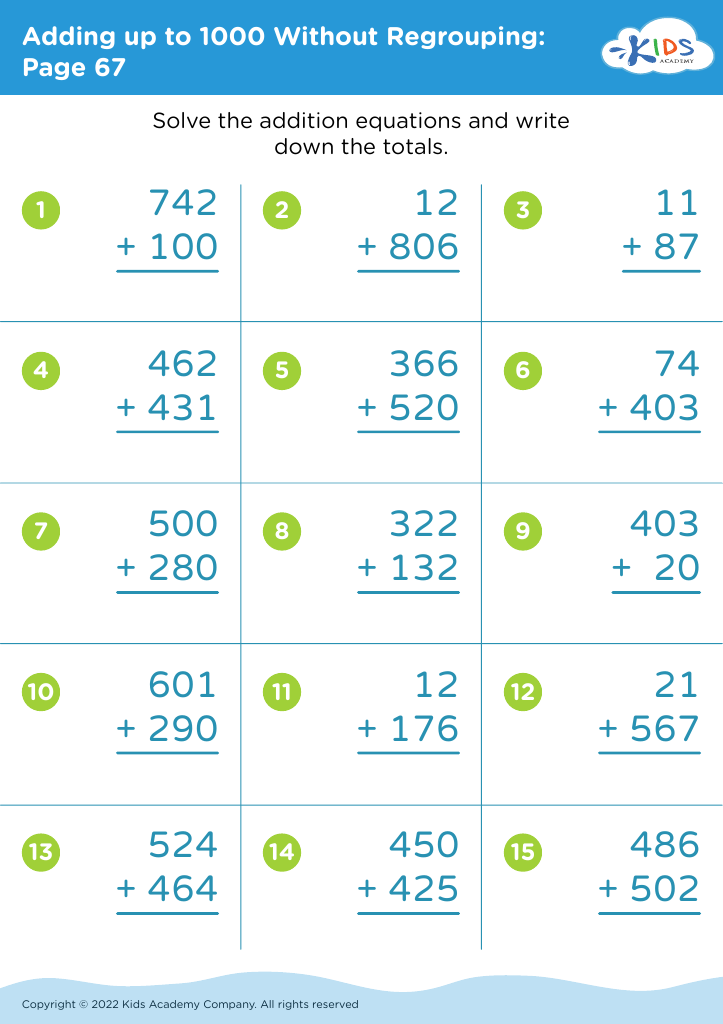
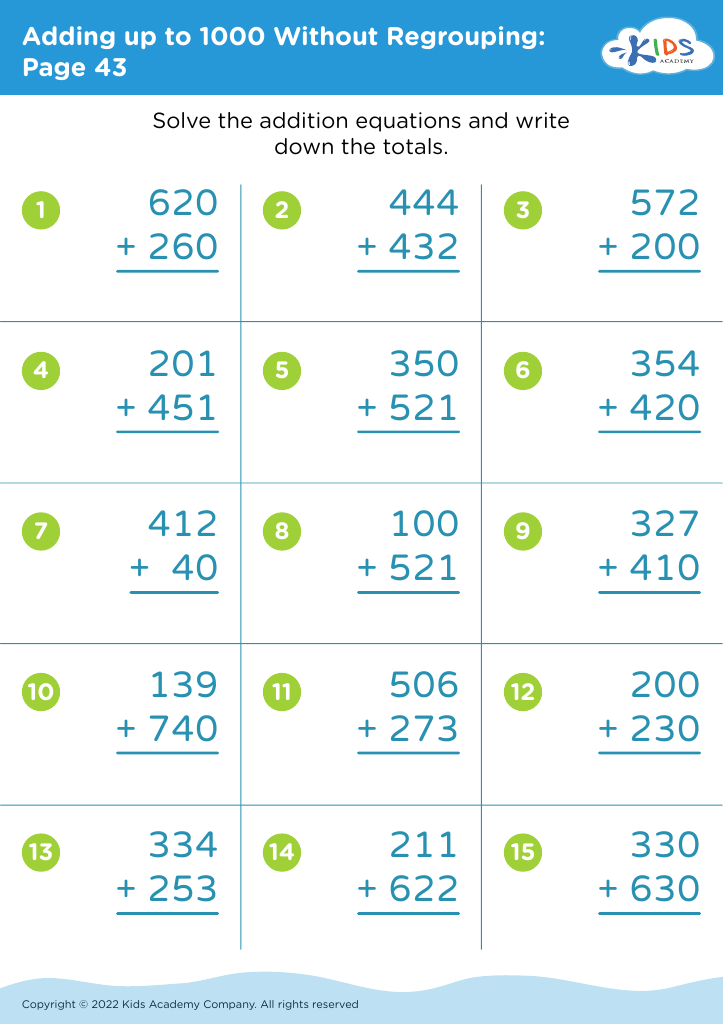
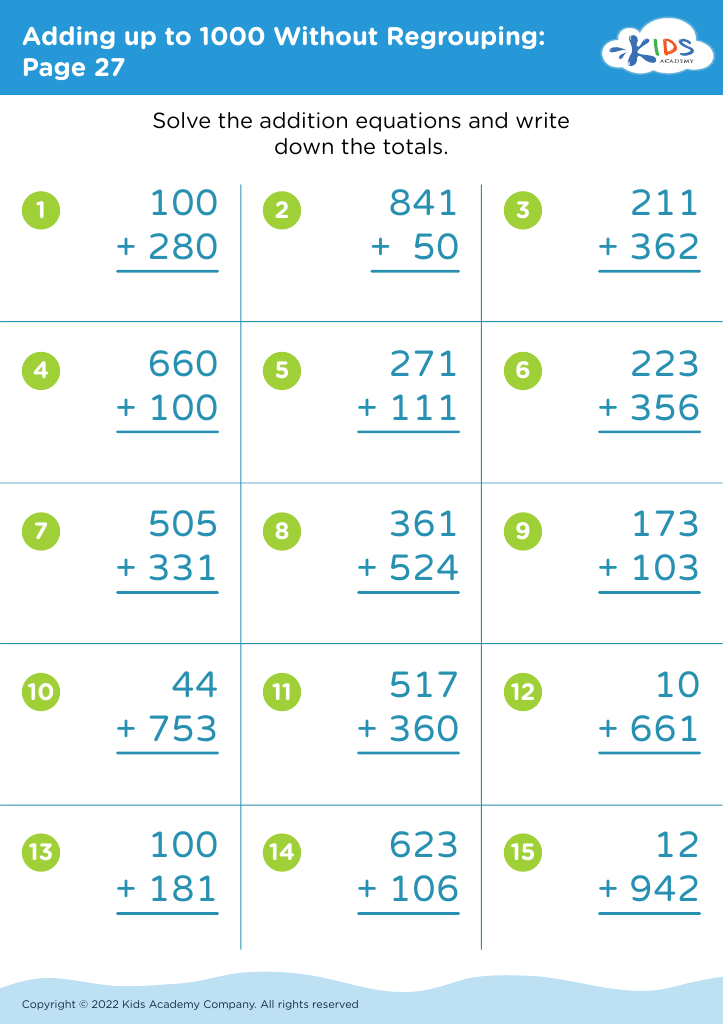
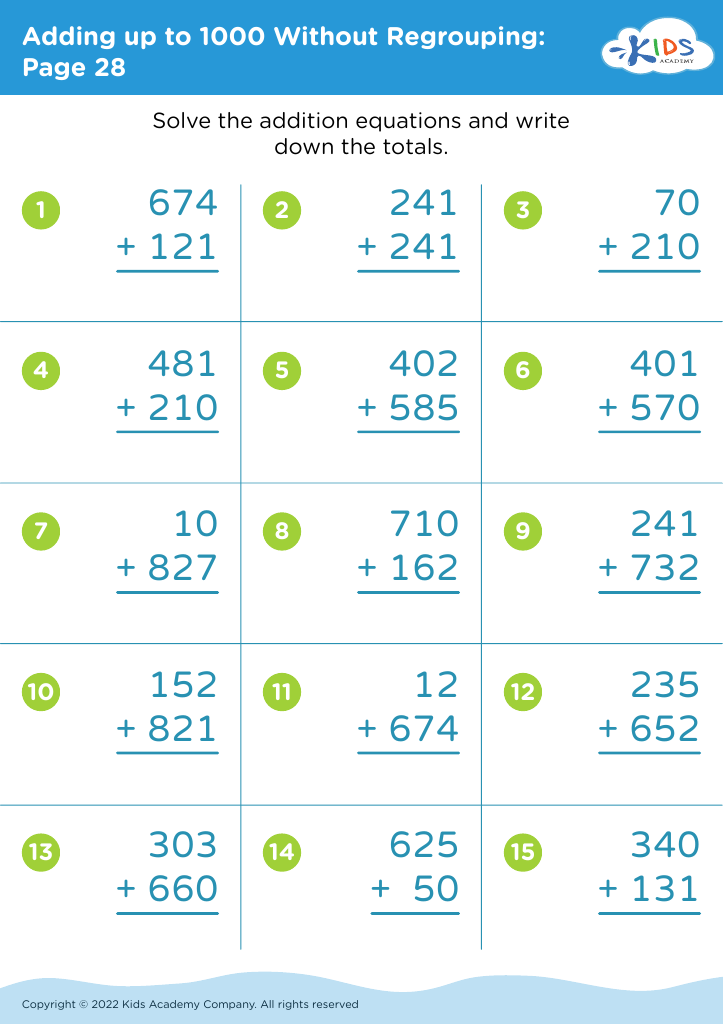
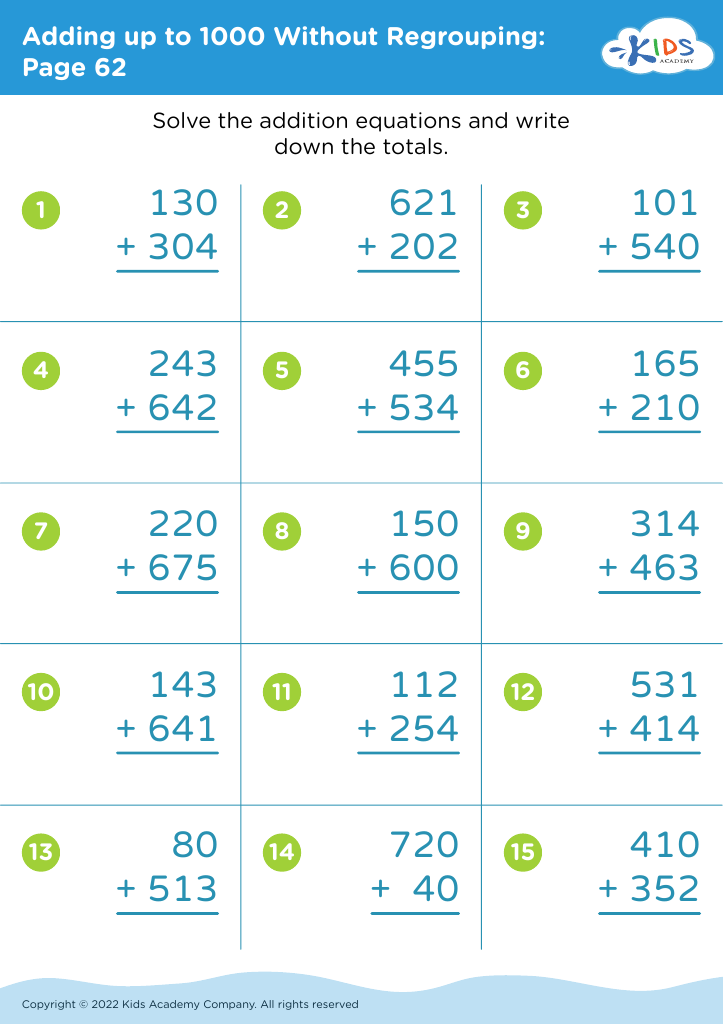
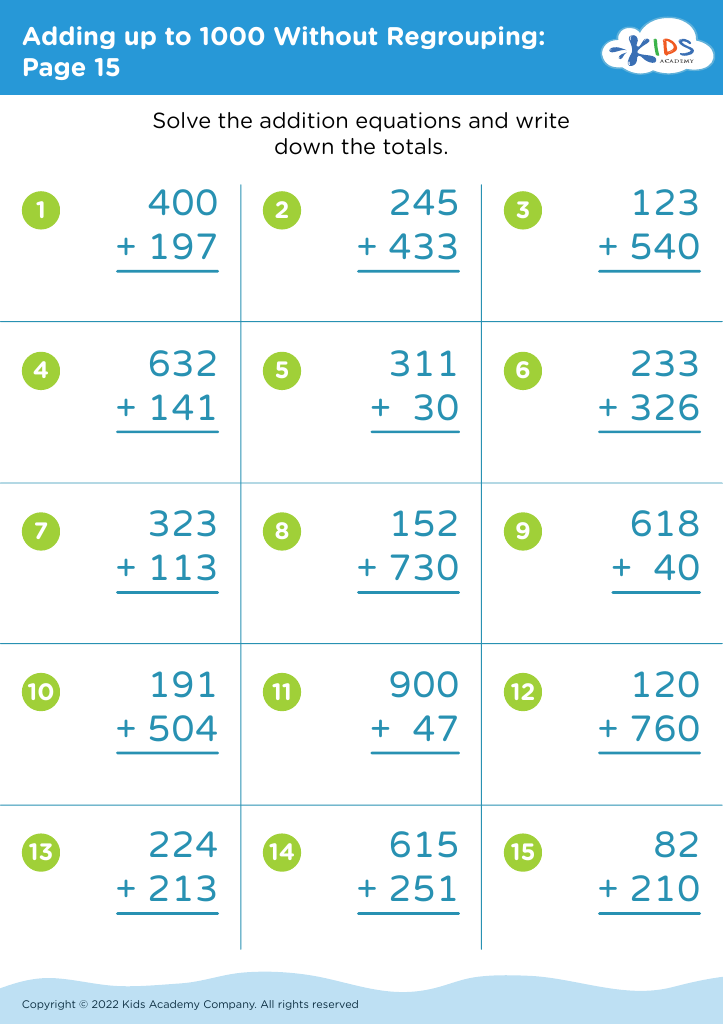
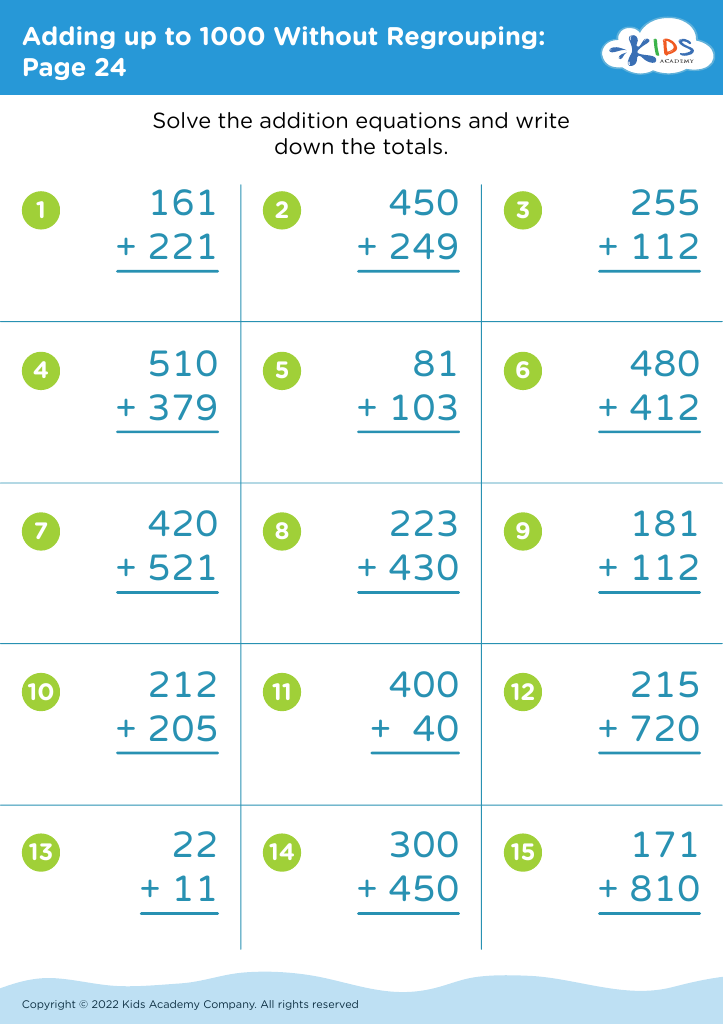


Understanding fractions and basic addition concepts, like adding up to 1000 without regrouping, is crucial for children aged 7-9. At this developmental stage, children are transitioning from concrete thinking to more abstract reasoning, allowing them to grasp mathematical concepts more comprehensively. Mastery of fractions lays the groundwork for future mathematical skills, including algebra and geometry, which require a fundamental understanding of parts of a whole.
Fractions teach students about division and proportional relationships, fostering their ability to compare quantities and engage in problem-solving. As students learn to add numbers without regrouping, they build confidence in their calculation skills, develop number sense, and gain fluency in arithmetic. This solidifies their mathematical foundation, making it easier to tackle more complex concepts in later grades.
Moreover, a solid understanding of these concepts boosts critical thinking and decision-making skills. For parents and teachers, supporting children in these areas not only enhances their academic success but also cultivates a positive attitude towards mathematics. Establishing a strong mathematical foundation encourages lifelong skills, promoting analytical thinking and resilience in facing challenges, which are essential for personal and academic growth. Engaging with these concepts can empower children to feel competent and confident in their abilities.