Basic Addition Adding up to 1000 Worksheets for Ages 7-9
6 filtered results
-
From - To
Welcome to our "Basic Addition Adding Up to 1000 Worksheets" designed for children aged 7 to 9! These engaging worksheets offer a fun and interactive way to strengthen your child's foundational math skills. With a variety of exercises, including visual aids and practical problem-solving scenarios, learners will confidently tackle addition problems up to 1000. Our worksheets not only promote independent learning but also foster critical thinking and number sense. Ideal for classroom use or at-home practice, these resources make learning addition enjoyable. Watch as your child develops a solid understanding of math concepts while building confidence in their skills!
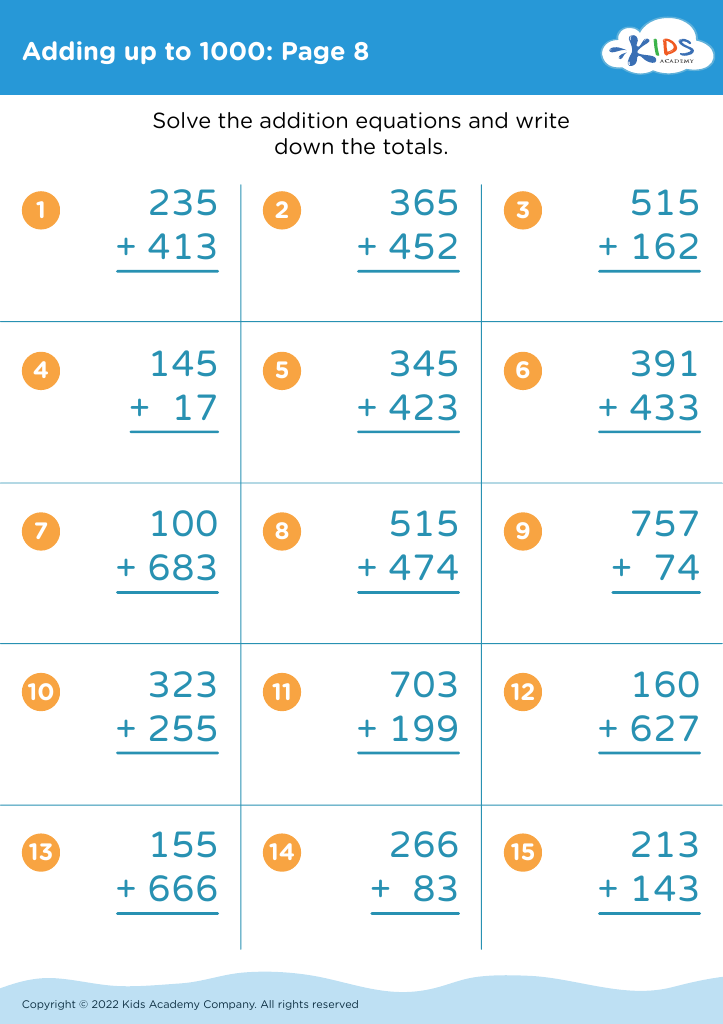
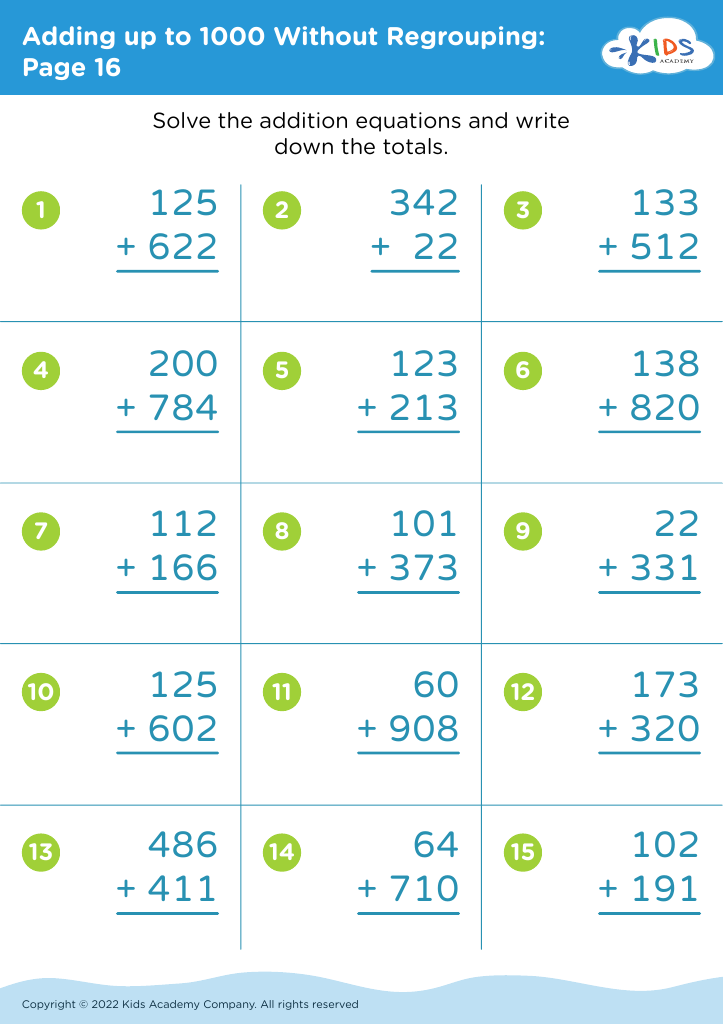
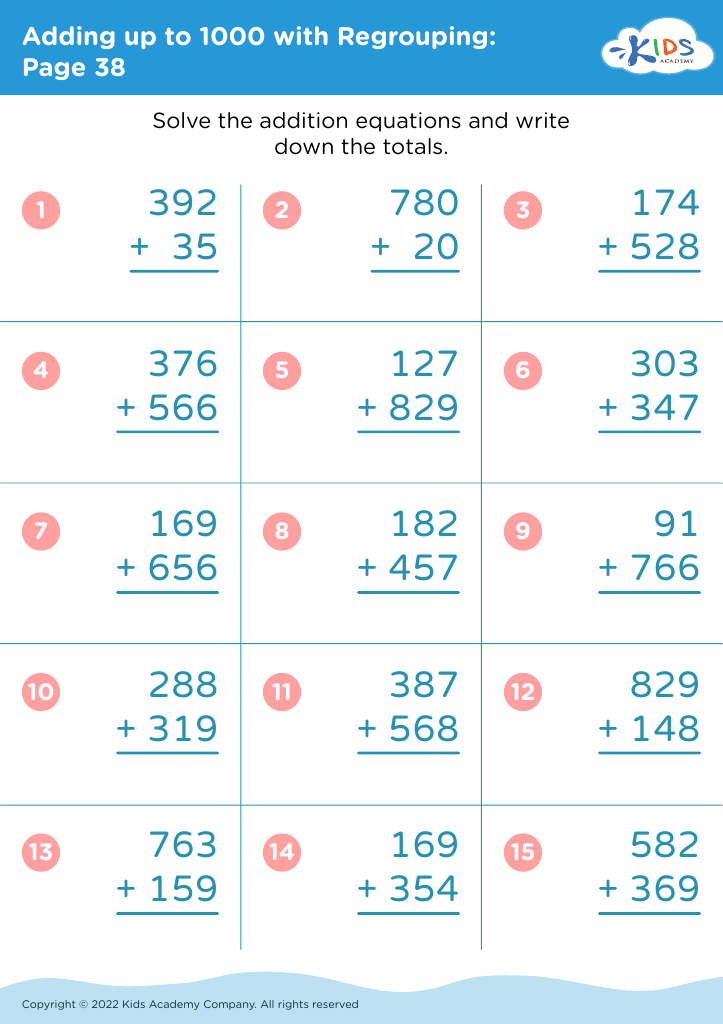
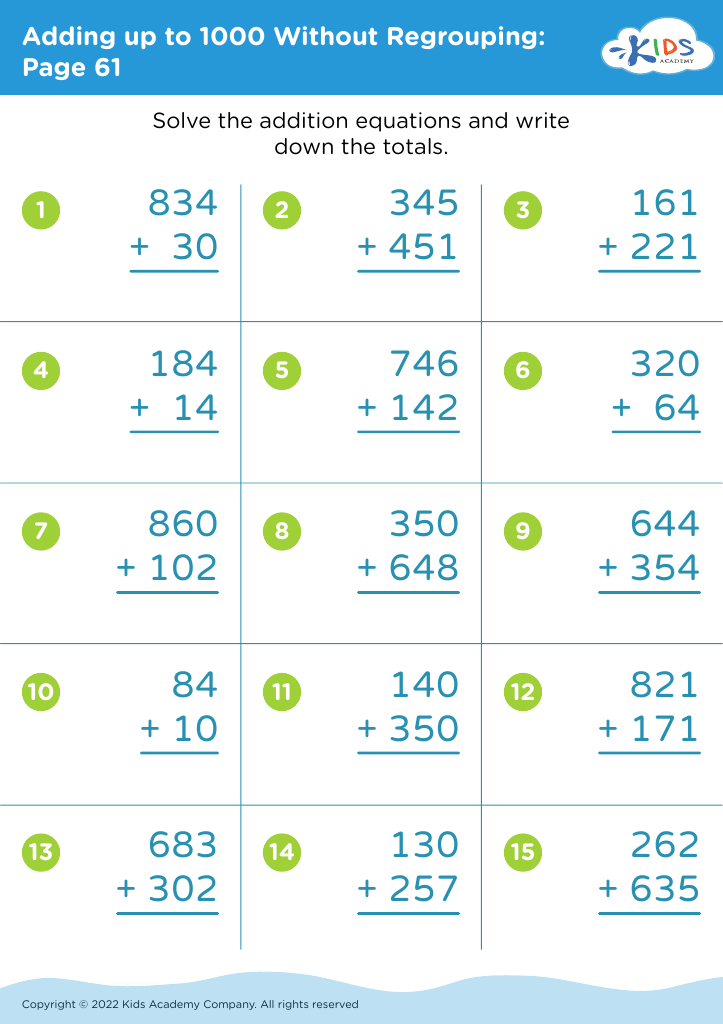
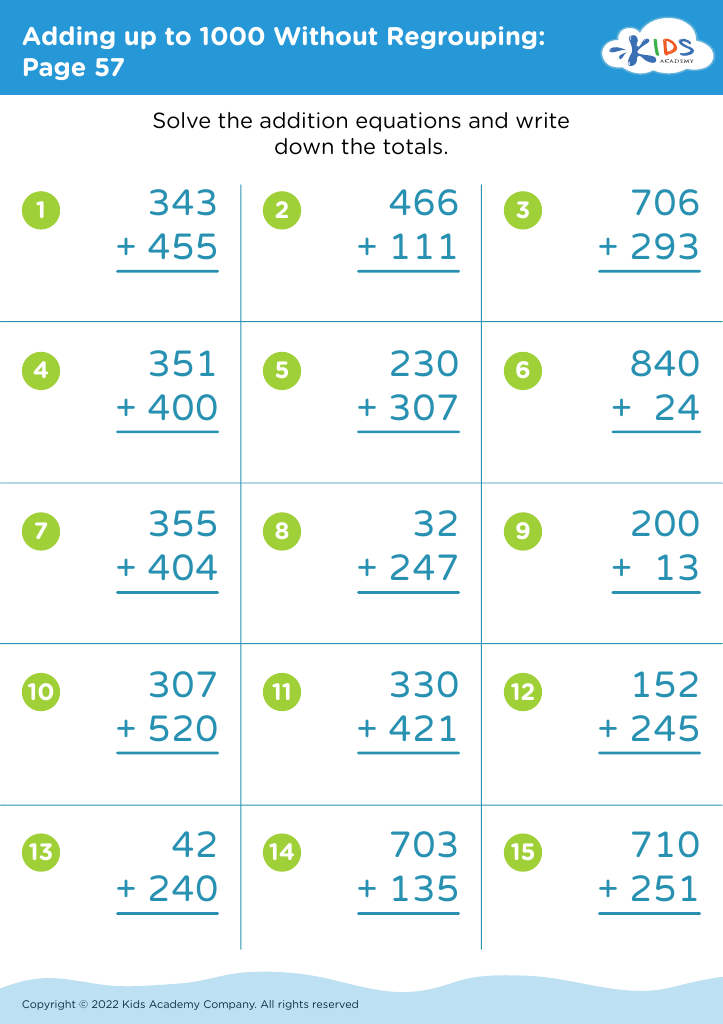
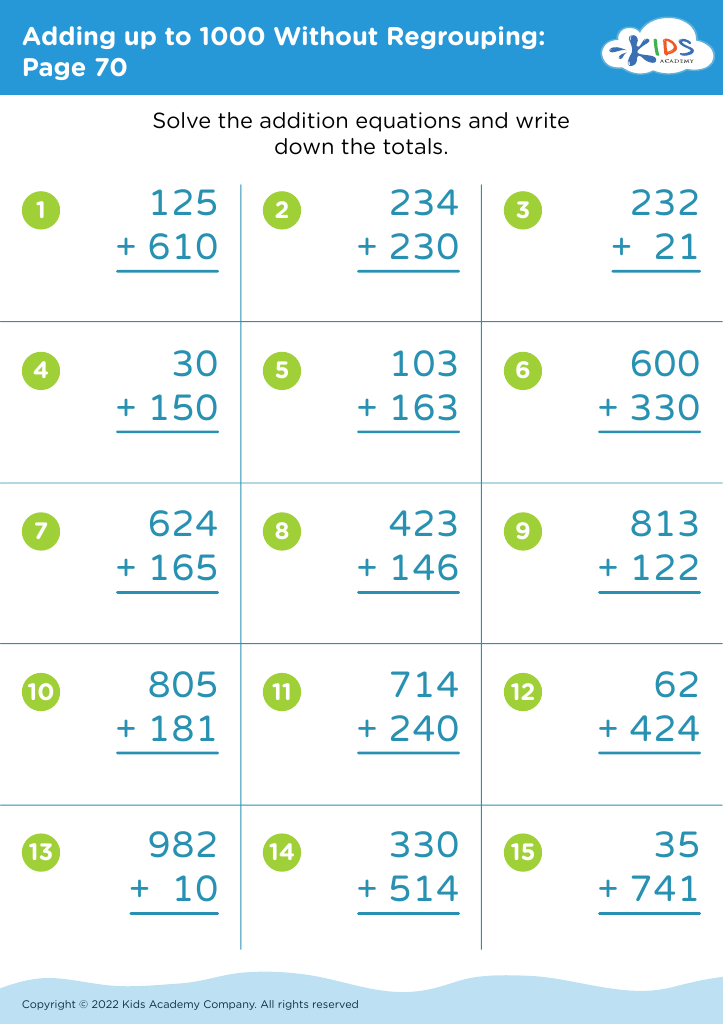



Basic addition, especially skills that involve sums up to 1000, is a foundational mathematical concept crucial for students ages 7-9. Mastering these skills goes beyond mere number crunching; it builds essential cognitive abilities, problem-solving skills, and confidence in young learners.
At this age, children are developing their ability to think critically and apply their knowledge to real-world situations. Recognizing how to add numbers efficiently enables them to handle everyday tasks, such as budgeting their allowance or calculating scores in games, fostering a sense of independence and responsibility.
Furthermore, strong addition skills pave the way for understanding more complex mathematical concepts, such as subtraction, multiplication, and even fractions down the line. These early experiences shape their attitudes towards math, influencing their long-term performance and interest in the subject.
Additionally, when parents and teachers actively support this learning, they foster a positive learning environment that encourages curiosity and resilience. Collaborative activities or games can make learning enjoyable, thus enhancing their motivation. All these aspects highlight why parents and teachers must prioritize teaching and reinforcing basic addition for children aged 7-9, ensuring they develop a robust foundation for future academic success.








