
Learn new vocabulary Adding up to 1000 Worksheets for Ages 7-9
3 filtered results
Difficulty Level
Grade
Age
-
From - To
Subject
Activity
Standards
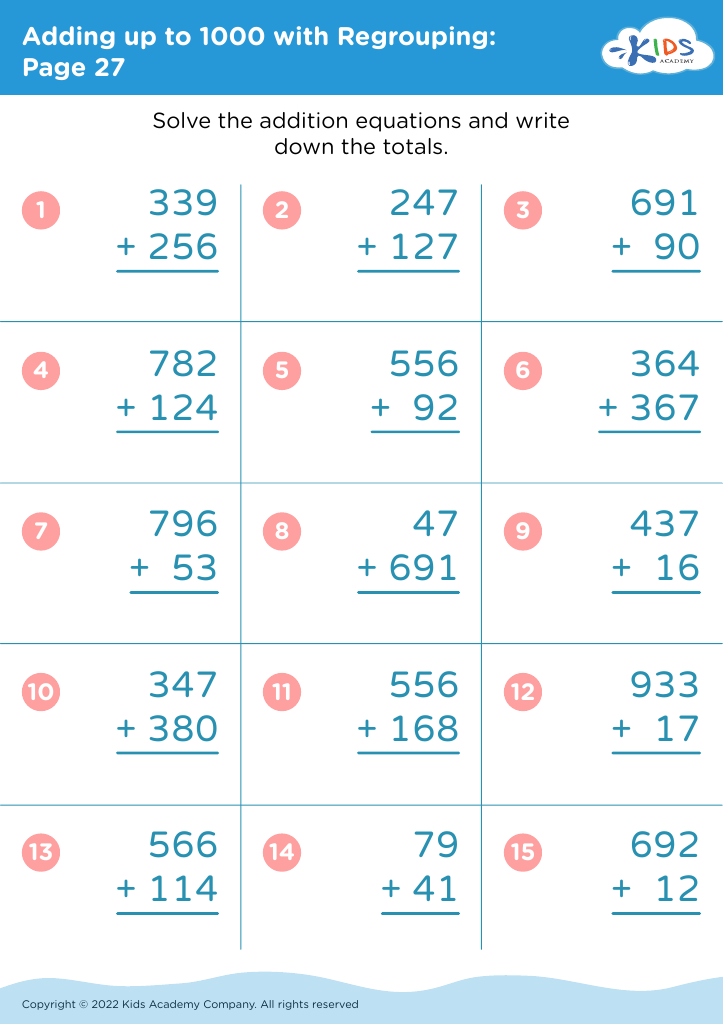
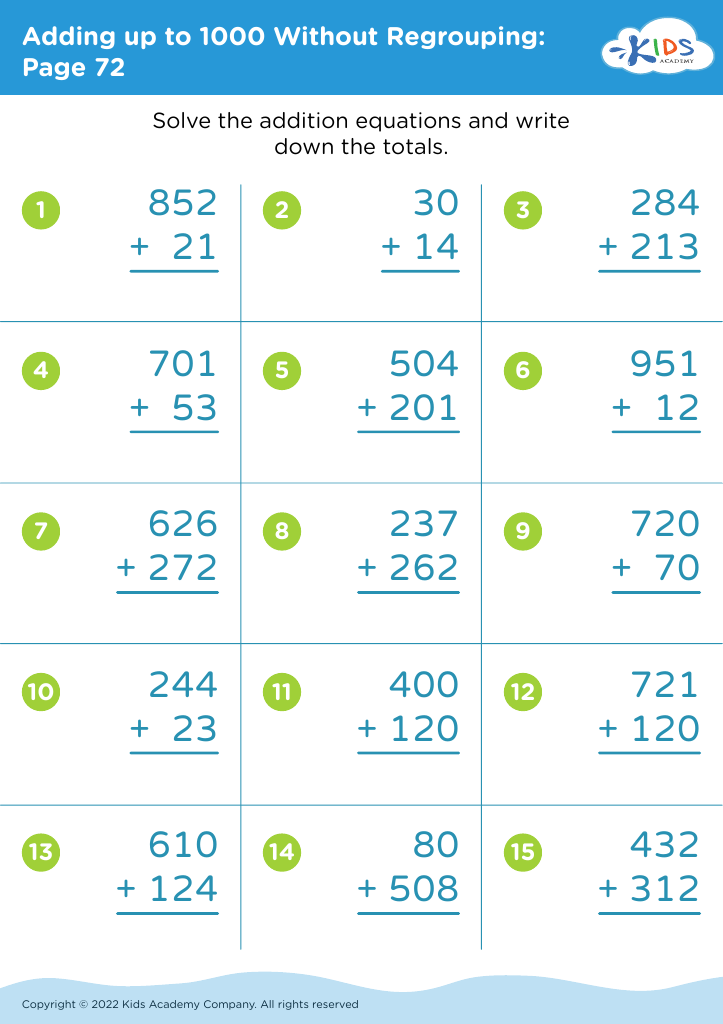
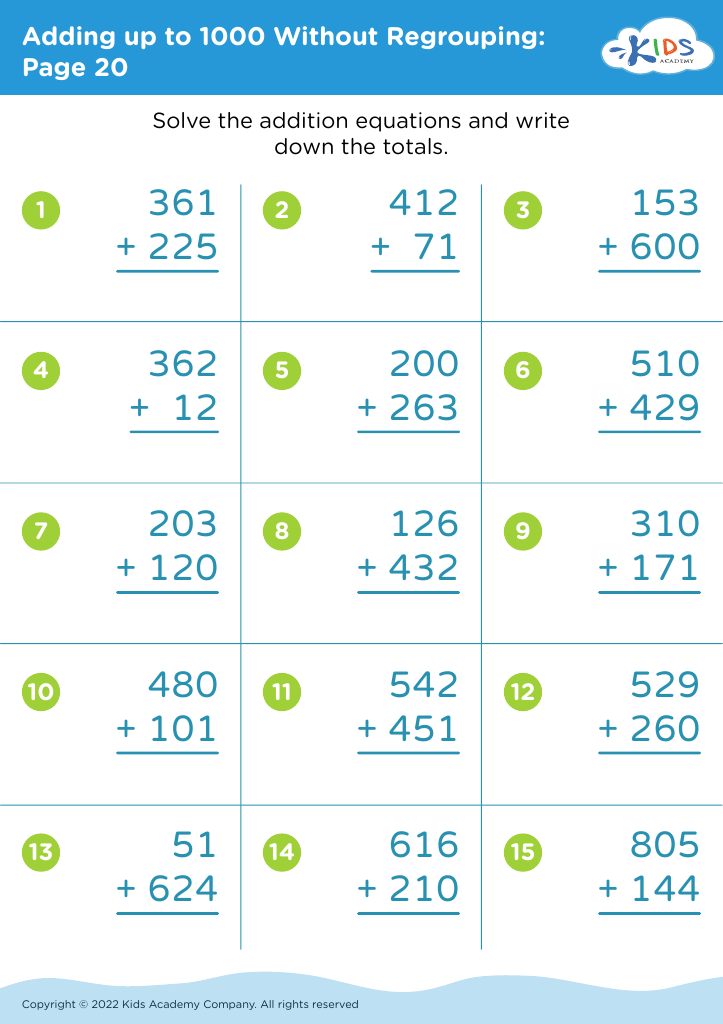
Discover an exciting way to enhance vocabulary skills with our "Learn New Vocabulary" worksheets for ages 7-9! Designed to complement the "Adding Up to 1000" curriculum, these engaging and colorful worksheets introduce essential math-related terms and concepts. By exploring vocabulary through interactive exercises, children develop a deeper understanding of mathematical language, boosting their confidence and comprehension in problem-solving. With a collection of 1000 thoughtfully crafted worksheets, kids will have endless opportunities to reinforce their learning, making math both educational and fun! Perfect for classroom use or home practice, these resources are essential for nurturing young learners' math skills and language development.
Favorites
With answer key
Interactive
Join Kids Academy for Free
Who is primarily going to use this learning content?



Parents and teachers should prioritize vocabulary development, especially for children ages 7-9, as it plays a crucial role in their overall education and communication skills. At this age, children are increasingly engaging with more complex texts and concepts, and a rich vocabulary enhances their reading comprehension, allowing them to understand and enjoy literature. Exposure to new words boosts their ability to express thoughts and feelings effectively, fostering both written and verbal communication skills necessary for academic success.
Building a vocabulary of up to 1000 words opens doors to critical thinking and strengthens cognitive skills. Children can articulate their ideas, ask questions, and participate in discussions that deepen their understanding of diverse subjects. Additionally, a strong vocabulary positively impacts standardized test performance, providing children with opportunities for advanced courses in later years.
Moreover, enriching vocabulary promotes confidence in social interactions, enabling children to navigate discussions with peers and adults. As language plays a fundamental role in socialization, a well-developed vocabulary can help cultivate friendships and connections. Ultimately, investing time in expanding vocabulary equips children with essential tools for lifelong learning, fostering curiosity and enabling them to engage fully in their educational journeys and personal lives.








