Recognizing shapes Adding up to 1000 Worksheets for Ages 7-9
8 filtered results
-
From - To
Discover a fun and engaging way to develop your child's math skills with our "Recognizing Shapes Adding up to 1000 Worksheets for Ages 7-9"! Designed to make learning exciting, our worksheets help children identify and differentiate various shapes while mastering addition up to 1000. Perfect for kids aged 7-9, these worksheets offer an excellent blend of visual shape recognition and arithmetic practice, keeping learners motivated and enhancing their problem-solving abilities. Download now to provide your child with a strong mathematical foundation and a love for learning!
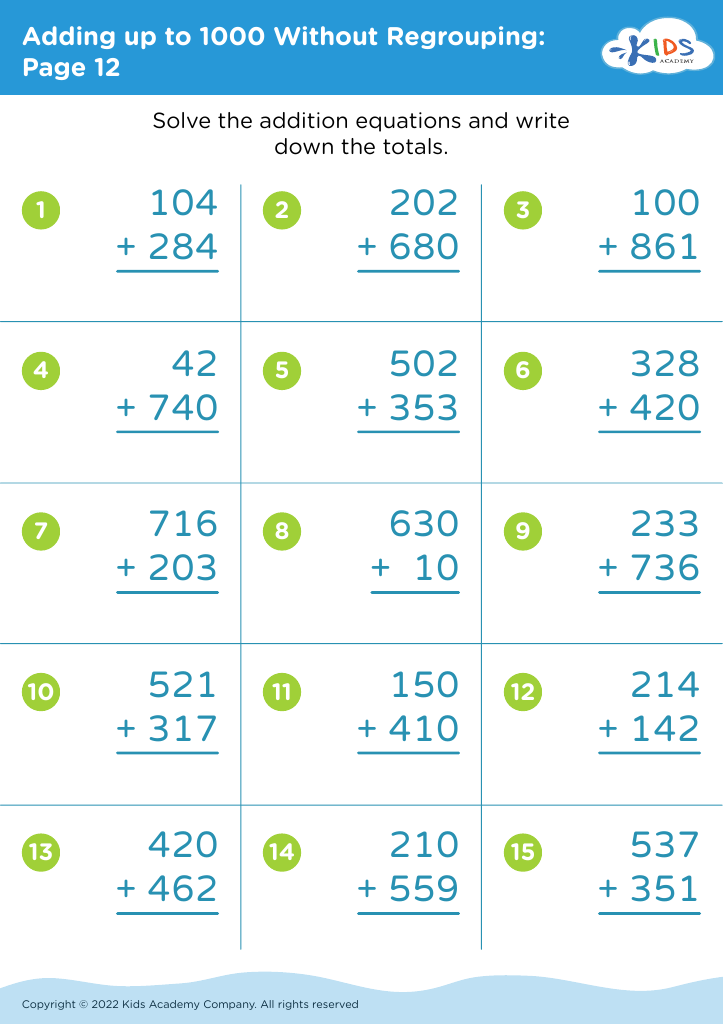
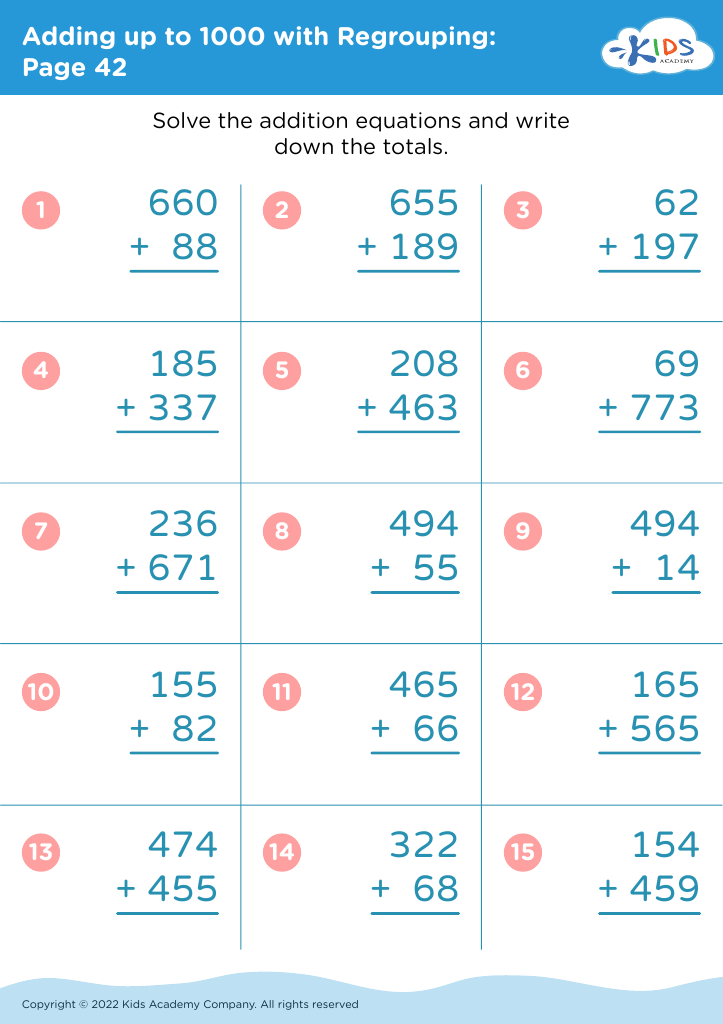
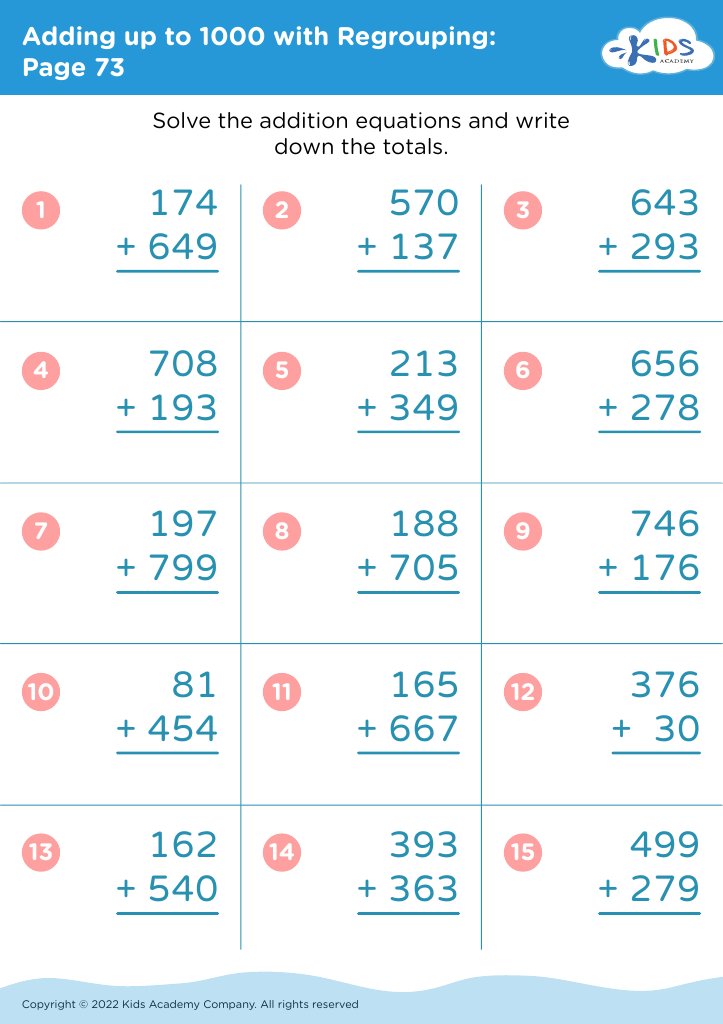
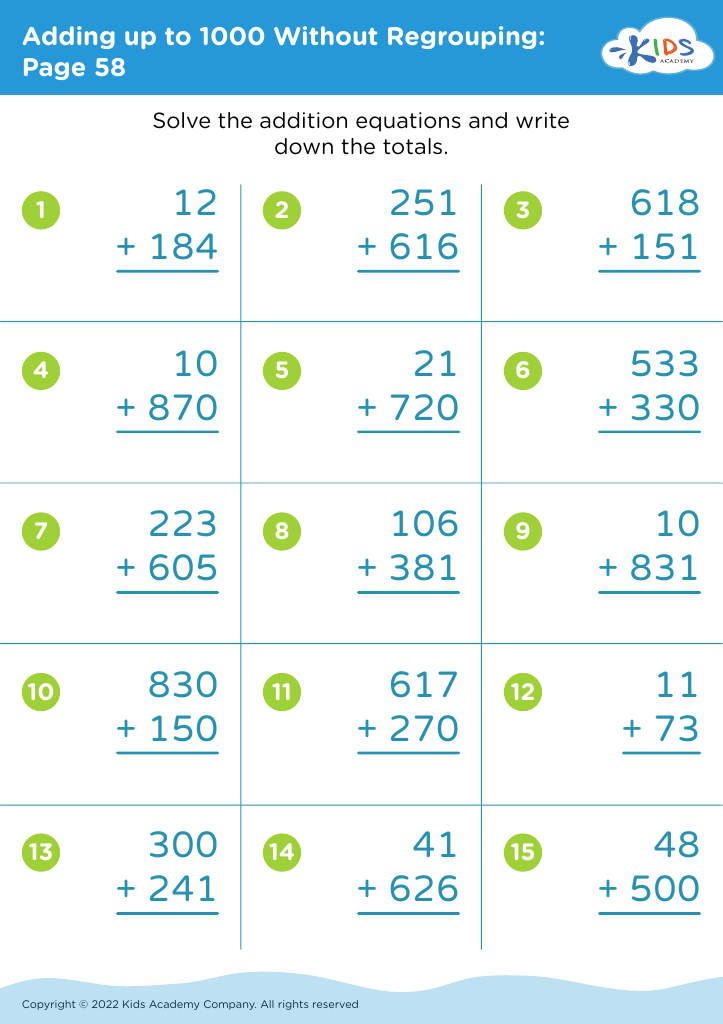
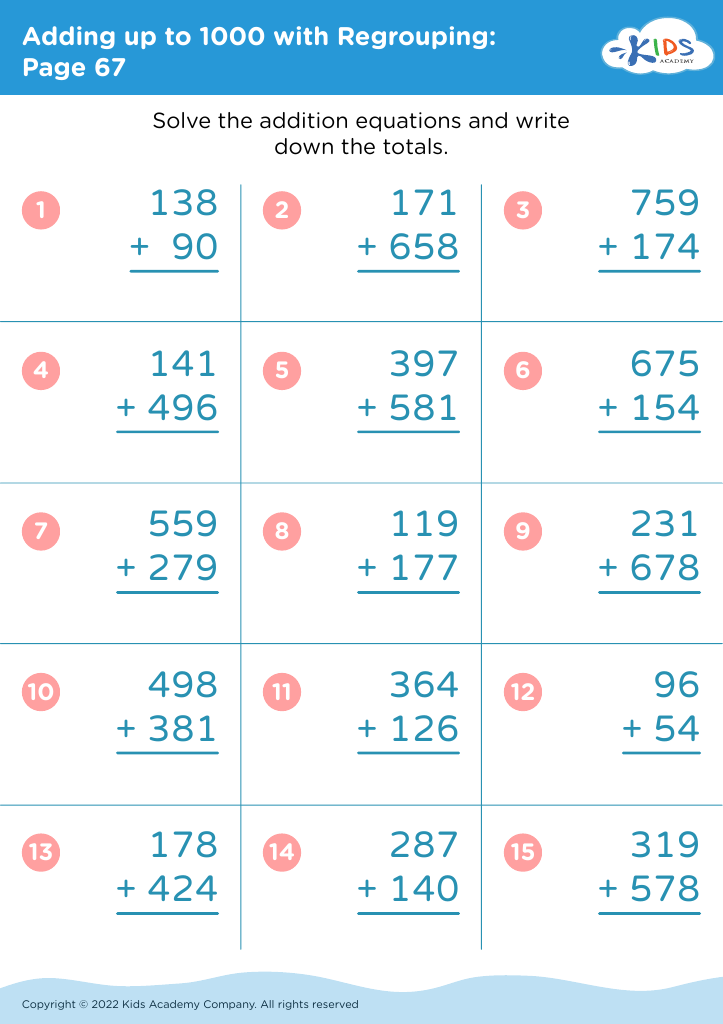
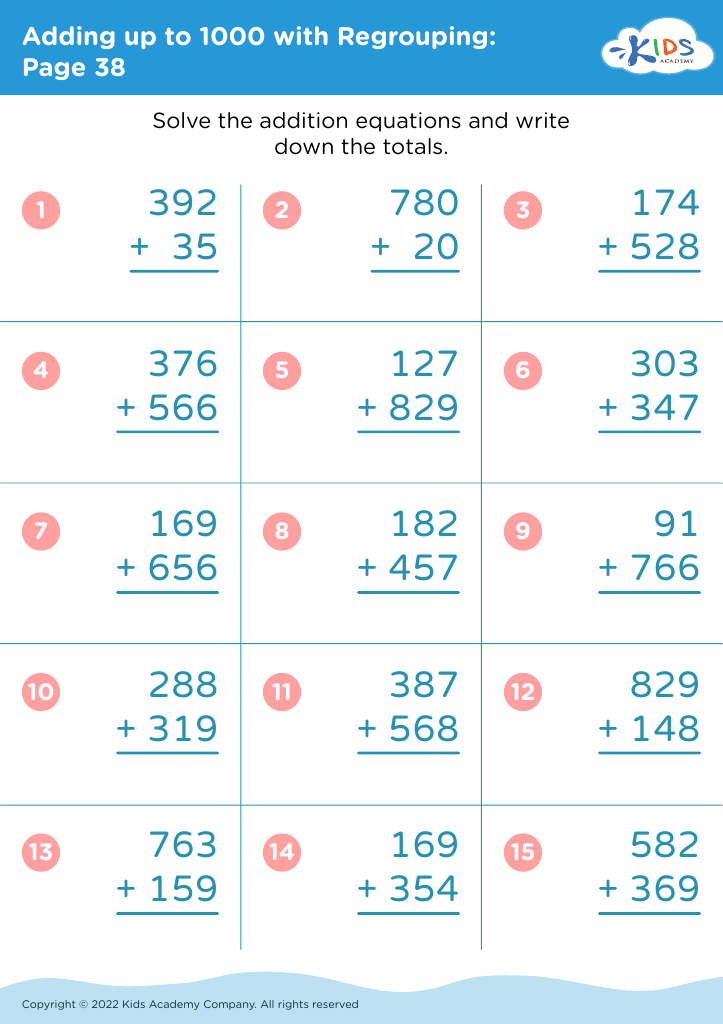
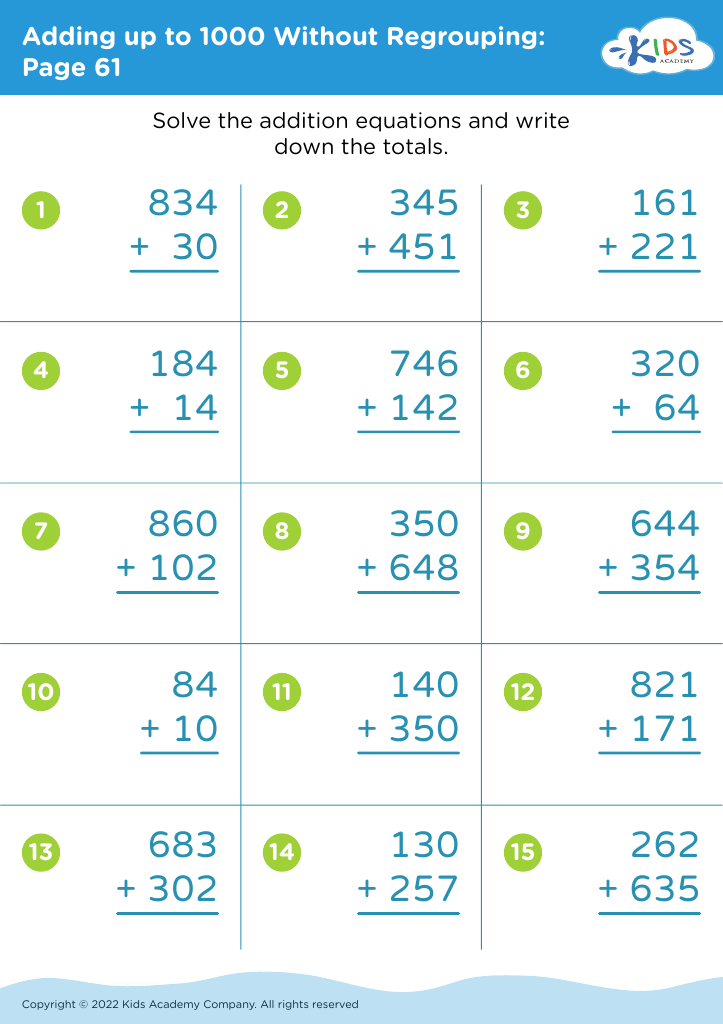
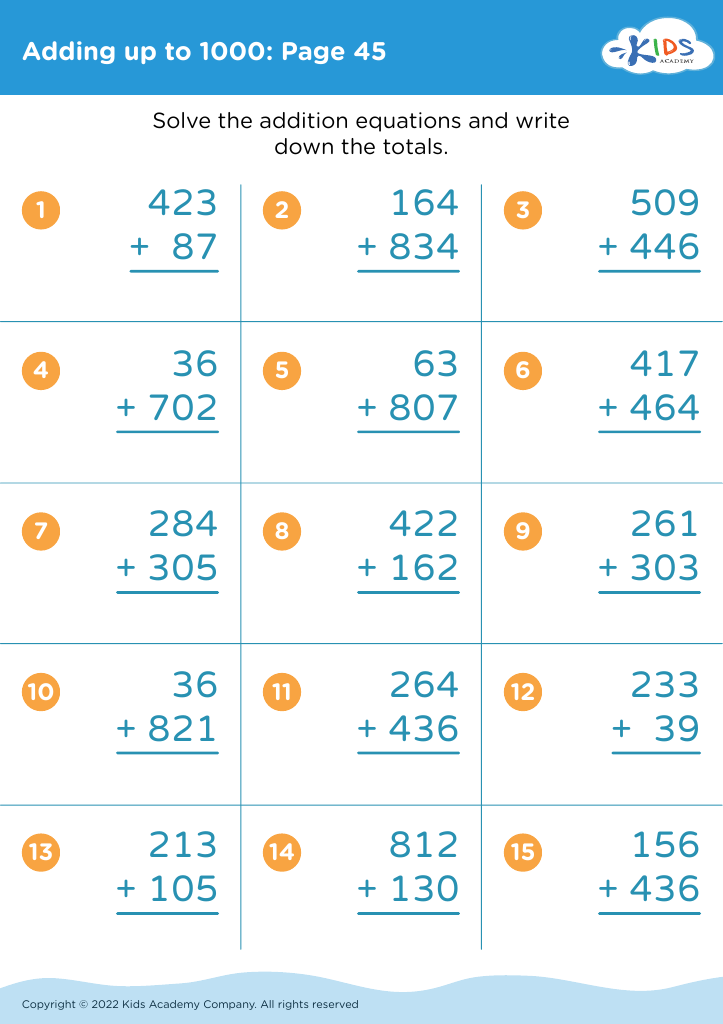



Recognizing shapes and adding up to 1000 are foundational skills that play crucial roles in a child's cognitive development for ages 7-9. For young learners, identifying shapes lays the groundwork for spatial awareness and geometry, allowing them to understand how objects relate to one another in space. This ability is not only vital in mathematics but also in everyday activities and fine motor skills. It supports the development of critical thinking by helping children discern patterns, symmetry, and structure in both natural and human-made environments.
Adding up to 1000 introduces elementary-level children to more complex arithmetic, crucial for their numerical literacy. This skill advances their understanding of number systems, place value, and the basics of addition and subtraction, which are essential for more complex math concepts they will encounter later in their education. It builds a solid foundation for problem-solving and logical reasoning.
By fostering these skills during the ages of 7-9, parents and teachers enable children to approach both academic and real-world challenges effectively and confidently. These early math competencies are not just academic milestones—they are deeply connected to daily life skills and cognitive development, supporting a child's ability to think critically, solve problems, and excel in a variety of future learning endeavors.








