Simplifying Fractions Adding up to 1000 Worksheets for Ages 7-9
6 filtered results
-
From - To
Introducing our "Simplifying Fractions Adding Up to 1000 Worksheets," specifically tailored for children aged 7-9. These engaging worksheets help young learners grasp the concept of simplifying fractions while enhancing their addition skills with numbers up to 1000. Each activity promotes critical thinking and encourages a strong foundation in mathematics, making complex concepts accessible and fun. With a variety of exercises, your child can practice simplifying fractions in a supportive, interactive environment. Perfect for home or classroom use, these worksheets aim to boost confidence and mastery in fundamental math concepts. Start your child’s math journey today!
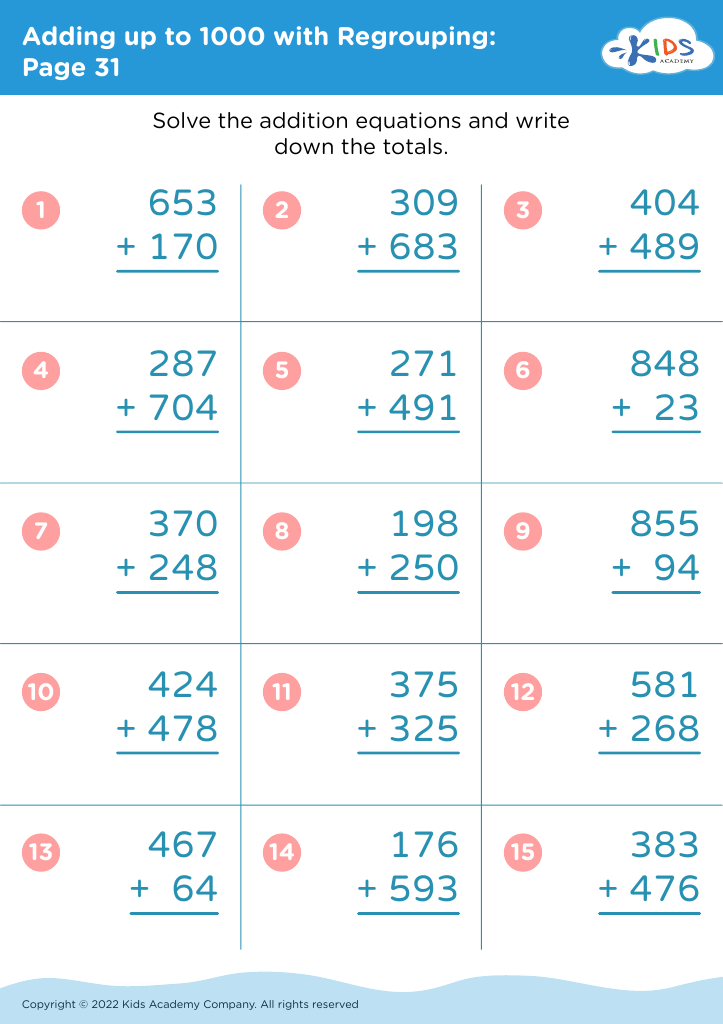
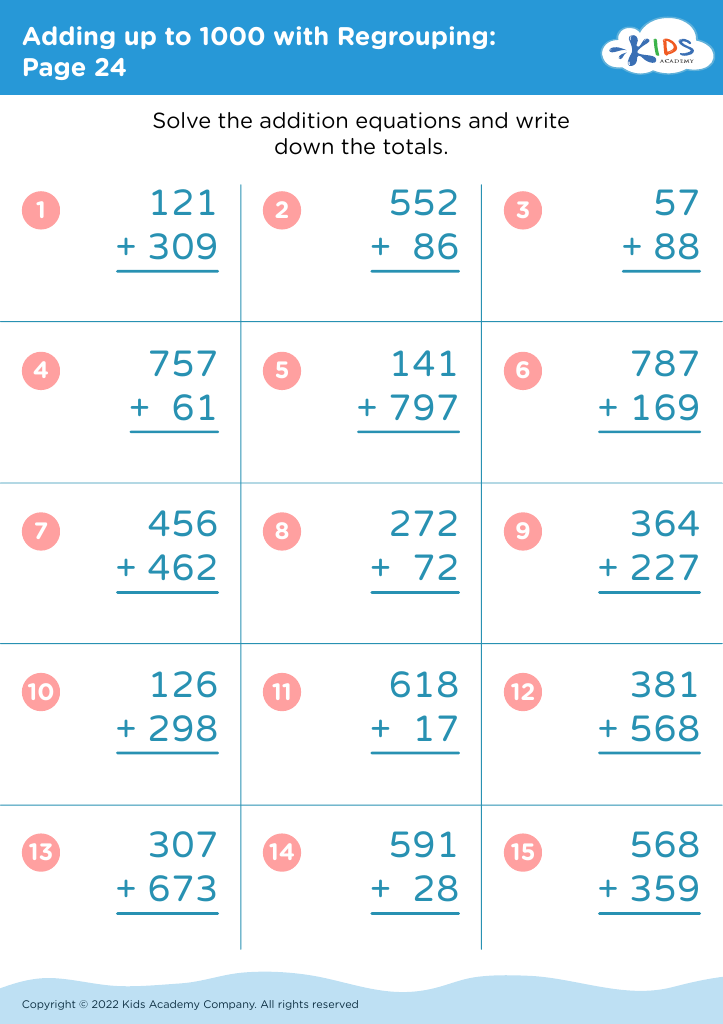
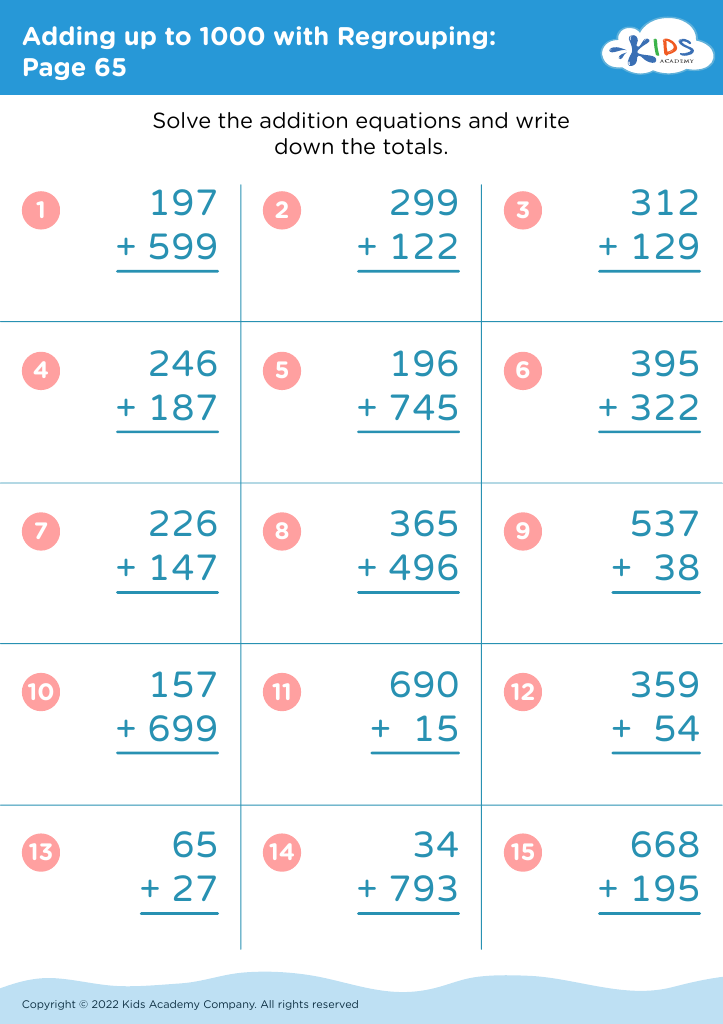
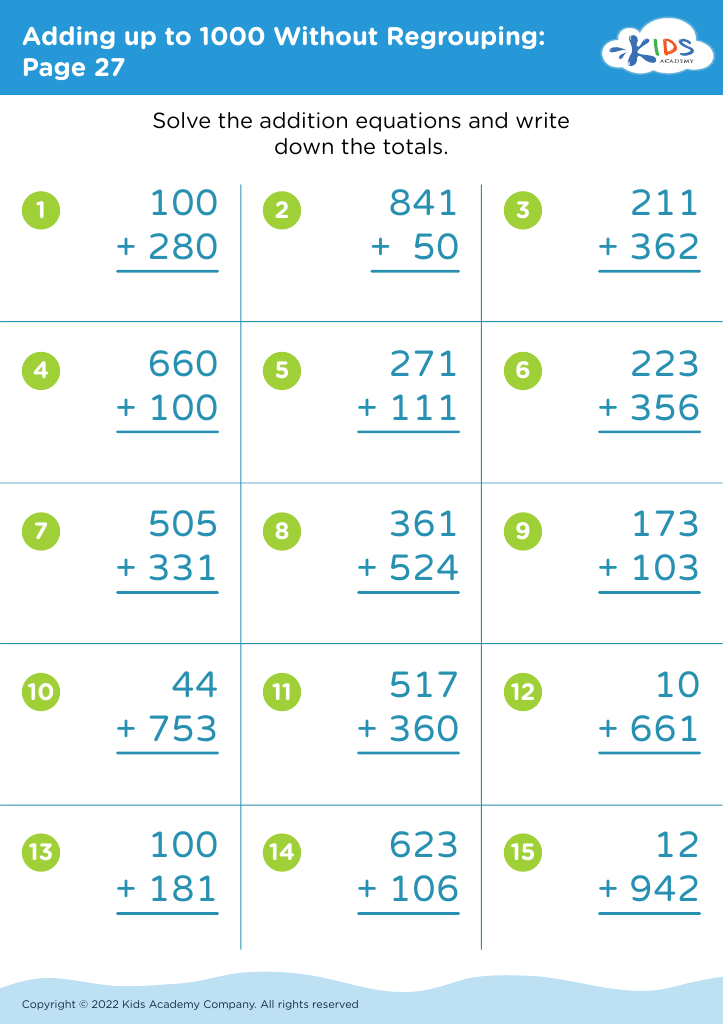
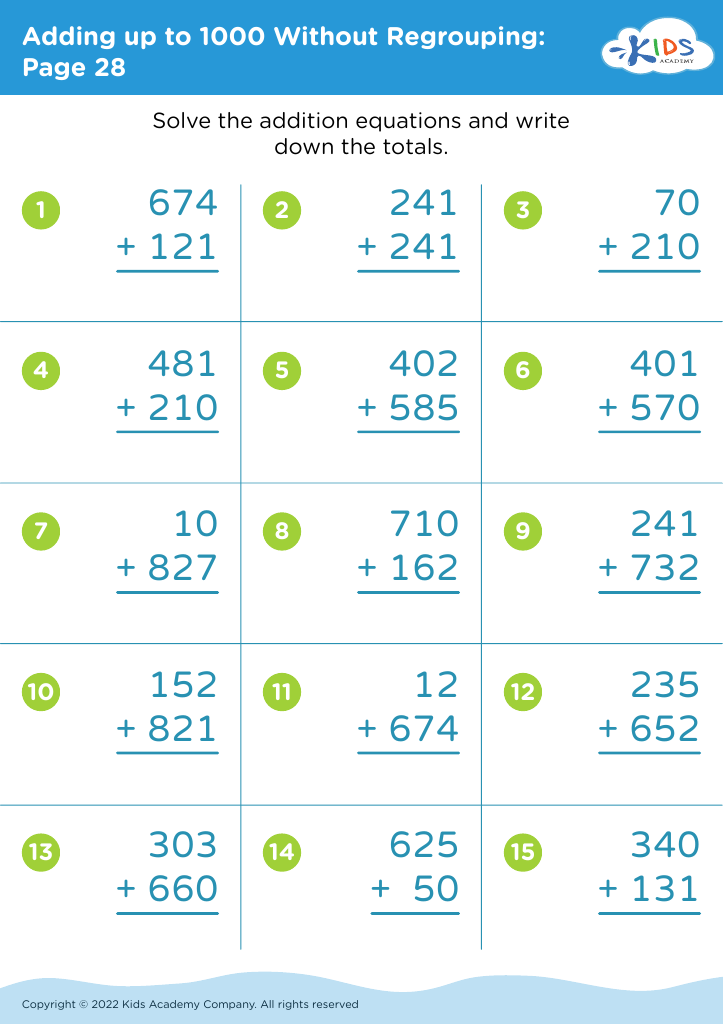
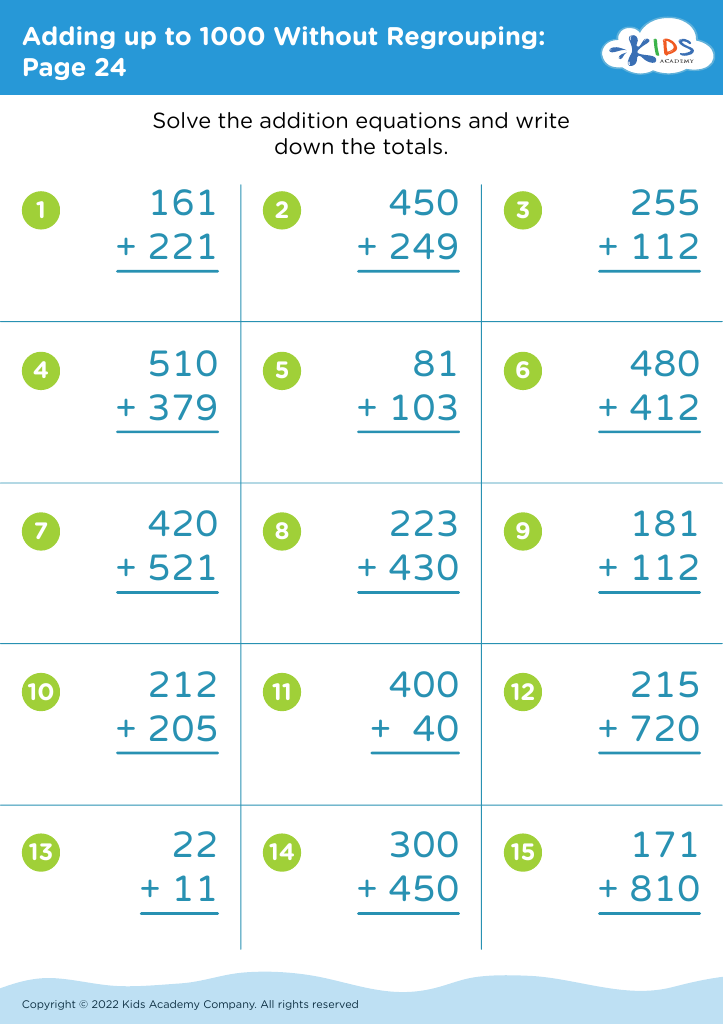



Simplifying fractions that sum to 1000 is an important skill for children aged 7-9 because it lays a strong mathematical foundation for their future academic pursuits. Understanding fractions fosters critical thinking by teaching children how to compare numbers, identify parts of a whole, and engage in logical reasoning. Simplifying helps learners grasp the concept of equivalence, solidifying their ability to manipulate numbers confidently.
Additionally, mastering this skill aligns with the core mathematical standards set for young learners, ensuring they develop a concrete understanding of fundamental math concepts. Learning to simplify fractions aids in the comprehension of more complex topics encountered in higher grades, such as ratios and proportions.
Furthermore, when parents or teachers emphasize simplification, they help students see how numbers work harmoniously together, enhancing their number sense. These skills are crucial not just in school but also for everyday activities, such as cooking, shopping, and budgeting, instilling practical life skills early on.
Ultimately, encouraging young learners to master fractions opens doors to a world of opportunities and equips them with the tools they need for success in both mathematics and real-life situations. By caring about this aspect of education, parents and teachers are investing in their future understanding and enjoyment of math.








