Filters

44 filtered results

Clear all filters
Favorites
With answer key
Interactive

44 filtered results

Difficulty Level

Grade


Check out this FREE Trial Lesson on Adding up to 1000 for age 7-9!

P

Favorites
With answer key
Interactive
  • 7-9
  • Understanding fractions
  • Adding up to 1000
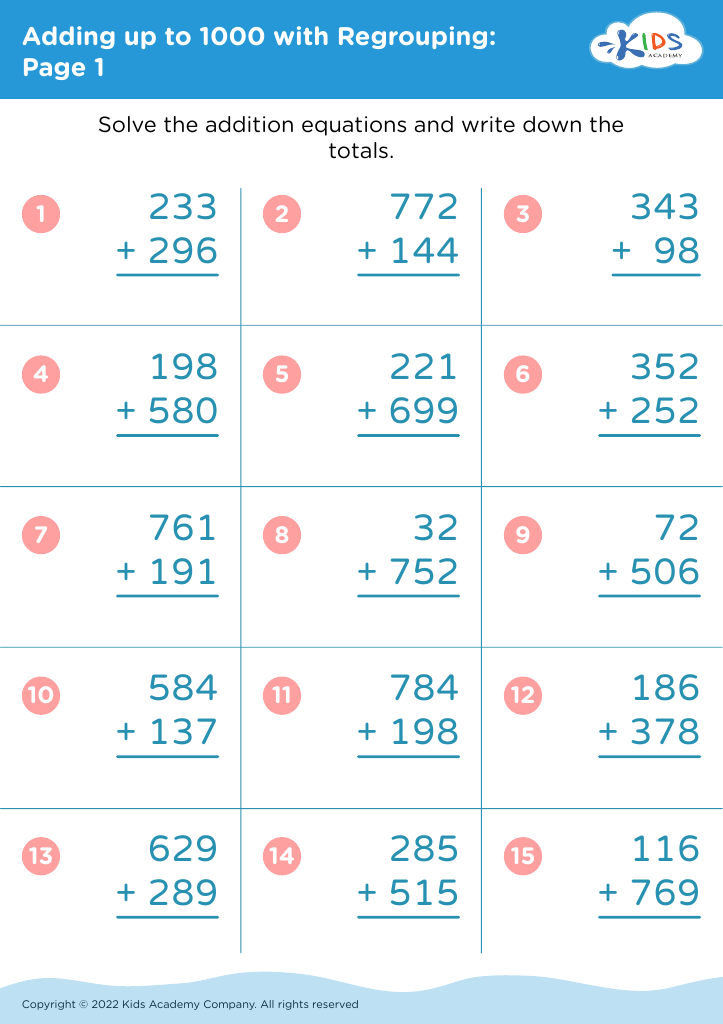
Adding up to 1000 with Regrouping: Page 1
Worksheet
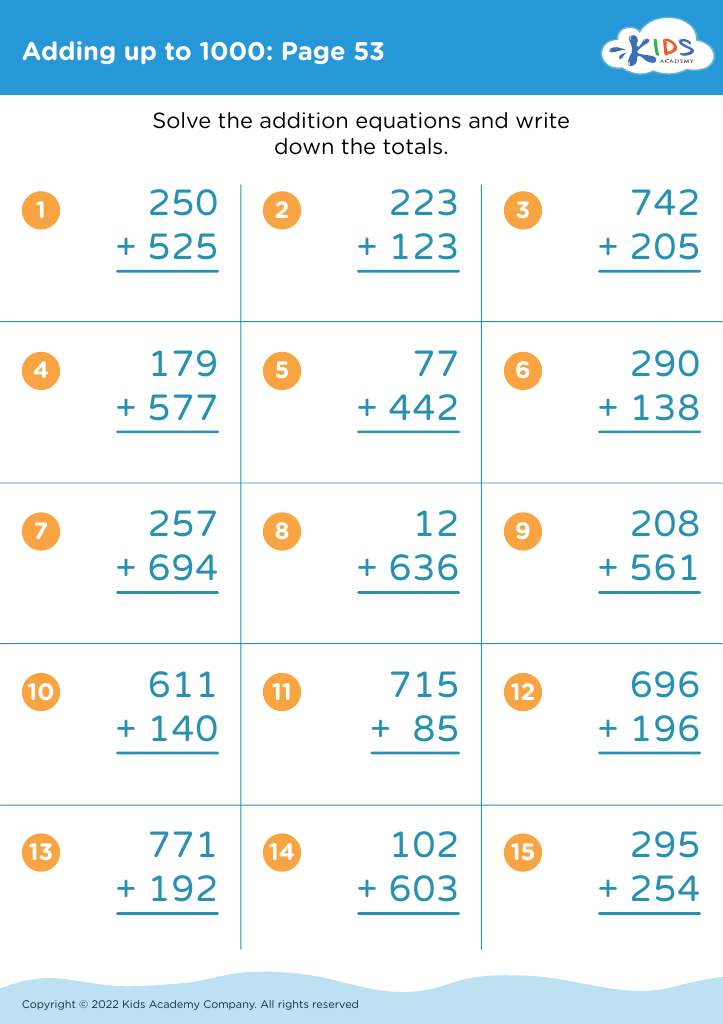
Adding up to 1000: Page 53

Adding up to 1000: Page 53

Adding up to 1000: Page 53
Worksheet
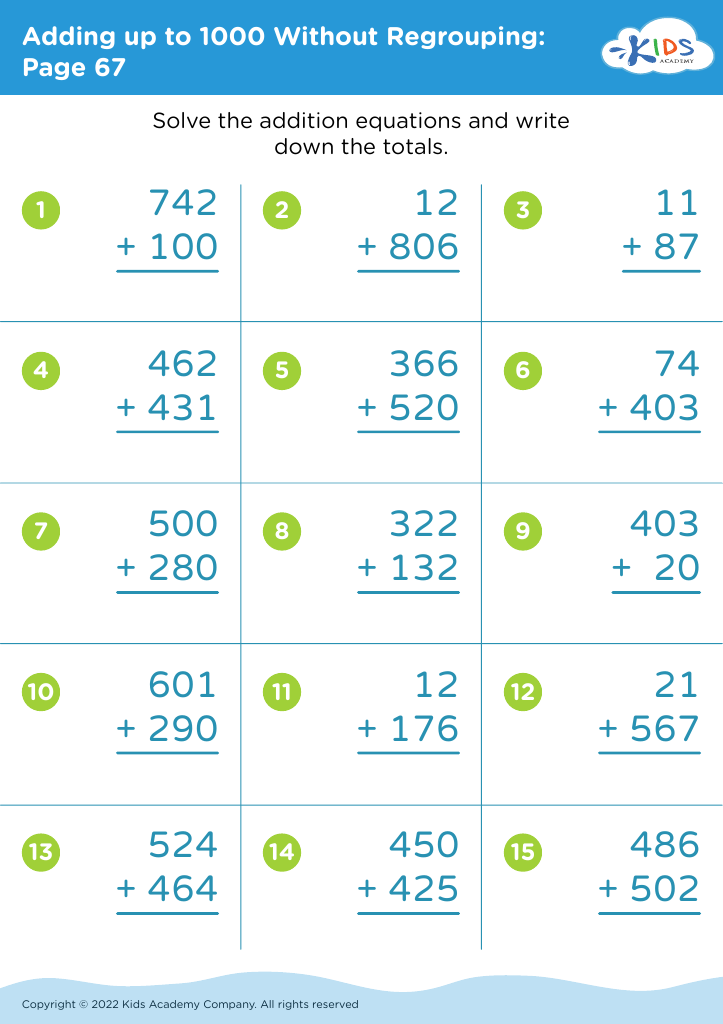
Adding up to 1000 Without Regrouping: Page 67
Worksheet
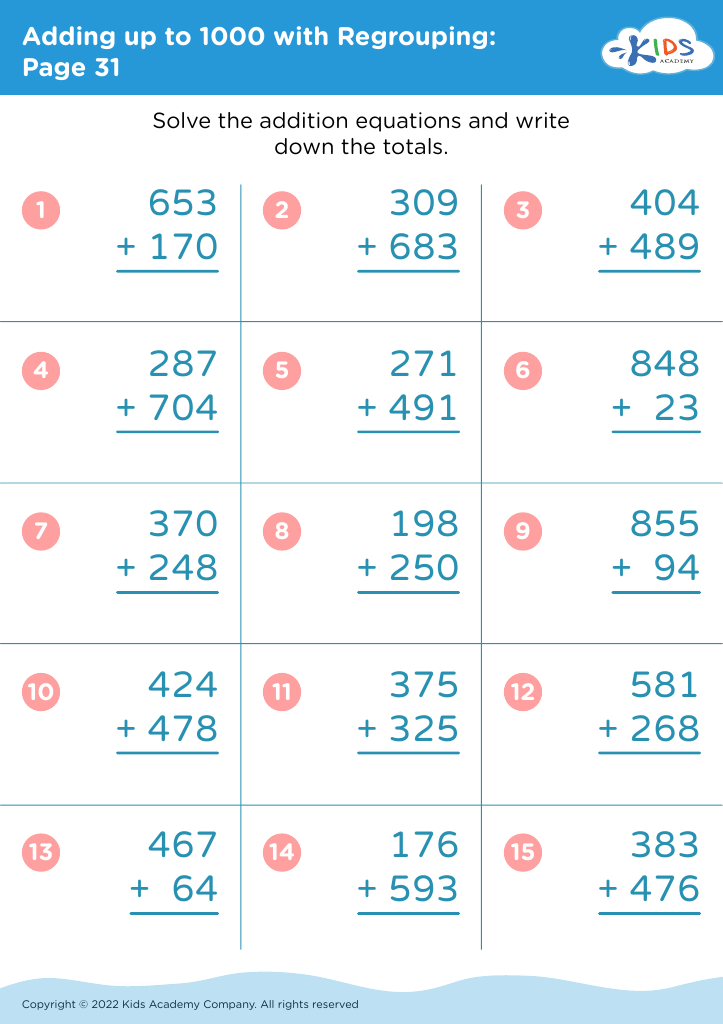
Adding up to 1000 with Regrouping: Page 31
Worksheet
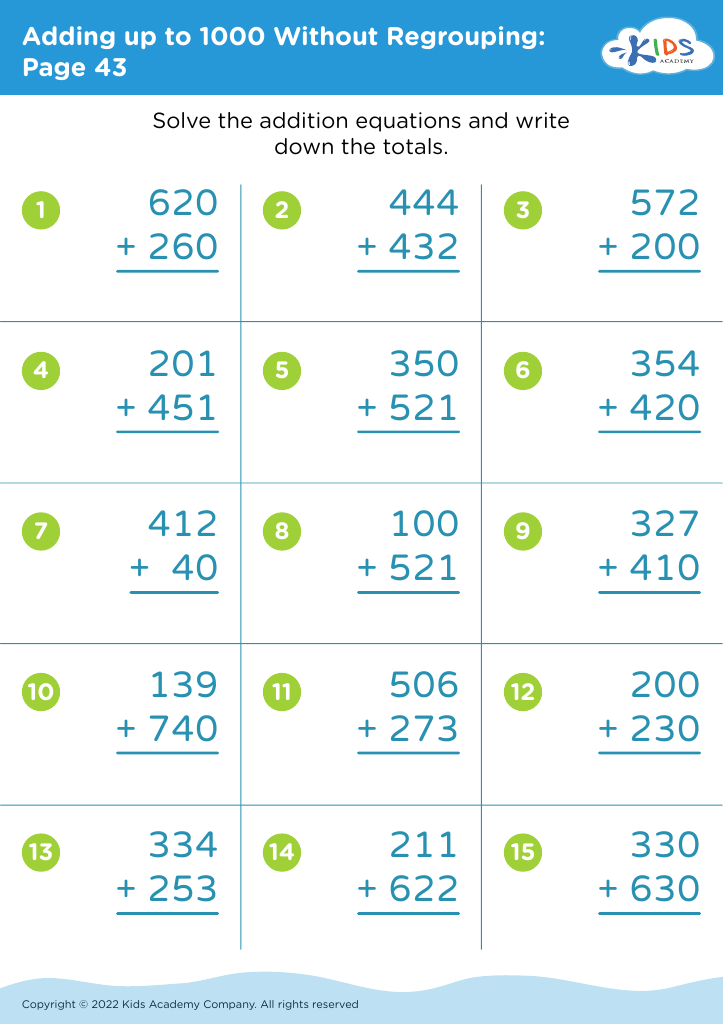
Adding up to 1000 Without Regrouping: Page 43
Worksheet
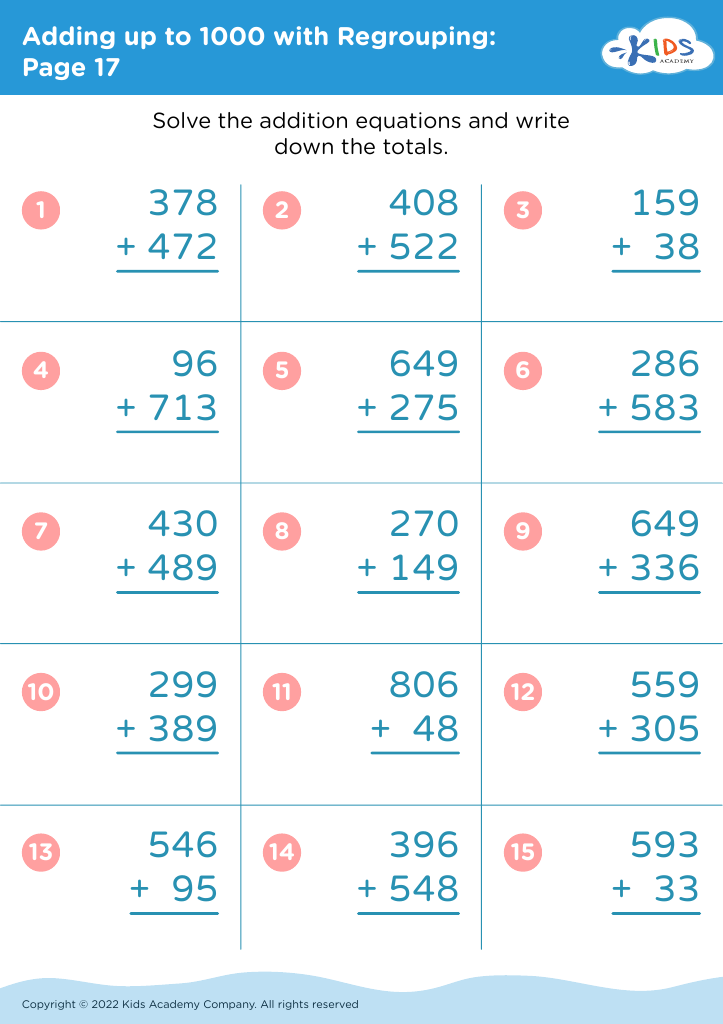
Adding up to 1000 with Regrouping: Page 17
Worksheet
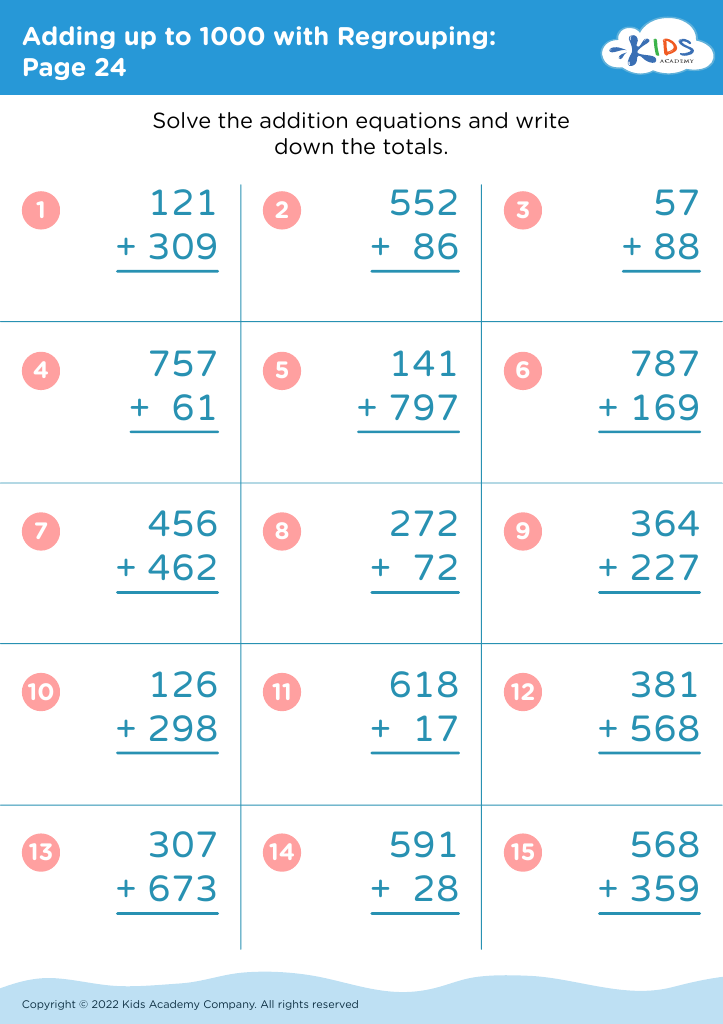
Adding up to 1000 with Regrouping: Page 24
Worksheet
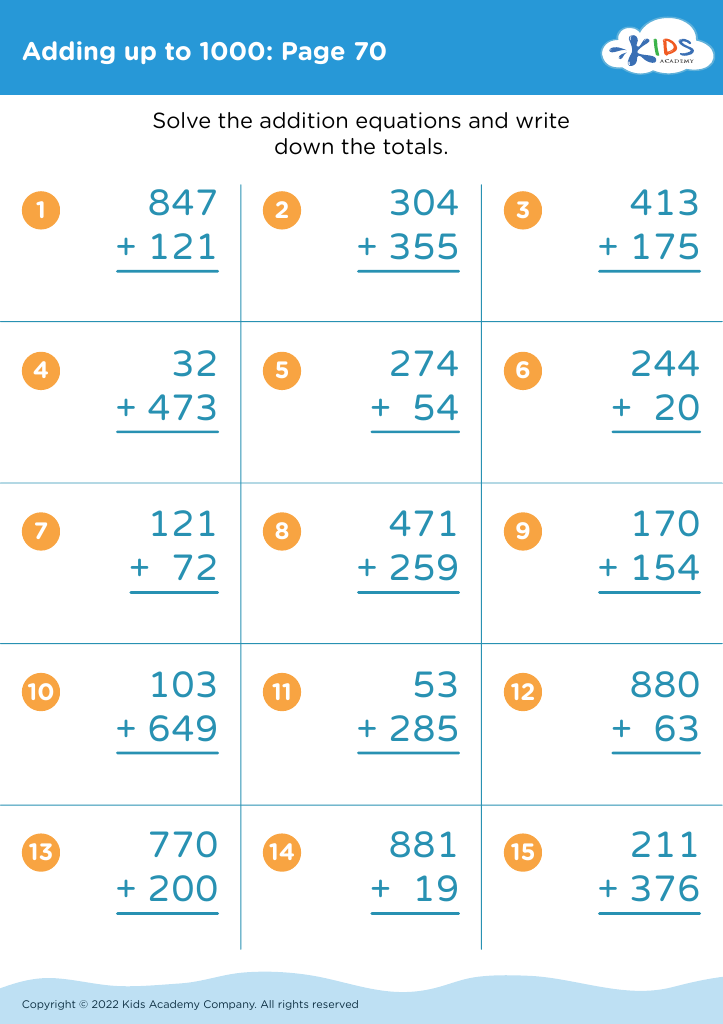
Adding up to 1000: Page 70

Adding up to 1000: Page 70

Adding up to 1000: Page 70
Worksheet
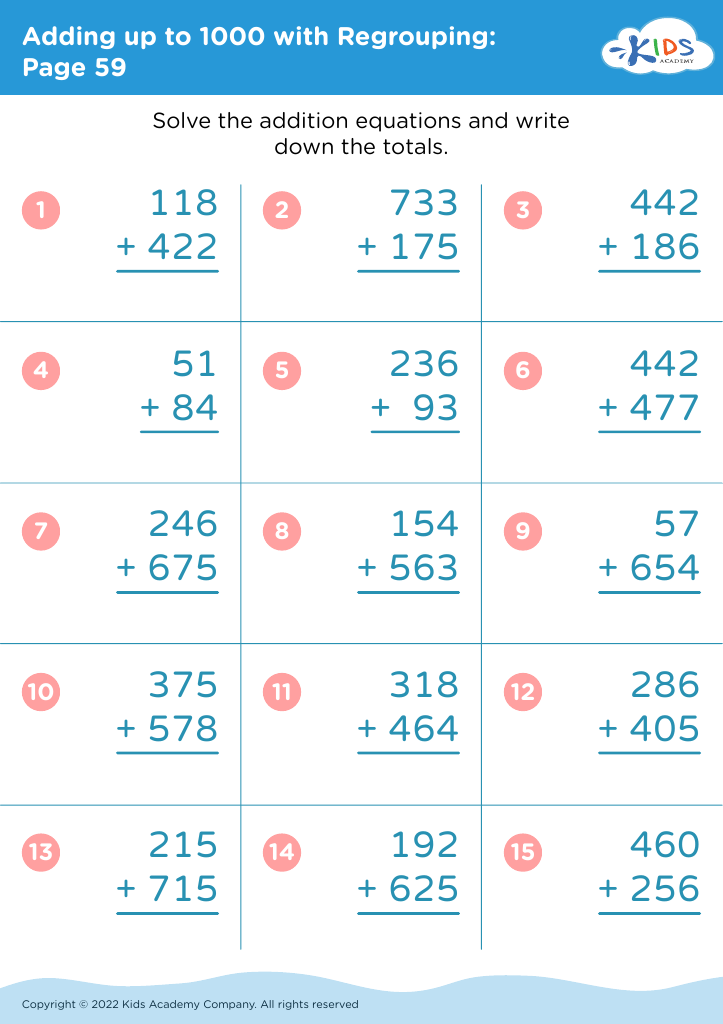
Adding up to 1000 with Regrouping: Page 59
Worksheet
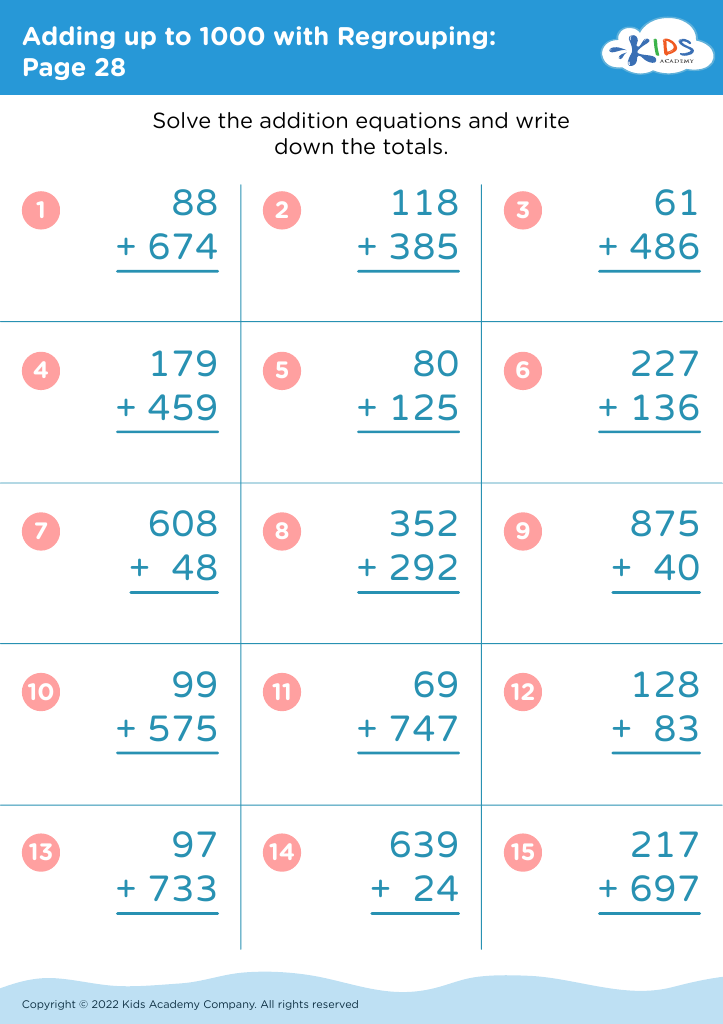
Adding up to 1000 with Regrouping: Page 28
Worksheet
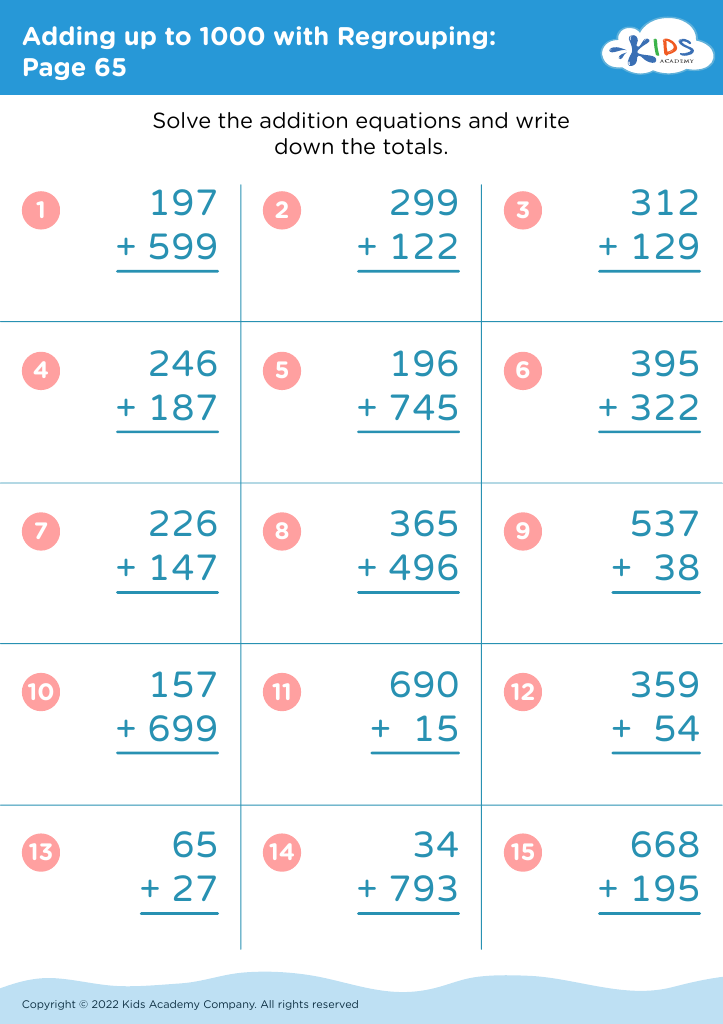
Adding up to 1000 with Regrouping: Page 65
Worksheet
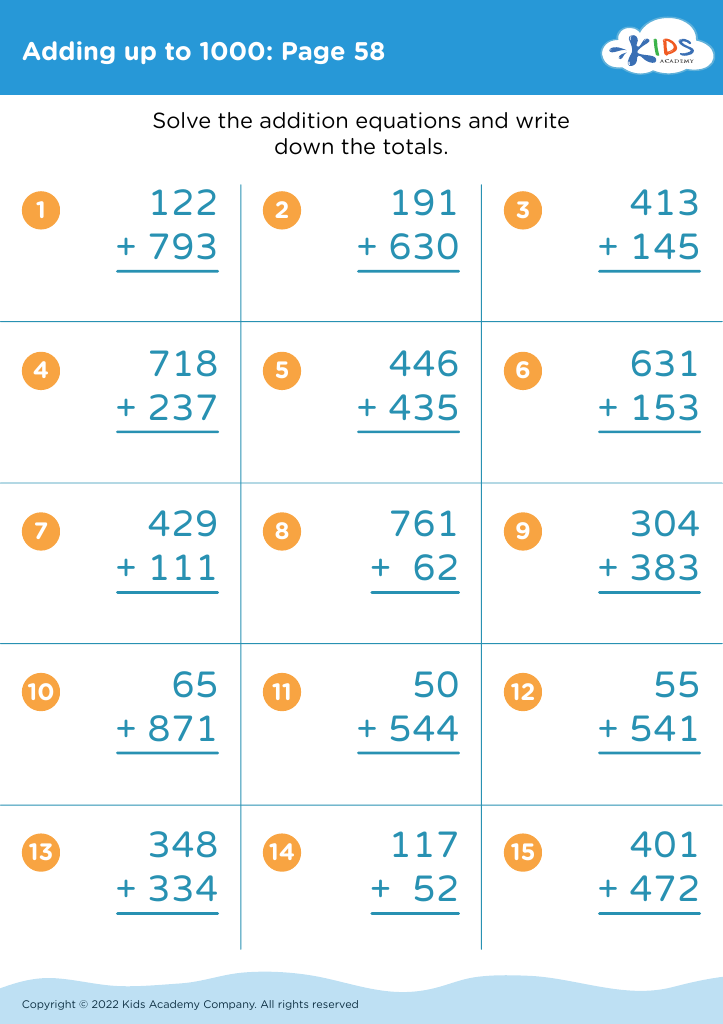
Adding up to 1000: Page 58

Adding up to 1000: Page 58

Adding up to 1000: Page 58
Worksheet
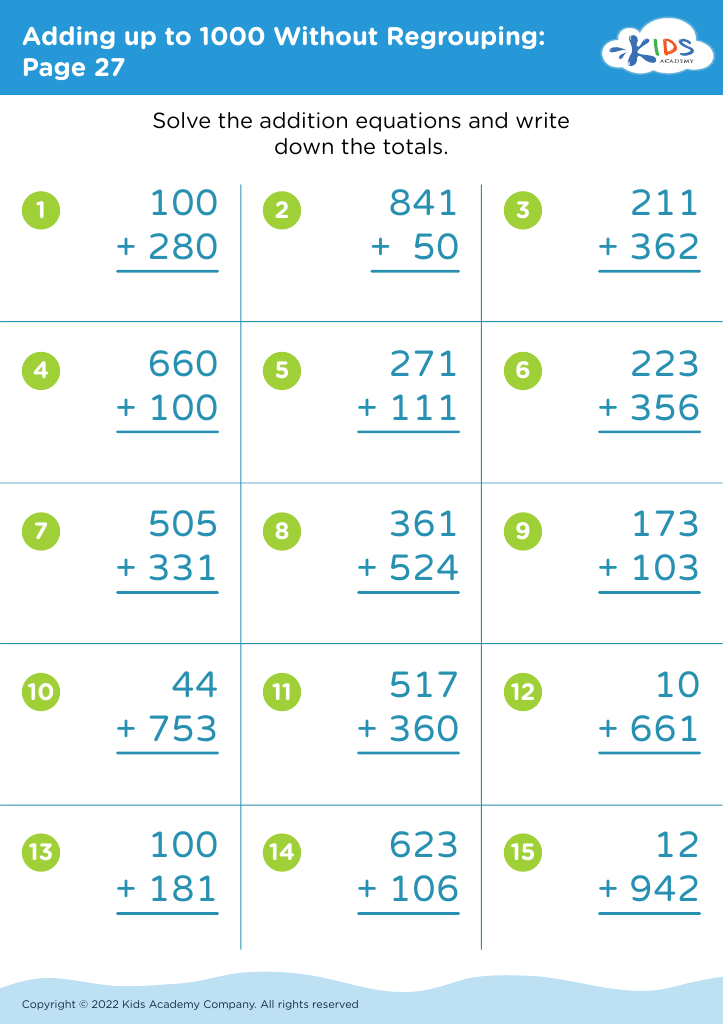
Adding up to 1000 Without Regrouping: Page 27
Worksheet
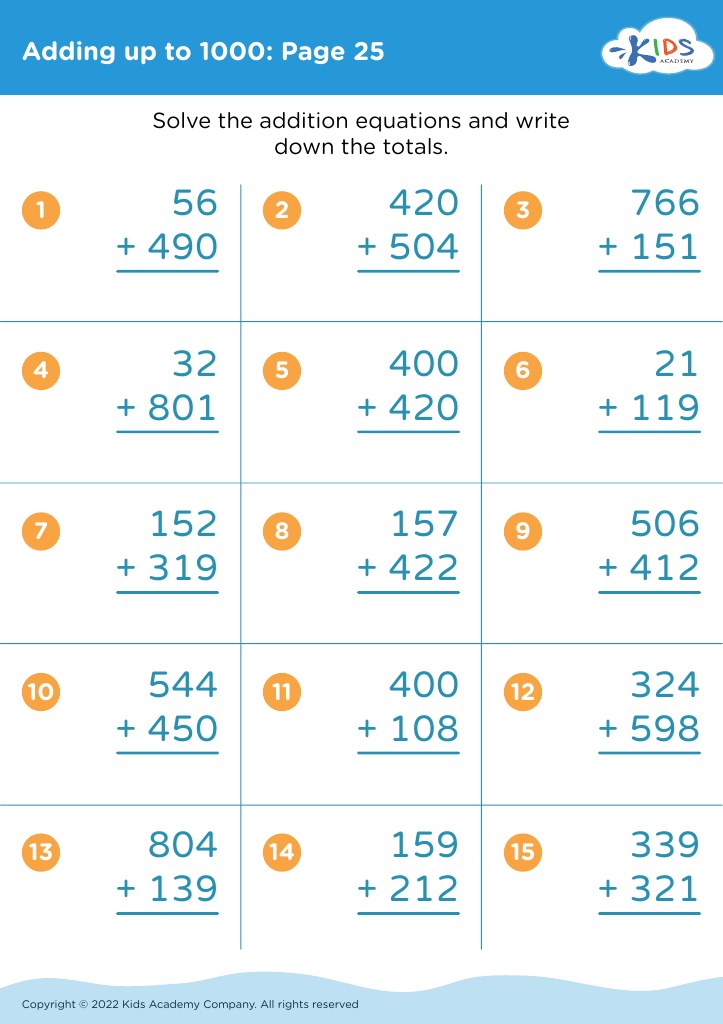
Adding up to 1000: Page 25

Adding up to 1000: Page 25

Adding up to 1000: Page 25
Worksheet
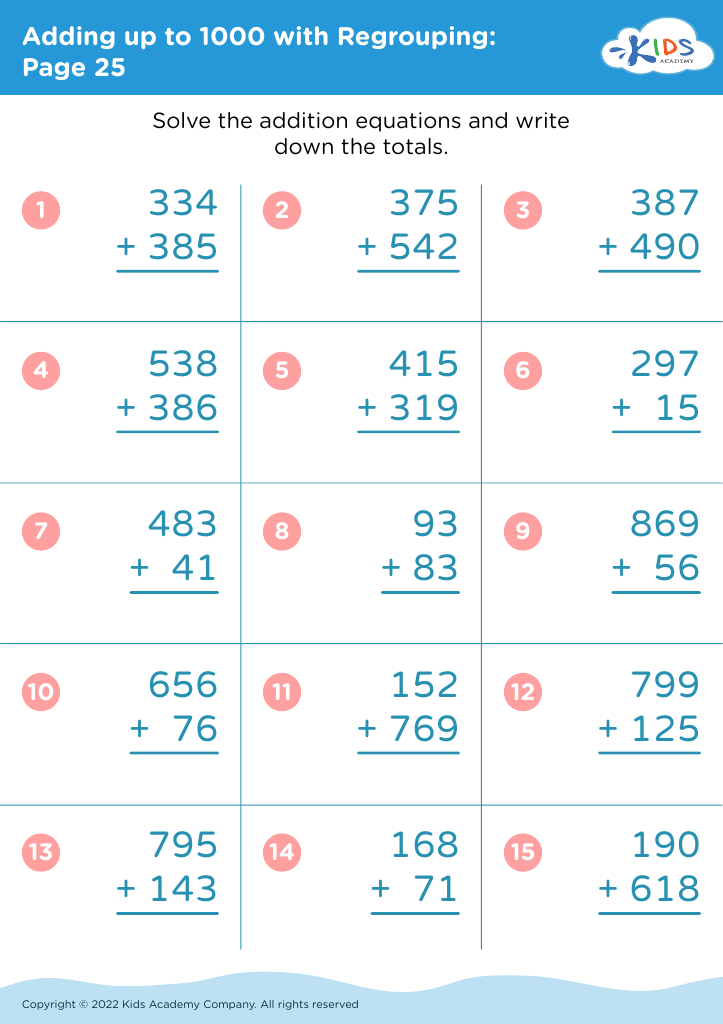
Adding up to 1000 with Regrouping: Page 25
Worksheet
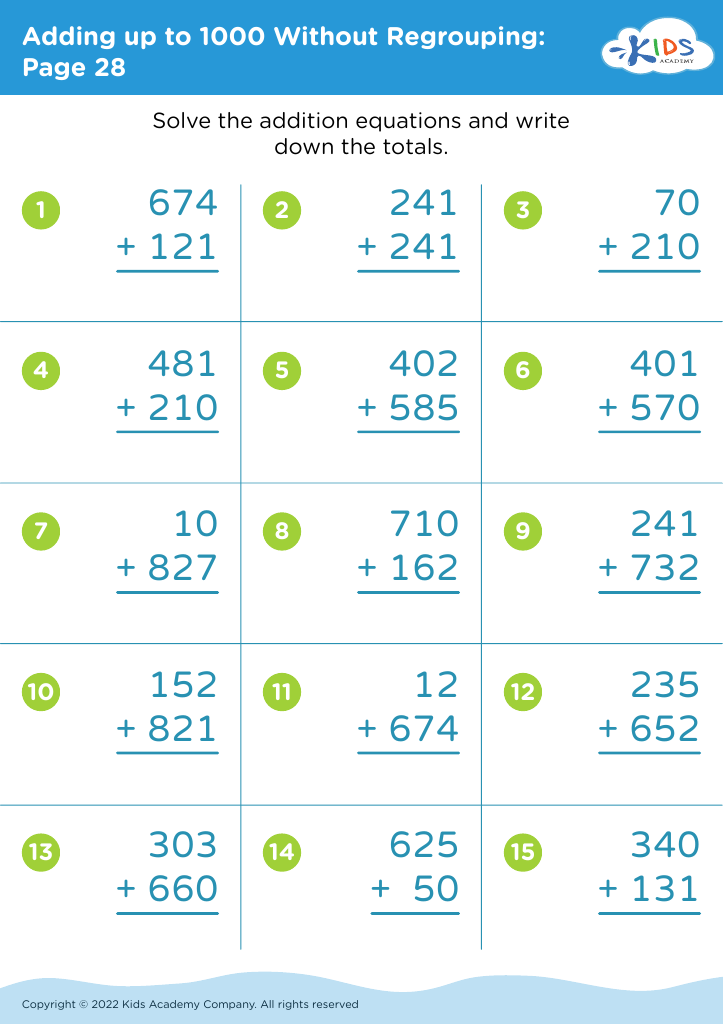
Adding up to 1000 Without Regrouping: Page 28
Worksheet
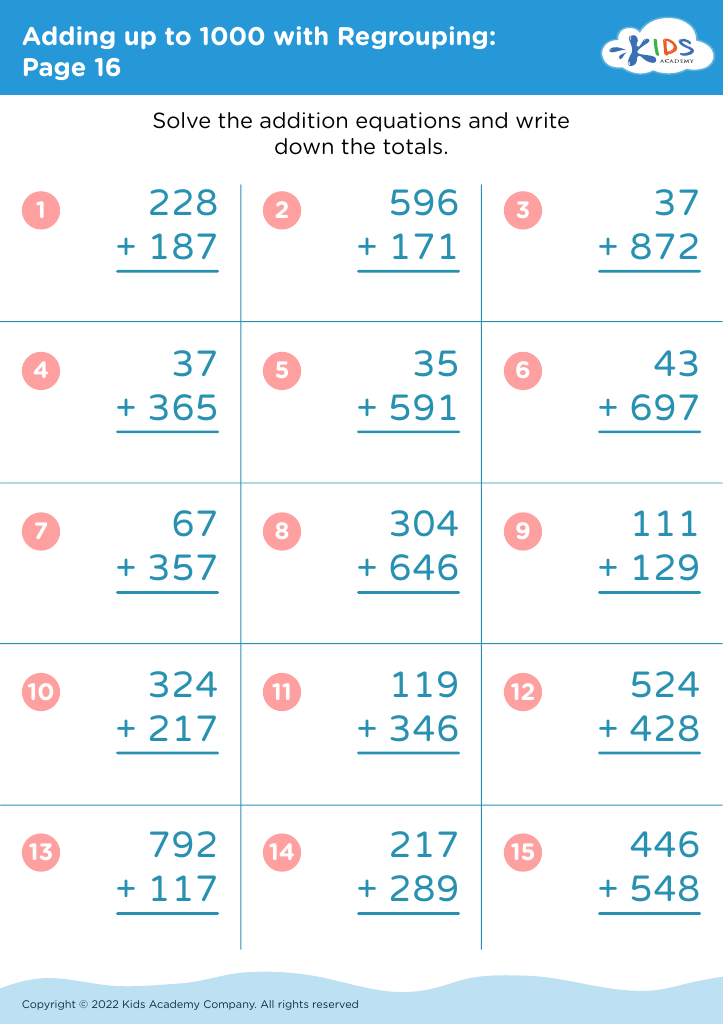
Adding up to 1000 with Regrouping: Page 16
Worksheet
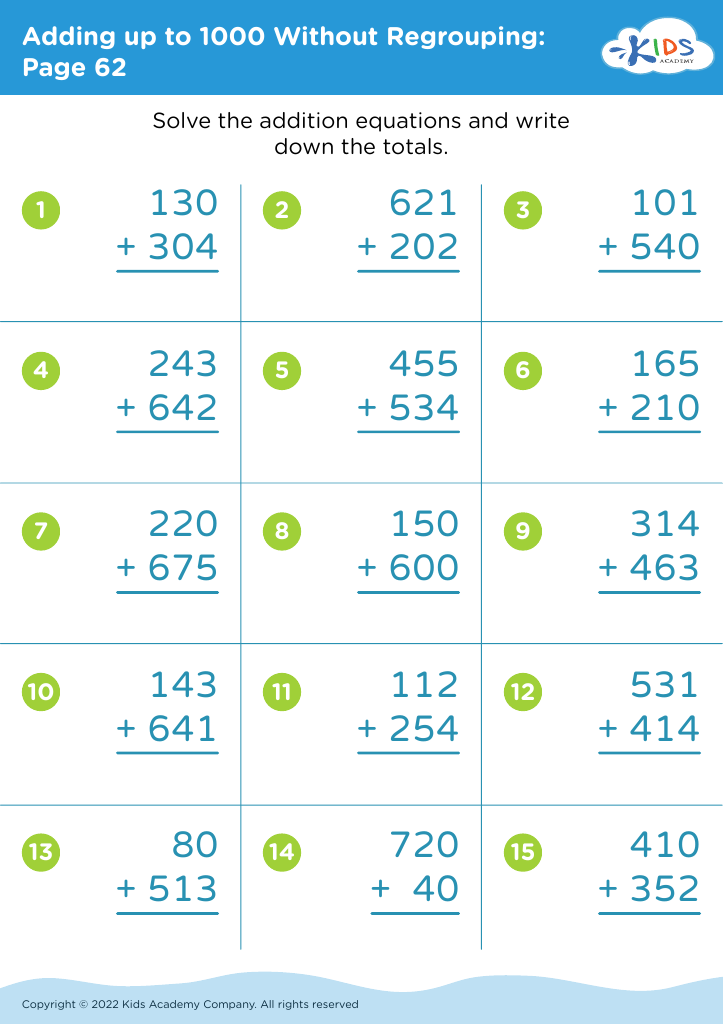
Adding up to 1000 Without Regrouping: Page 62
Worksheet
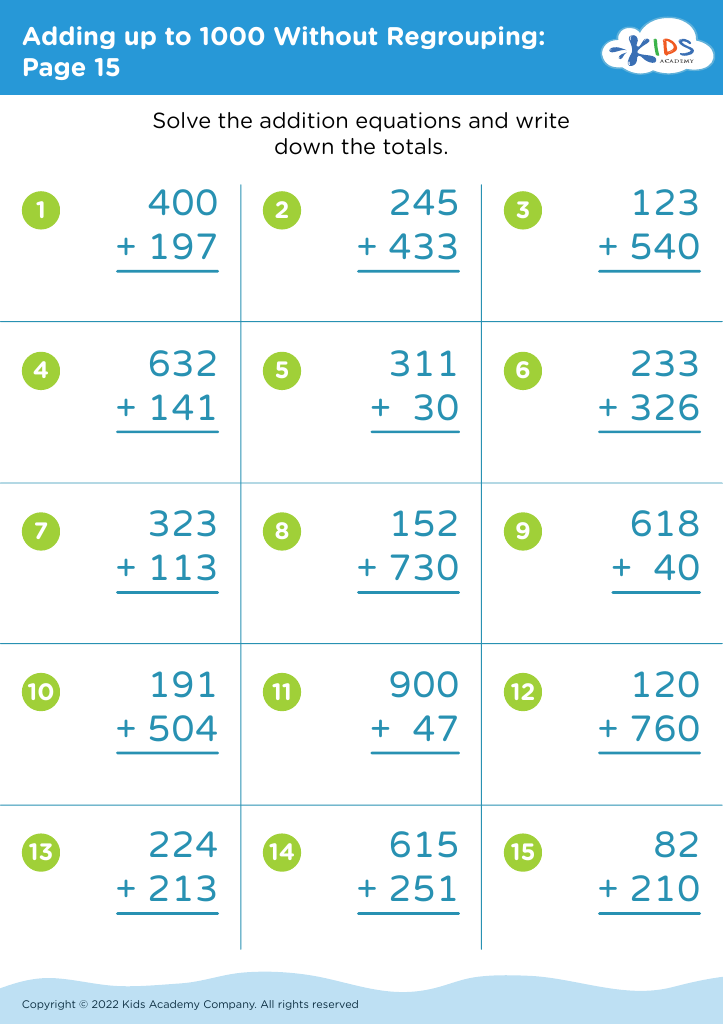
Adding up to 1000 Without Regrouping: Page 15
Worksheet
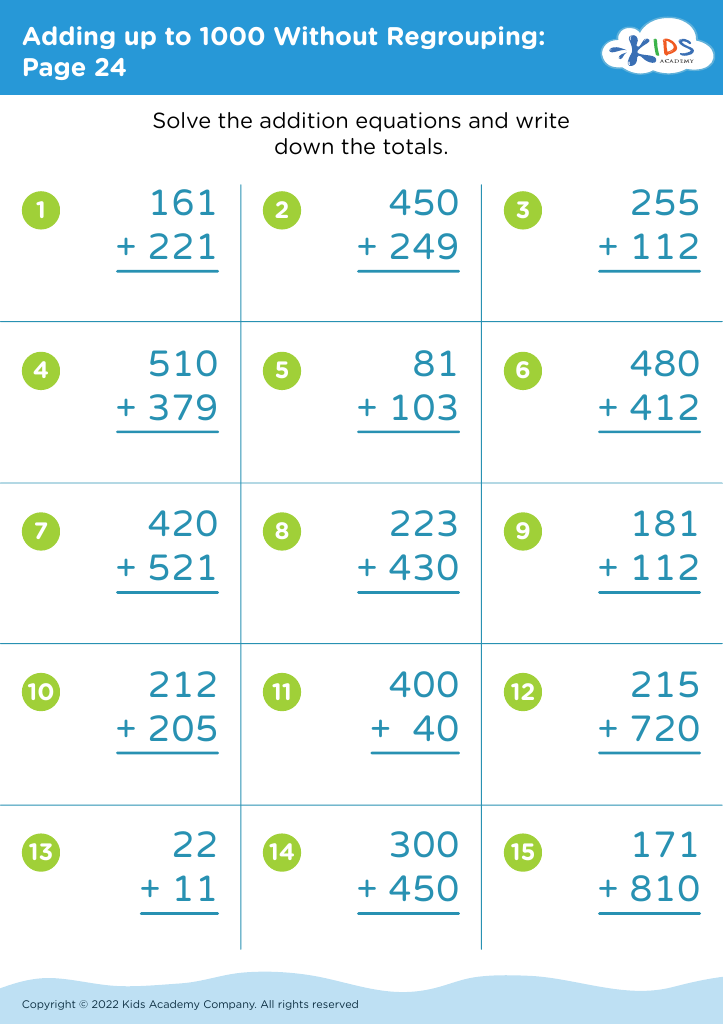
Adding up to 1000 Without Regrouping: Page 24
Worksheet


Understanding fractions is crucial for children aged 7-9 as it builds a foundational skill needed for mathematical proficiency and real-life problem-solving. For one, learning fractions helps kids grasp the concept of parts and wholes, which is essential not just in math, but also in understanding everyday phenomena, such as cutting a pizza into slices or dividing a bag of candies among friends. Furthermore, fractions are a stepping-stone to more complex mathematical ideas, such as decimals and percentages, which they will encounter later in their education.

Adding fractions plays a significant role in teaching children about number sense and the flexibility of numbers. They become adept at seeing that there are multiple ways to represent the same value, which fosters a deeper understanding of mathematics. Practice with adding fractions up to 1000 also reinforces their skills in arithmetic and critical thinking, making them more comfortable and creative with numbers.

Educators and parents should pay attention to teaching these concepts because early mastery supports academic success in multiple subjects, particularly science and engineering, which heavily rely on mathematics. Moreover, fostering these skills at an early age promotes cognitive development, aiding children in becoming logical thinkers, better problem-solvers, and more confident in their own abilities.