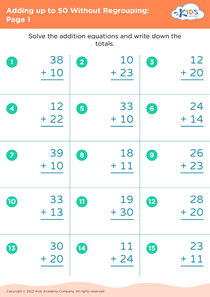
Comparing Fractions Adding up to 50 with Regrouping Worksheets for Ages 7-9
12 filtered results
-
From - To
Enhance your child’s math skills with our Comparing Fractions Adding up to 50 with Regrouping Worksheets for ages 7-9. These expertly designed exercises help young learners tackle the fundamentals of fractions and regrouping additions in an engaging way. Each worksheet provides practice in real-life math problems, encouraging analytical thinking and precision. Perfect for classroom activities or extra homework, our worksheets encourage students to compare different fractions and enhance their understanding through visual fractions and clever regrouping techniques. Set your child on the path to mathematical proficiency with these fun and educational resources. Download today and start learning the fun way!
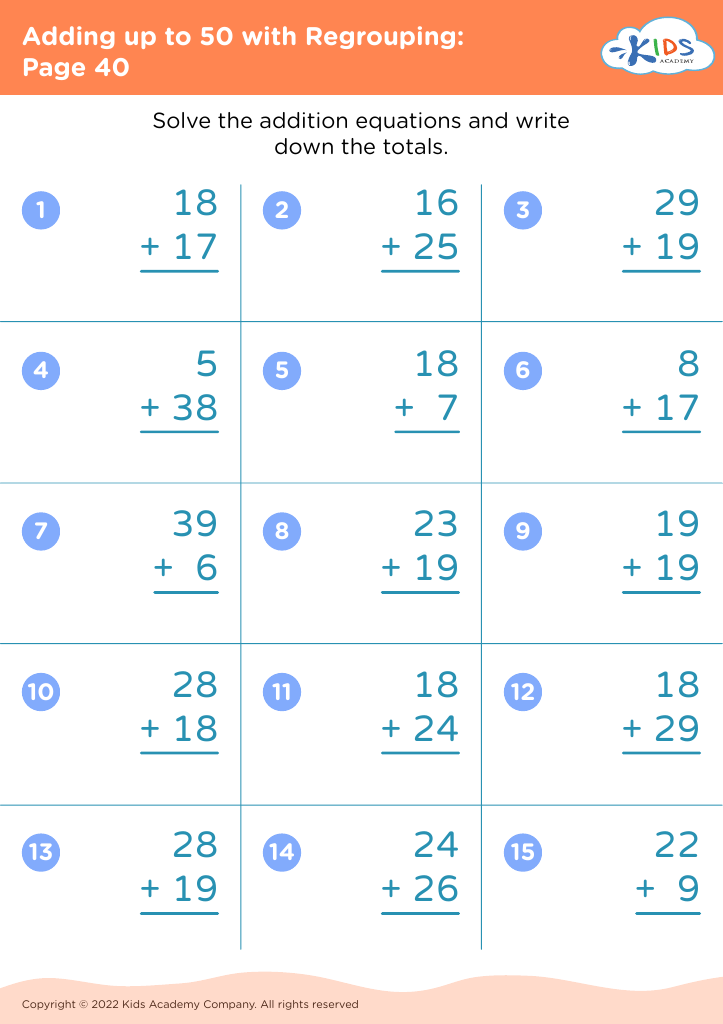
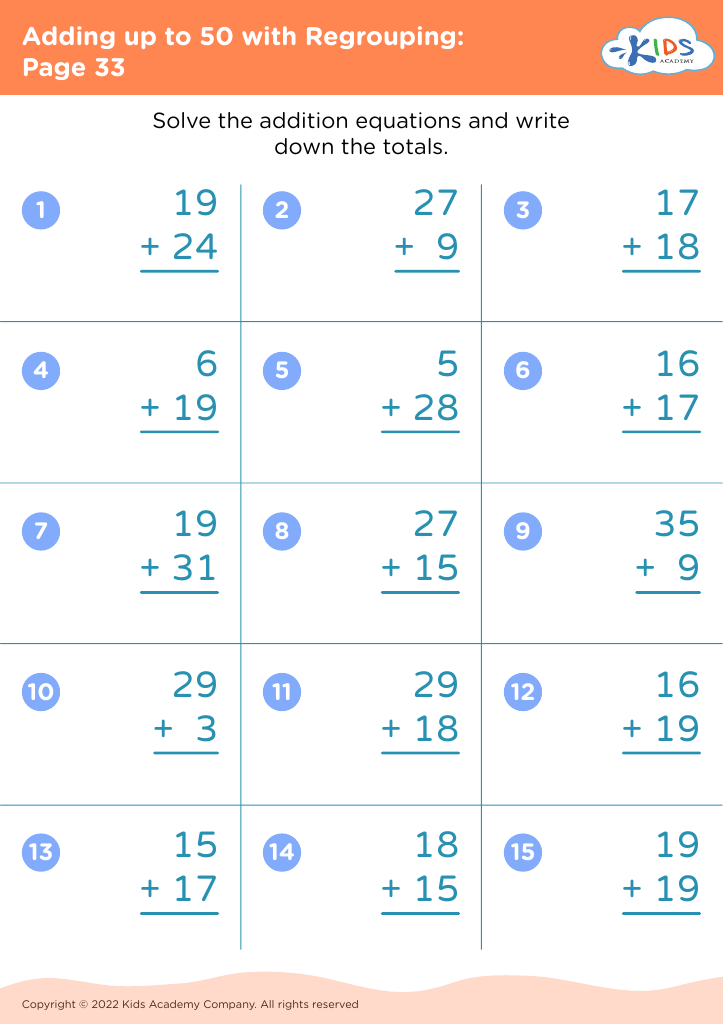
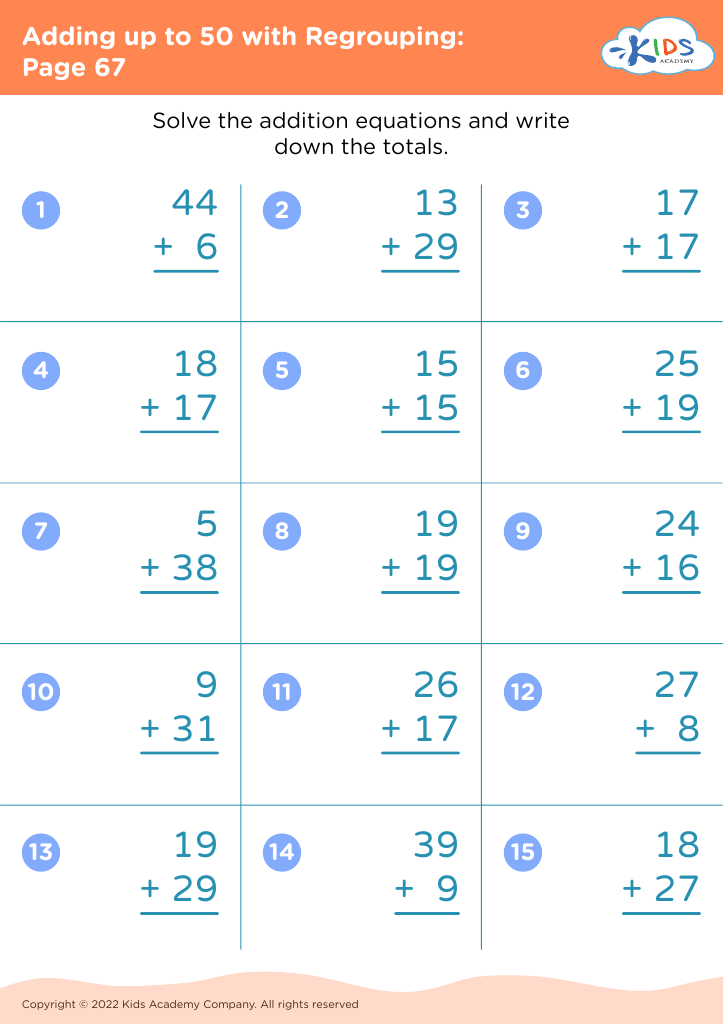
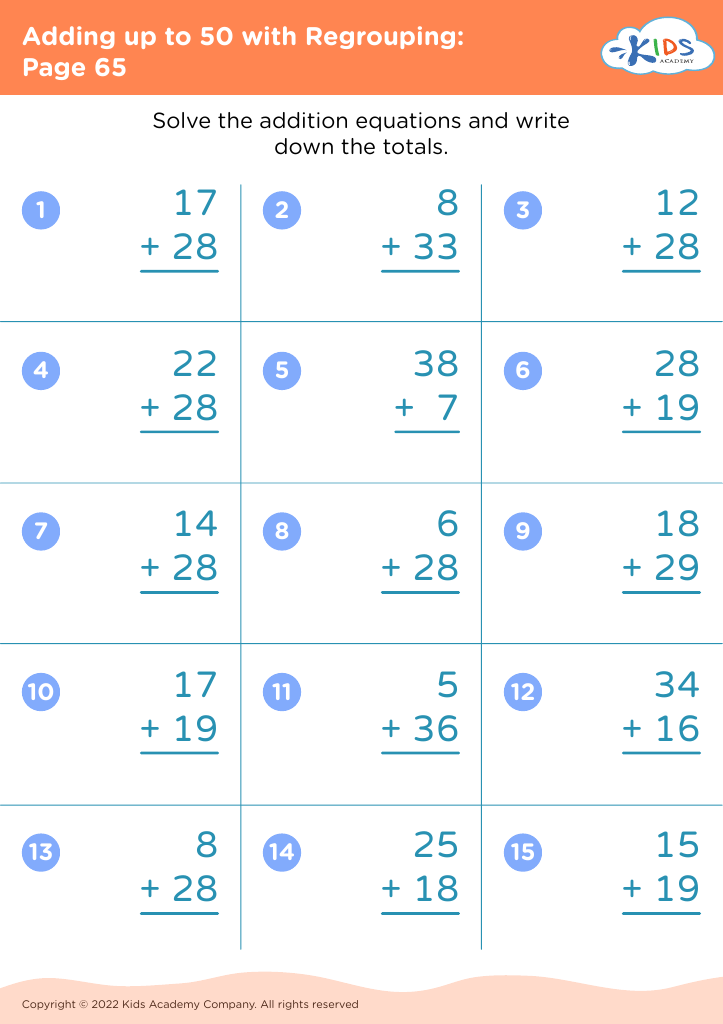
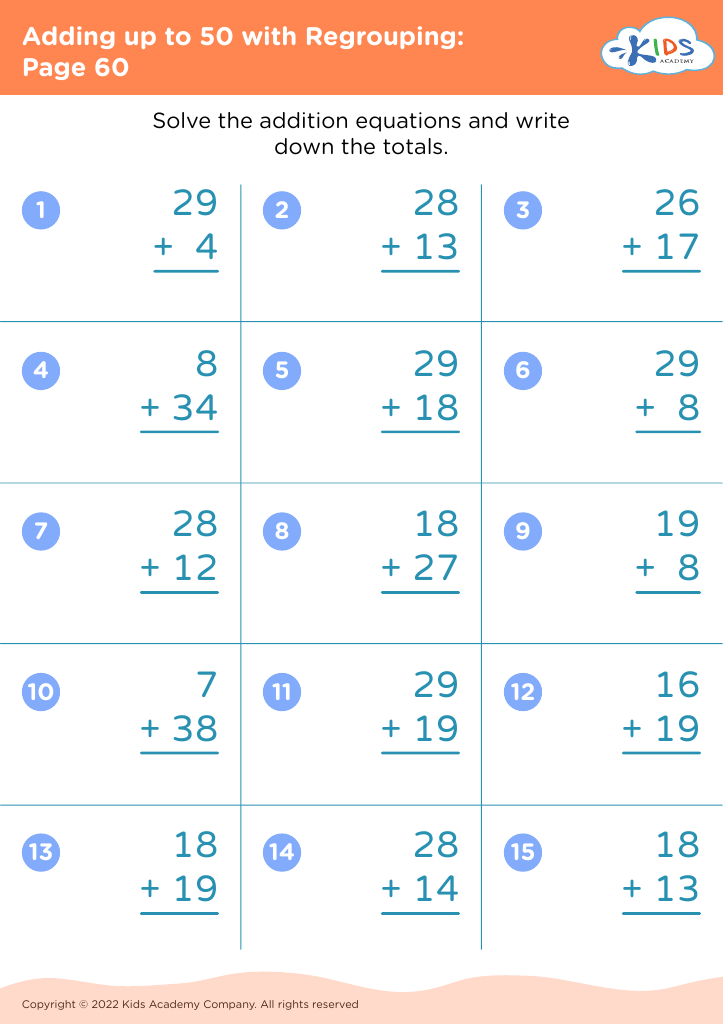
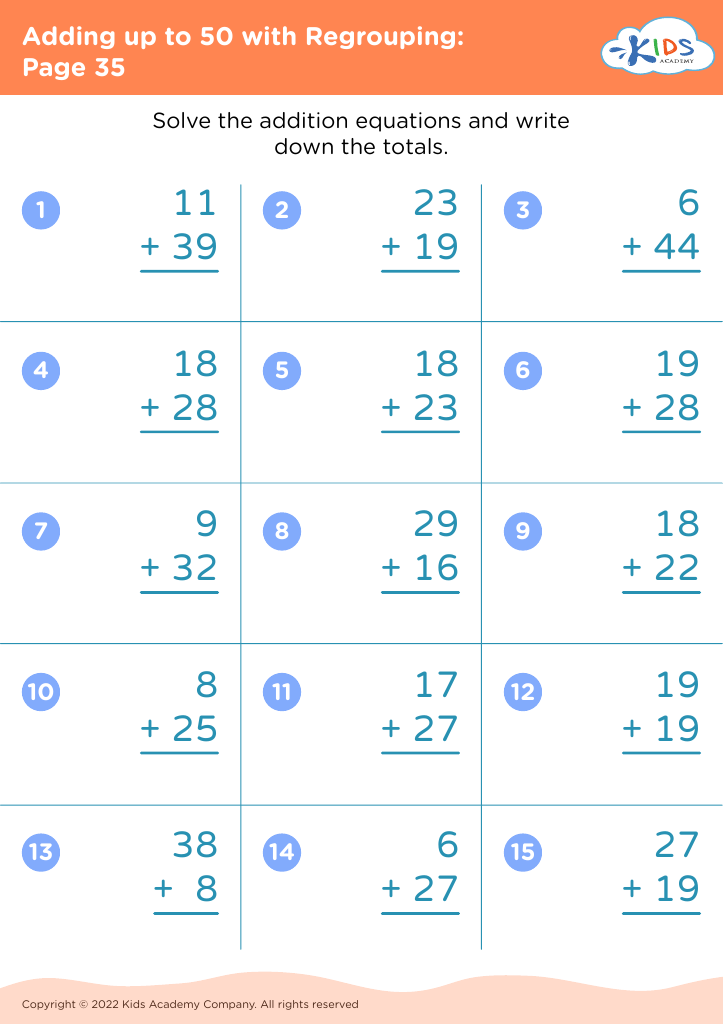
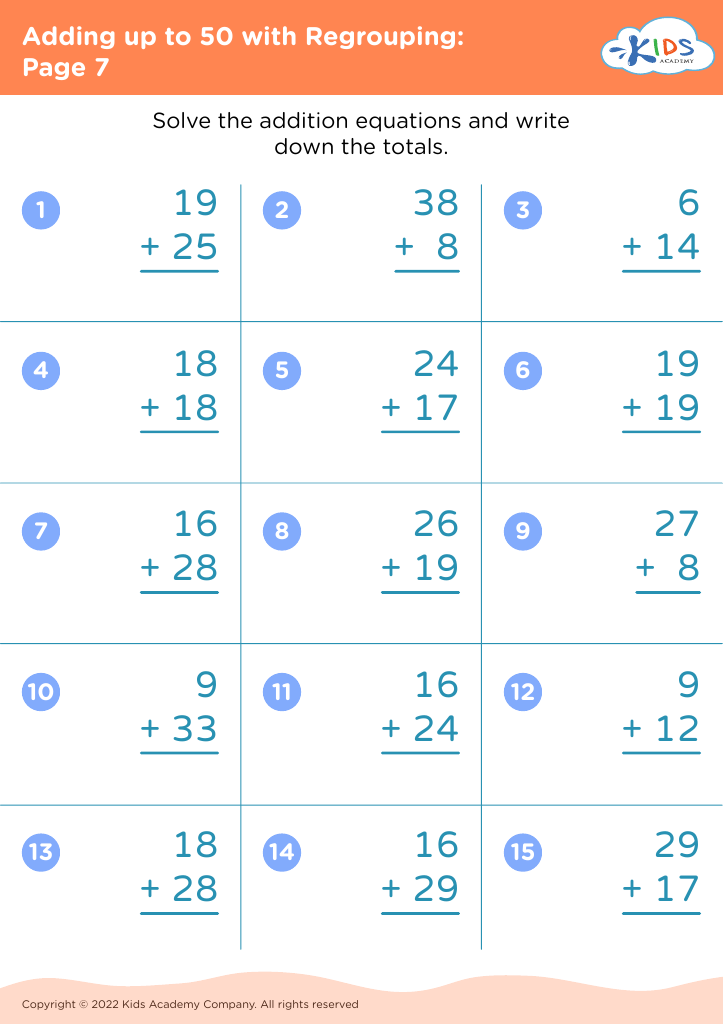
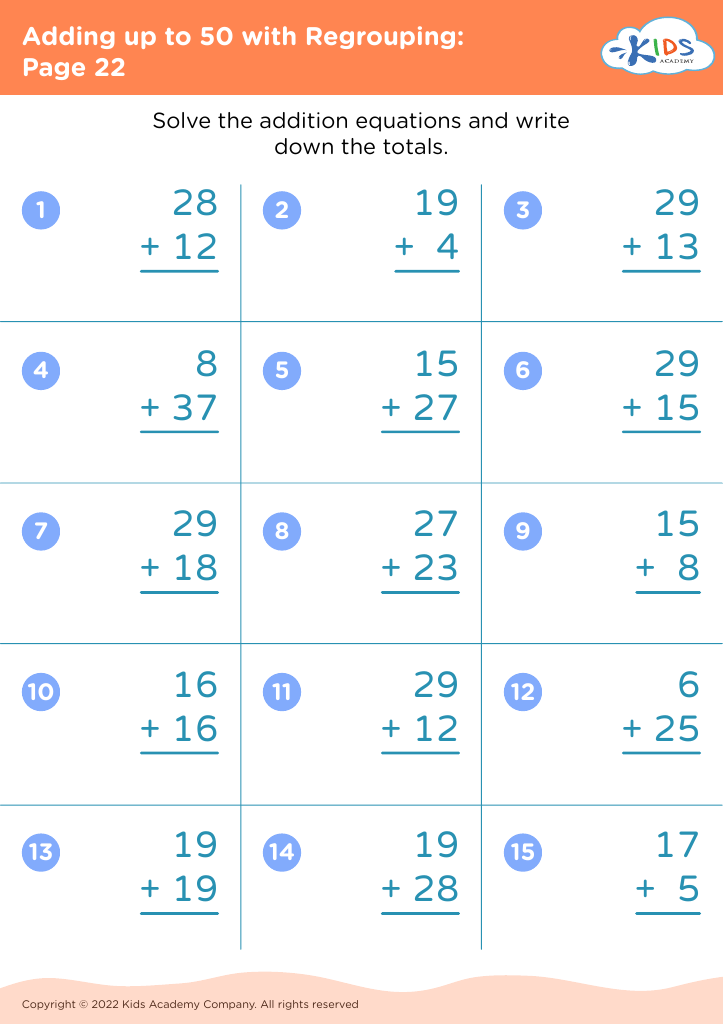
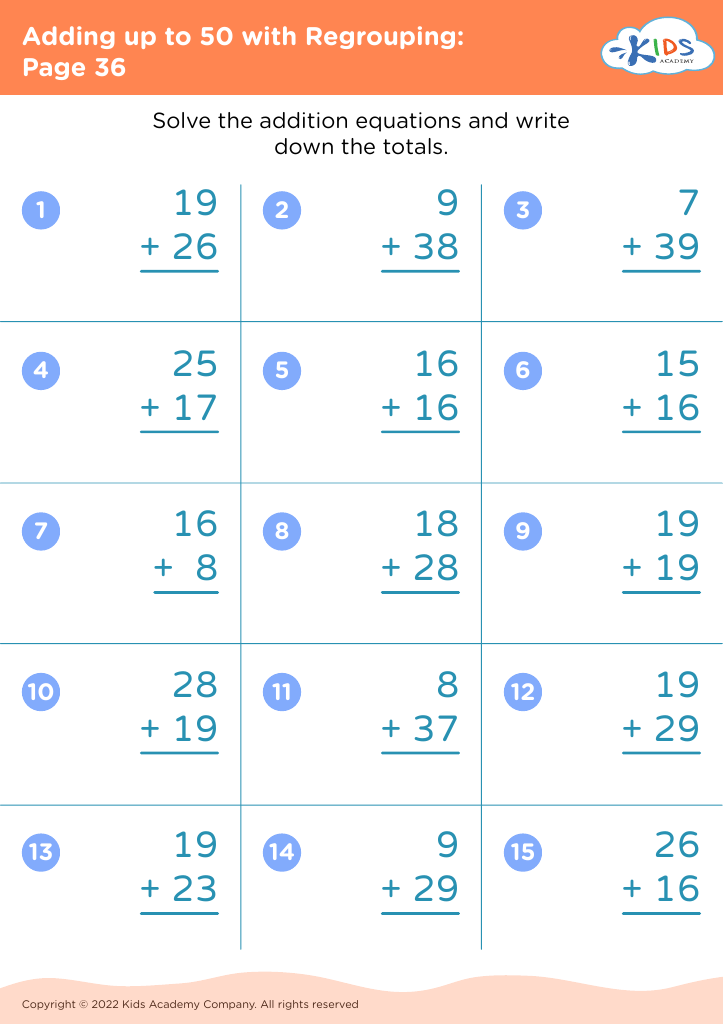
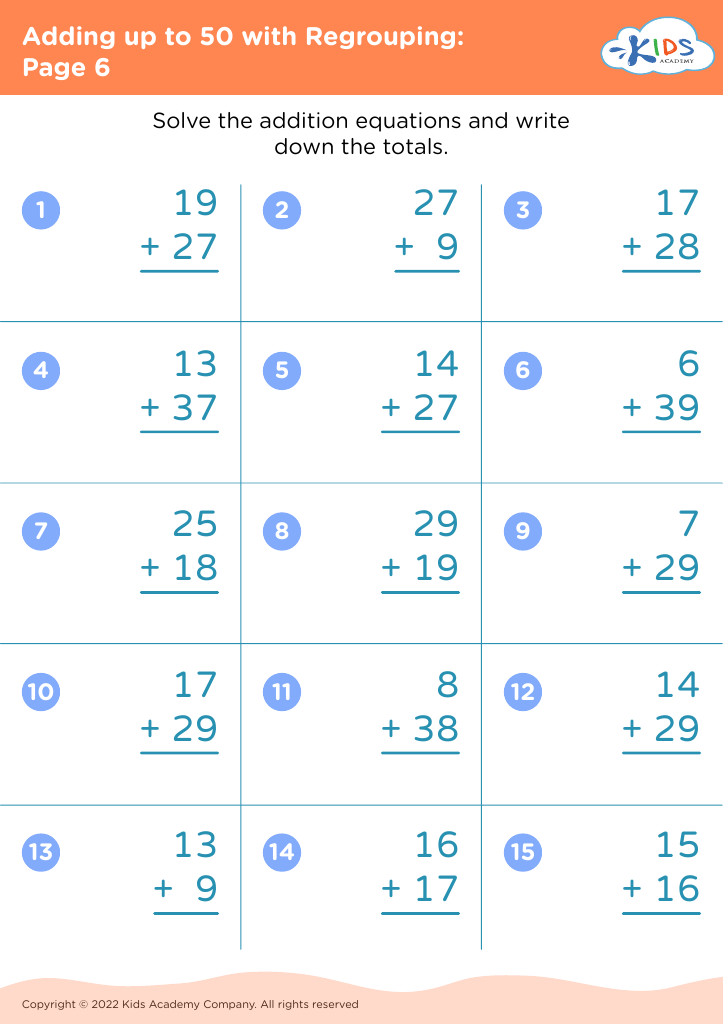
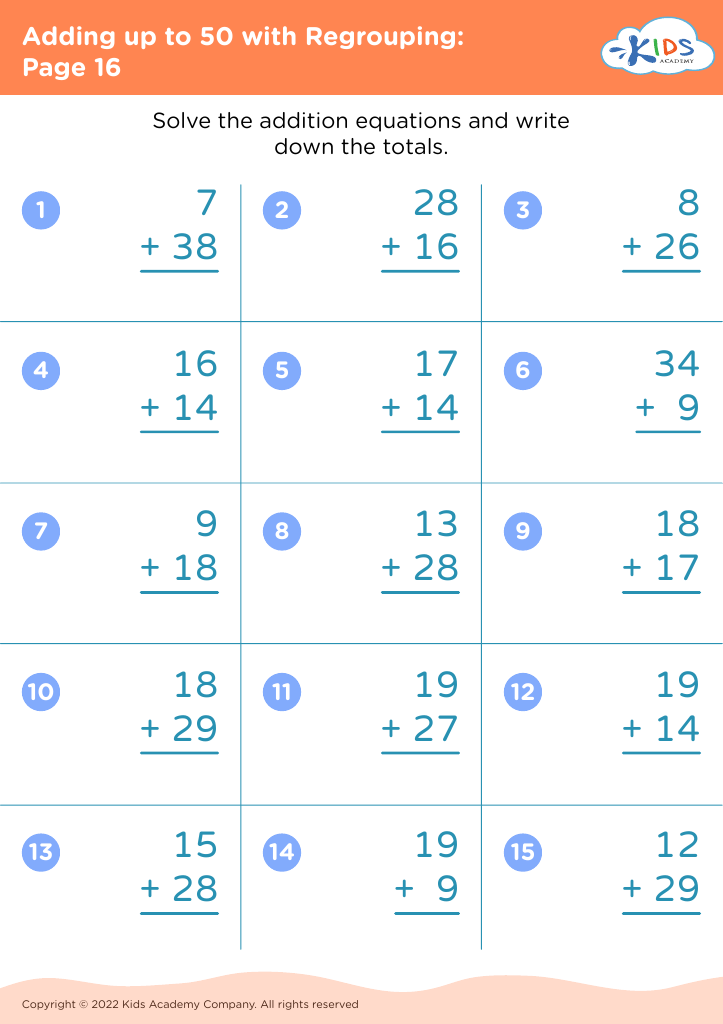
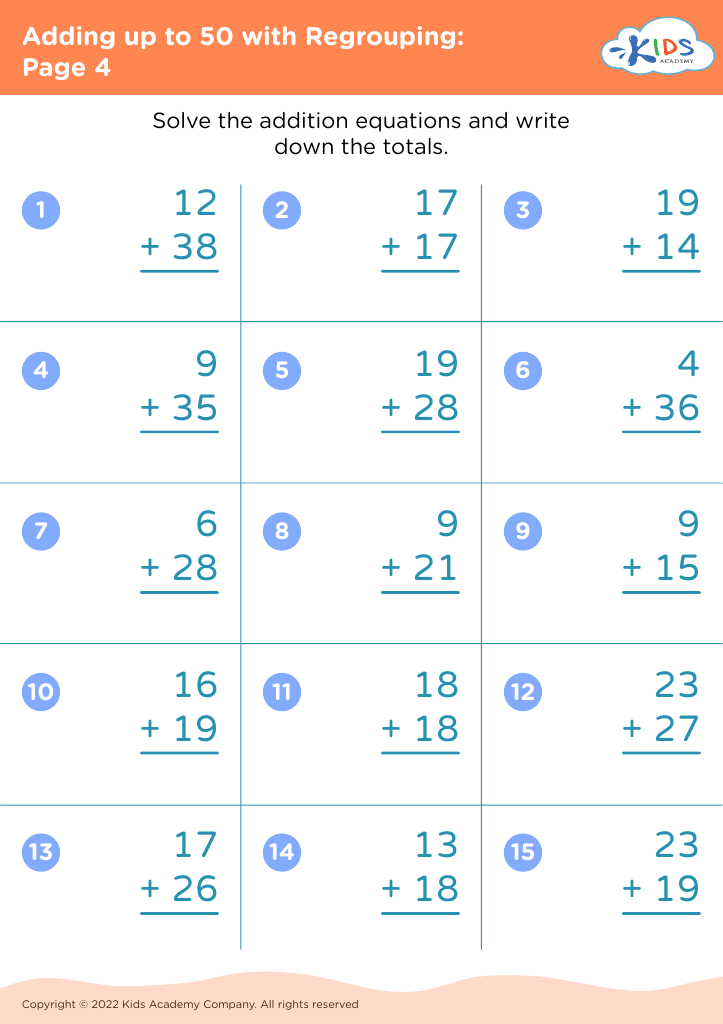


Comparing fractions and understanding regrouping when adding numbers up to 50 are crucial skills for children aged 7-9, forming the basis for advanced mathematical concepts. At this age, children transition from concrete to more abstract thinking, allowing them to comprehend fractions as parts of a whole. Comparing fractions helps them visualize and grasp fundamental mathematical principles, enabling them to see the relationship between different quantities and sizes. This visualization is essential for real-world applications such as measuring ingredients in a recipe or dividing objects into equal parts.
Adding numbers up to 50, especially with regrouping, introduces children to place value and the concept of carrying over numbers, which is vital for mastering addition and builds a strong foundation for other operations such as subtraction, multiplication, and division. Regrouping fosters a deeper understanding of the number system and enhances problem-solving skills, ensuring that children are prepared for more complex arithmetic involving larger numbers.
Moreover, these skills develop critical thinking, perseverance, and accuracy, helping children build confidence in their mathematical abilities. Parents and teachers should prioritize these concepts, as proficiency in early math is a strong predictor of future academic success, equipping children with the tools necessary for advanced education and everyday decision making.