Filters

17 filtered results

Clear all filters
Favorites
With answer key
Interactive

17 filtered results

Difficulty Level

Grade


Explore our "Understanding Fractions Adding up to 50 with Regrouping Worksheets for Ages 7-9," designed to enhance your child's math skills. These engaging worksheets focus on mastering fraction concepts and addition up to 50, with a special emphasis on regrouping. Perfect for young learners aged 7-9, these printable materials provide a hands-on approach to learning, helping children to tackle fractions confidently. Whether for classroom or home use, our worksheets can make learning fractions fun and effective. Give your child the tools they need to understand and excel in math with our expertly crafted resources.
Check out this FREE Trial Lesson on Adding up to 50 with Regrouping for age 7-9!

Z

Favorites
With answer key
Interactive
  • 7-9
  • Understanding fractions
  • Adding up to 50 with Regrouping
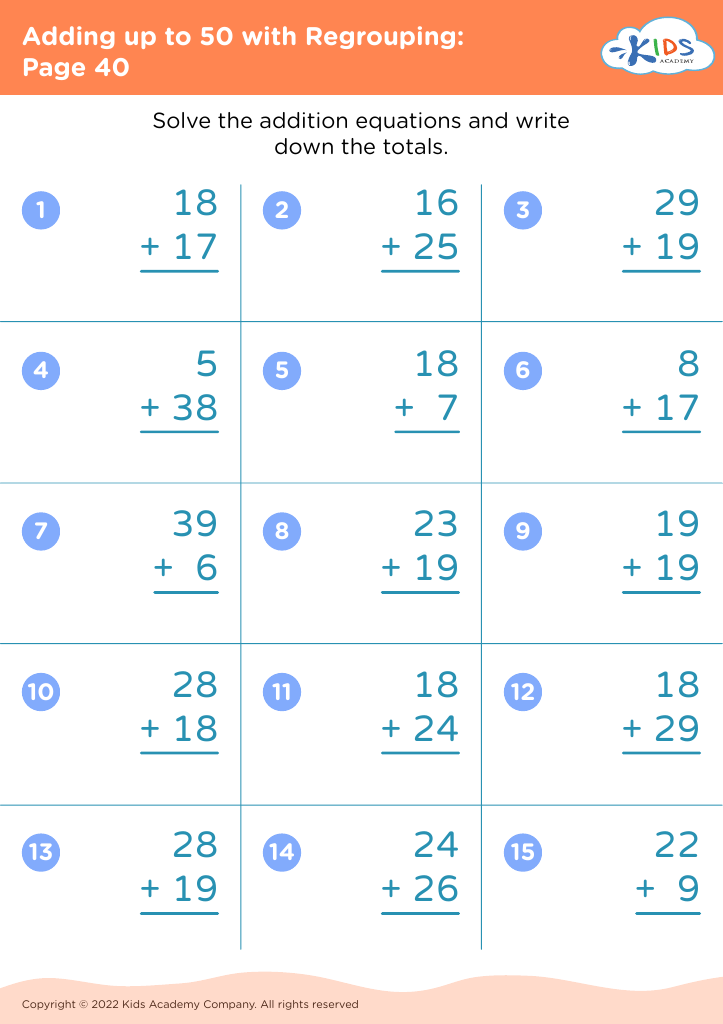
Adding up to 50 with Regrouping: Page 40
Worksheet
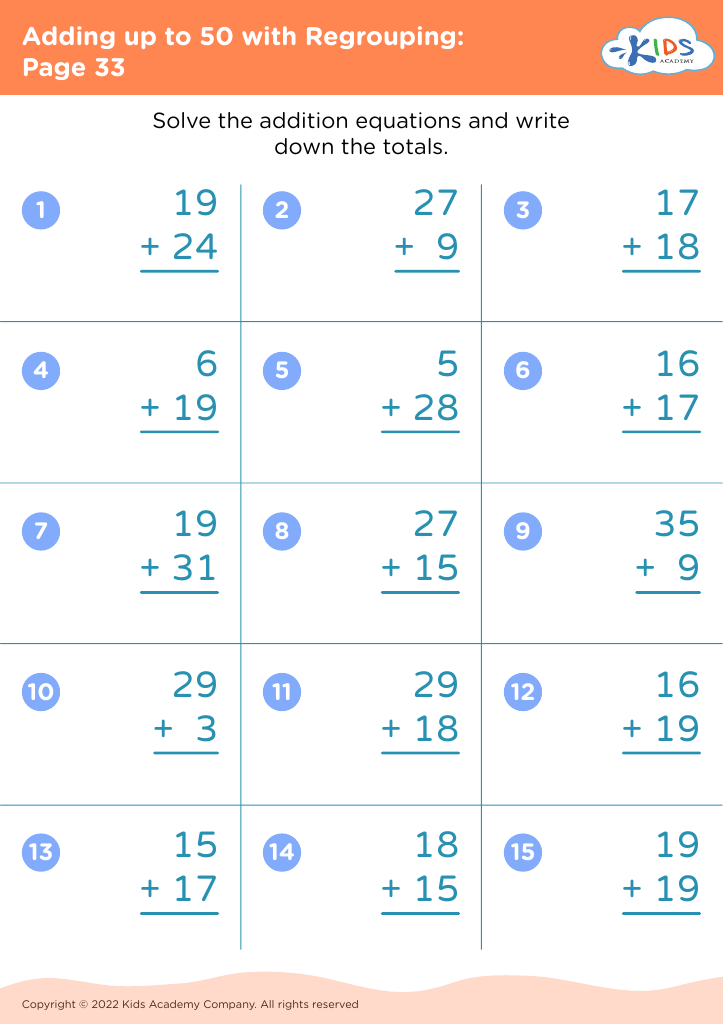
Adding up to 50 with Regrouping: Page 33
Worksheet
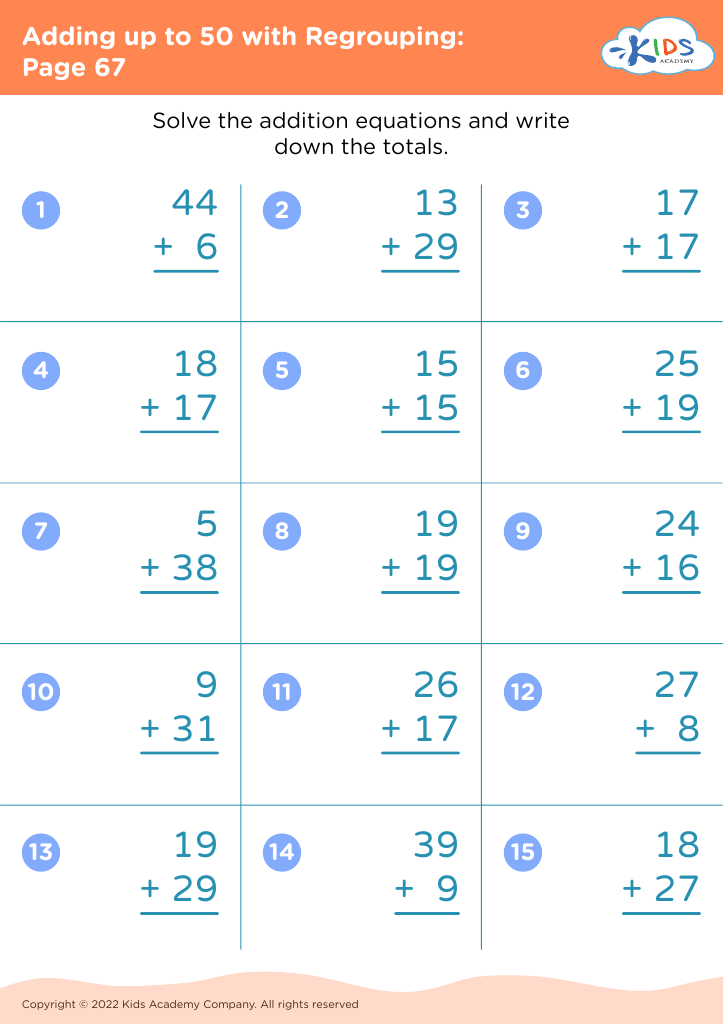
Adding up to 50 with Regrouping: Page 67
Worksheet
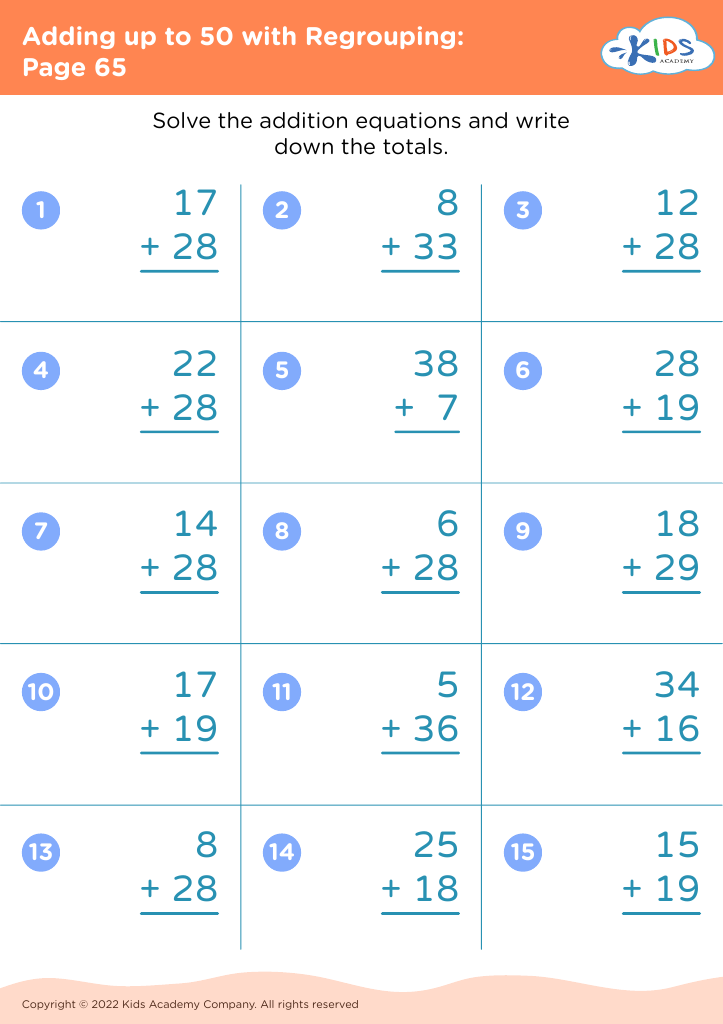
Adding up to 50 with Regrouping: Page 65
Worksheet
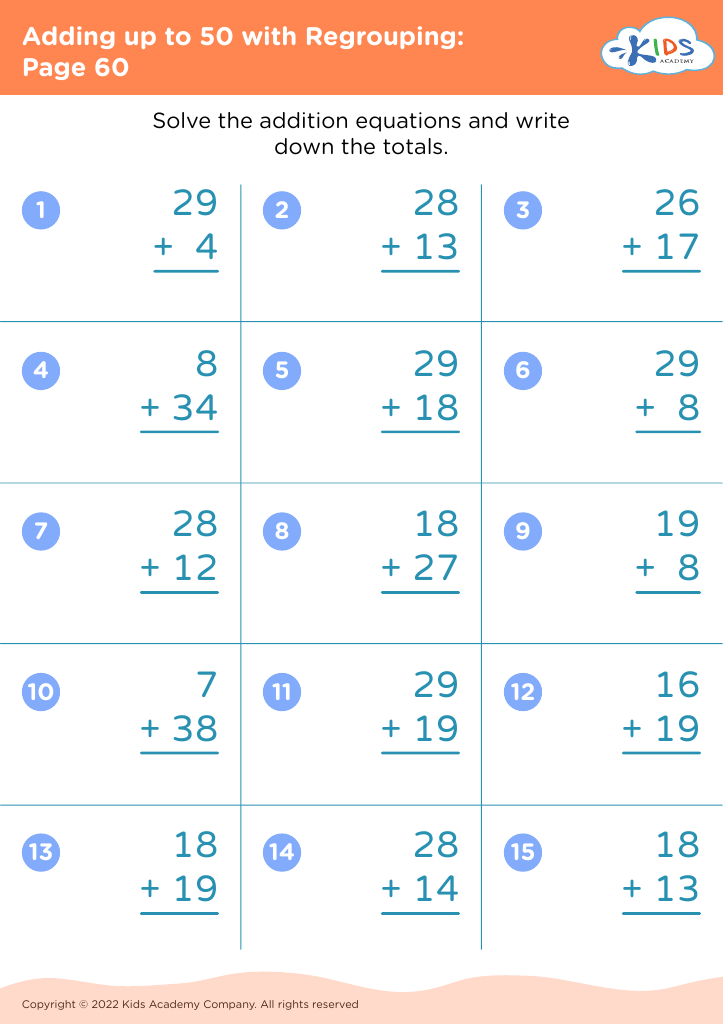
Adding up to 50 with Regrouping: Page 60
Worksheet
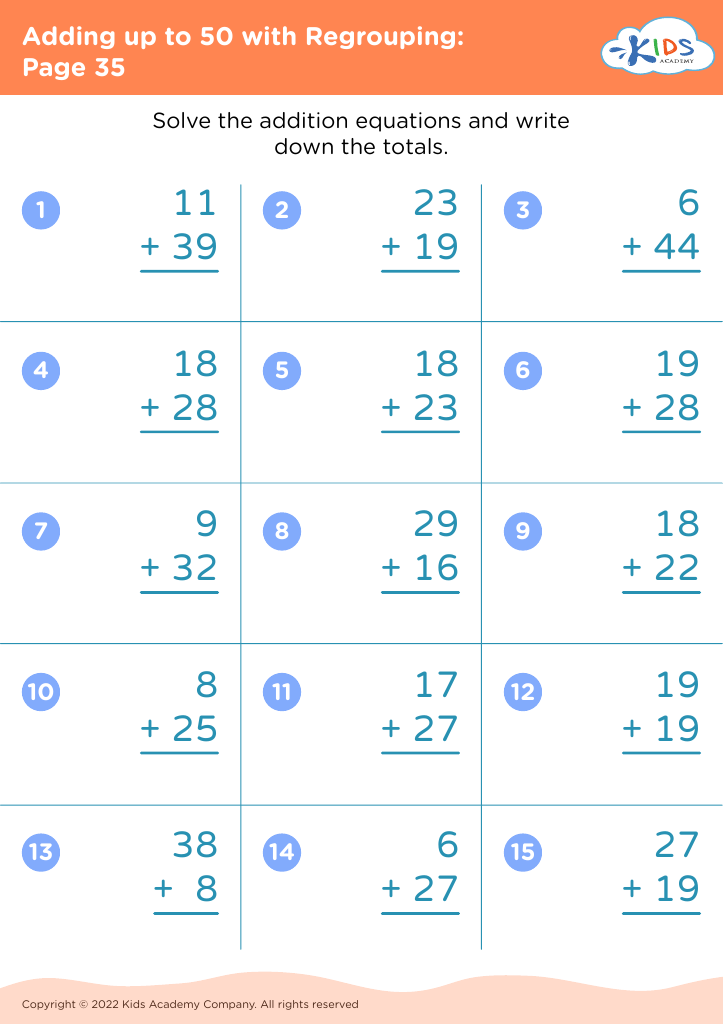
Adding up to 50 with Regrouping: Page 35
Worksheet
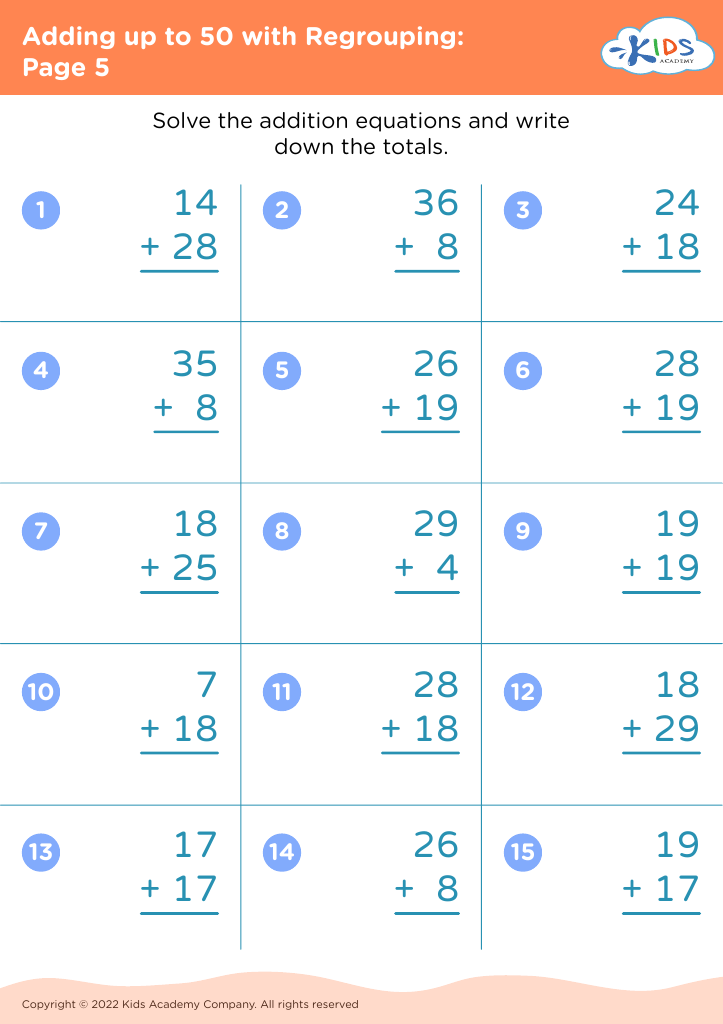
Adding up to 50 with Regrouping: Page 5
Worksheet
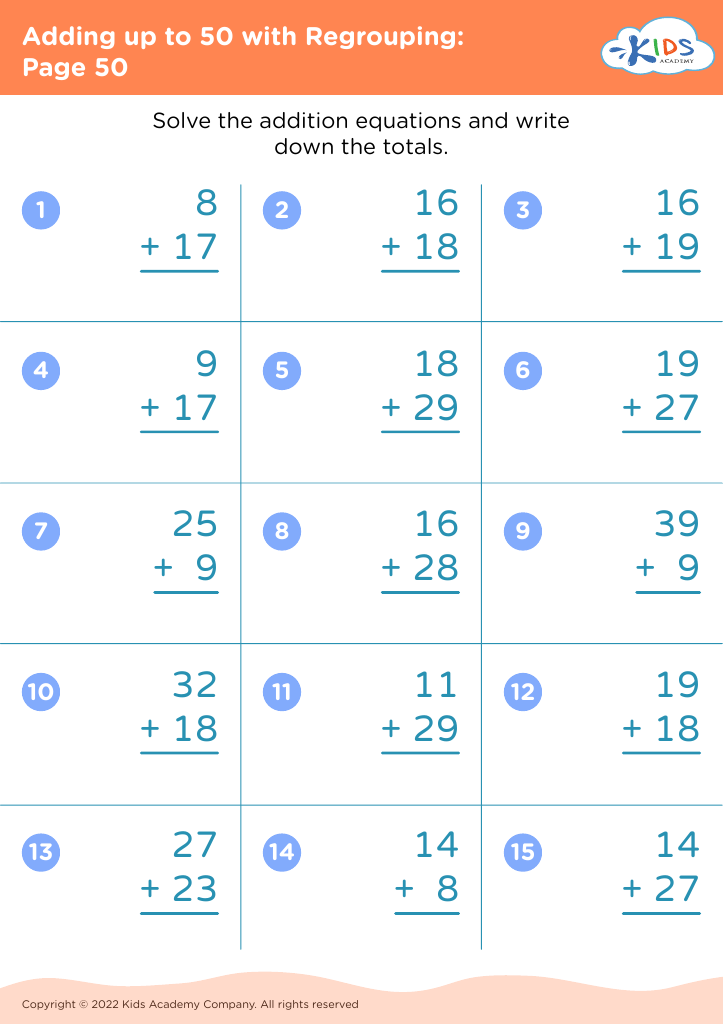
Adding up to 50 with Regrouping: Page 50
Worksheet
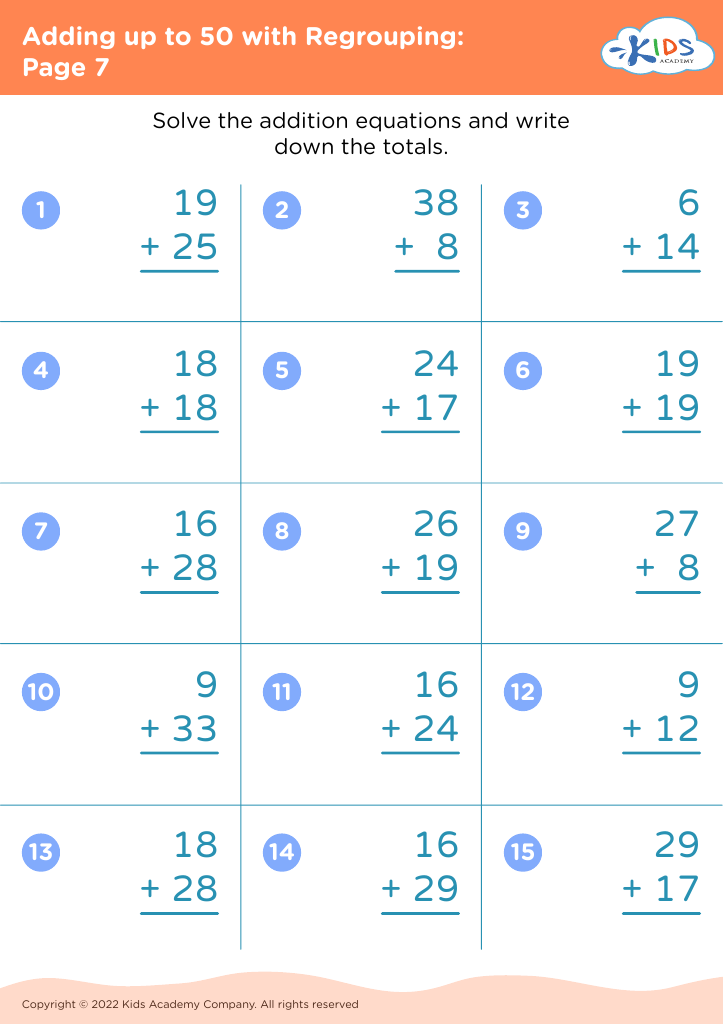
Adding up to 50 with Regrouping: Page 7
Worksheet
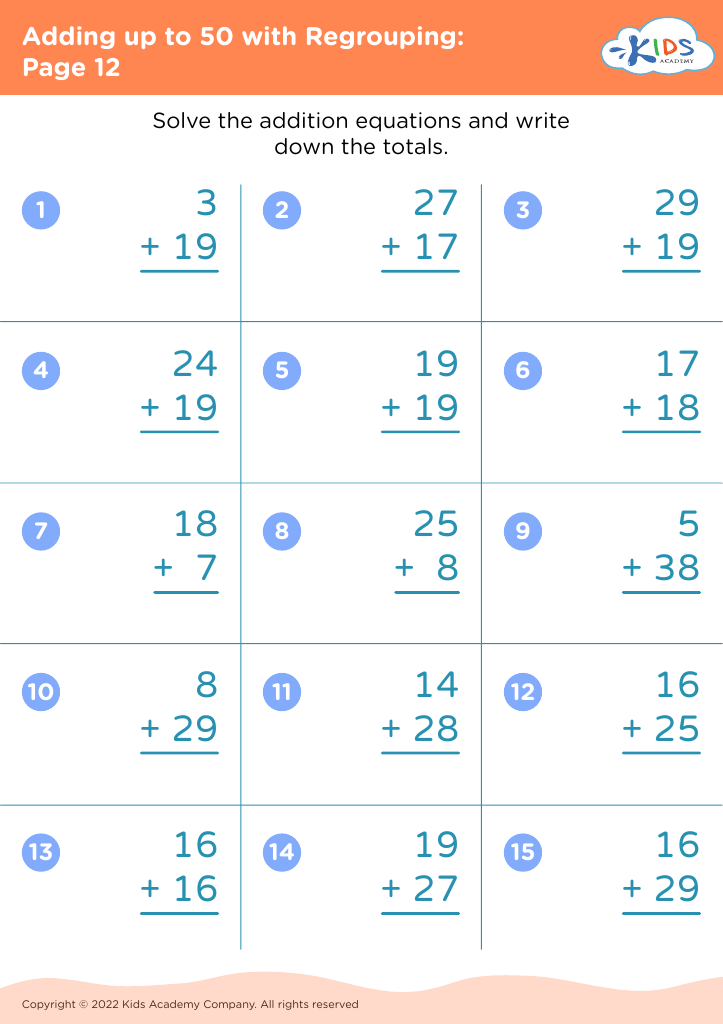
Adding up to 50 with Regrouping: Page 12
Worksheet
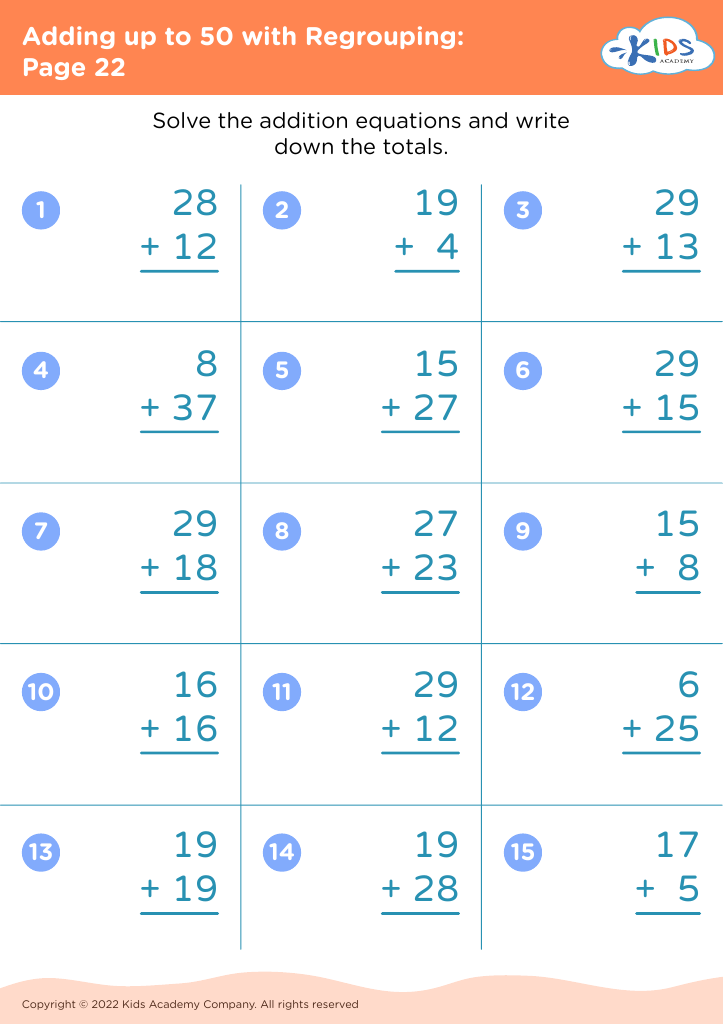
Adding up to 50 with Regrouping: Page 22
Worksheet
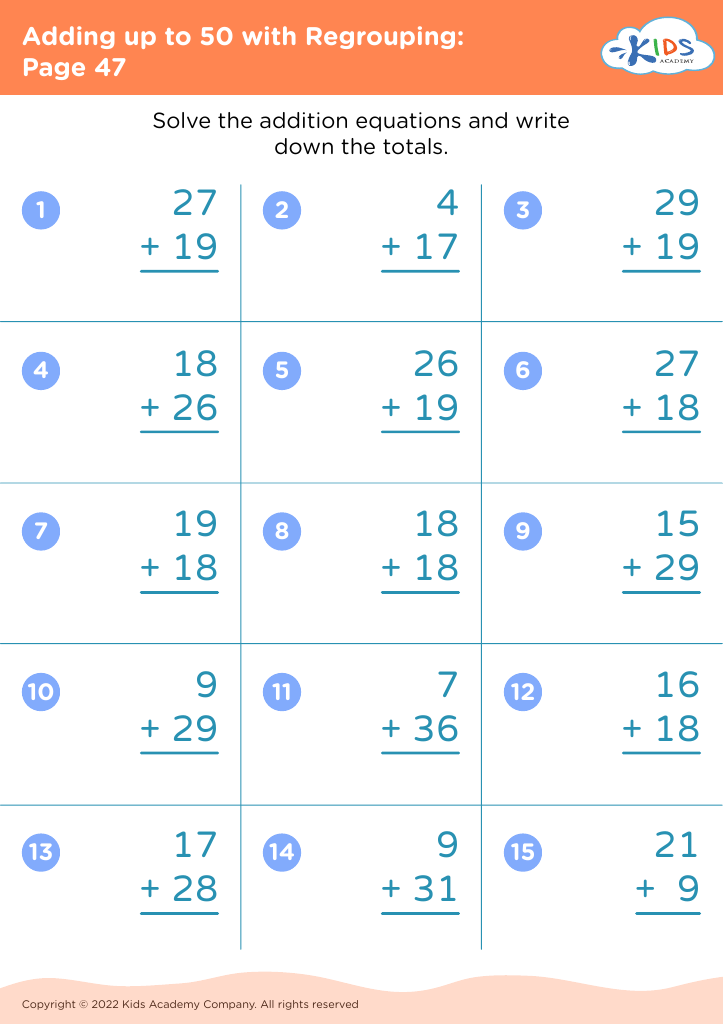
Adding up to 50 with Regrouping: Page 47
Worksheet
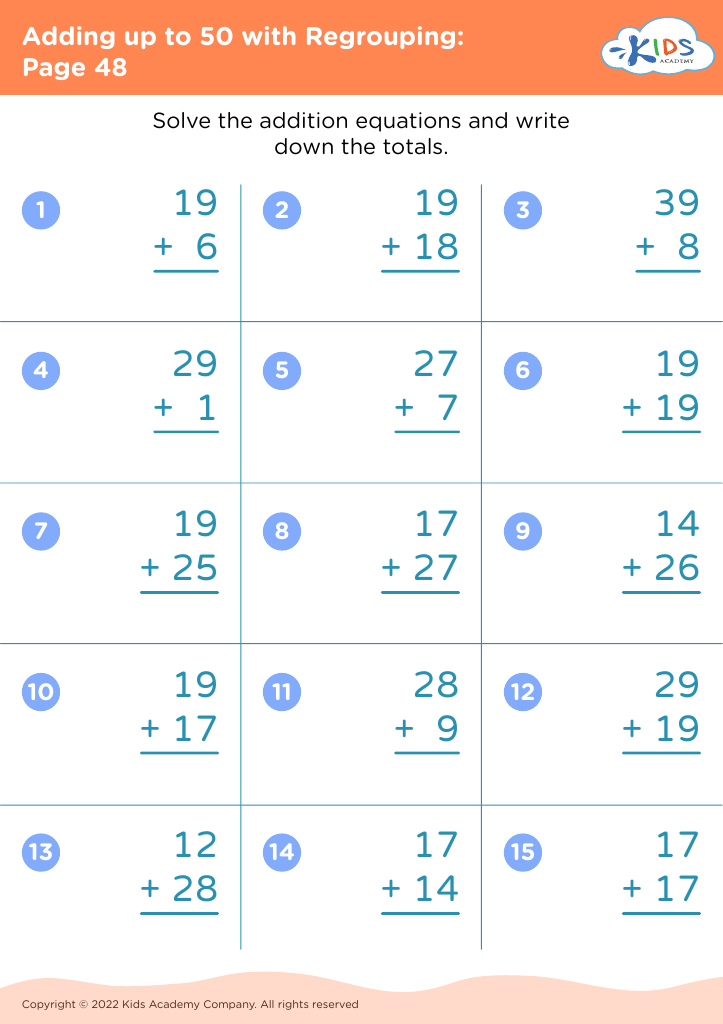
Adding up to 50 with Regrouping: Page 48
Worksheet
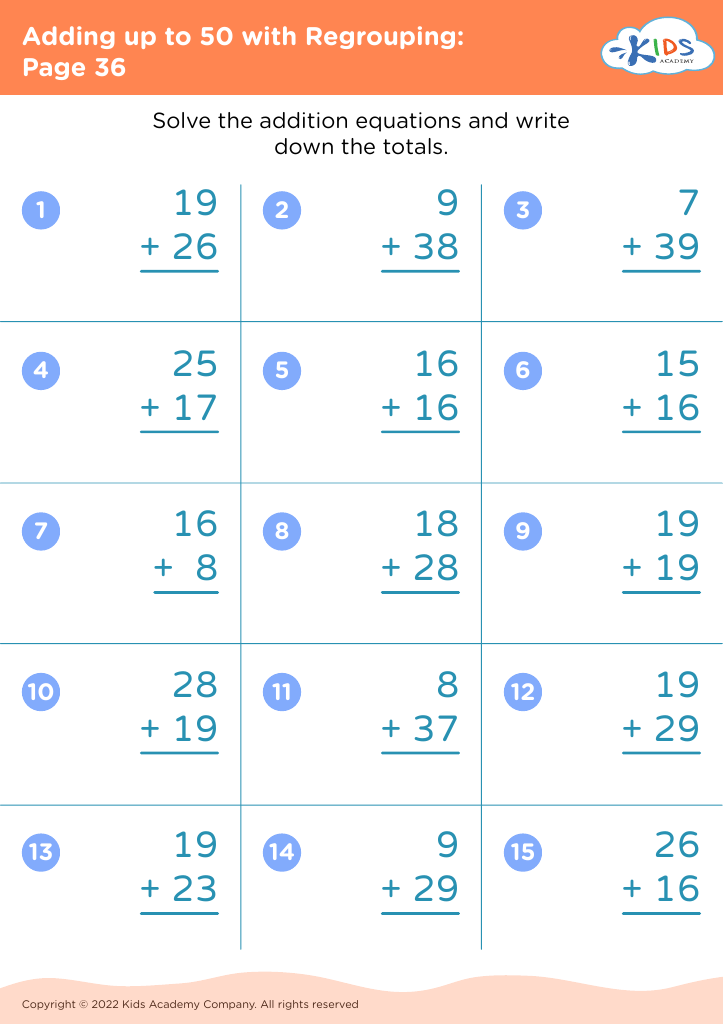
Adding up to 50 with Regrouping: Page 36
Worksheet
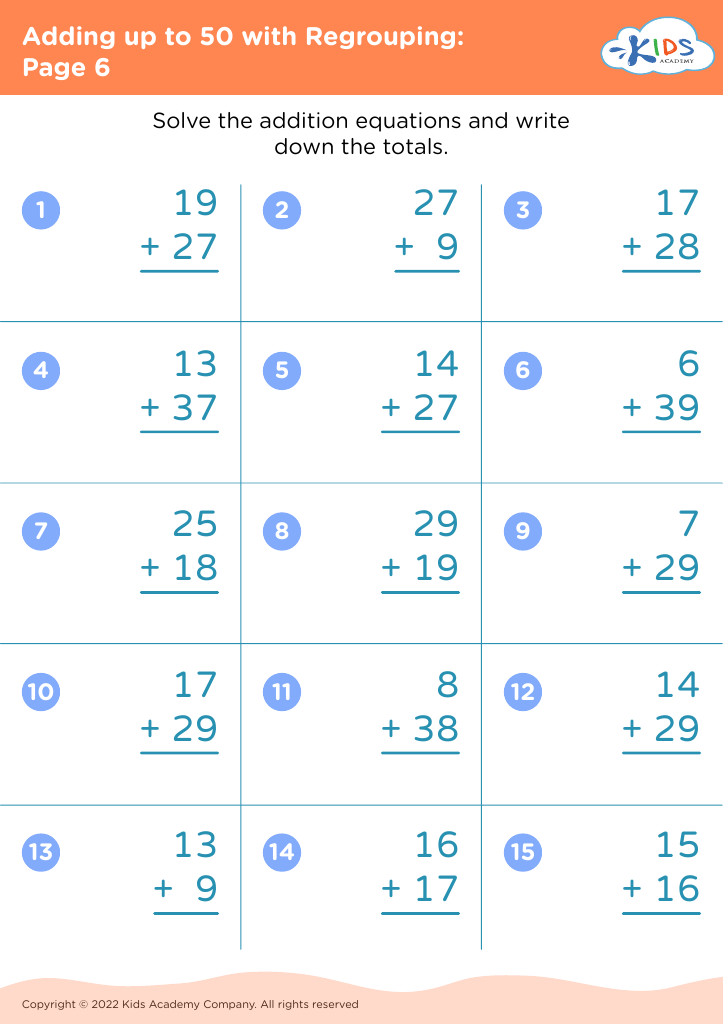
Adding up to 50 with Regrouping: Page 6
Worksheet
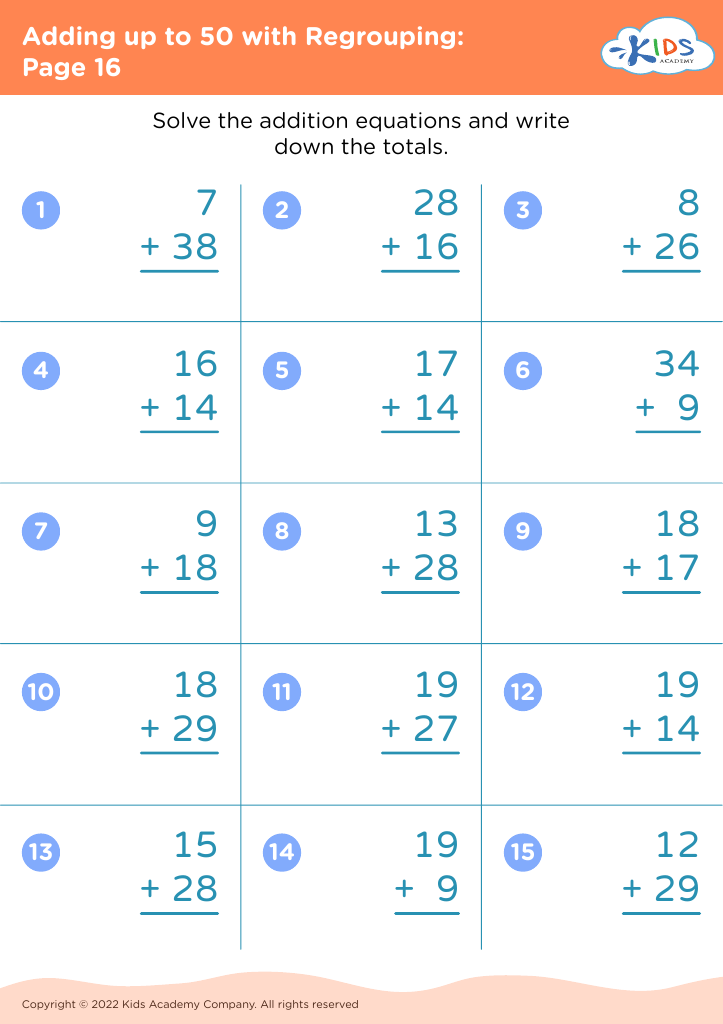
Adding up to 50 with Regrouping: Page 16
Worksheet
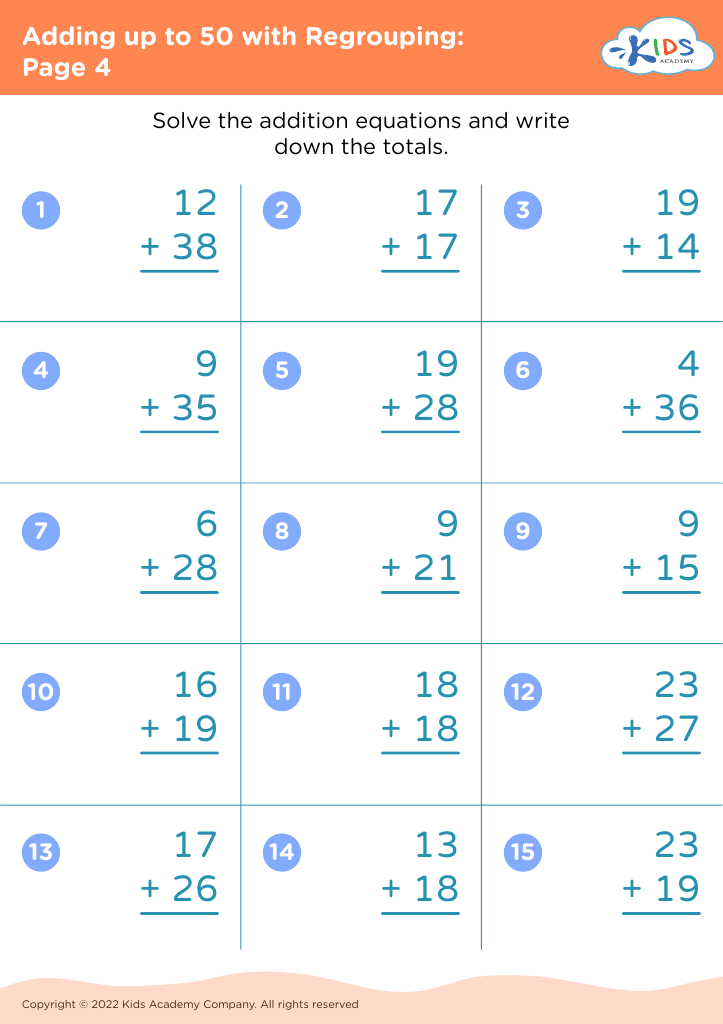
Adding up to 50 with Regrouping: Page 4
Worksheet


Understanding fractions and learning how to add numbers with regrouping are foundational math skills for children aged 7-9. Mastery in these areas sets the groundwork for more complex math concepts encountered later in their academic journey. When children grasp fractions, they develop a sense of how parts make up a whole, which enhances their ability to understand and manipulate more sophisticated numerical and measurement concepts. This conceptual clarity is not only crucial for advanced mathematics but has real-world applications in daily life, such as cooking, budgeting, and time management.

Similarly, addition with regrouping builds a child's ability to work with larger sums, improving their overall mathematical fluency. When students understand how to carry over numbers, they gain confidence in handling multi-digit addition, which is essential as math curricula progress in complexity. Developing these skills early makes future math challenges less intimidating, fostering a positive attitude towards mathematics that can last a lifetime.

For parents and teachers, focusing on these areas helps identify and address potential learning gaps early. Tailored support at this stage ensures that children don't fall behind. Encouragingly, mastering these units can boost a child's self-esteem, enabling them to tackle more advanced problems with assurance. Thus, it's vital to give these fundamental skills the attention they deserve in early education.