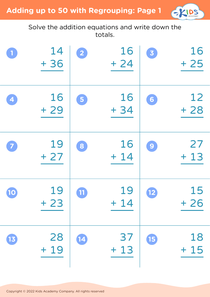
Fraction simplification Adding up to 50 Without Regrouping Worksheets for Ages 7-9
7 filtered results
-
From - To
Discover our engaging "Fraction Simplification and Adding Up to 50 Without Regrouping Worksheets" specially designed for ages 7-9 at Kids Academy. These worksheets simplify complex math concepts, ensuring students grasp fraction reduction and addition, all without the need for regrouping. Crafted to align with curriculum standards, they build essential arithmetic skills while fostering confidence and mastery. Perfect for both classroom and home learning, our fun, colorful activities make learning interactive and enjoyable. Boost your child’s math proficiency and problem-solving abilities effortlessly with our expertly crafted practice sheets. Downloads now to make learning fractions and addition a breeze!
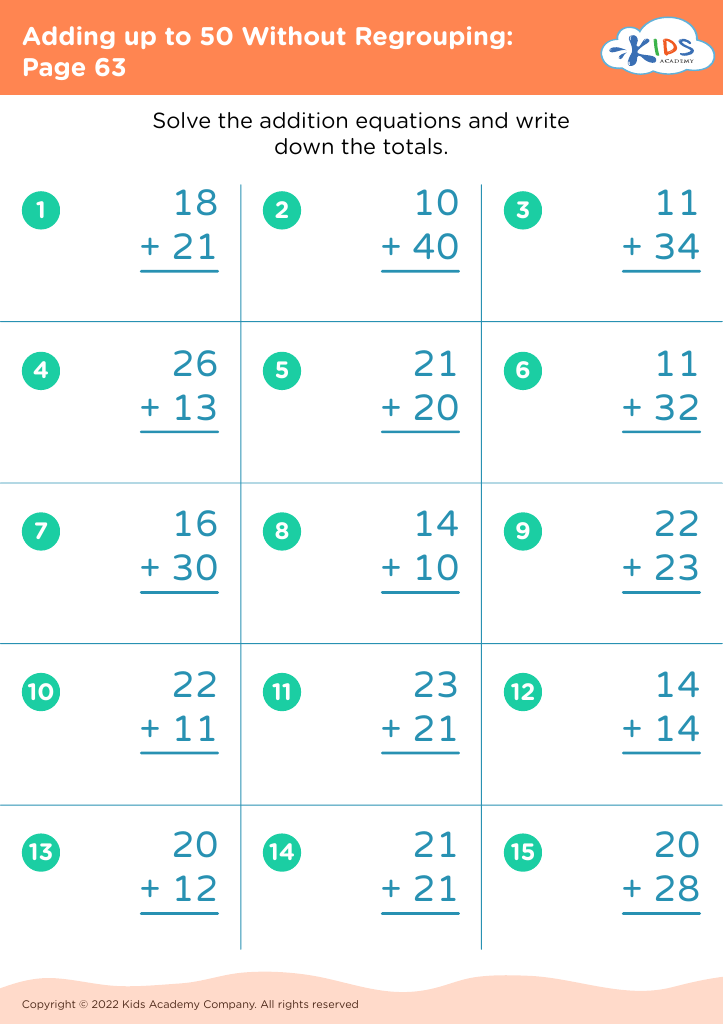
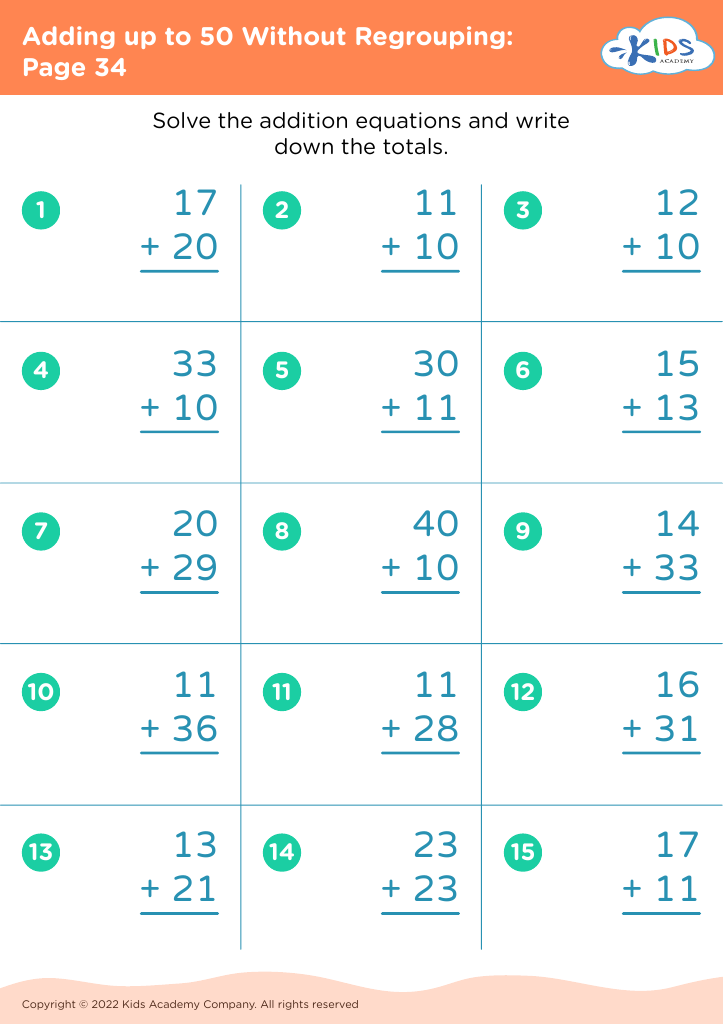
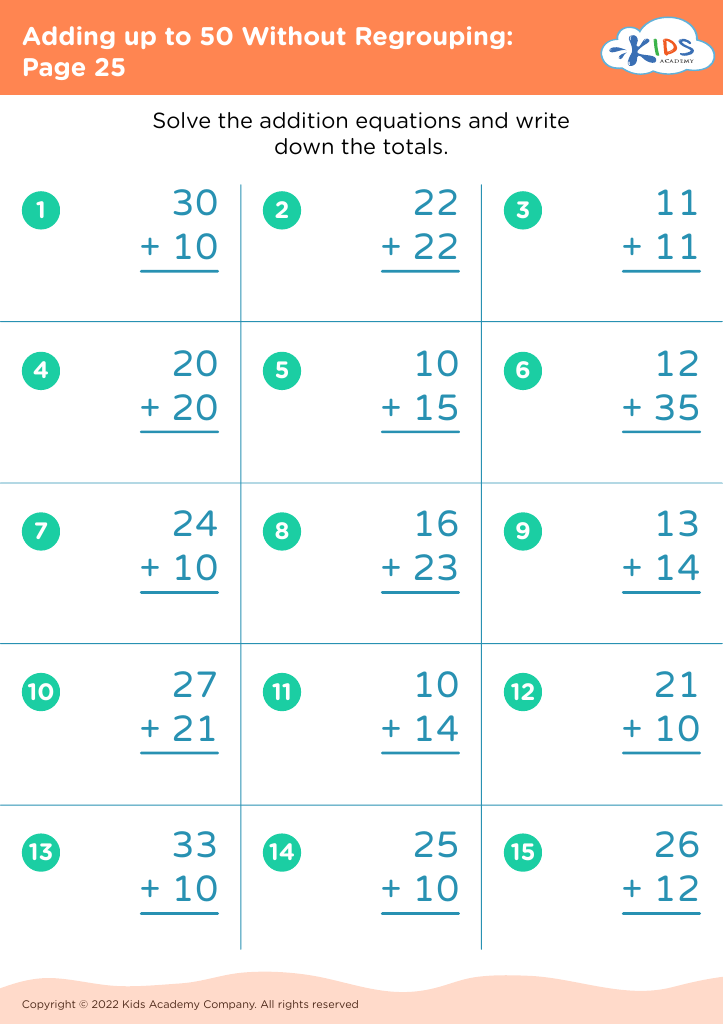
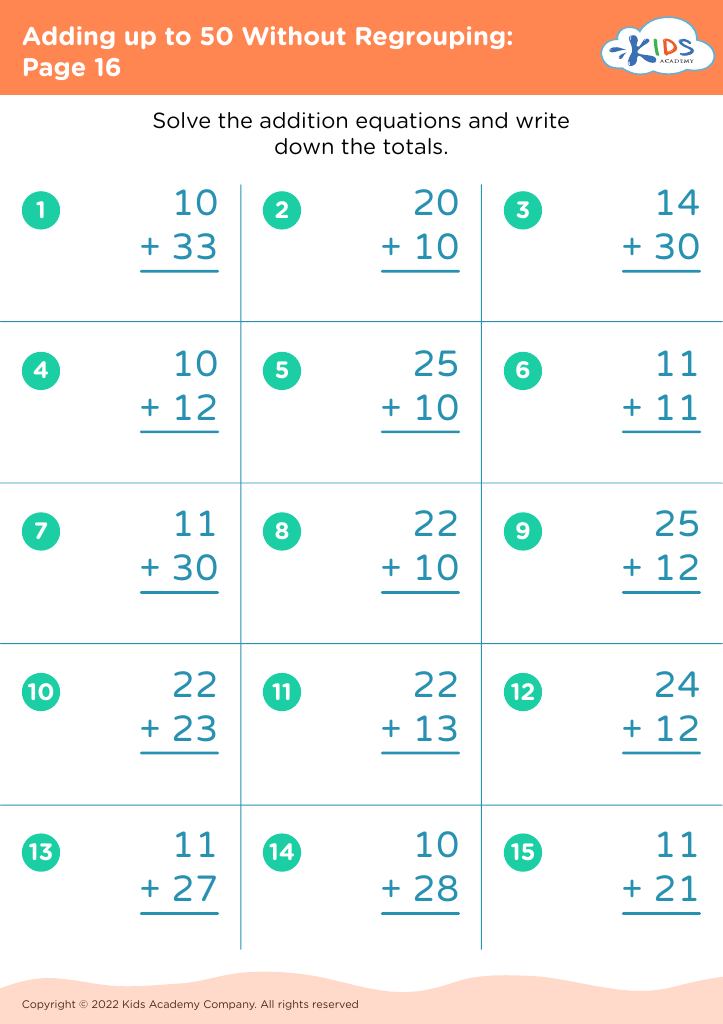
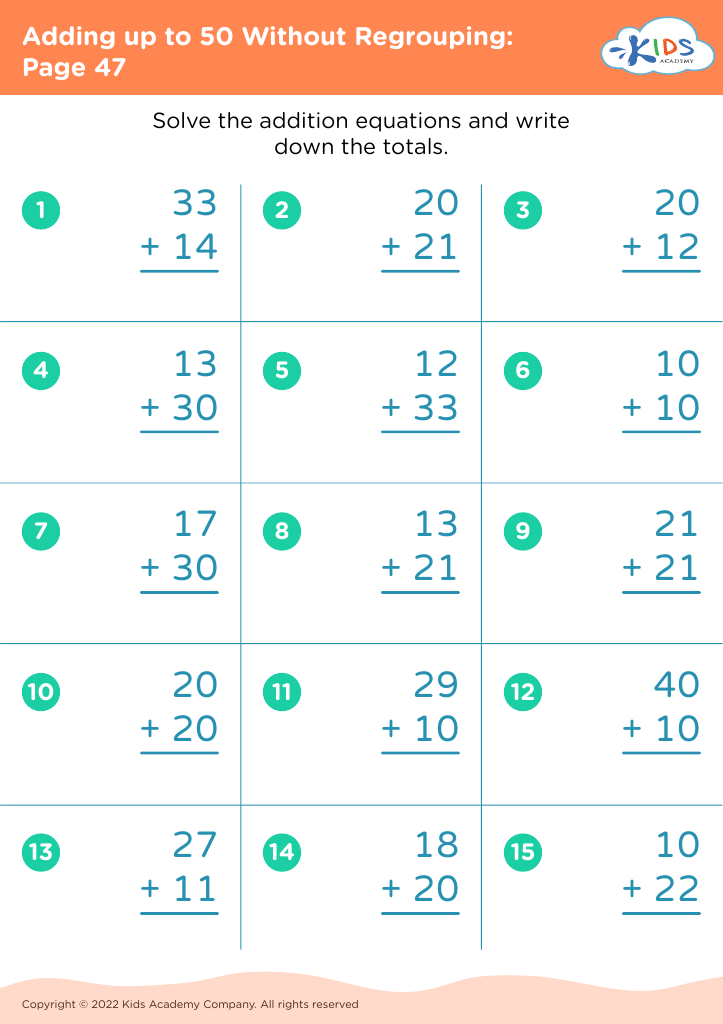
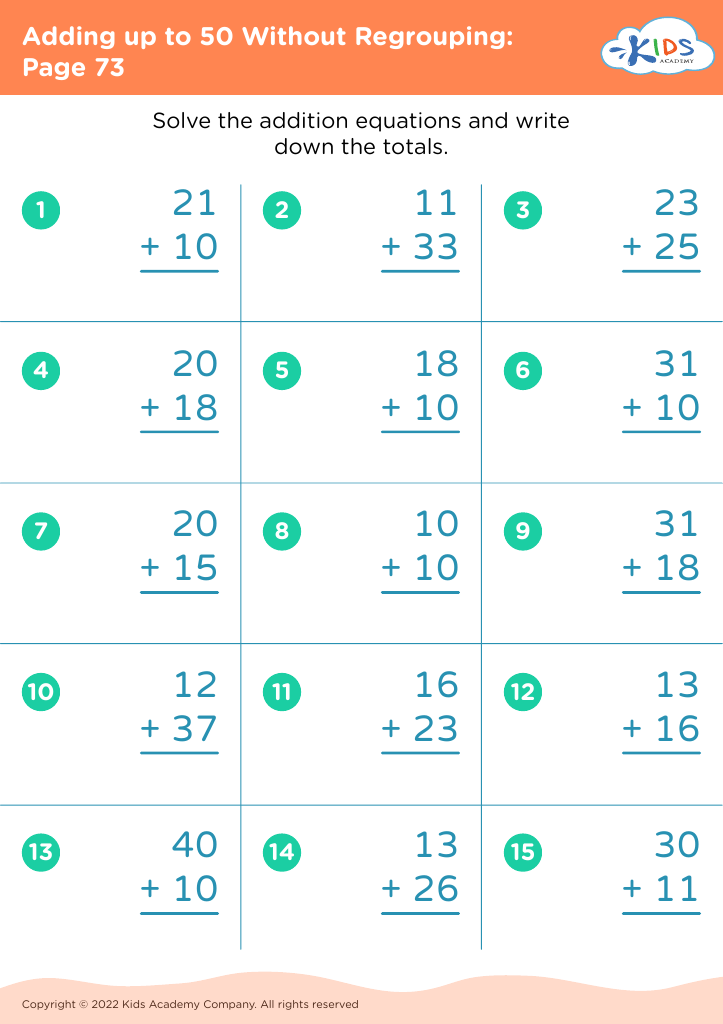
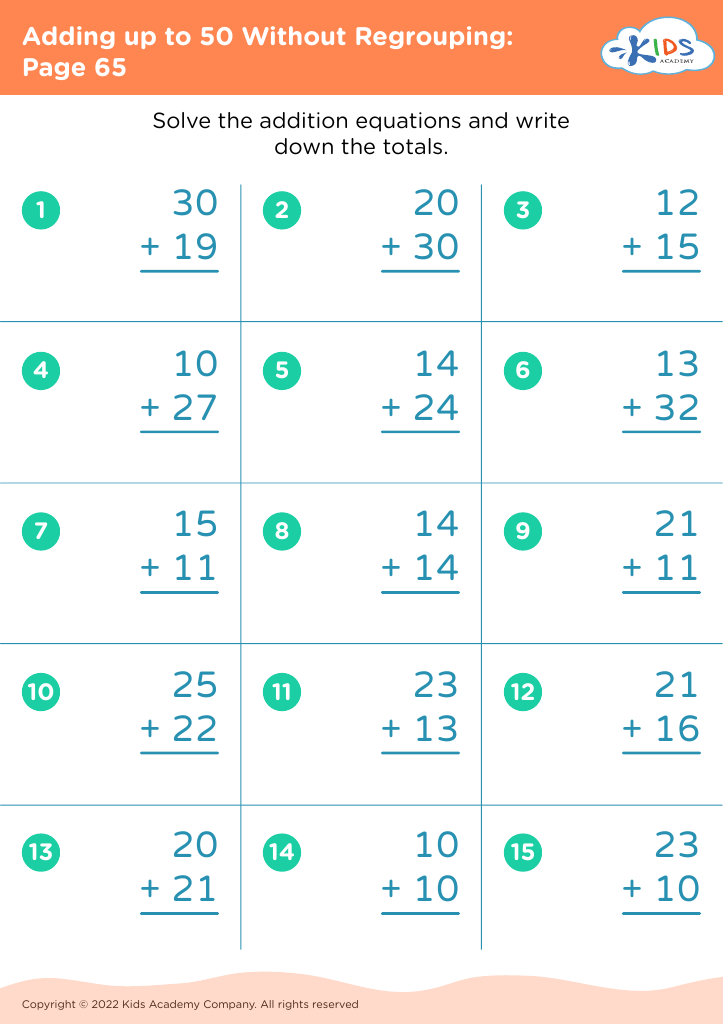


Parents and teachers should prioritize teaching fraction simplification and adding up to 50 without regrouping for children aged 7-9 because these foundational math skills are pivotal for a child’s cognitive development and future mathematical success. Understanding fractions helps students grasp the concept of parts of a whole, which is applicable in numerous real-life situations, such as measuring ingredients in a recipe or dividing items among people. Simplifying fractions ensures that students can easily interpret and manipulate these values, making more complex arithmetic more approachable as they advance in their studies.
Similarly, mastering the skill of adding up numbers to 50 without needing to regroup reinforces basic arithmetic fundamentals. It enhances number sense, allowing children to recognize patterns and achieve accurate calculations more efficiently. These skills build confidence and reduce anxiety associated with more complex mathematics encountered in later grades.
By teaching these concepts early, parents and teachers lay a robust foundation that supports continued academic growth. Students with strong, fundamental math skills are likelier to excel in subjects involving more advanced computations and to develop critical thinking abilities, applicable in all areas of life. Prioritizing fraction simplification and basic addition thus nurtures well-rounded, mathematically literate students prepared for future learning challenges.