Filters

15 filtered results

Clear all filters
Favorites
With answer key
Interactive

15 filtered results

Difficulty Level

Grade


Boost your child's math confidence with our "Number Recognition Adding up to 50 Without Regrouping Worksheets" designed for ages 7-9! These engaging activities help young learners master the essential skill of number recognition and addition up to 50 without the complexity of regrouping. Each worksheet is thoughtfully crafted to provide practice in a fun, interactive way, fostering both comprehension and speed. Ideal for classroom use or at-home practice, these resources support foundational math skills, ensuring your child builds a solid numerical foundation. Download now to kickstart your child's journey towards math excellence!
Check out this FREE Trial Lesson on Adding up to 50 Without Regrouping for age 7-9!

Z

Favorites
With answer key
Interactive
  • 7-9
  • Number Recognition
  • Adding up to 50 Without Regrouping
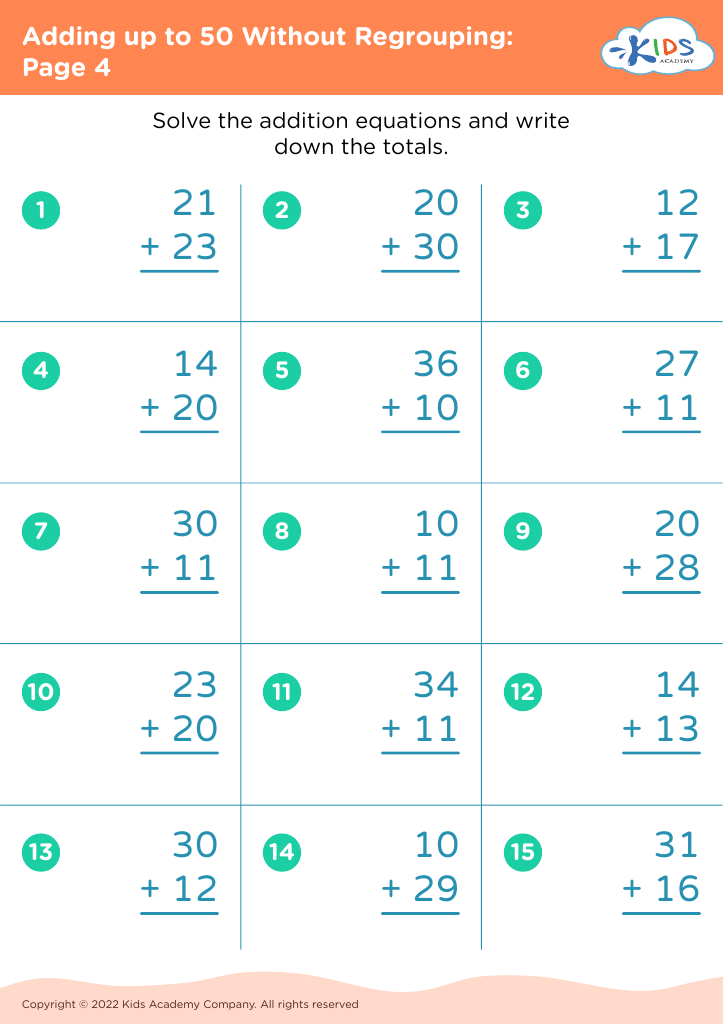
Adding up to 50 Without Regrouping: Page 4
Worksheet
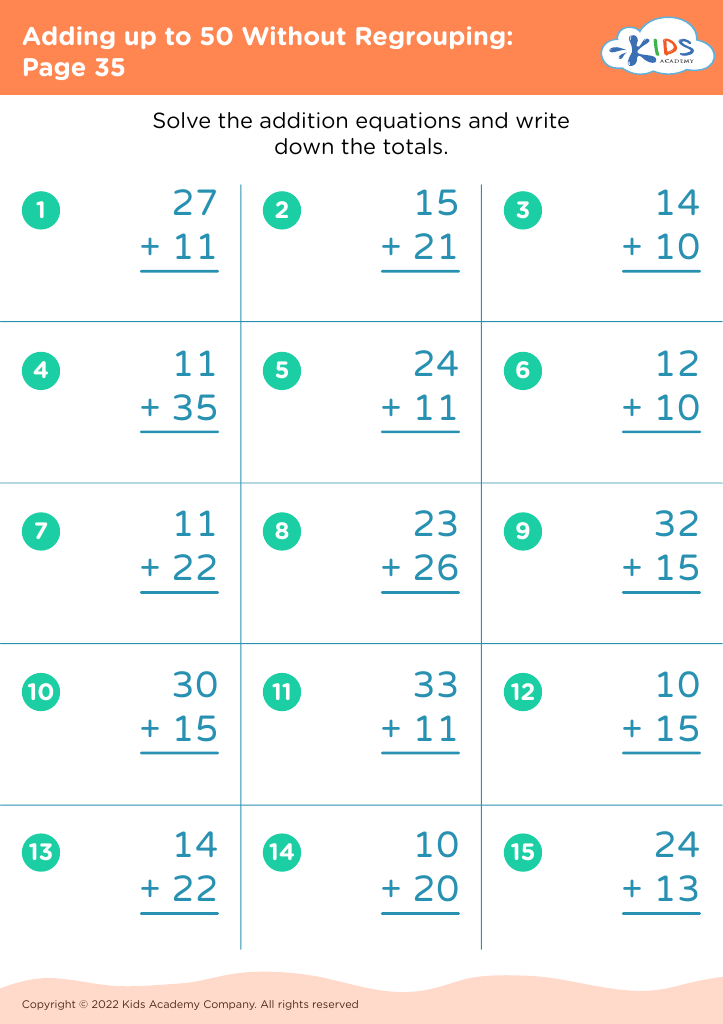
Adding up to 50 Without Regrouping: Page 35
Worksheet
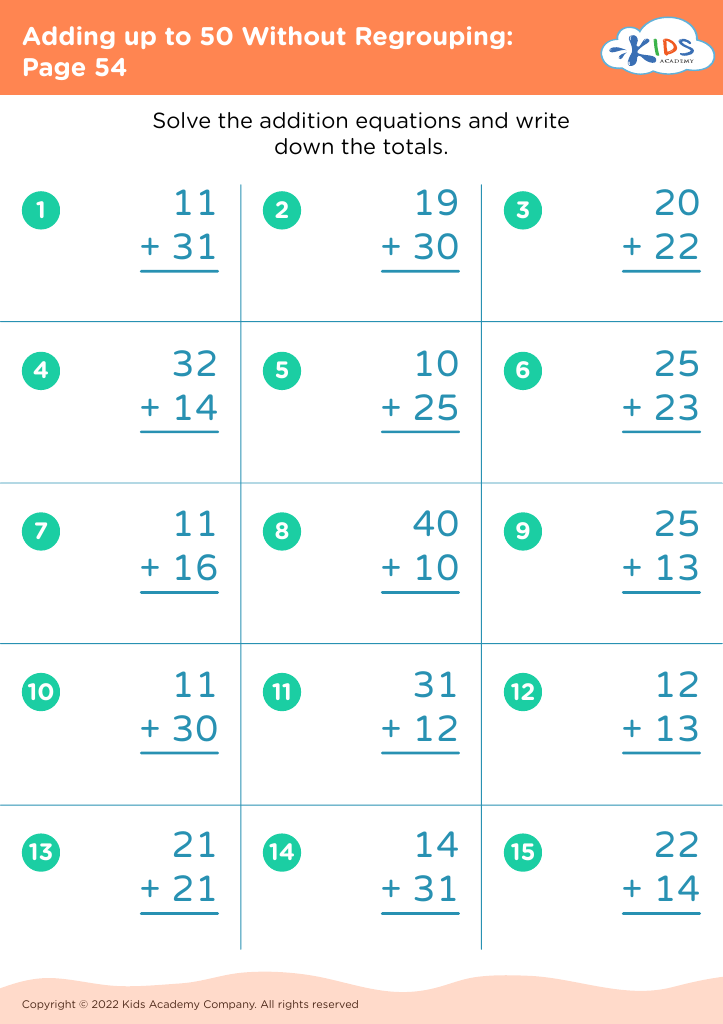
Adding up to 50 Without Regrouping: Page 54
Worksheet
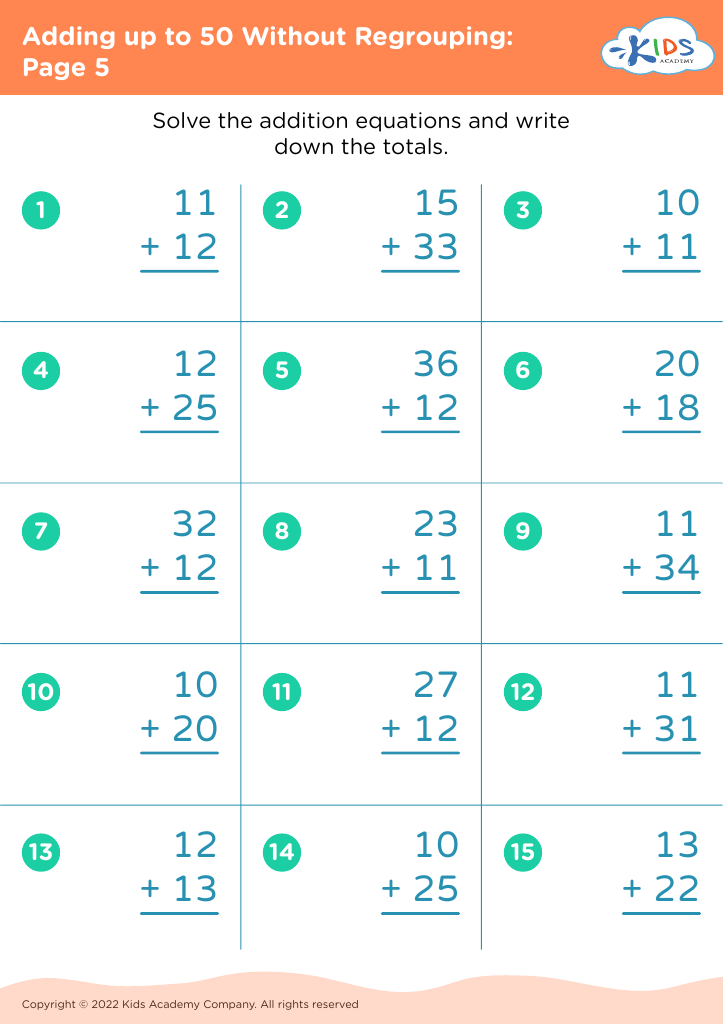
Adding up to 50 Without Regrouping: Page 5
Worksheet
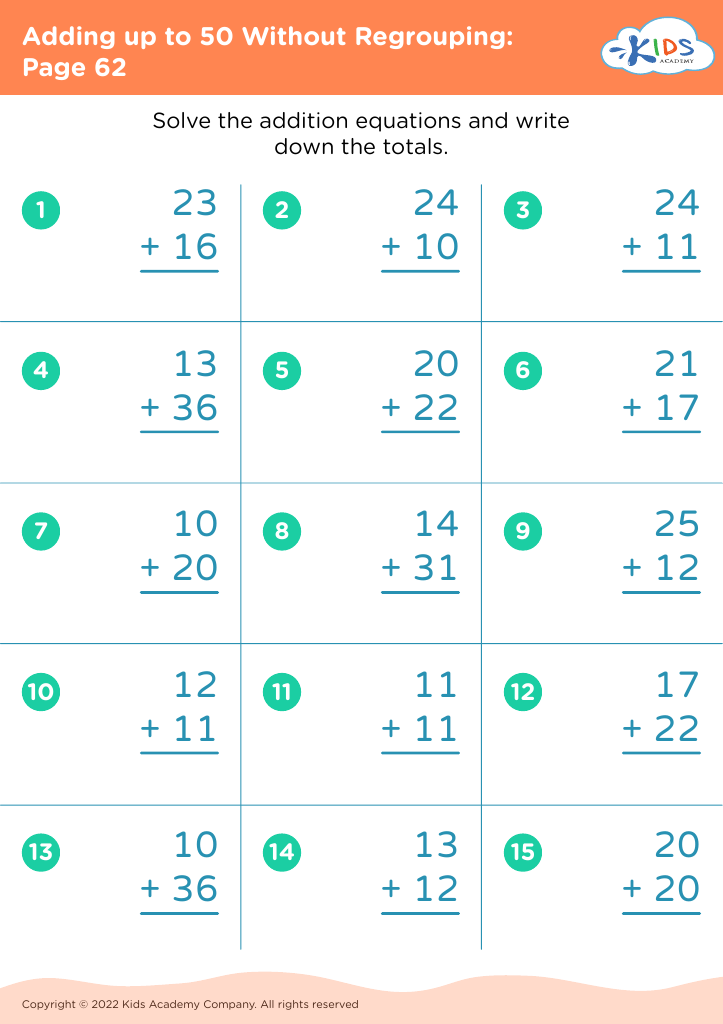
Adding up to 50 Without Regrouping: Page 62
Worksheet
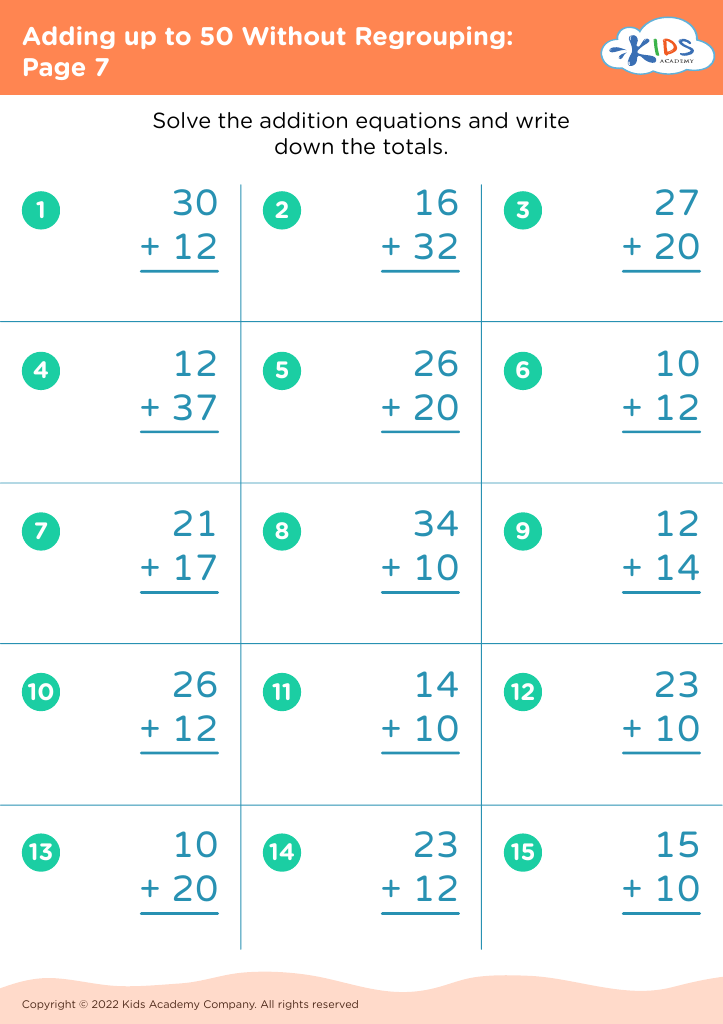
Adding up to 50 Without Regrouping: Page 7
Worksheet
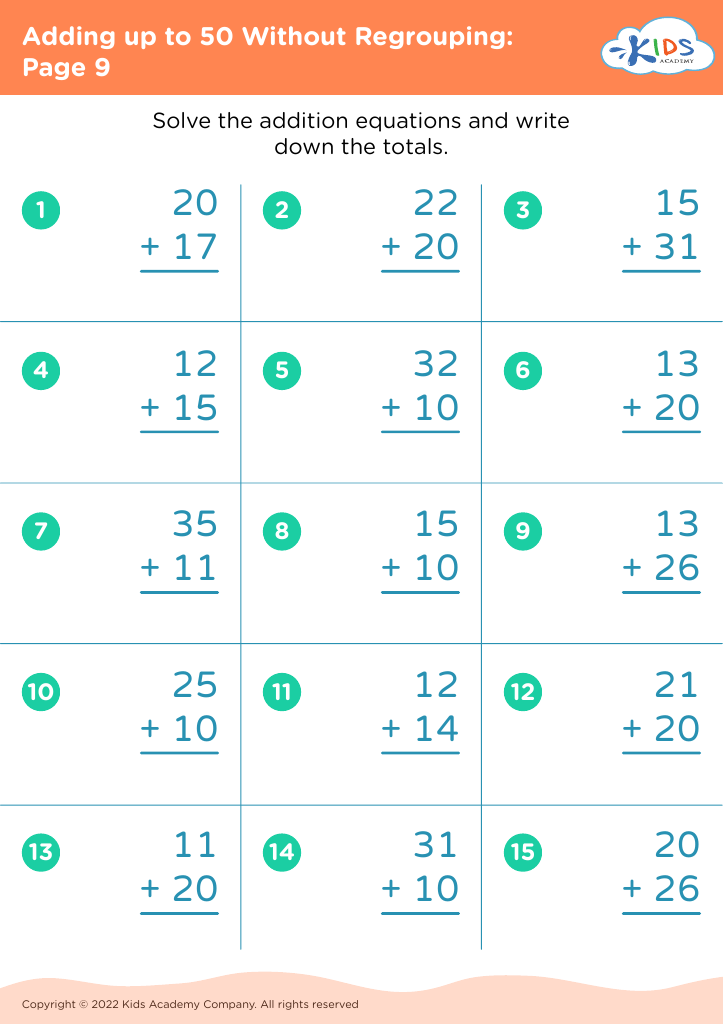
Adding up to 50 Without Regrouping: Page 9
Worksheet
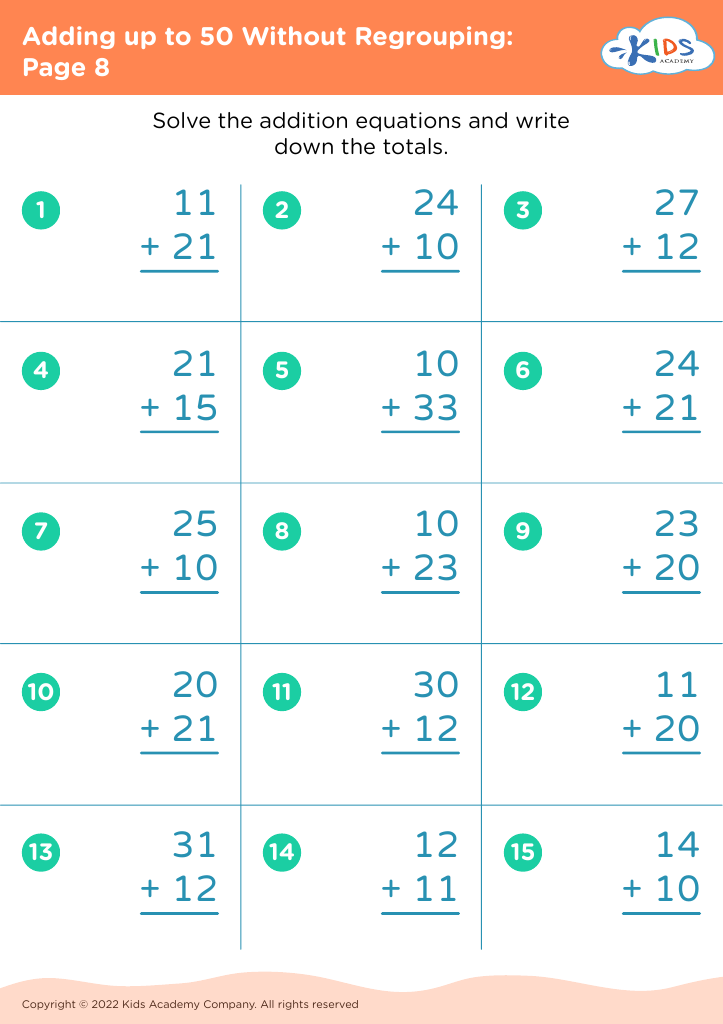
Adding up to 50 Without Regrouping: Page 8
Worksheet
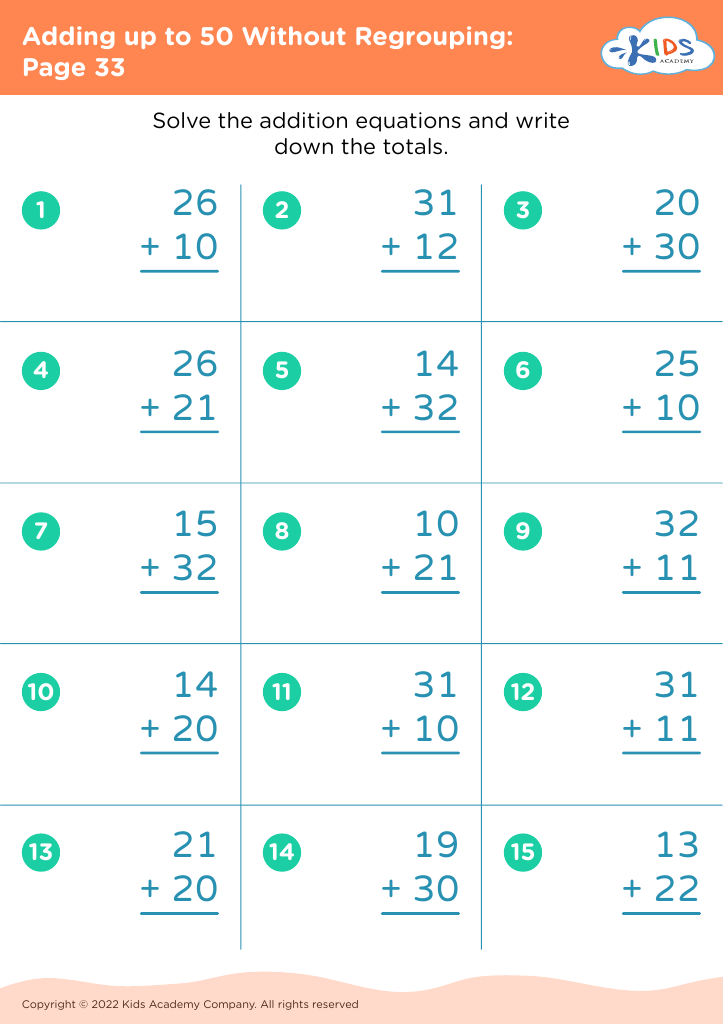
Adding up to 50 Without Regrouping: Page 33
Worksheet
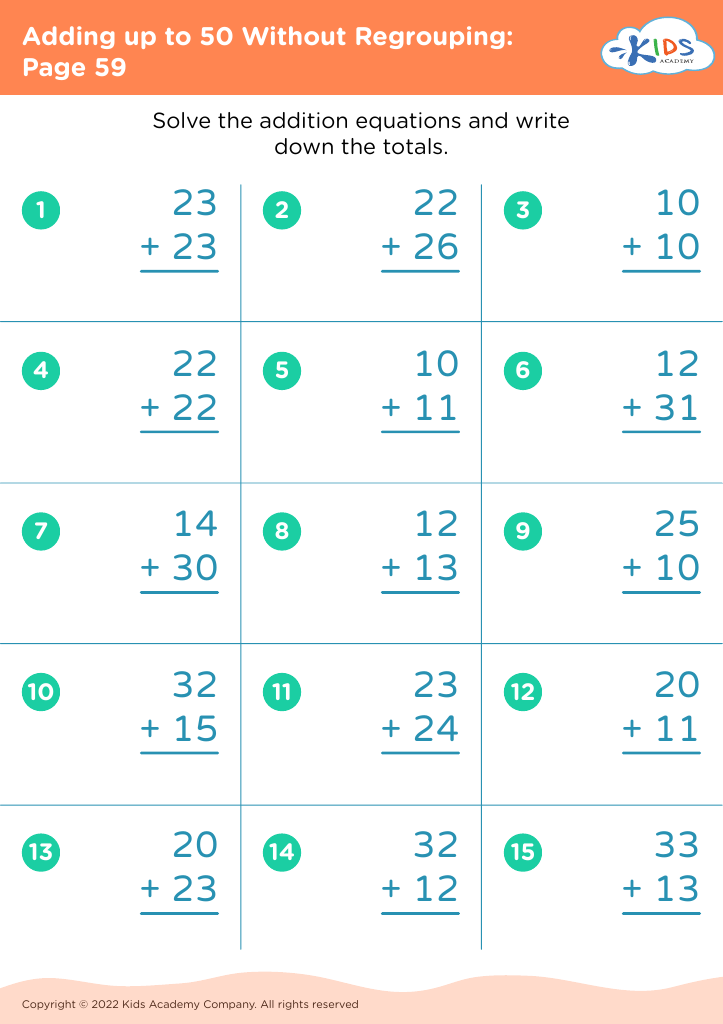
Adding up to 50 Without Regrouping: Page 59
Worksheet
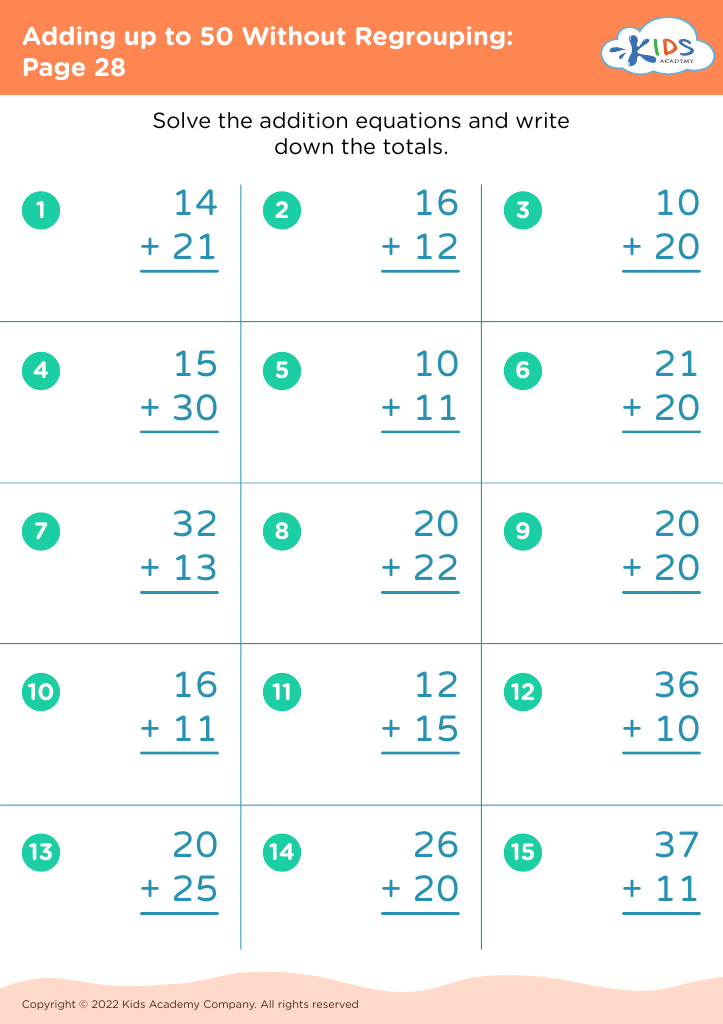
Adding up to 50 Without Regrouping: Page 28
Worksheet
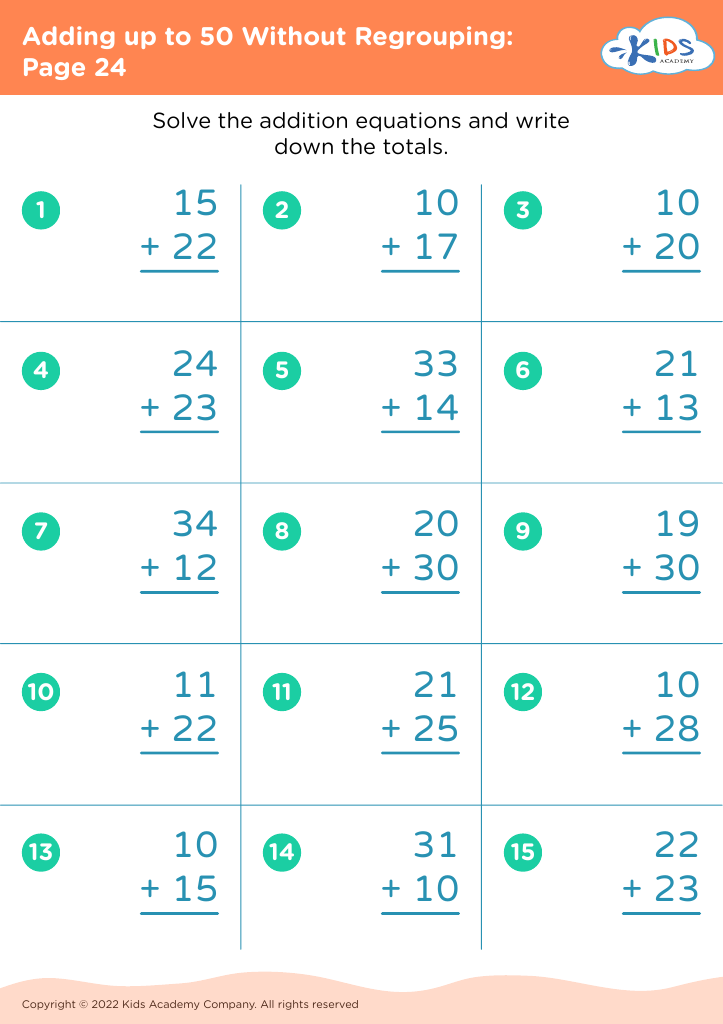
Adding up to 50 Without Regrouping: Page 24
Worksheet
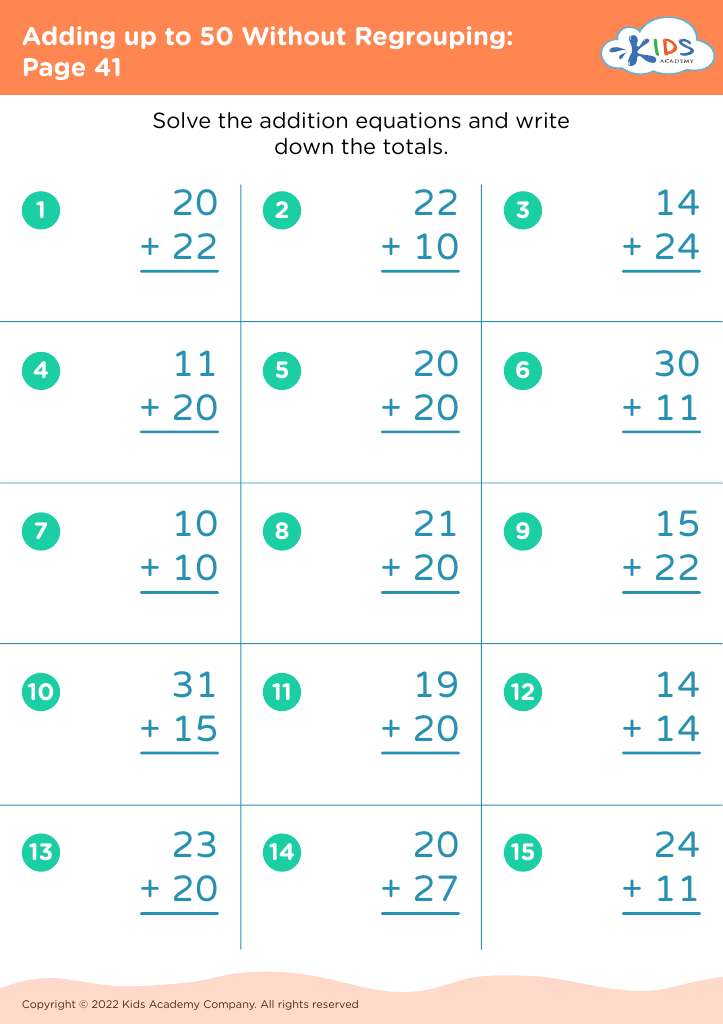
Adding up to 50 Without Regrouping: Page 41
Worksheet
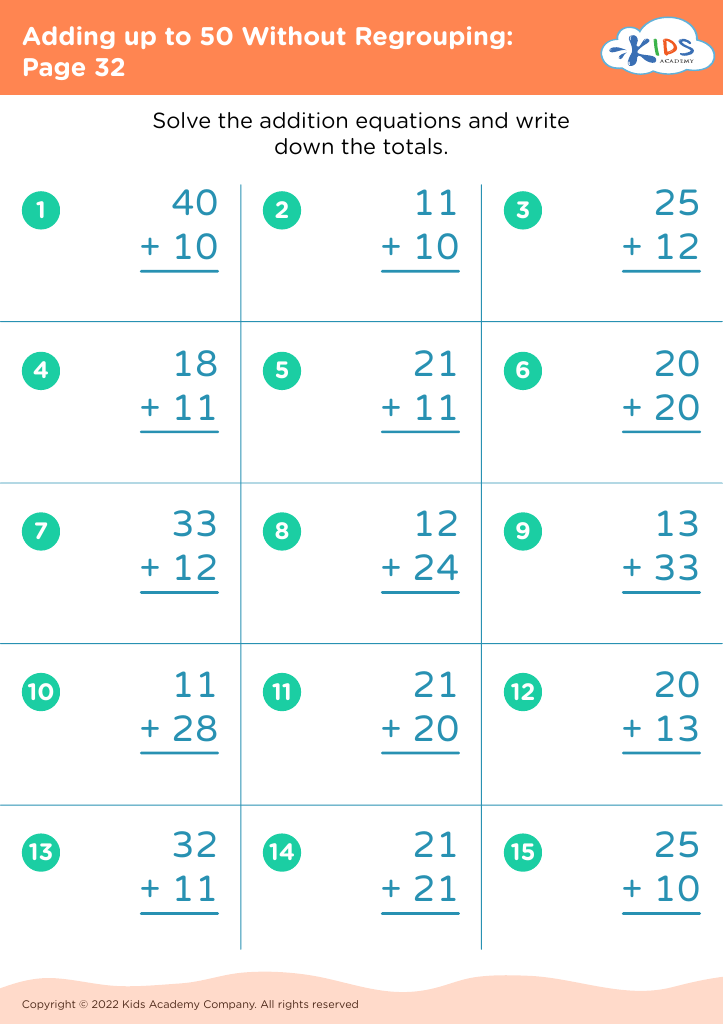
Adding up to 50 Without Regrouping: Page 32
Worksheet
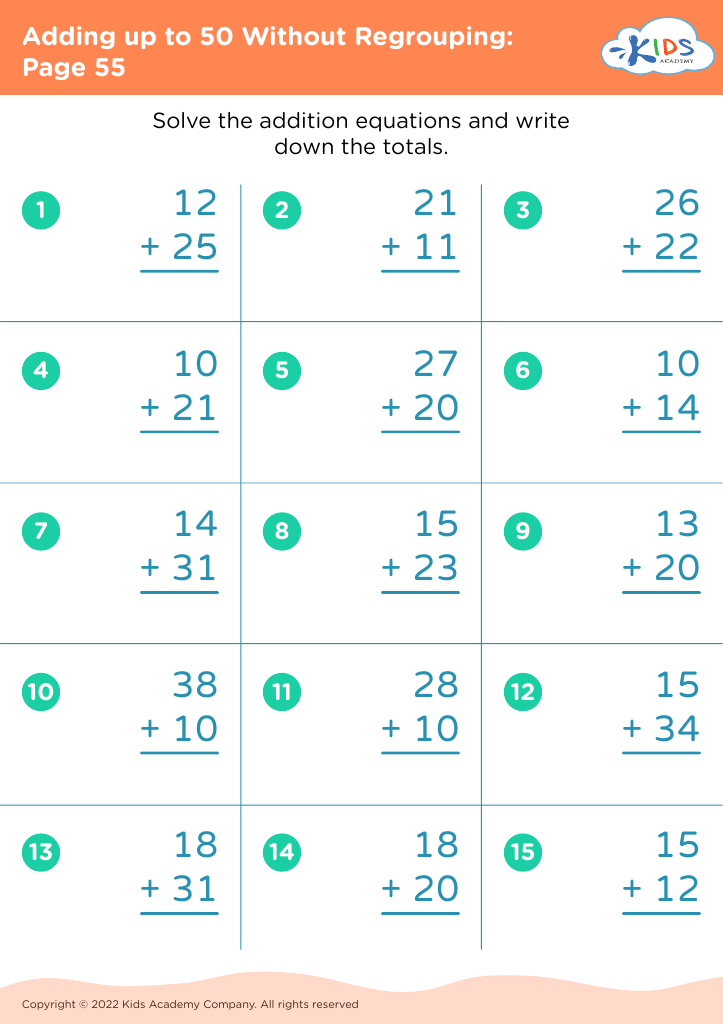
Adding up to 50 Without Regrouping: Page 55
Worksheet


Number recognition and adding up to 50 without regrouping is a fundamental math skill crucial for children aged 7-9. Mastering this concept builds a solid foundation for future math learning and everyday problem-solving. When children can recognize numbers accurately and add them confidently up to 50, they develop important cognitive skills, such as memorization, attention to detail, and logical thinking.

For parents and teachers, emphasizing this skill means ensuring that children can handle basic arithmetic confidently, which is essential before moving on to more complex mathematical operations like subtraction with regrouping, multiplication, and division. Encouraging proficiency in these fundamental skills increases a child's confidence and fosters a positive attitude toward math, reducing math anxiety and making them more likely to succeed in the subject.

Moreover, these skills have practical applications in real life, such as managing allowances, counting money, or following a recipe, which enhances a child's independence and responsibility. Focusing on number recognition and addition within this range prepares children not just for academic success, but also for practical competence in dealing with day-to-day tasks that involve numbers. Thus, parents and teachers should prioritize this essential part of early math education to cultivate well-rounded, numerically literate individuals.