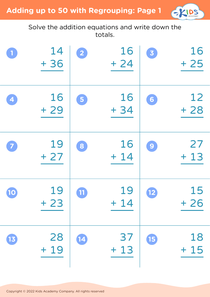
Understand fractions Adding up to 50 Without Regrouping Worksheets for Ages 7-9
4 filtered results
-
From - To
Explore our "Understand Fractions: Adding Up to 50 Without Regrouping Worksheets" tailored for children aged 7-9. Designed to enhance fundamental math skills, these engaging worksheets will help young learners grasp the concept of fractions while practicing addition without regrouping. Perfectly aligned with early-grade math curricula, they offer clear illustrations and simple equations to promote a comprehensive understanding of fractions in an enjoyable manner. Encourage your child's math proficiency with hands-on practice that boosts confidence and sharpens problem-solving abilities. Start your journey towards mastering math today with our colorful and interactive worksheets! Suitable for parents, teachers, and homeschooling activities.
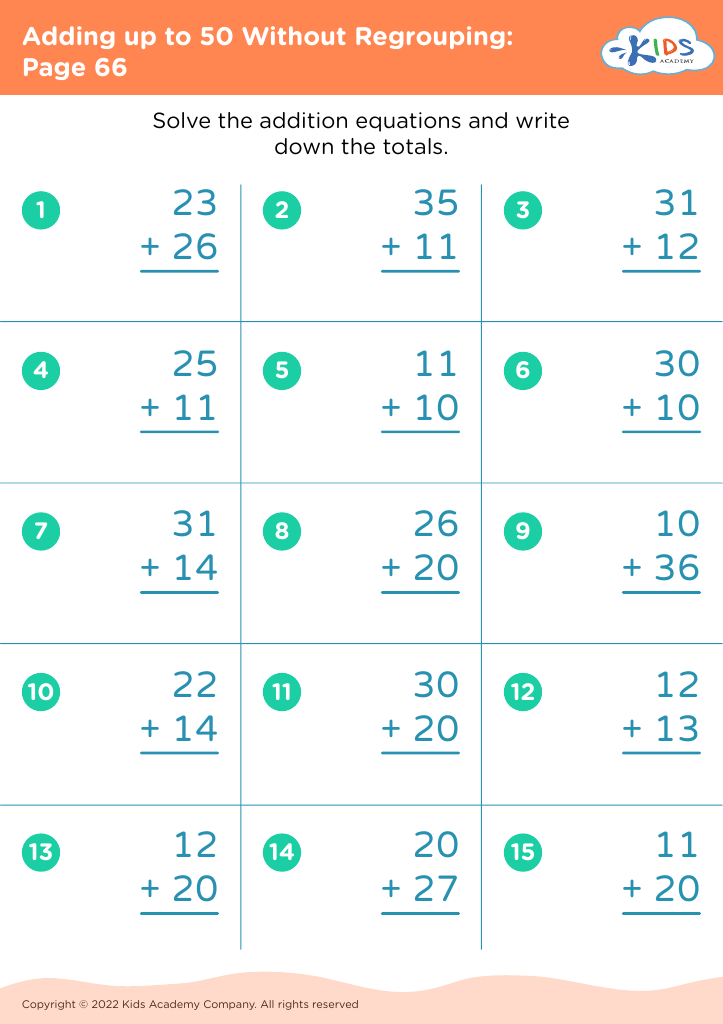
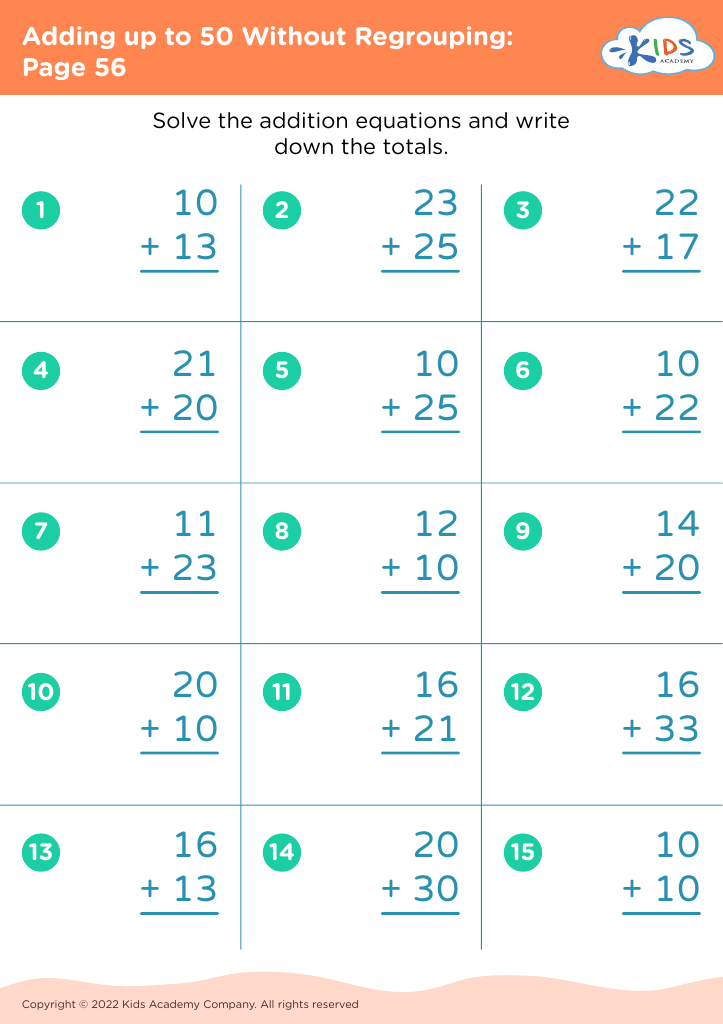
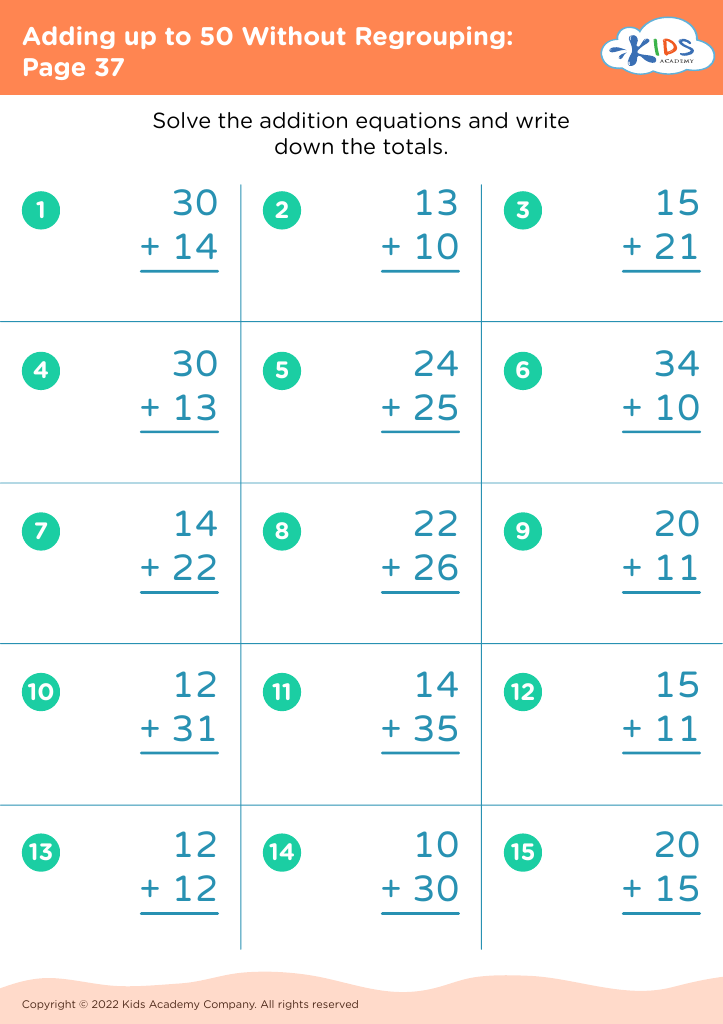
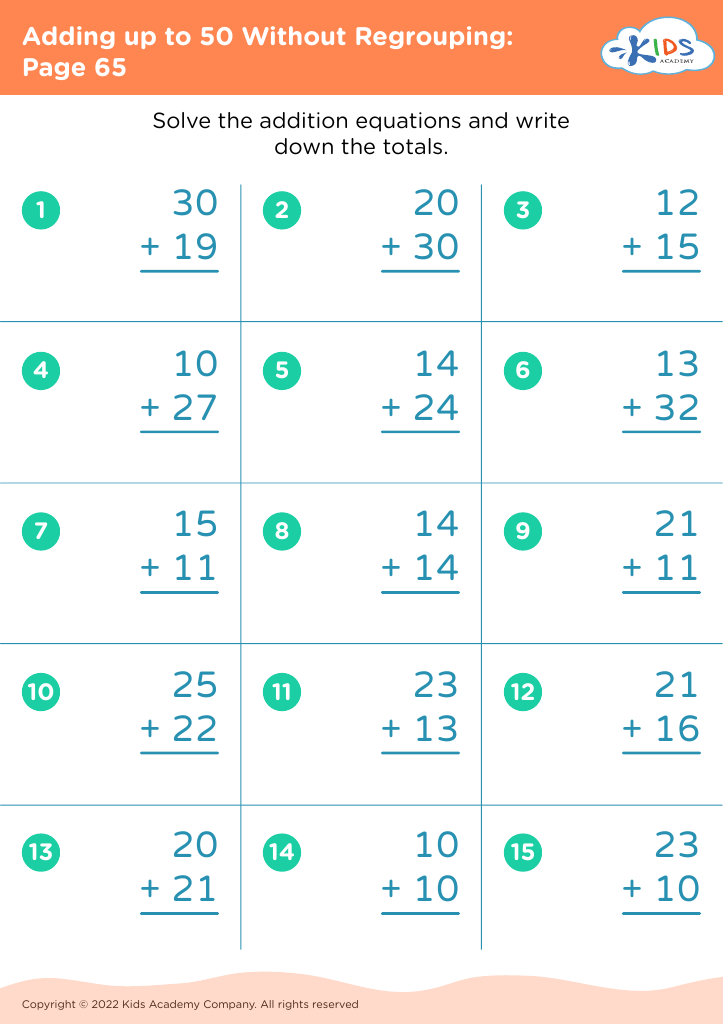


Understanding fractions and their addition, especially within the context of adding fractions that total up to a whole number (like 50) without regrouping, is essential for children aged 7-9. This foundational skill nurtures mathematical comprehension, which is especially crucial as children transition from basic arithmetic to more advanced concepts. Mastering fractions helps develop problem-solving abilities and logical reasoning, which are critical not only in math but in daily life situations.
When children grasp these concepts, they build confidence in their abilities to tackle more complex math problems in the future, laying the groundwork for success in higher grades. Additionally, understanding fractions is integral in various real-world applications, such as cooking, budgeting, and measuring—skills that students will encounter daily.
Parents and teachers play a vital role in fostering this comprehension. Engaging with children during fraction exercises can strengthen their bond and create a supportive learning environment. Moreover, creating hands-on activities or utilizing visual aids can make learning fractions enjoyable. Encouraging questions and exploration can further enhance their understanding. Ultimately, a strong grasp of fractions empowers children academically and prepares them for practical challenges in life.