Addition skills Adding up to 50 Worksheets for Ages 7-9
7 filtered results
-
From - To
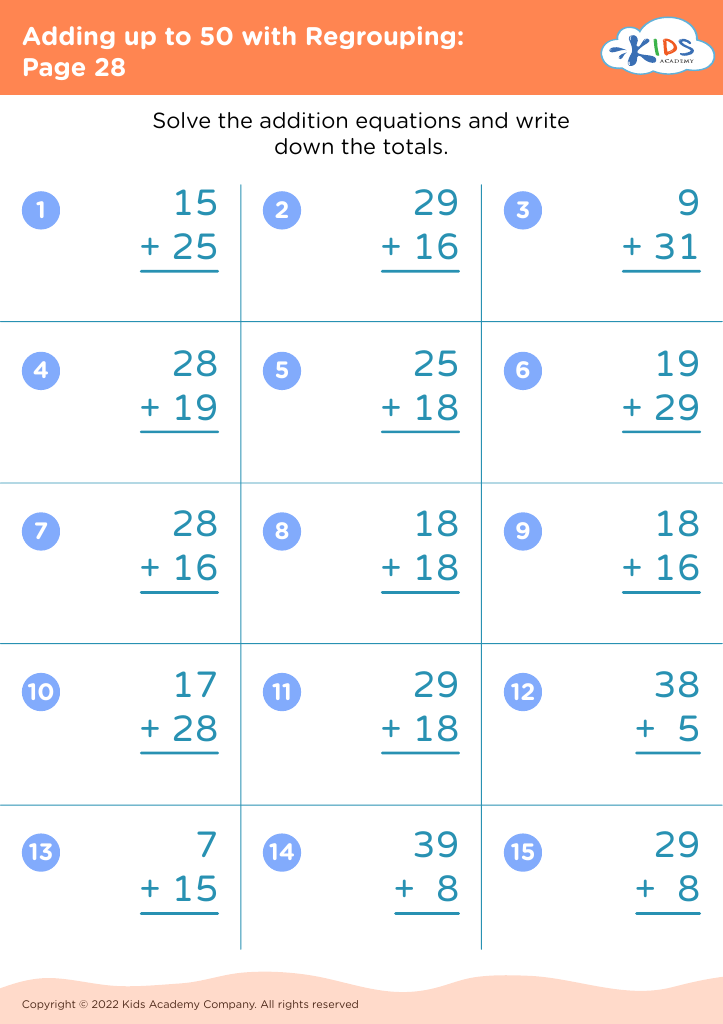
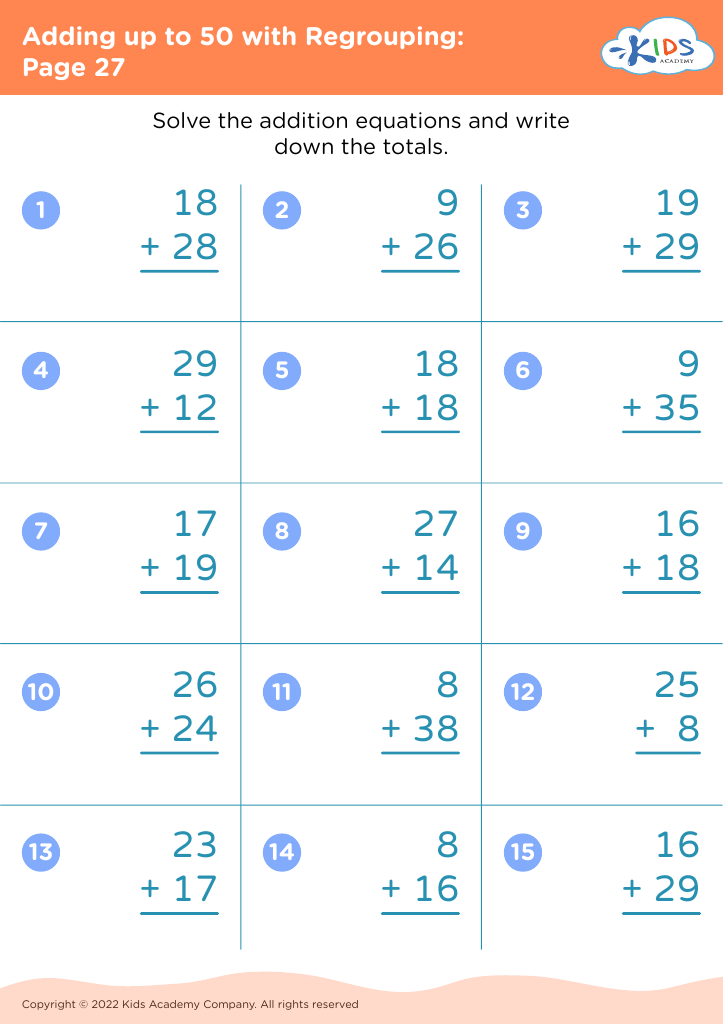
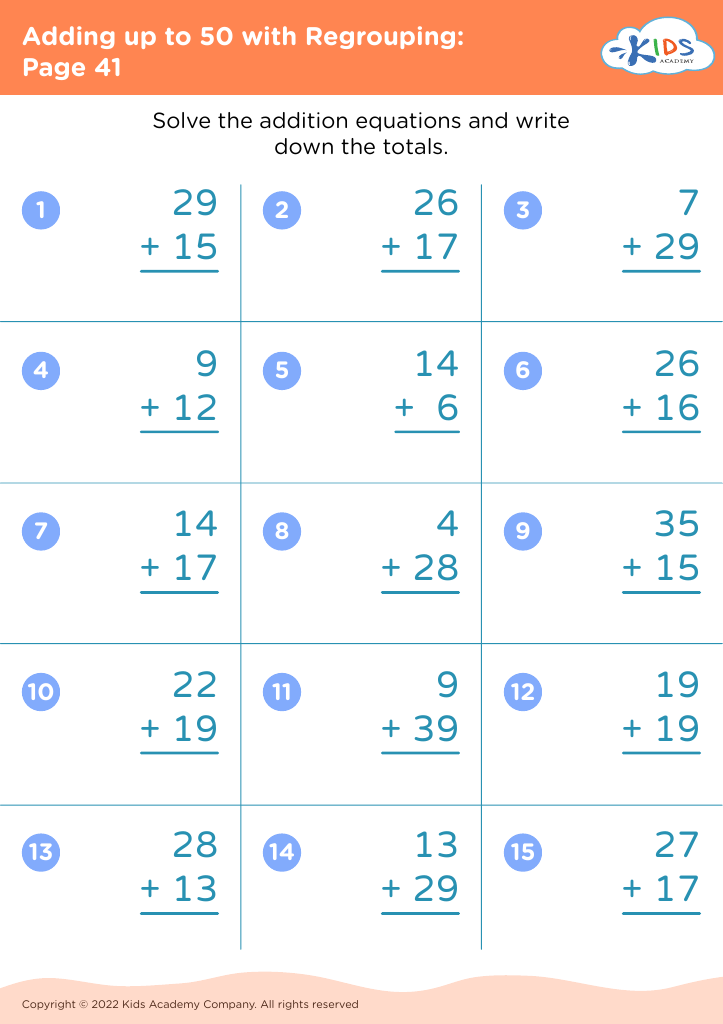
Enhance your child's math ability with our engaging "Addition skills Adding up to 50 Worksheets," designed specifically for ages 7-9. These worksheets provide a stimulating way for young learners to master addition facts, improve their number sense, and boost their confidence in handling calculations up to 50. With a variety of fun activities, including fill-in-the-blank problems and visually appealing illustrations, your child can practice at their own pace while solidifying essential math skills. Ideal for both home and classroom use, these worksheets serve as a perfect complement to traditional learning, making math enjoyable and interactive. Start adding success to their educational journey today!
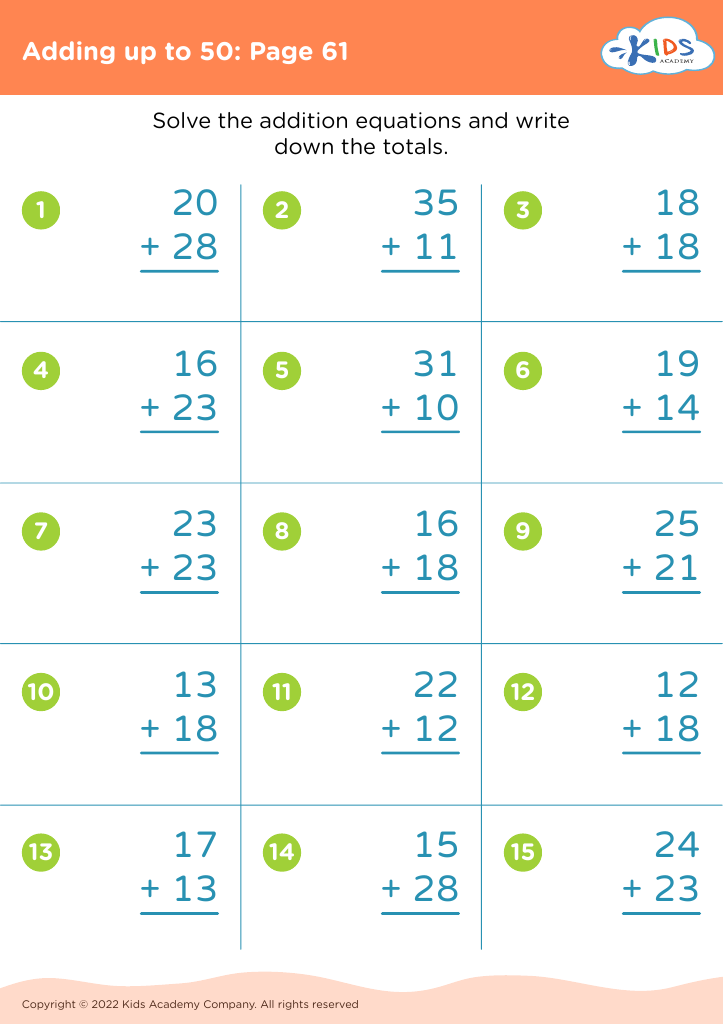
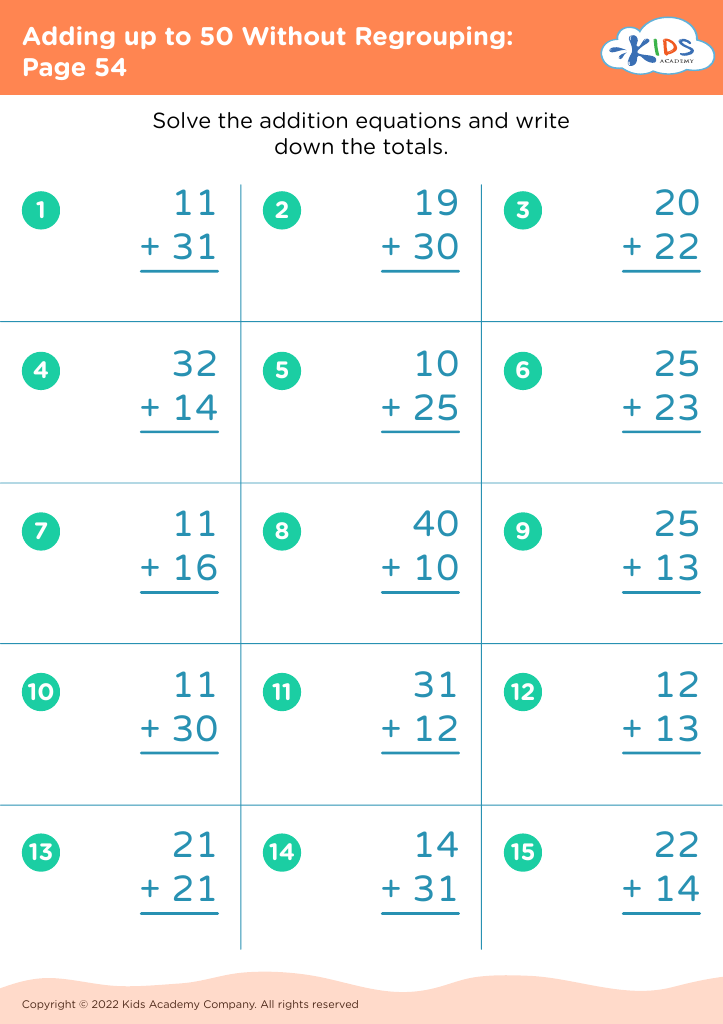
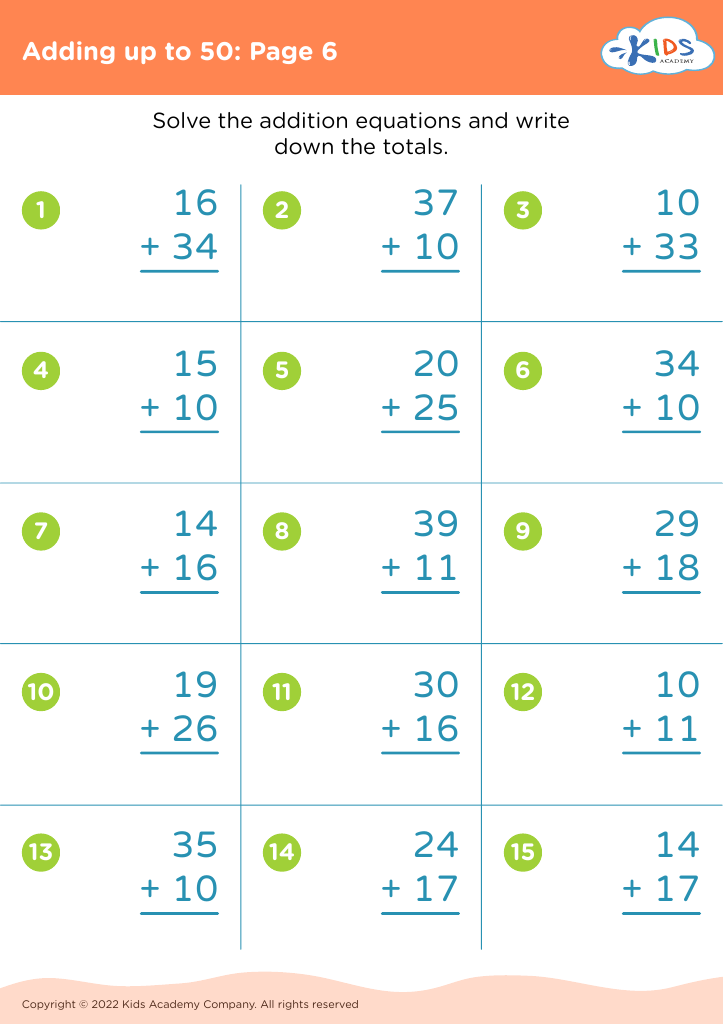
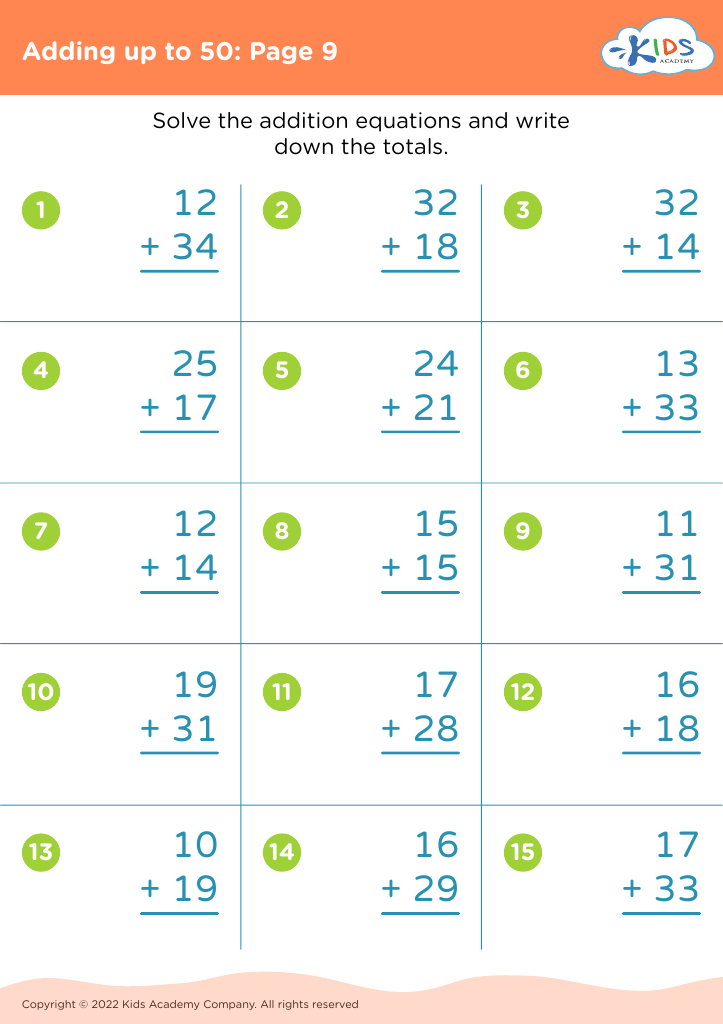




Addition skills, particularly adding up to 50, are crucial for children aged 7-9 as they lay the foundation for more complex mathematical concepts. During this stage, children transition from basic counting to developing fluency with numbers, which significantly enhances their problem-solving abilities in everyday situations.
Understanding addition sets the groundwork for future learning in mathematics, including subtraction, multiplication, and division. Mastery of addition up to 50 can help prevent learning gaps that may result in larger struggles as children progress in their education. It encourages logical thinking, promotes cognitive development, and helps children gain confidence in their math abilities.
Moreover, addition skills are not just abstract concepts; they directly relate to real-life scenarios, such as handling money, measuring ingredients for a recipe, or determining durations of time. Encouraging proficiency in this area also fosters a positive attitude towards math, which is often viewed as challenging or intimidating.
By cultivating a strong understanding of addition, parents and teachers equip children with essential life skills that go beyond the classroom, fostering independence, analytical thinking, and the ability to navigate various challenges. Hence, focusing on addition skills at this critical age should be a priority for both parents and educators.








