Filters

16 filtered results

Clear all filters
Favorites
With answer key
Interactive

16 filtered results

Difficulty Level

Grade


Enhance your child's math abilities with our "Basic Math Skills Adding Up to 50" worksheets, designed specifically for children ages 7-9. These engaging worksheets offer a fun and interactive way for young learners to practice and master addition skills through various activities tailored to their level. Covering essential concepts, these resources aim to build a strong math foundation while keeping students motivated and excited about learning. With clear instructions and colorful illustrations, kids will find joy as they complete each worksheet. Perfect for home schooling, classroom use, or supplemental practice, empower your child's mathematical journey today!
Check out this FREE Trial Lesson on Adding up to 50 for age 7-9!

Exactly the Same, or Not

Favorites
With answer key
Interactive
  • 7-9
  • Basic Math Skills
  • Adding up to 50
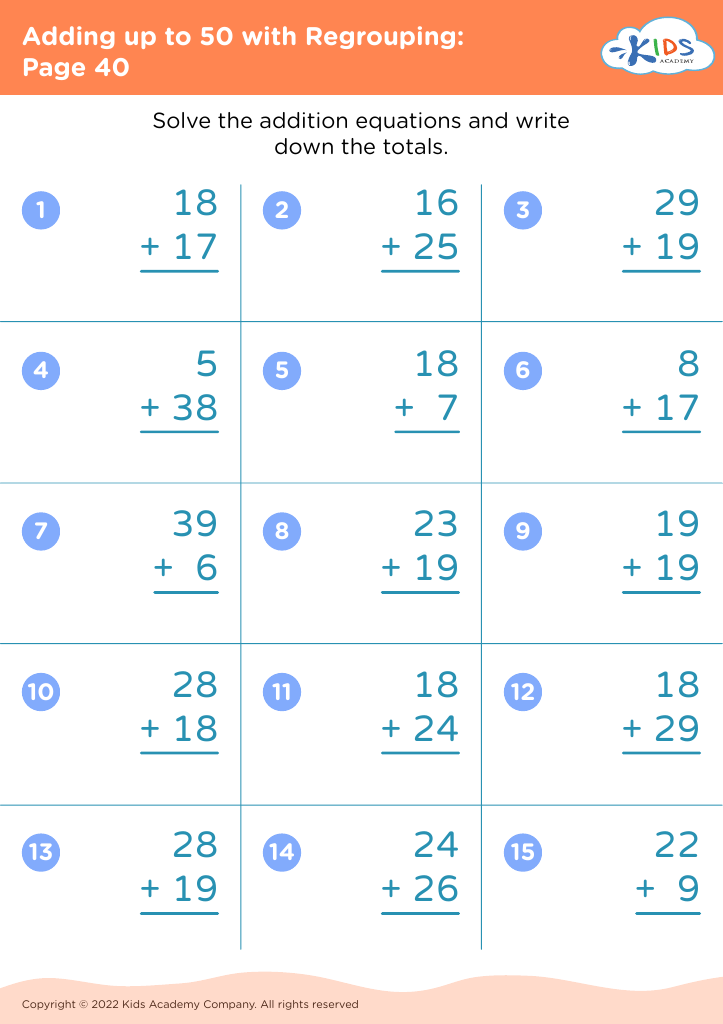
Adding up to 50 with Regrouping: Page 40
Worksheet
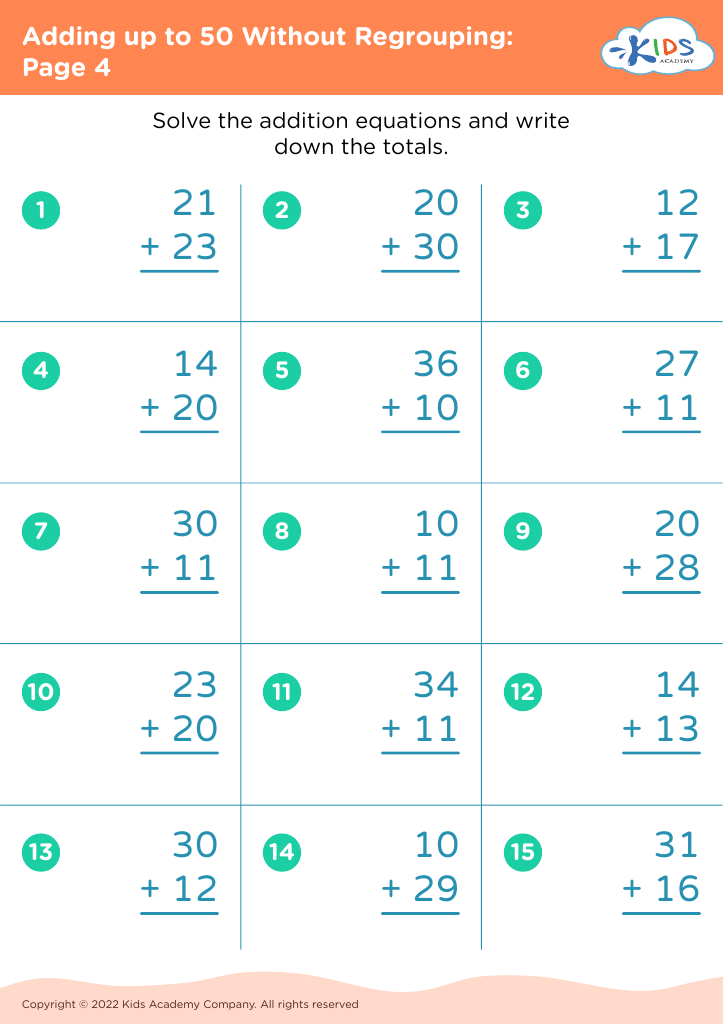
Adding up to 50 Without Regrouping: Page 4
Worksheet
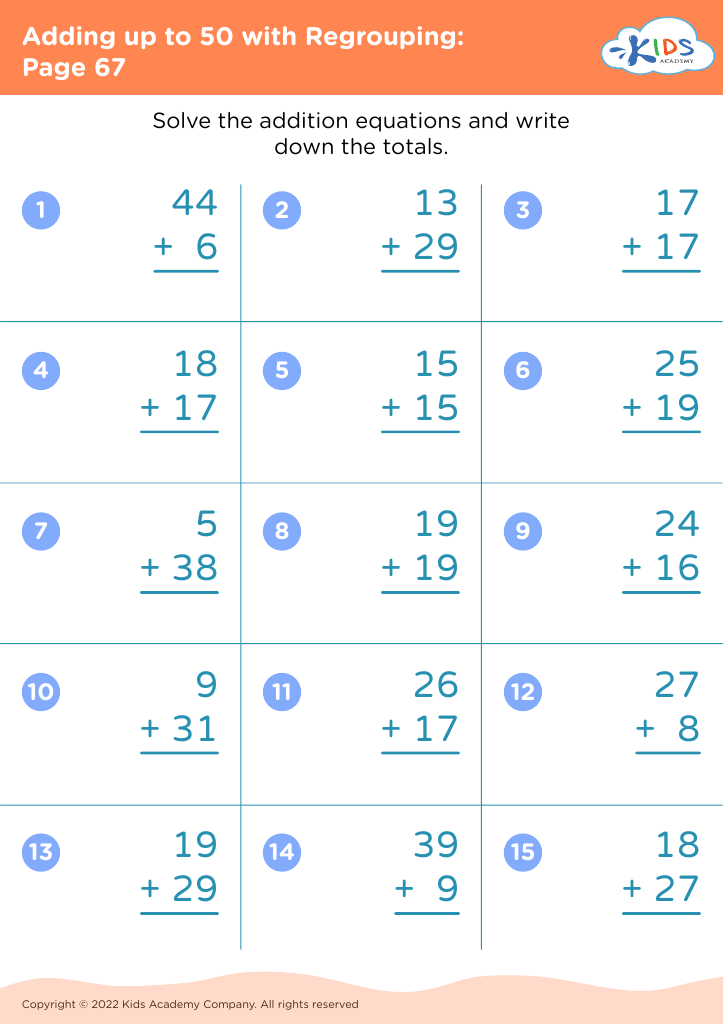
Adding up to 50 with Regrouping: Page 67
Worksheet
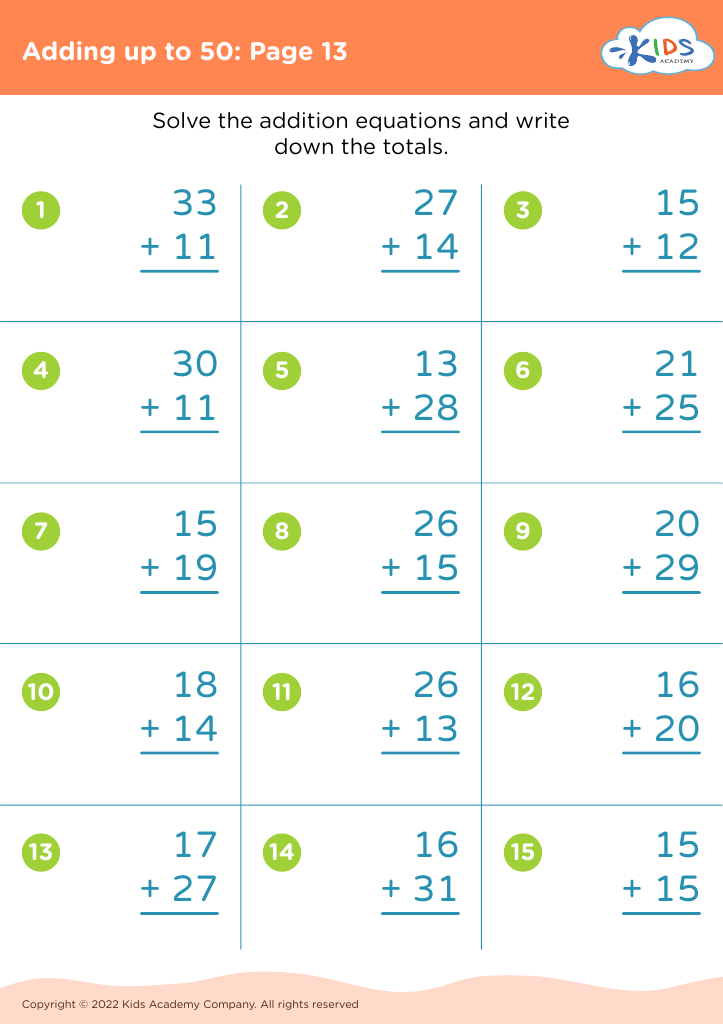
Adding up to 50: Page 13

Adding up to 50: Page 13

Adding up to 50: Page 13
Worksheet
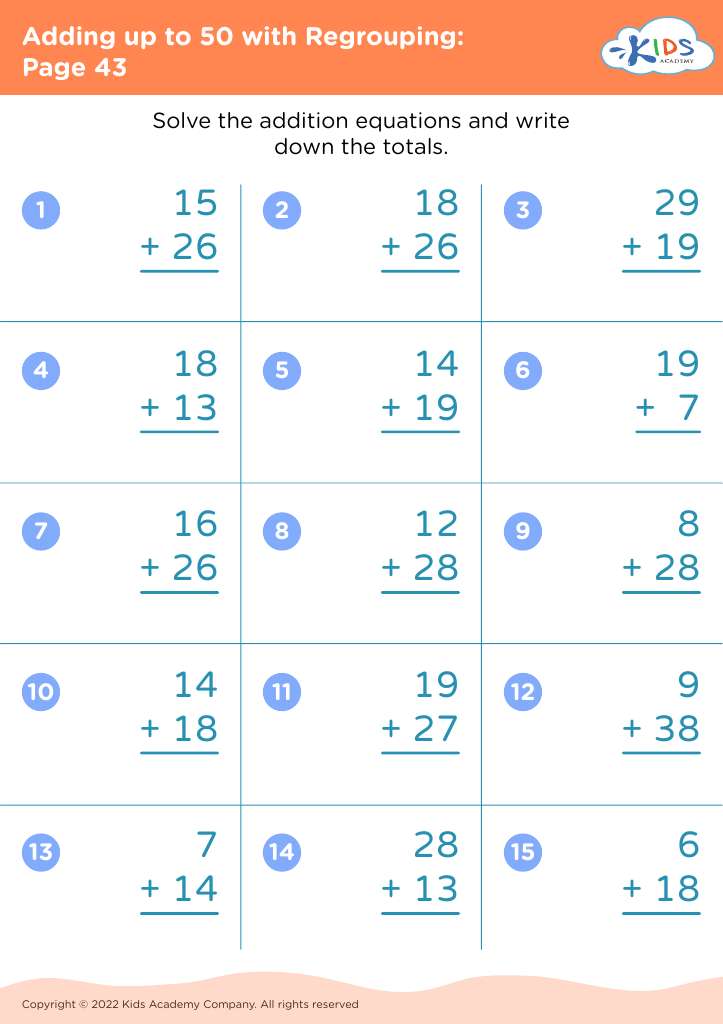
Adding up to 50 with Regrouping: Page 43
Worksheet
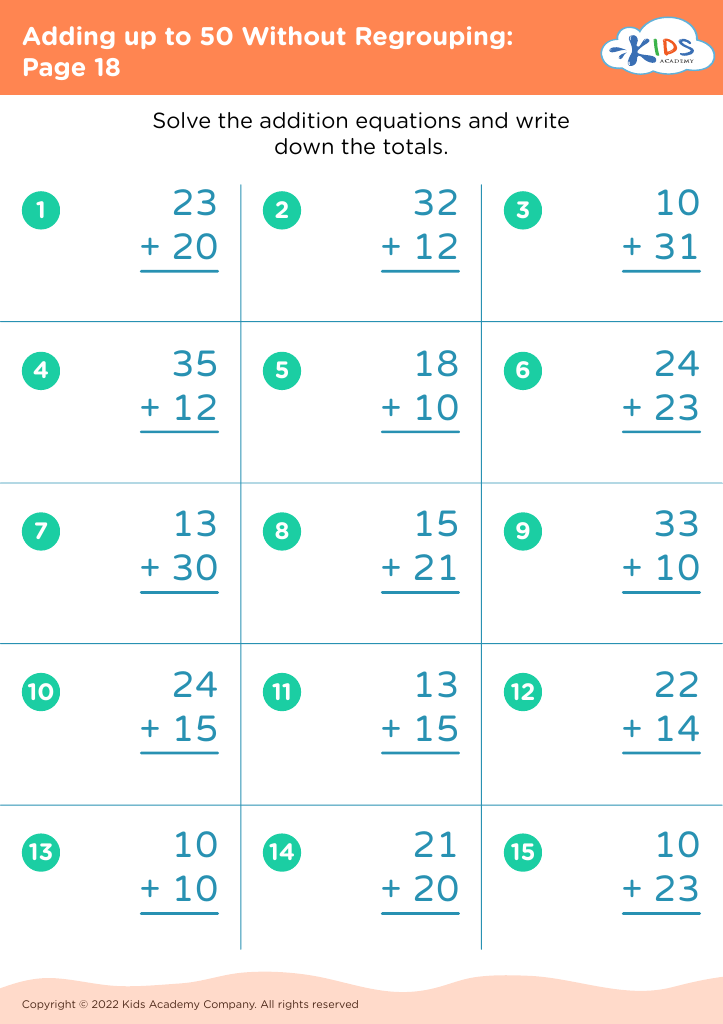
Adding up to 50 Without Regrouping: Page 18
Worksheet
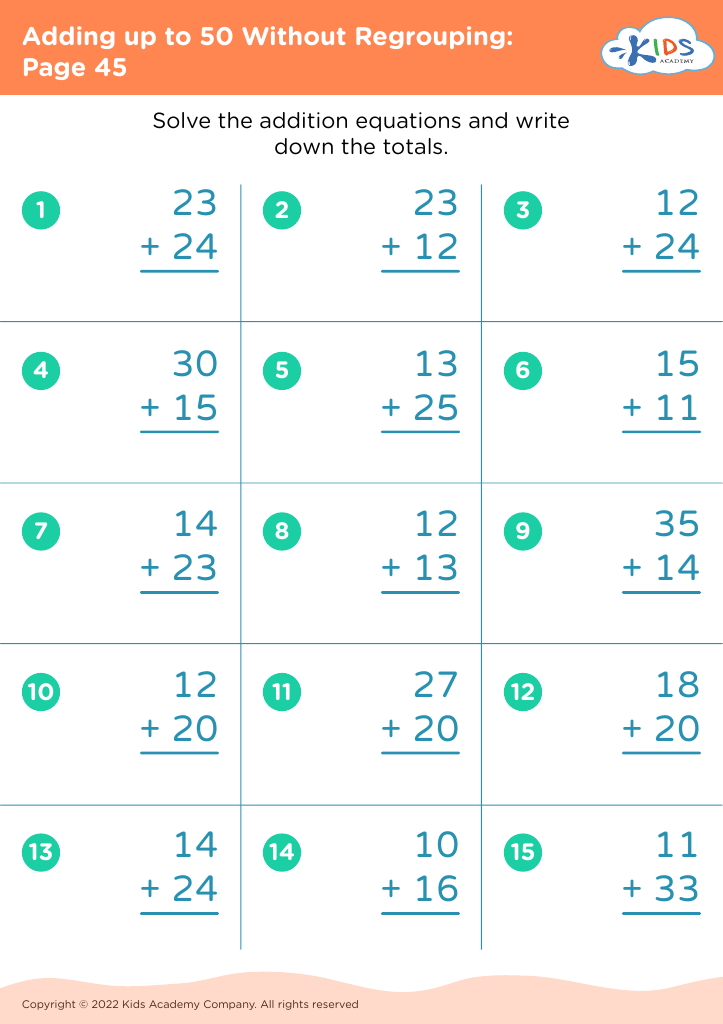
Adding up to 50 Without Regrouping: Page 45
Worksheet
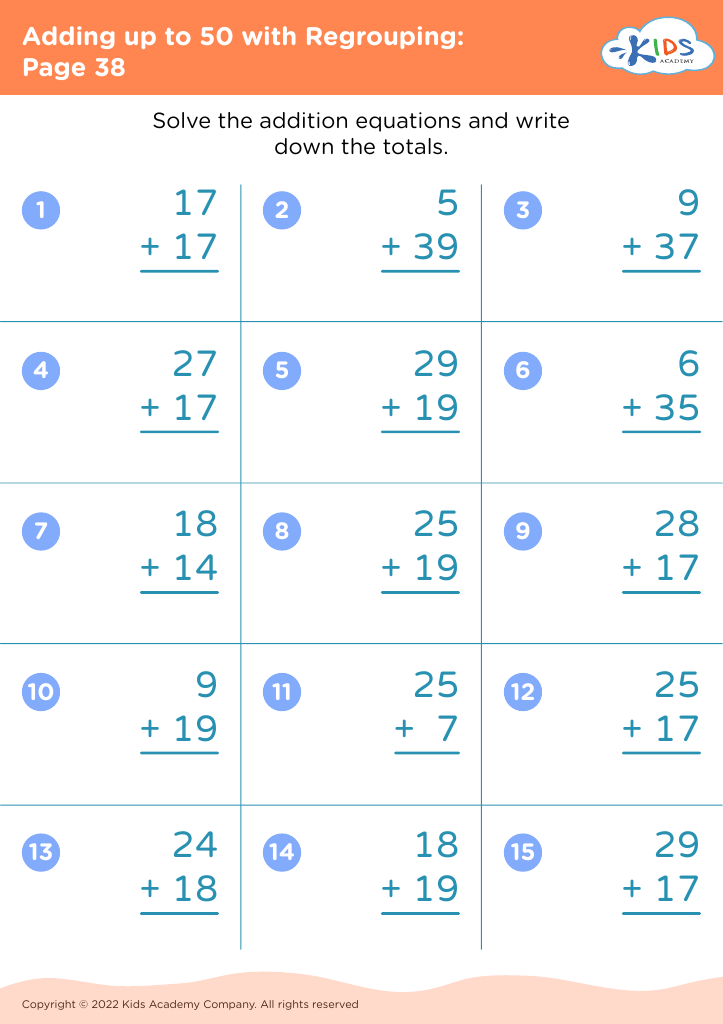
Adding up to 50 with Regrouping: Page 38
Worksheet
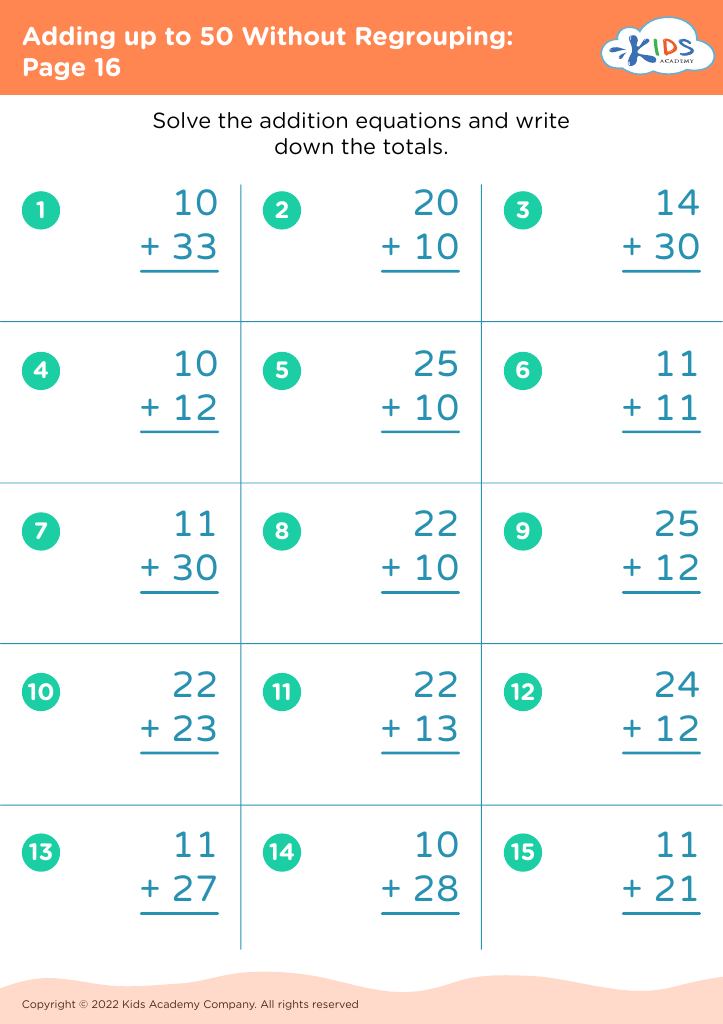
Adding up to 50 Without Regrouping: Page 16
Worksheet
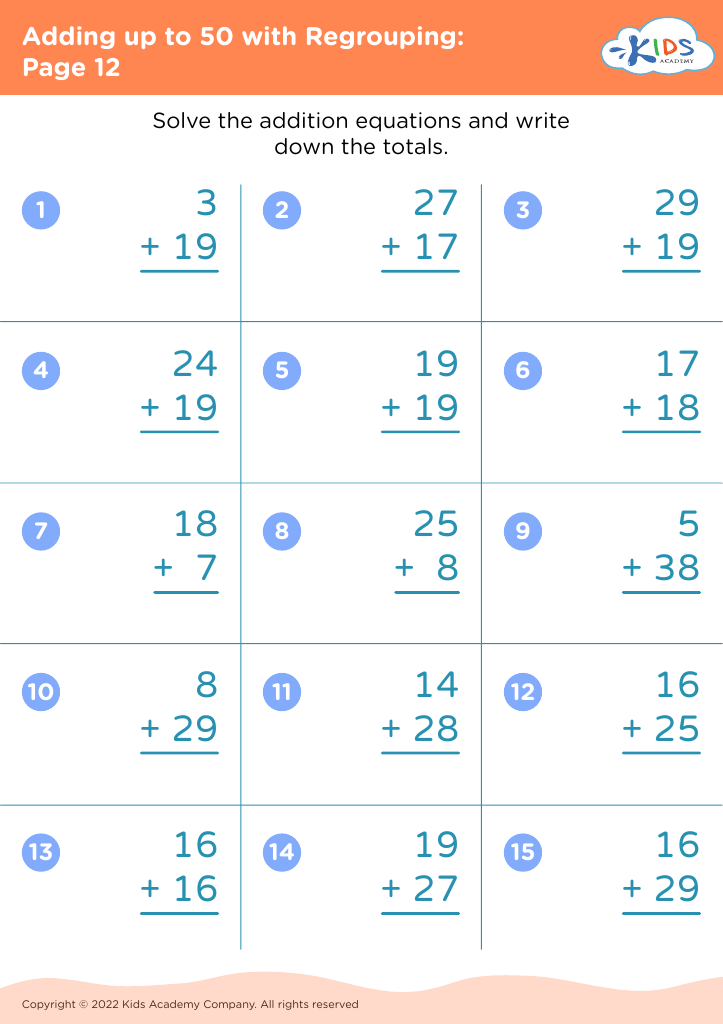
Adding up to 50 with Regrouping: Page 12
Worksheet
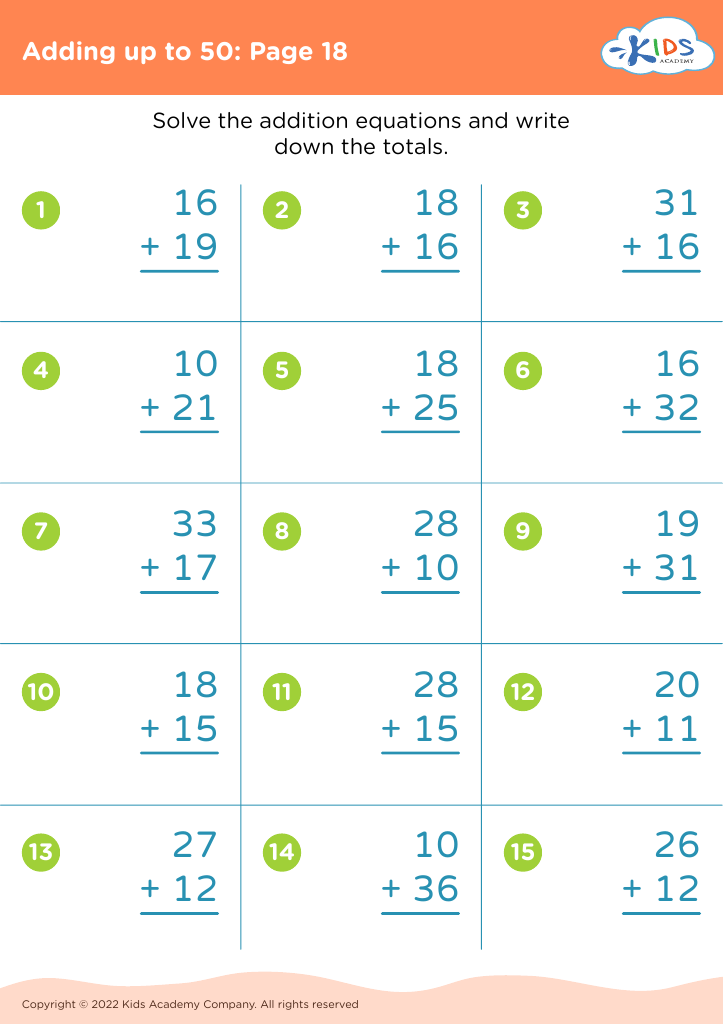
Adding up to 50: Page 18

Adding up to 50: Page 18

Adding up to 50: Page 18
Worksheet
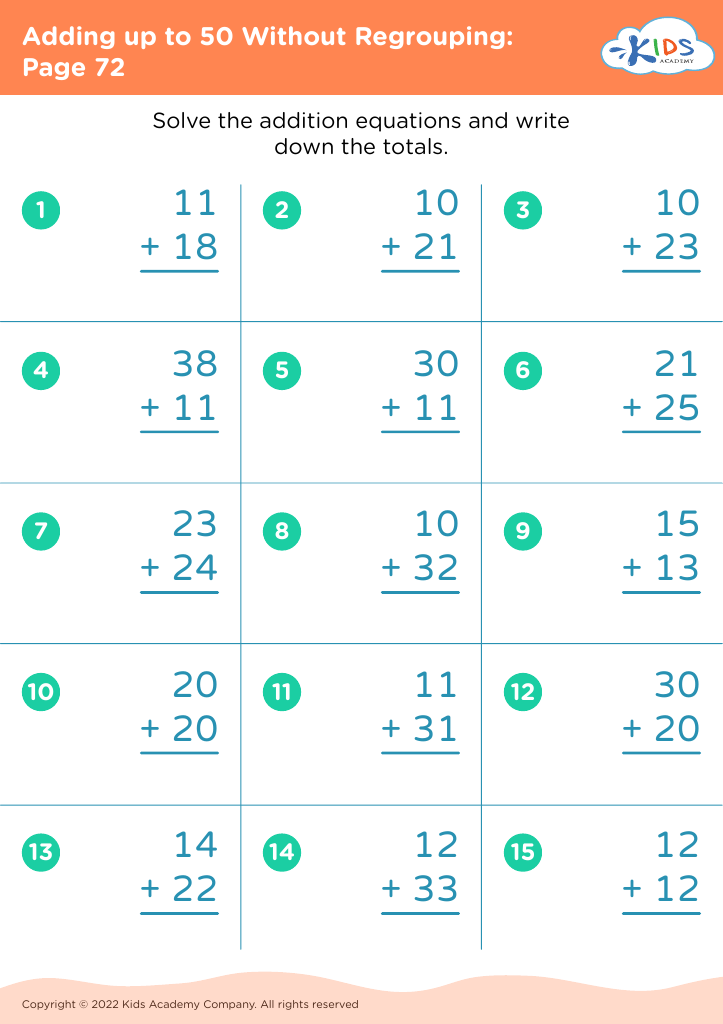
Adding up to 50 Without Regrouping: Page 72
Worksheet
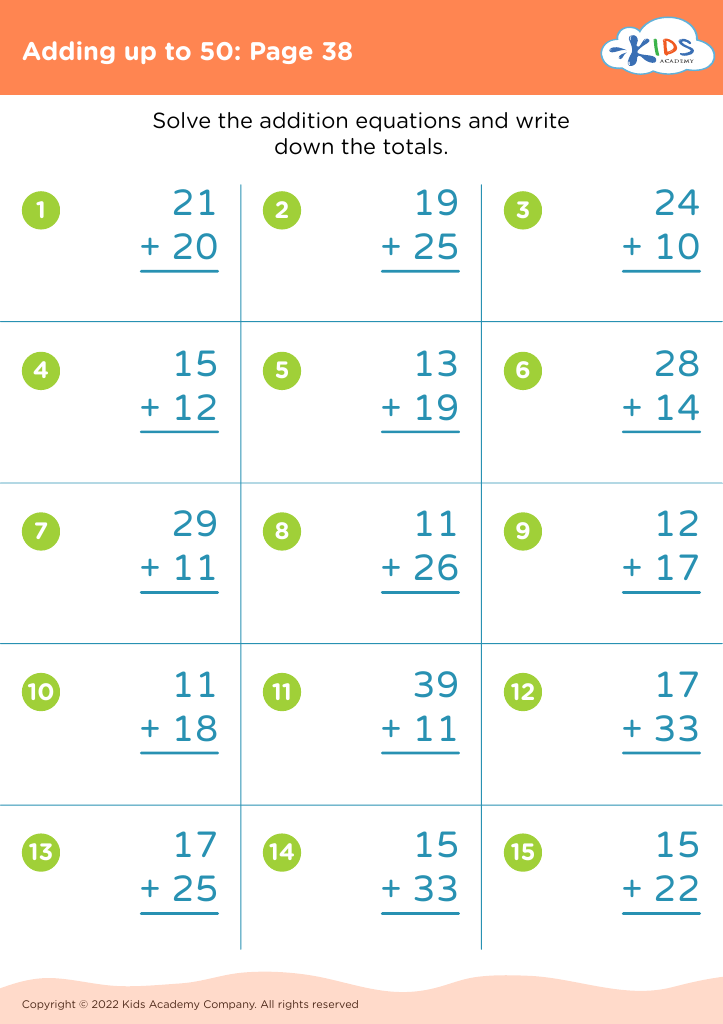
Adding up to 50: Page 38

Adding up to 50: Page 38

Adding up to 50: Page 38
Worksheet
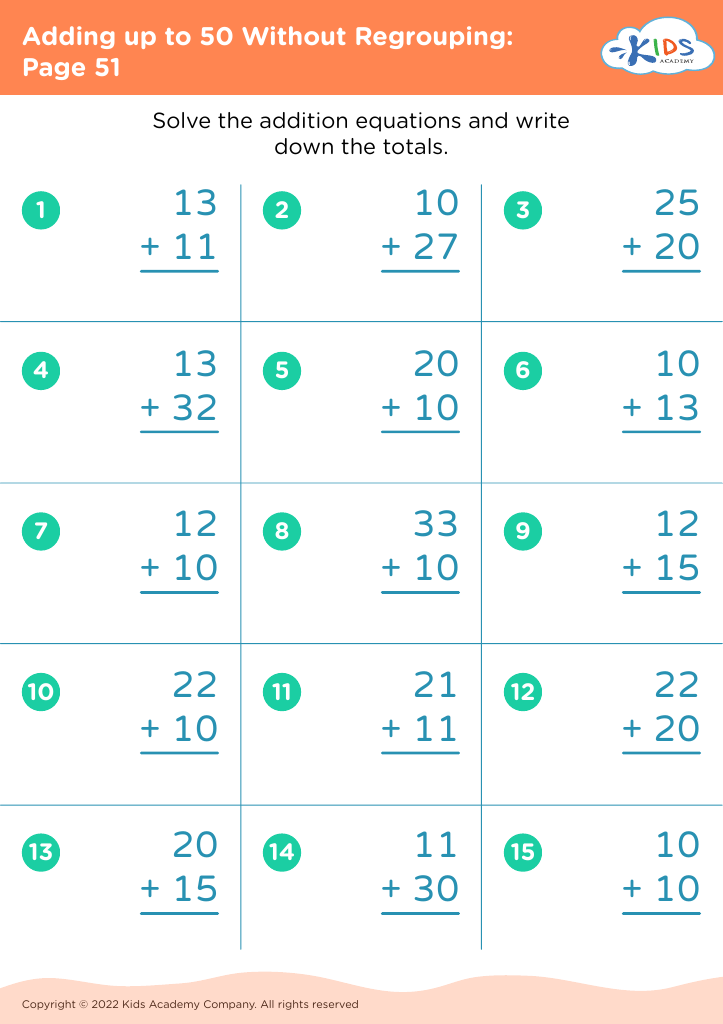
Adding up to 50 Without Regrouping: Page 51
Worksheet
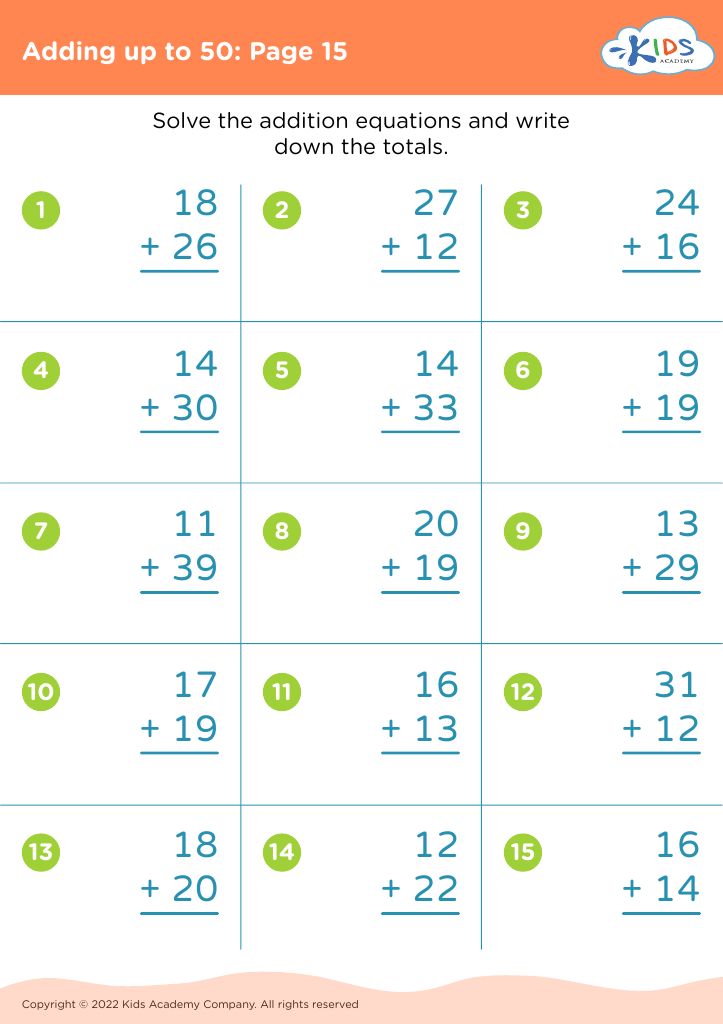
Adding up to 50: Page 15

Adding up to 50: Page 15

Adding up to 50: Page 15
Worksheet
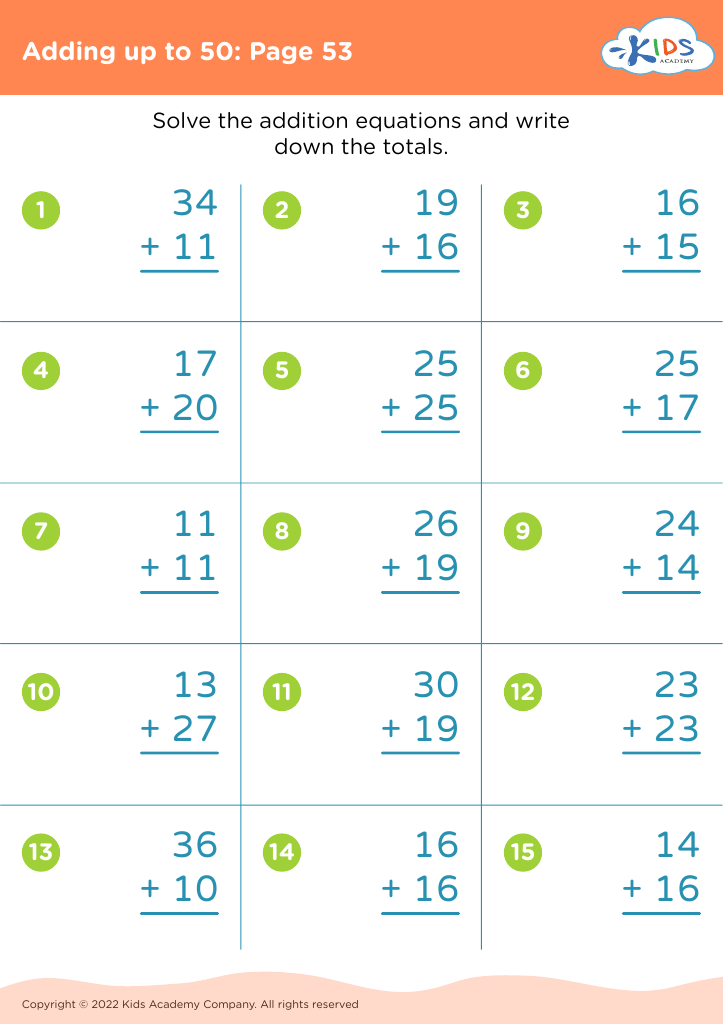
Adding up to 50: Page 53

Adding up to 50: Page 53

Adding up to 50: Page 53
Worksheet


Teaching basic math skills, particularly addition up to 50, is crucial for children aged 7-9 for several reasons. During this developmental stage, children are building essential cognitive skills that establish a solid foundation for more complex mathematical concepts. Proficiency in addition enhances their problem-solving abilities, encouraging logical thinking and reasoning.

Understanding numbers and mastering addition helps children in real-world scenarios, such as shopping or managing money, fostering a sense of responsibility and independence. It also supports their academic performance across subjects; math skills are interconnected with learning in science, art, and even reading comprehension.

For parents and teachers, focusing on addition up to 50 ensures that children build confidence in their abilities, reducing math anxiety that can emerge if fundamental skills are weak. Engaging them in fun, practical exercises promotes a positive attitude toward math and learning. Additionally, these foundational skills set the stage for higher-level mathematics, like subtraction, multiplication, and division, which they'll encounter in later grades.

By prioritizing basic addition skills, parents and teachers can provide a meaningful and enriching educational experience, ensuring children feel competent and proficient, contributing to their overall development and future academic success.