Color recognition Adding up to 50 Worksheets for Ages 7-9
3 filtered results
-
From - To
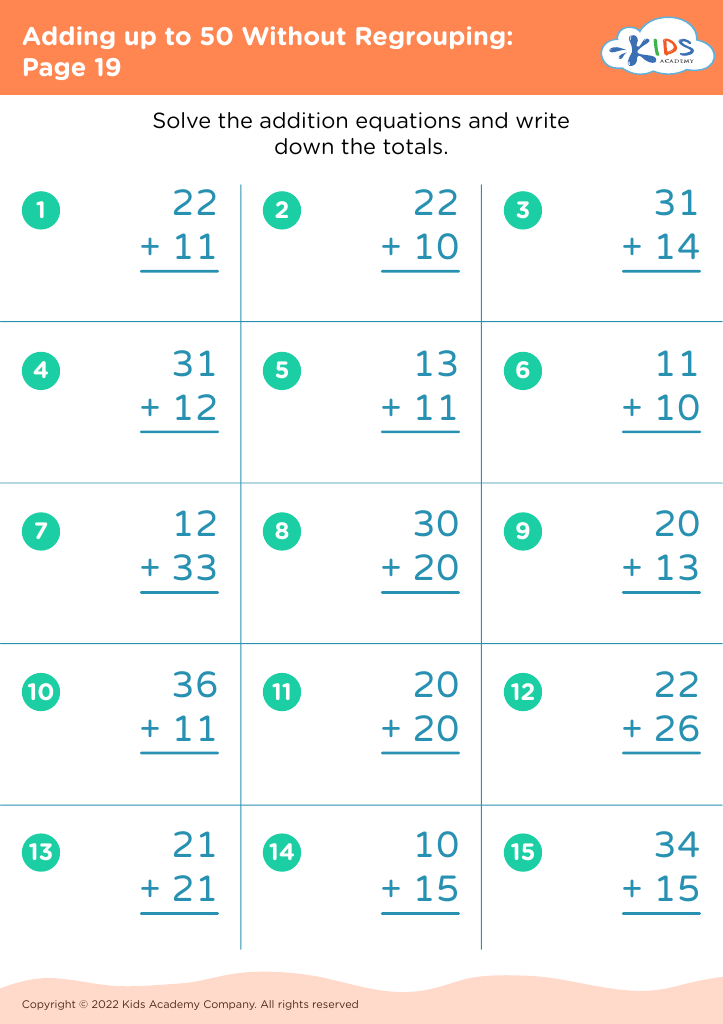
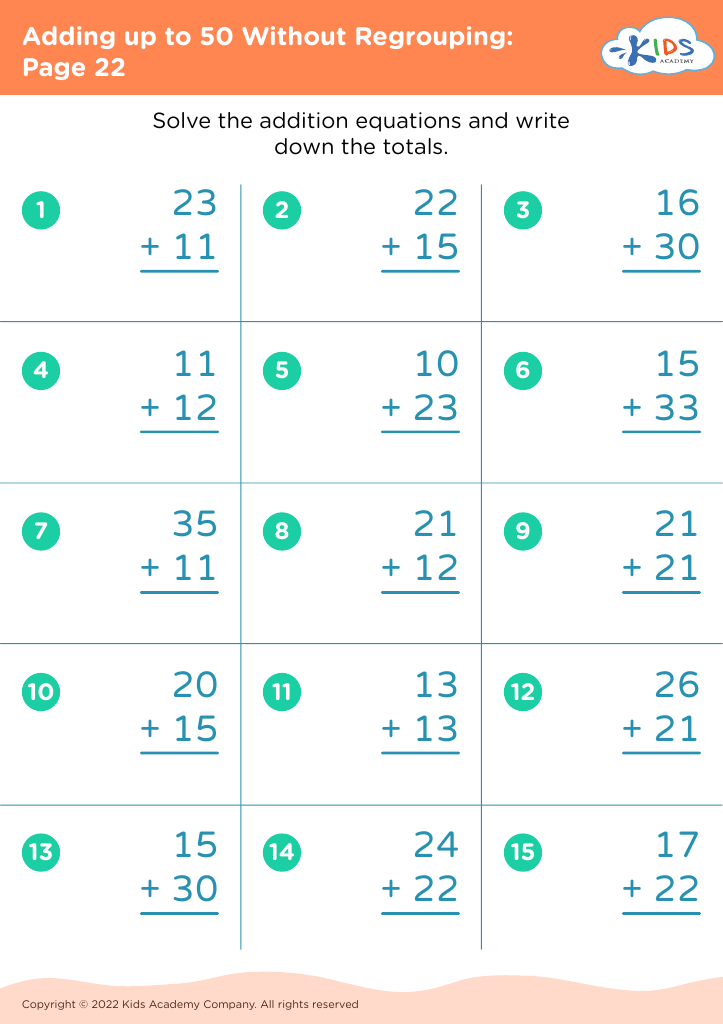
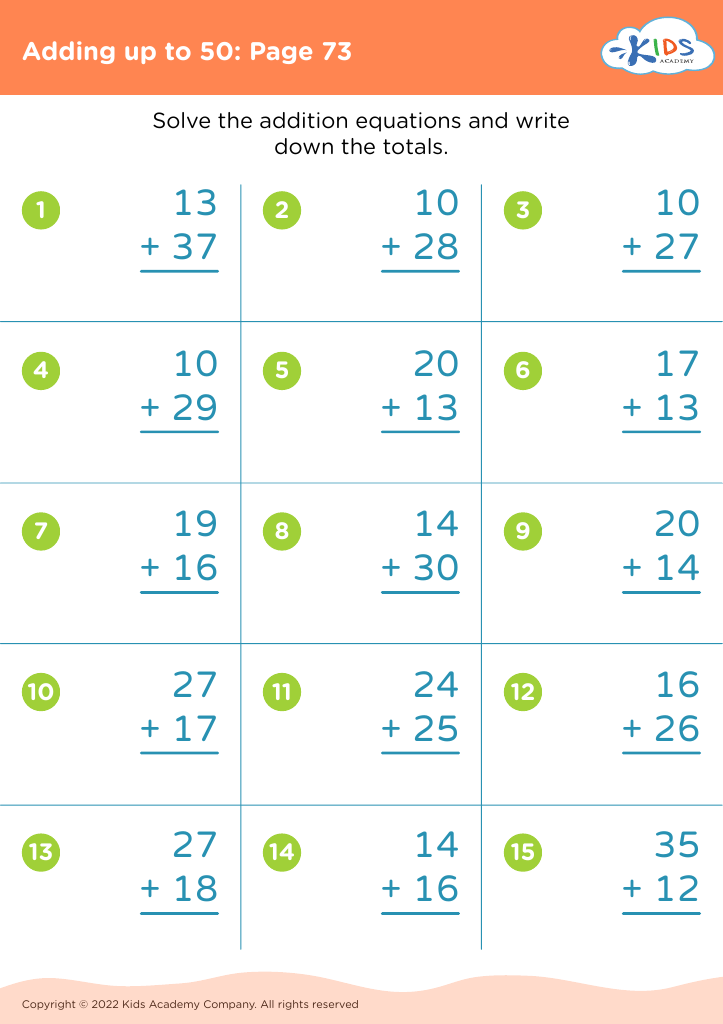
Discover our engaging "Color Recognition Adding up to 50 Worksheets" designed for kids ages 7-9. These worksheets build essential math skills while incorporating fun, color-based activities to enhance learning. Each worksheet combines color recognition with addition problems up to 50, ensuring a delightful and educational experience for children. Students will love identifying colors and solving math problems, making learning enjoyable and effective. Perfect for both classroom and home use, these printable worksheets support your child’s development in numeracy and color identification. Visit Kid’s Academy to download and watch your child’s math skills blossom!




Color recognition and basic arithmetic up to 50 are foundational skills for children aged 7-9 that have lasting impacts on their learning and cognitive development. Parents and teachers should prioritize these skills for several key reasons.
Color recognition enhances visual perception and cognitive abilities. Understanding and identifying colors help children categorize and interpret their world more effectively. This skill also supports the development of descriptive language and communication, as children learn to express themselves more clearly. For instance, recognizing and naming colors underpin tasks such as following instructions, organizing thought processes, and engaging in creative activities like drawing and coloring, which, in turn, foster fine motor skills.
Basic arithmetic, particularly adding up to 50, lays the groundwork for more advanced mathematical concepts. At this age, children develop number sense, which is critical for future success in math. Practicing addition promotes logical thinking and problem-solving skills, essential abilities transcending academic subjects and permeating everyday life. Understanding fundamental math helps children gain confidence in their abilities, encouraging a positive attitude towards learning.
In summary, color recognition and basic addition not only bolster cognitive and academic growth but also equip children with essential life skills. By actively engaging in and supporting these early learnings, parents and teachers play an influential role in shaping well-rounded and capable individuals.








