Compare fractions Adding up to 50 Worksheets for Ages 7-9
3 filtered results
-
From - To
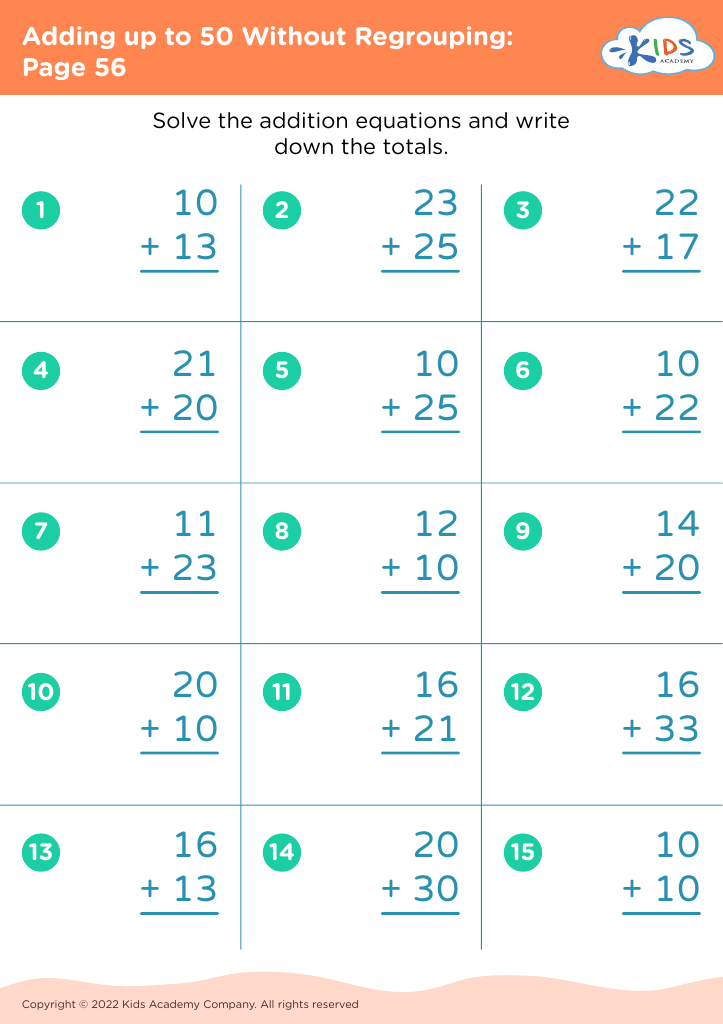
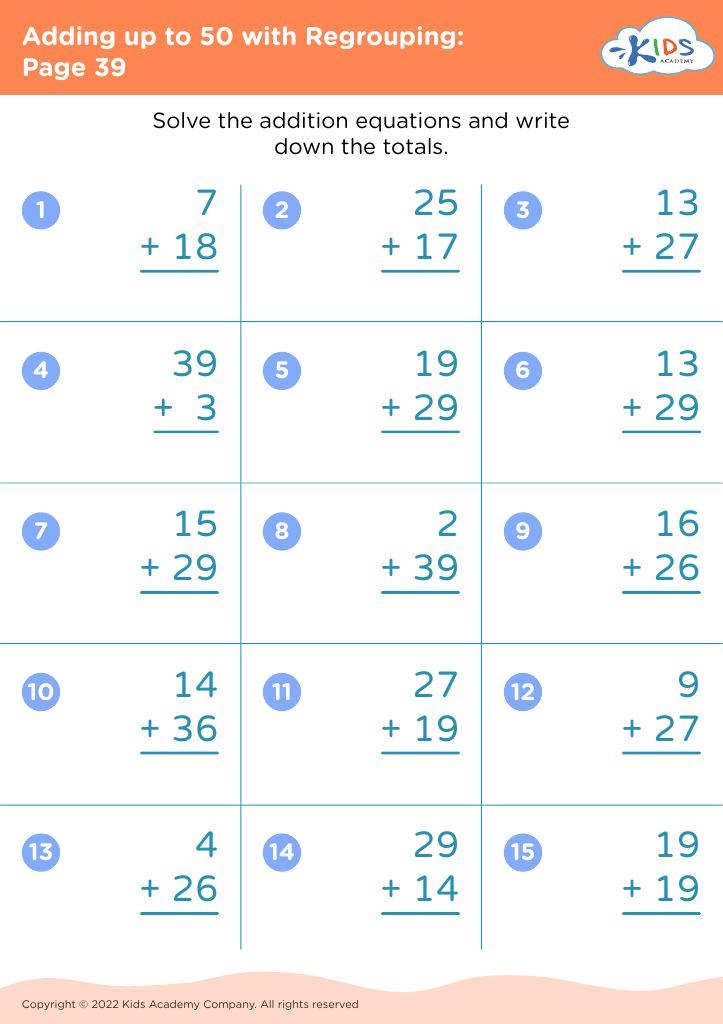
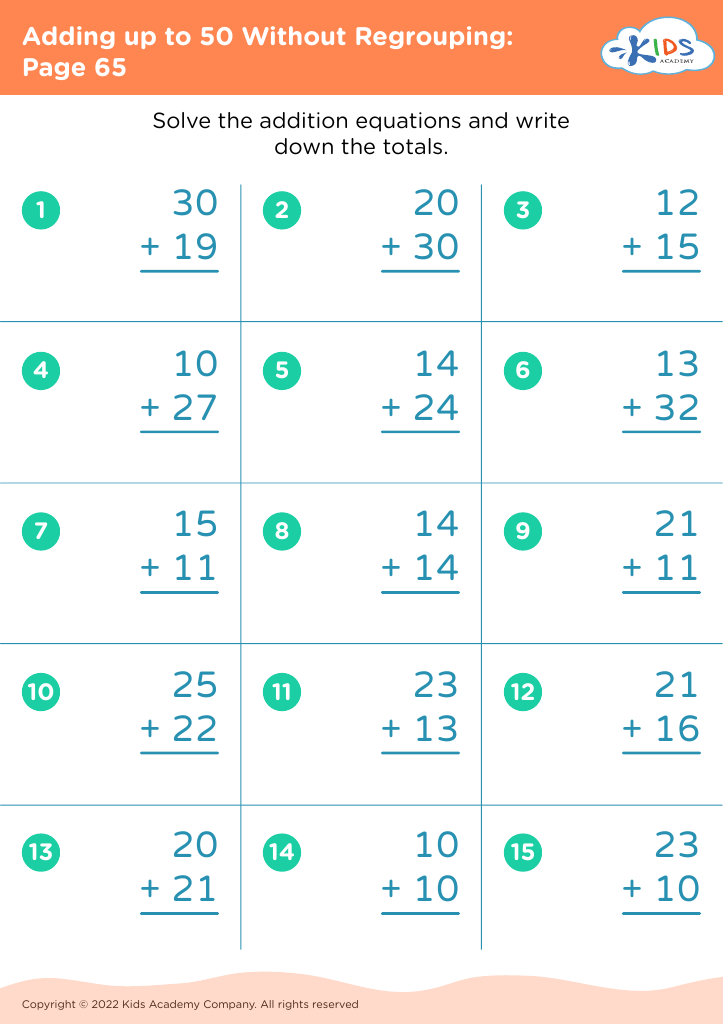
Unlock the world of fractions with our engaging "Compare Fractions Adding Up to 50 Worksheets" designed specifically for children ages 7 to 9. These meticulously crafted worksheets encourage early learners to explore and comprehend the concept of fractions while enhancing their math skills. Through fun and interactive exercises, kids will compare different fractions, developing critical thinking and problem-solving abilities. Ideal for classrooms or at-home practice, these worksheets feature colorful graphics and clear instructions, making learning enjoyable. Help your child gain confidence in mathematics while mastering the essentials of comparing fractions and achieving proficiency in adding up to 50. Start their journey today!




Understanding how to compare fractions is crucial for students aged 7-9, as it lays the foundation for more complex mathematical concepts. It enriches their ability to reason mathematically and enhances critical thinking skills. Learning to compare fractions enables kids to grasp relationships between numbers, an essential skill not just in math, but also in everyday decision-making.
Additionally, adding fractions is an integral part of math that students often encounter in real-life situations, such as cooking, budgeting, or dividing tasks. It fosters numerical fluency and prepares them for future academic challenges, ensuring they are ready for more advanced topics, like adding and subtracting mixed numbers or working with decimals.
For parents and teachers, collaborating on these skills can encourage a positive attitude toward math. Engaging students in fun activities, like using visual aids or games that incorporate fractions adds excitement to learning. Doing so also nurtures their confidence and self-efficacy, making them more likely to take on challenging problems. Ultimately, instilling these foundational skills helps set the stage for lifelong mathematical competence and problem-solving abilities, essential aspects of an educated individual’s toolkit.








