Comparing Fractions Adding up to 50 Worksheets for Ages 7-9 - Page 2
30 filtered results
-
From - To
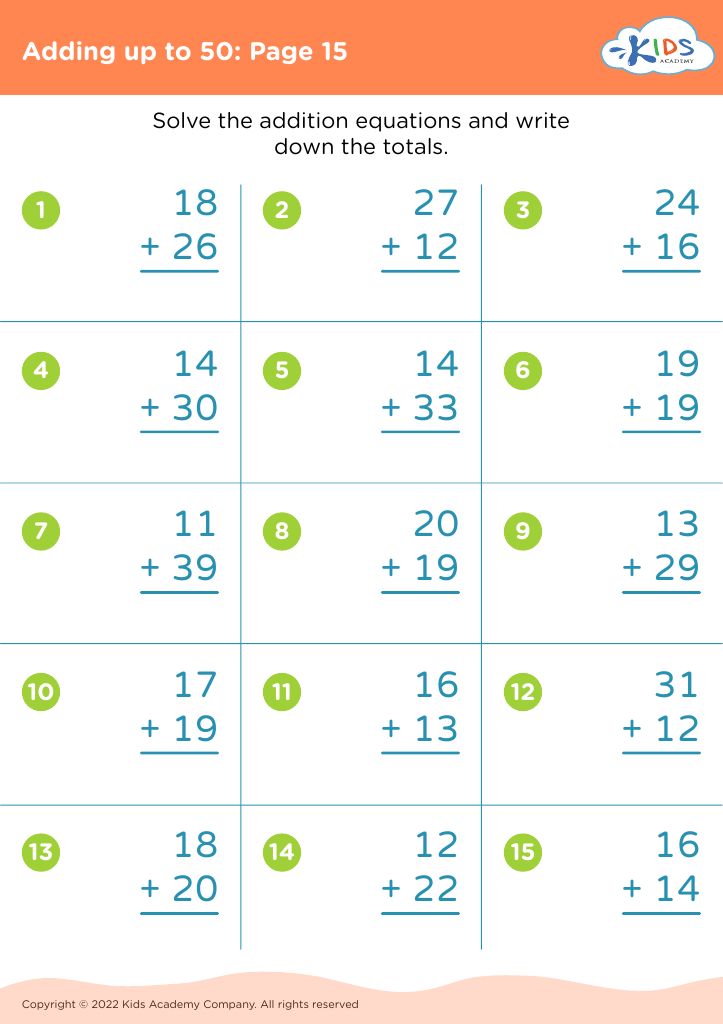
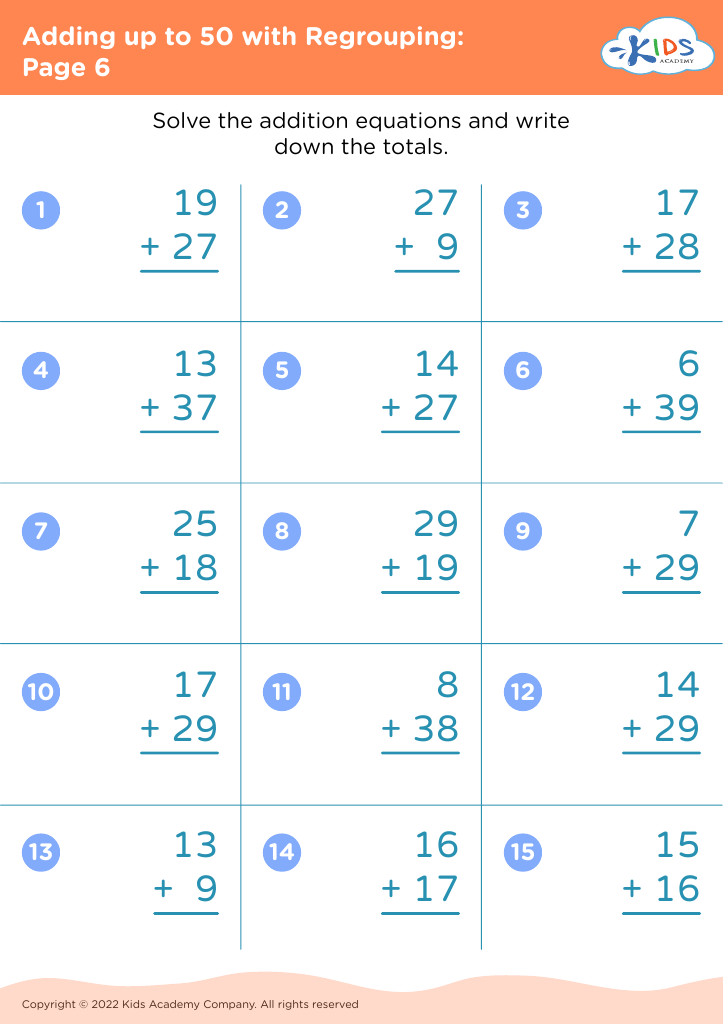
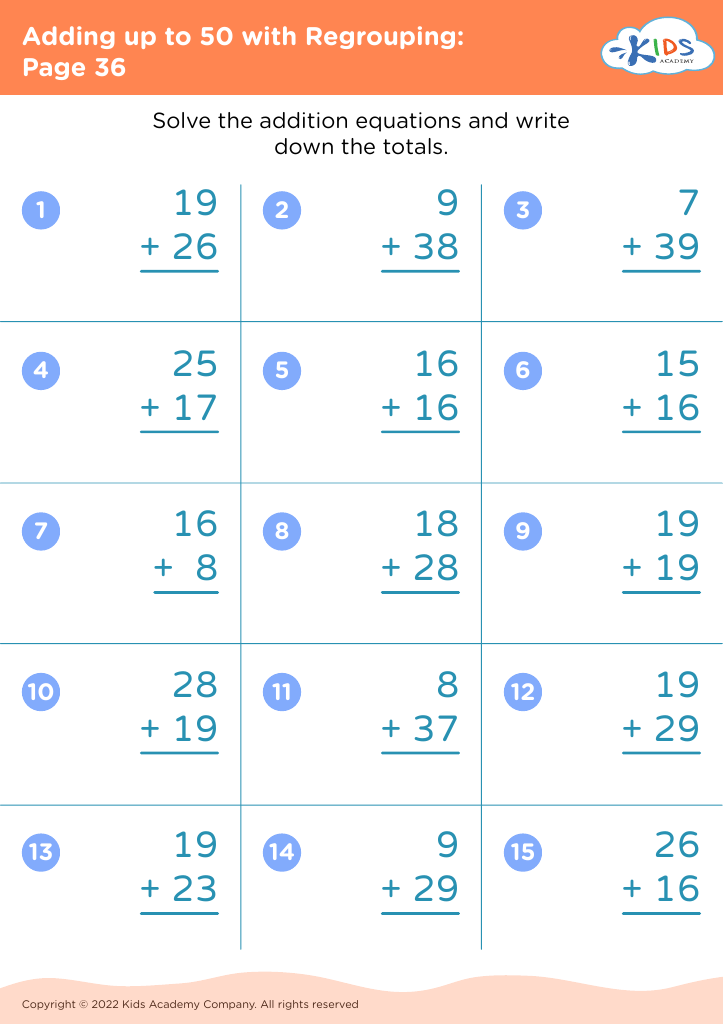
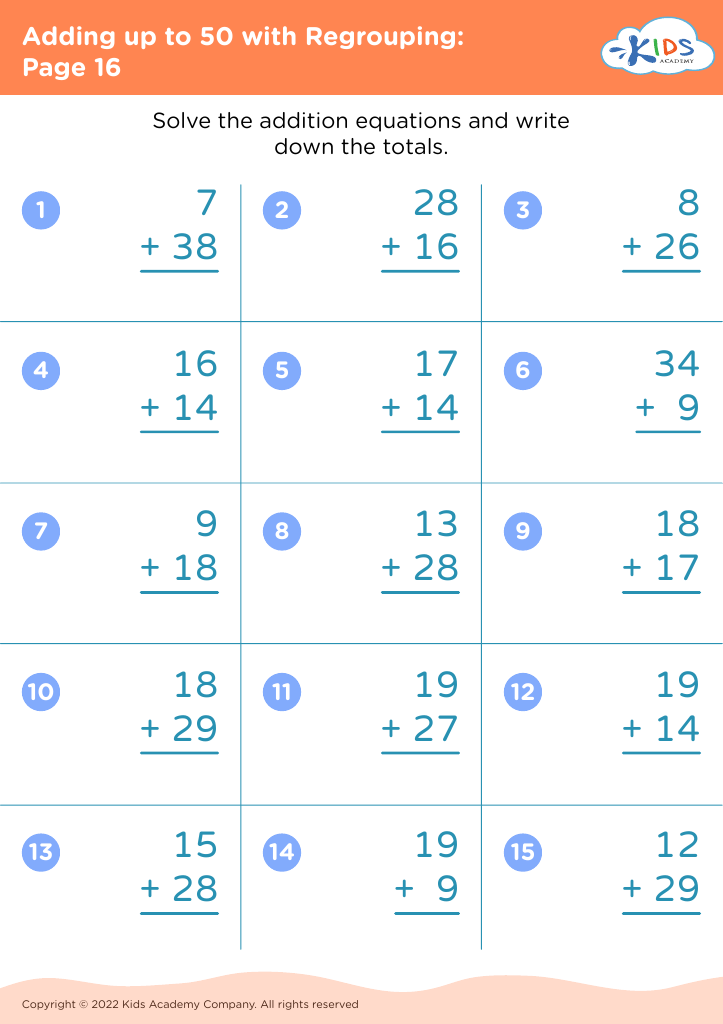
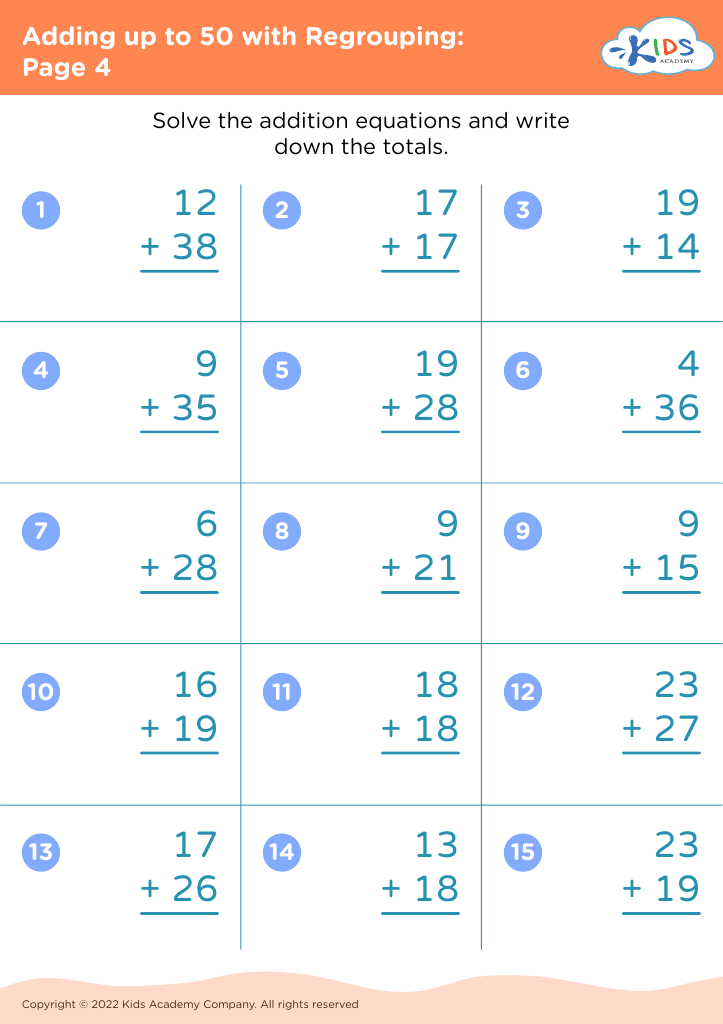
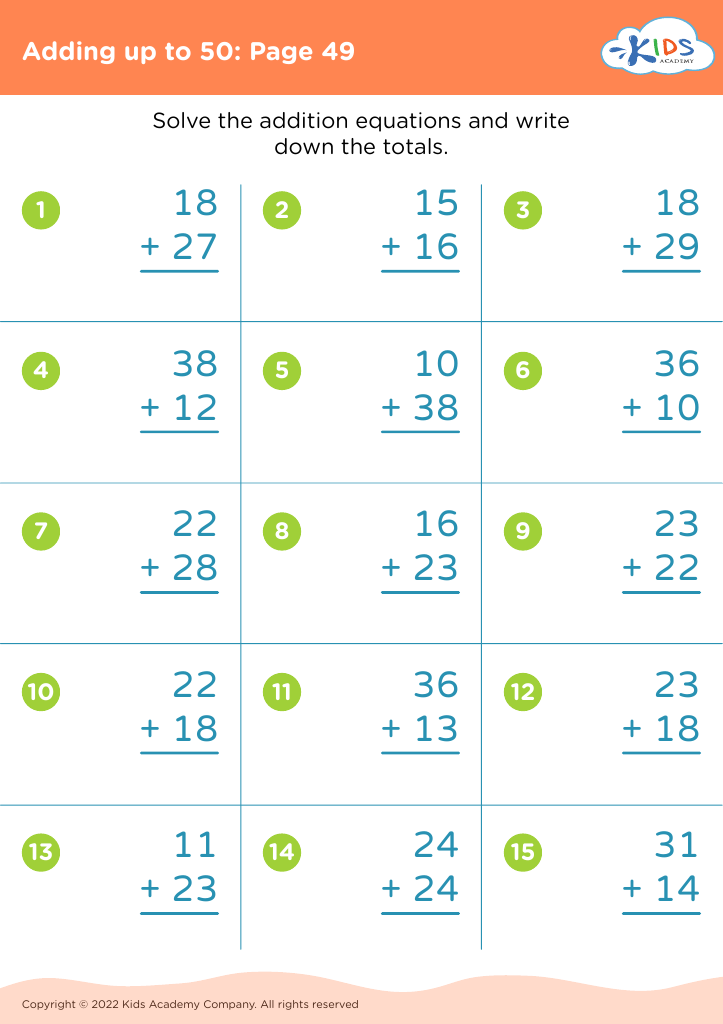




Comparing fractions is a crucial mathematical skill for children aged 7-9, laying a foundation for more complex concepts in the future. It enhances critical thinking and problem-solving abilities, which are essential across all areas of learning. Understanding how to compare fractions helps children grasp the concept of parts versus wholes, aiding their comprehension of ratios, percentages, and even basic algebra later on.
When parents and teachers focus on the task of comparing fractions that add up to 50, it not only engages students in practical mathematics but also makes learning relatable. This strategy emphasizes the importance of collaboration and teamwork, as children can work together to solve problems and share their reasoning, promoting communication skills.
Moreover, incorporating real-world contexts—like cooking, crafting, or budgeting—all related to fractions can make learning more engaging. It encourages a growth mindset, helping children understand mistakes as opportunities for learning.
Overall, prioritizing fraction comparisons fosters mathematical fluency, builds confidence, and cultivates a genuine interest in mathematics, which is vital to a child's academic success both now and in future studies. Nurturing these skills nurtures curious, confident learners, ultimately enriching their educational journey.








