Enhance counting skills Adding up to 50 Worksheets for Ages 7-9
5 filtered results
-
From - To
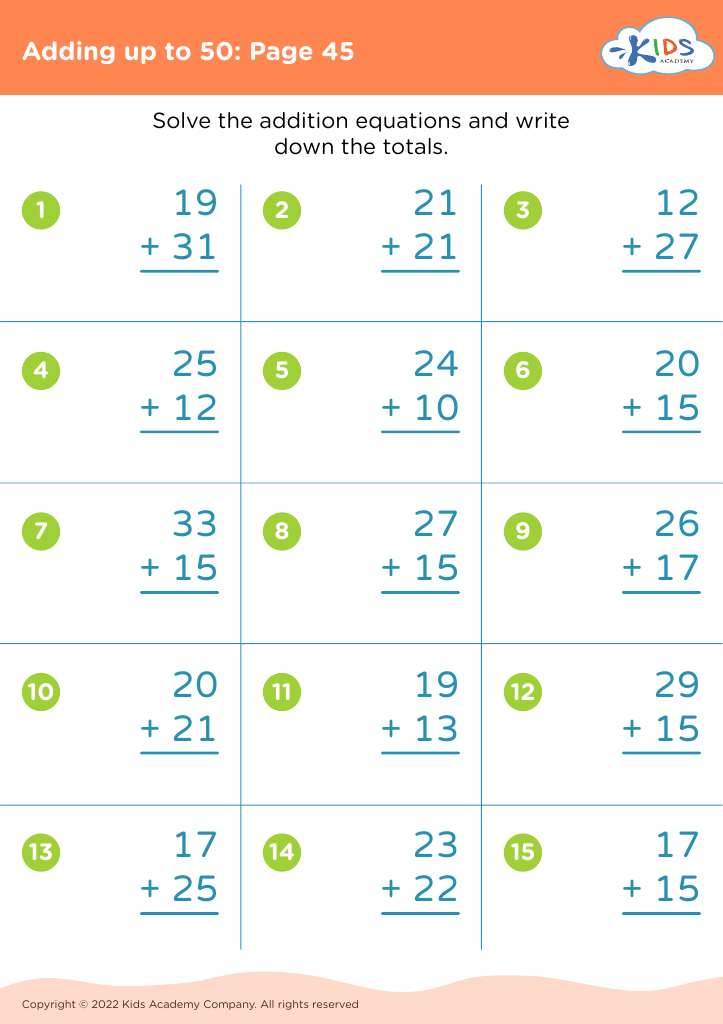
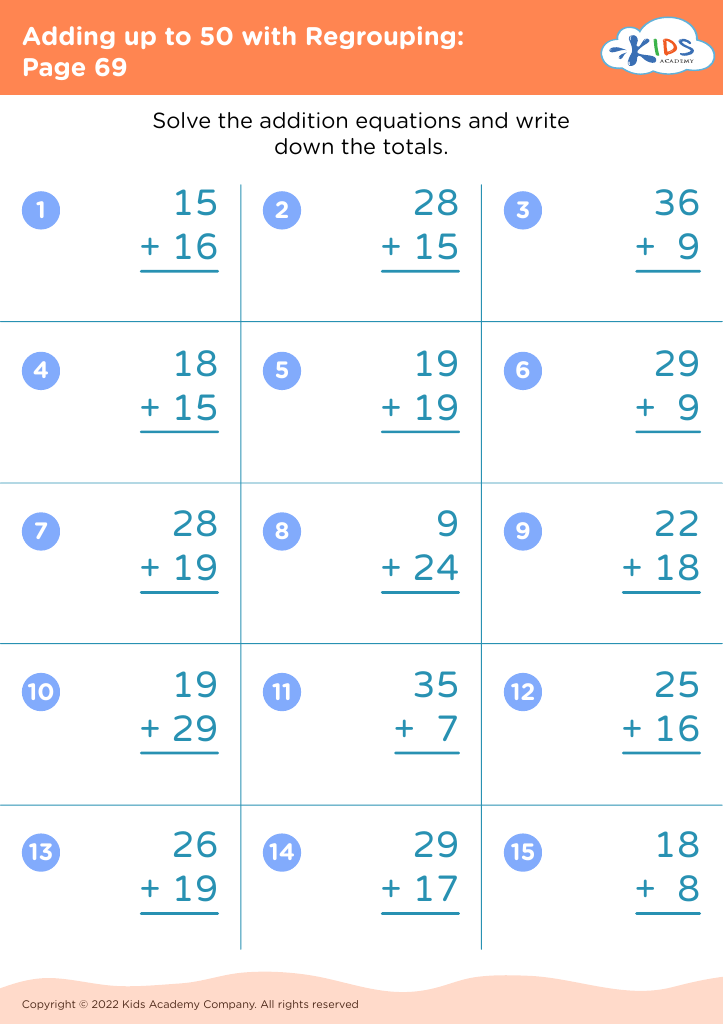
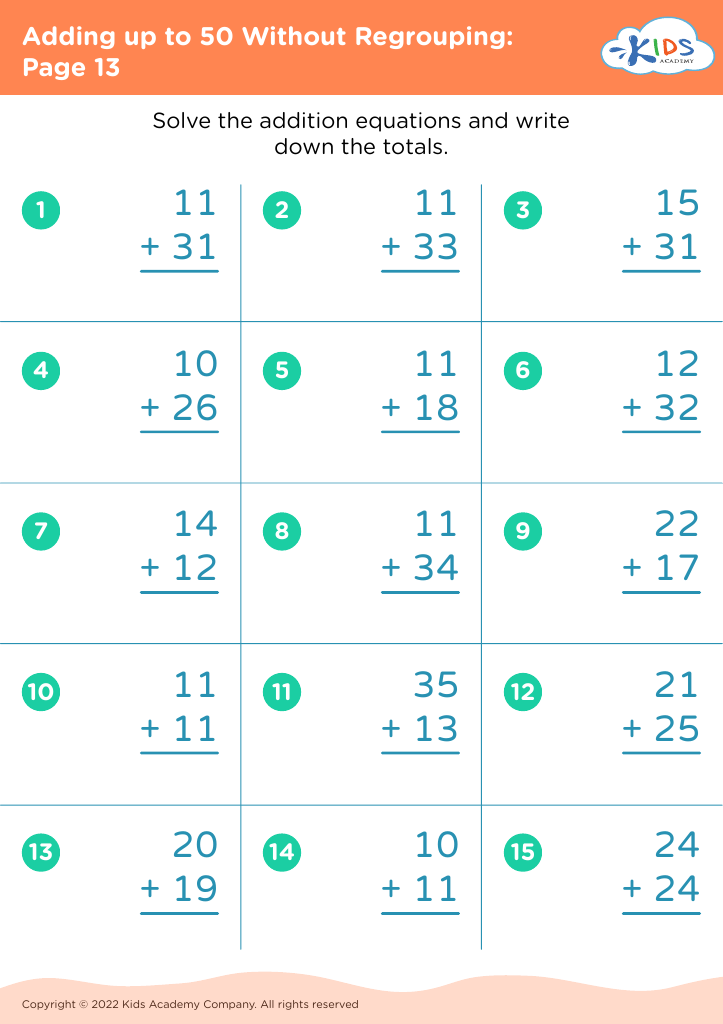
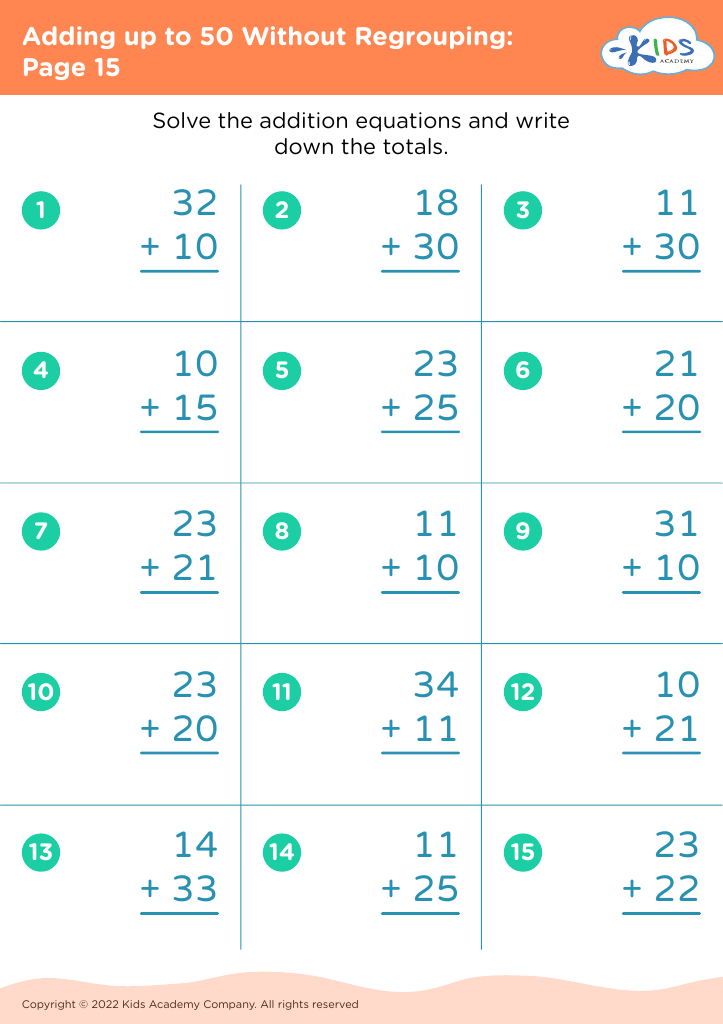
Discover our "Enhance Counting Skills: Adding Up to 50 Worksheets" designed specifically for ages 7-9! These engaging and interactive worksheets help young learners master addition skills while having fun. Each worksheet focuses on building counting confidence through various exercises that promote number recognition and problem-solving abilities. With a range of activities, children will reinforce their understanding of adding numbers up to 50, making math an enjoyable experience. Ideal for classroom use or home learning, our worksheets cater to different learning paces and styles. Empower your child’s math journey today and watch them excel with essential counting skills!
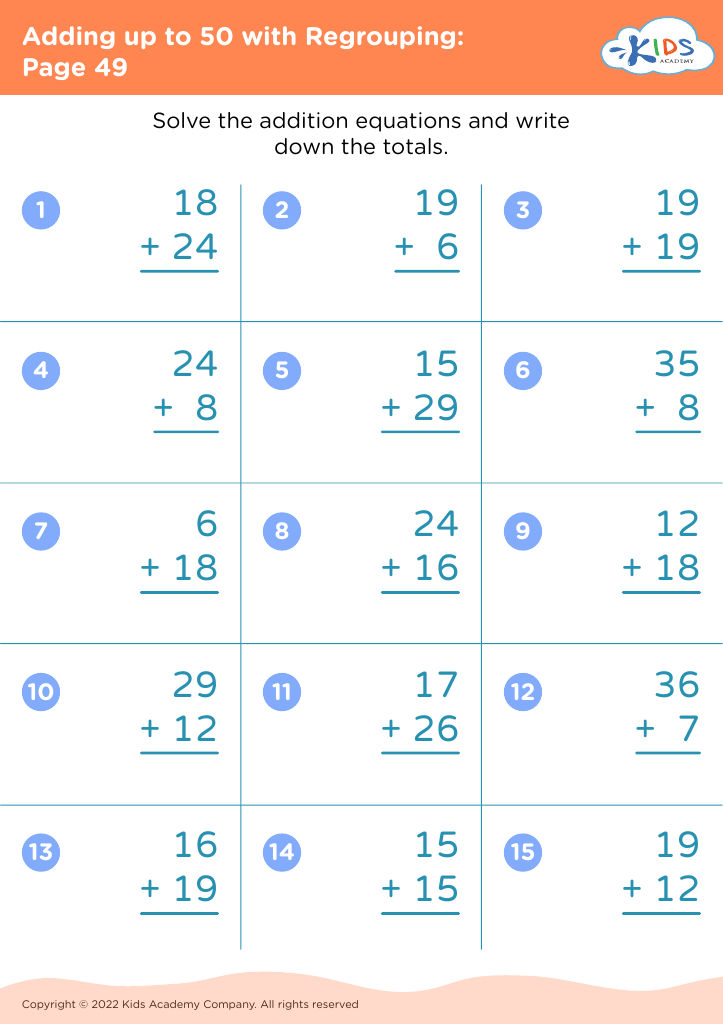




Enhancing counting skills, specifically adding up to 50 for children ages 7-9, is crucial for several reasons. At this developmental stage, children are building a solid foundation for their future mathematical understanding. Mastering addition up to 50 supports not only arithmetic skills but also develops critical thinking and problem-solving abilities.
Firstly, counting and adding up to 50 helps children conceptualize numbers, fostering number sense that is foundational for more advanced math topics like multiplication, division, and even fractions. A strong grasp of these skills enhances their confidence in handling numbers, which can positively affect their overall academic performance.
Secondly, these skills are relevant in daily life. Children encounter scenarios requiring counting and adding—such as shopping, sharing, and playing games—much more frequently as they grow. Introducing practical, engaging exercises can enhance their motivation to learn.
Finally, working on counting and addition can create great bonding opportunities between parents and teachers, promoting collaboration in a child's learning journey. Engaged support from adults encourages children to explore mathematics joyfully and provide reassurance as they face new challenges. Prioritizing counting skills ensures children are well-prepared for their academic futures and equipped with vital life skills.








