Fraction Addition Adding up to 50 Worksheets for Ages 7-9
5 filtered results
-
From - To
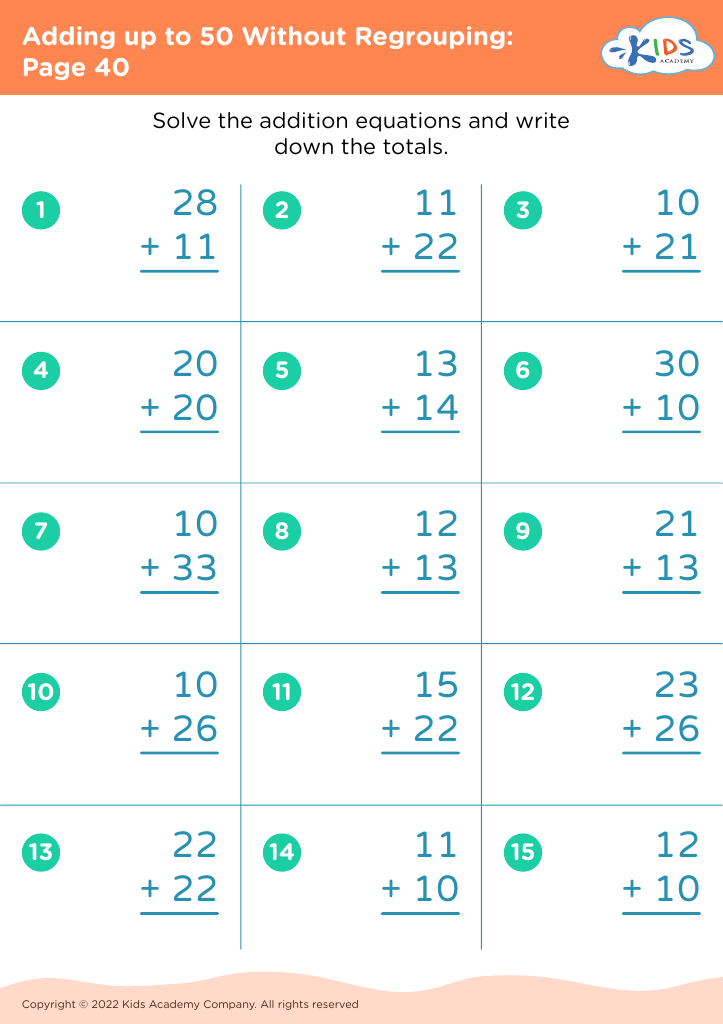
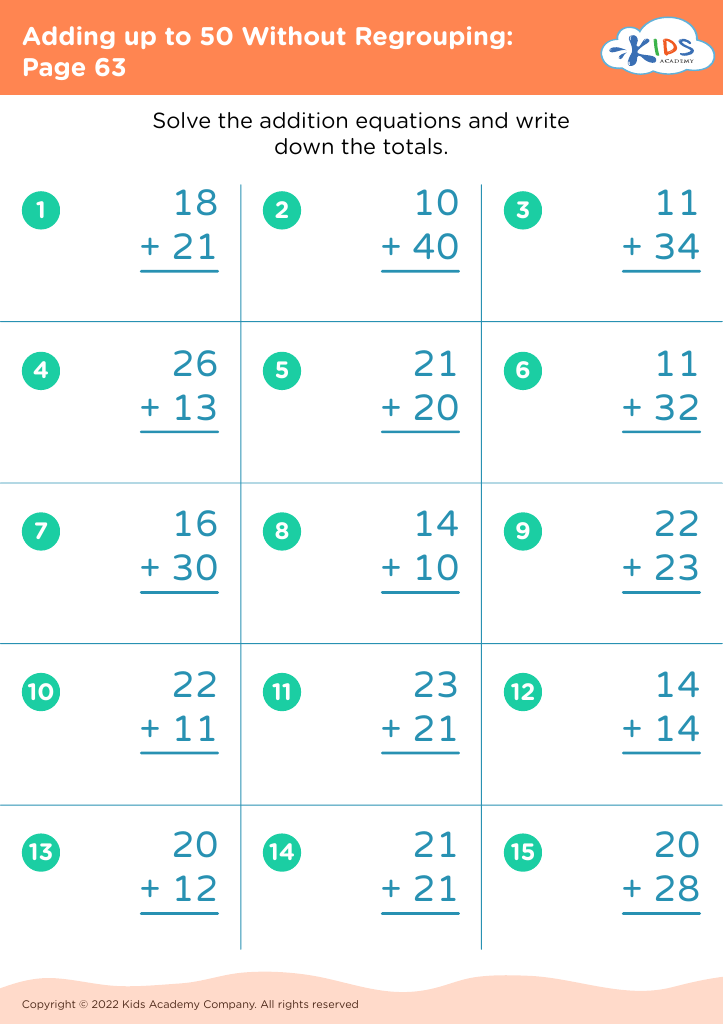
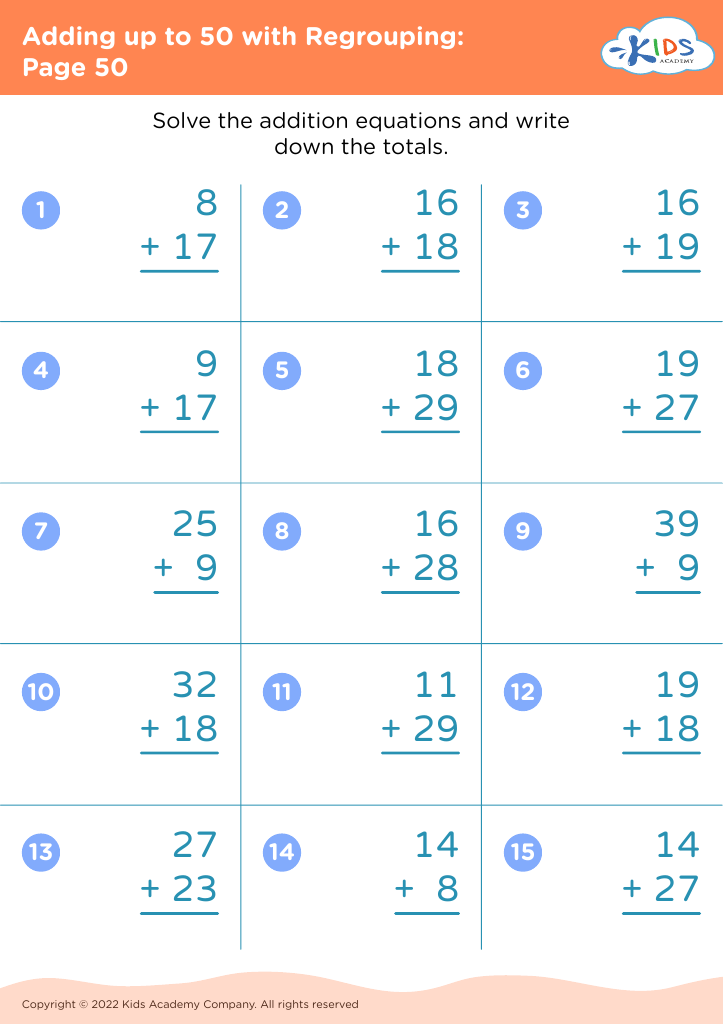
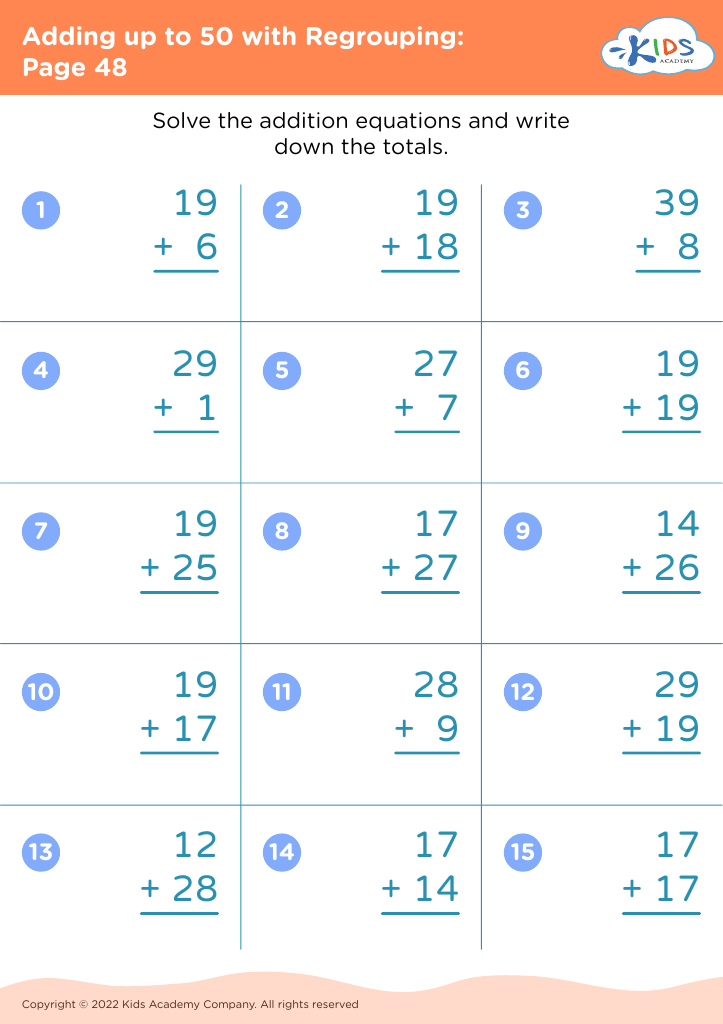
Introducing our engaging "Fraction Addition Adding Up to 50 Worksheets" tailored for children ages 7-9! These interactive worksheets help young learners master the concept of adding fractions with a focus on sums that reach up to 50. With vibrant illustrations and age-appropriate exercises, students can practice essential math skills while boosting their confidence. Each worksheet is designed to challenge students while keeping them motivated and eager to learn. Ideal for classroom use or at-home practice, these worksheets provide a solid foundation in fraction addition, making math fun and accessible. Download now and help your child excel in their mathematical journey!
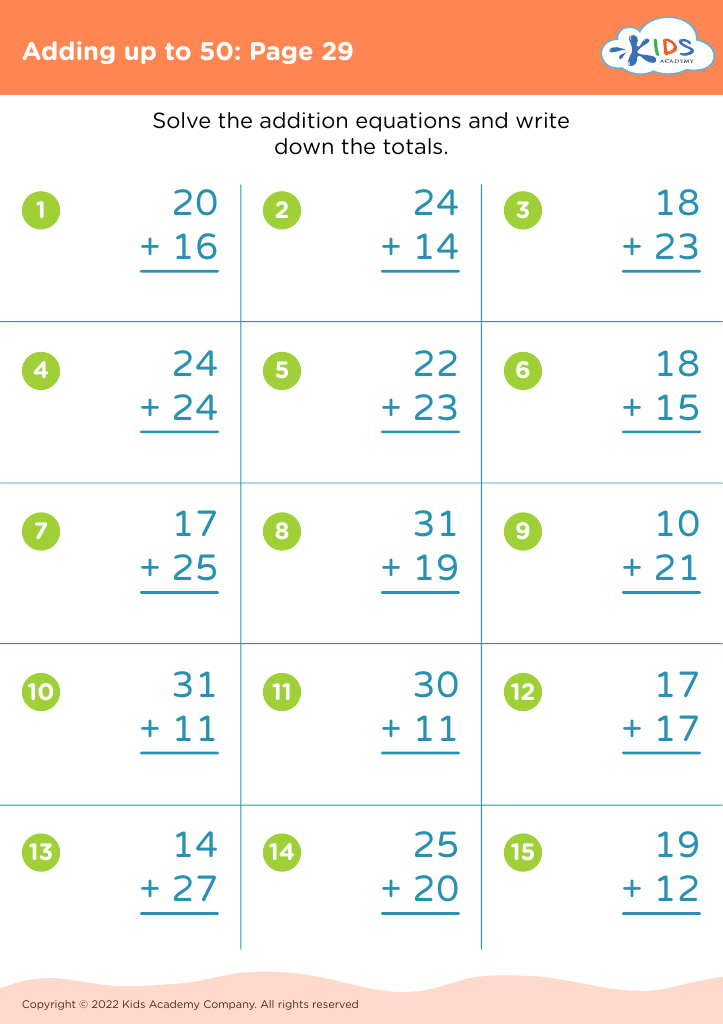




Understanding fraction addition is a fundamental skill that benefits children aged 7-9 as they develop essential mathematics proficiency. At this young age, students begin to develop their number sense, which serves as a strong foundation for future learning. Adding fractions, especially within the context of sums up to 50, helps them grasp the concept of parts of a whole, reinforcing their understanding of division and equivalency.
Parents and teachers should prioritize this skill because it promotes critical thinking and problem-solving abilities. As children learn to combine fractions, they also learn how to simplify and compare different values, which enhances their analytical skills. Mastery of addition helps build confidence in students, making them more willing to tackle complex math problems in the future.
Furthermore, understanding fractions is crucial not only in mathematics but also in real-world contexts, such as cooking, budgeting, and measuring. Parents and teachers can use everyday situations to teach and reinforce this concept, making the learning process engaging and relevant. Ultimately, by ensuring kids have a solid foundation in adding fractions, they equip them with the skills necessary for higher-level math and help foster a lifelong love of learning.








