Fraction identification Adding up to 50 Worksheets for Ages 7-9
3 filtered results
-
From - To
Enhance your child's understanding of fractions with our engaging "Fraction Identification Adding up to 50 Worksheets" designed specifically for ages 7-9. These worksheets offer a fun, interactive way for students to practice identifying fractions and adding them together to reach a total of 50. Ideal for classroom use or at-home learning, our resources help reinforce essential math skills, fostering confidence and proficiency in young learners. With diverse exercises that capture their attention and challenge their thinking, these worksheets are perfect for honing critical math abilities while keeping learning enjoyable. Jump into the world of fractions and watch your child excel!
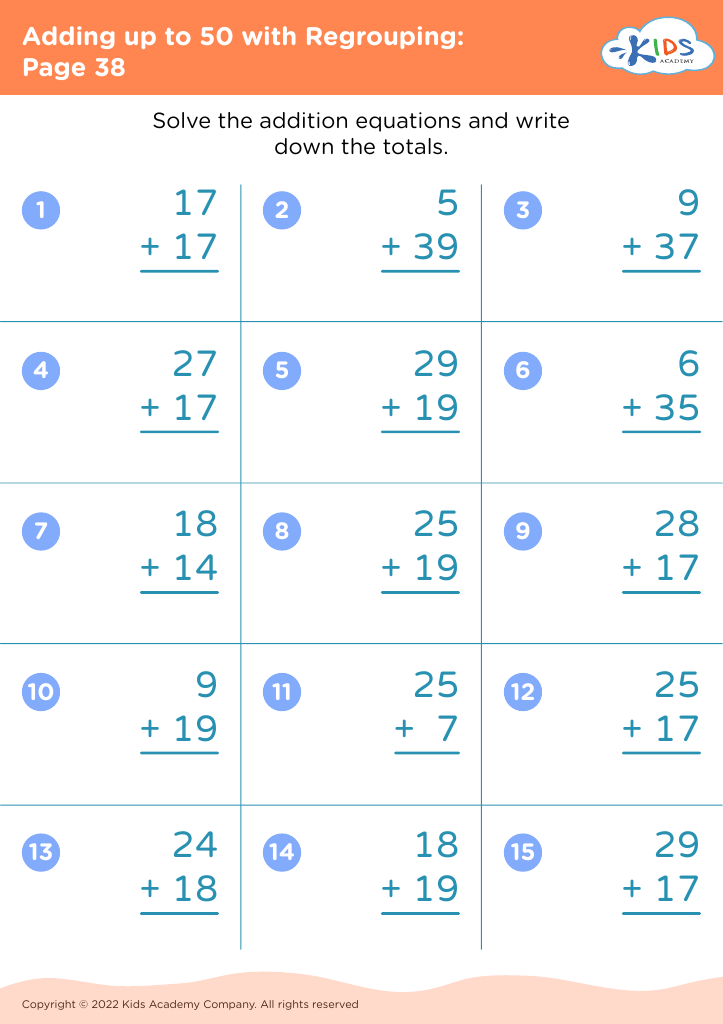
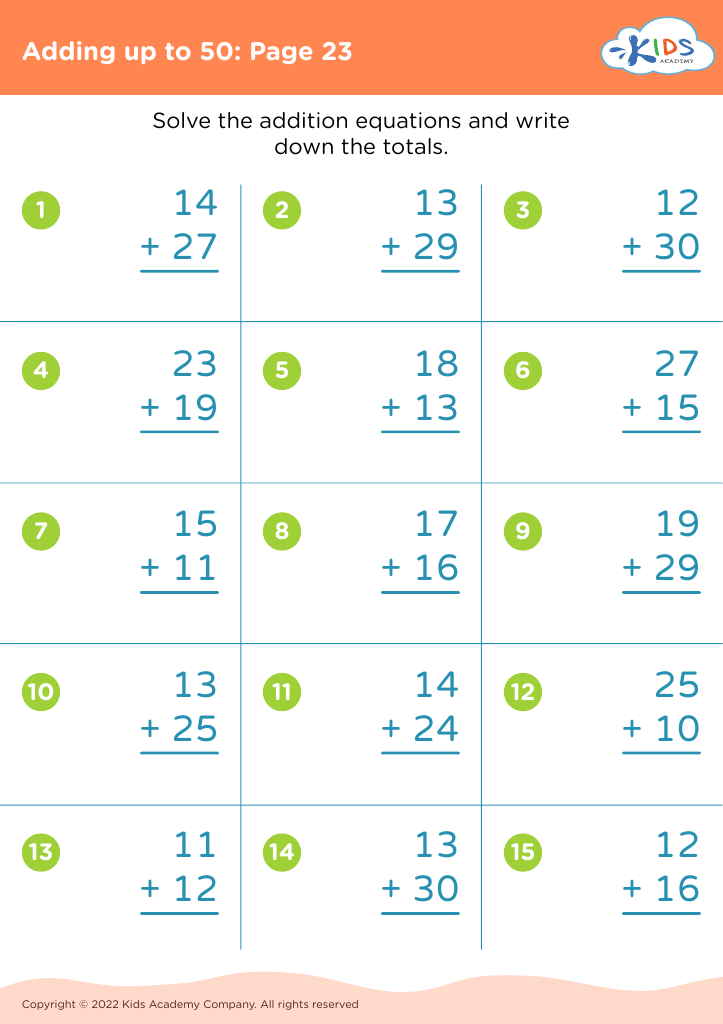
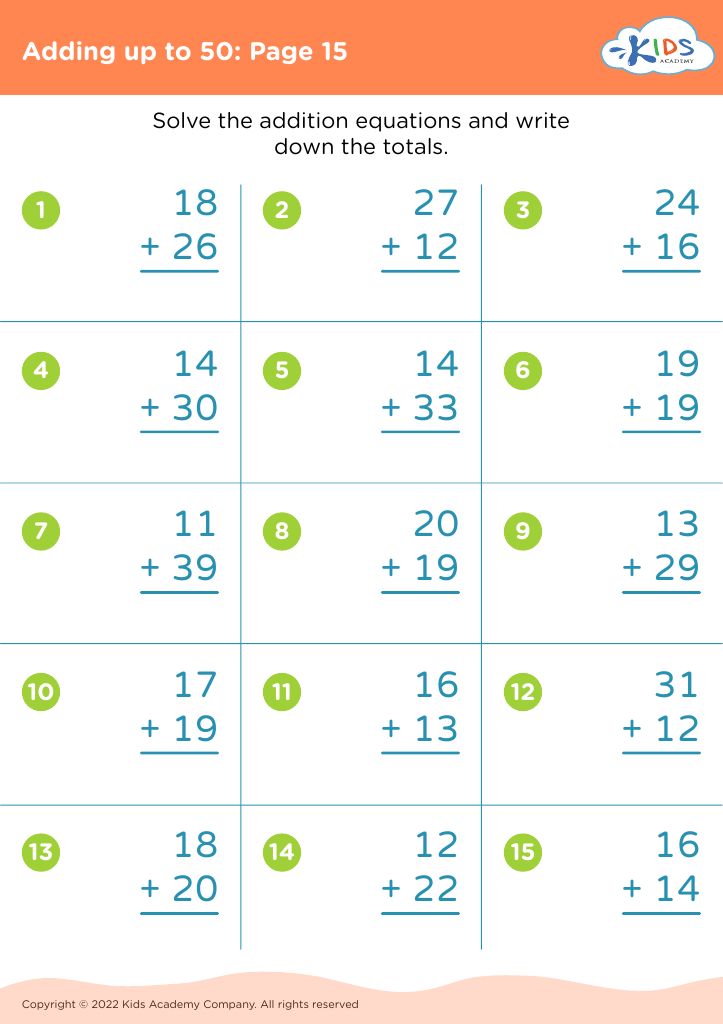




Fraction identification and addition are critical skills for children aged 7-9, laying the foundation for more advanced mathematical concepts later on. For parents and teachers, understanding fractions helps children develop logical thinking and problem-solving abilities. This age group is particularly receptive to learning such concepts, and grasping fractions can significantly enhance their overall math skills.
By fostering a strong understanding of fraction identification and addition, educators and caregivers can aid students in seeing the connections between different mathematical concepts, such as whole numbers, decimals, and percentages. This skill aids in their ability to handle real-life scenarios, like measuring ingredients for a recipe or dividing items equally among friends.
Moreover, mastering fractions supports children’s confidence in mathematics, reducing anxiety and aversion to the subject. This confidence translates to better academic performance, lifelong learning, and an appreciation for mathematical thinking. Strengthening fraction comprehension also equips learners with skills necessary for higher-level math concepts they'll encounter in middle school and beyond.
In short, prioritizing fraction identification and addition in early education isn't just about teaching math; it's about building intellectual resilience and ensuring students are well-prepared for future challenges.








