Filters

20 filtered results

Clear all filters
Favorites
With answer key
Interactive

20 filtered results

Difficulty Level

Grade


Explore our Fraction Simplification Adding up to 50 Worksheets designed for ages 7-9! These engaging and interactive worksheets help young learners master the concepts of simplifying fractions and addition within 50. Through a variety of exercises, students develop crucial math skills while having fun solving puzzles and problems. Our worksheets are crafted to enhance understanding, improve accuracy, and build confidence in working with fractions. Perfect for home or classroom use, these printable resources provide an excellent foundation for future math success. Download now and watch your child excel in their math journey!
Check out this FREE Trial Lesson on Adding up to 50 for age 7-9!

L

Favorites
With answer key
Interactive
  • 7-9
  • Fraction simplification
  • Adding up to 50
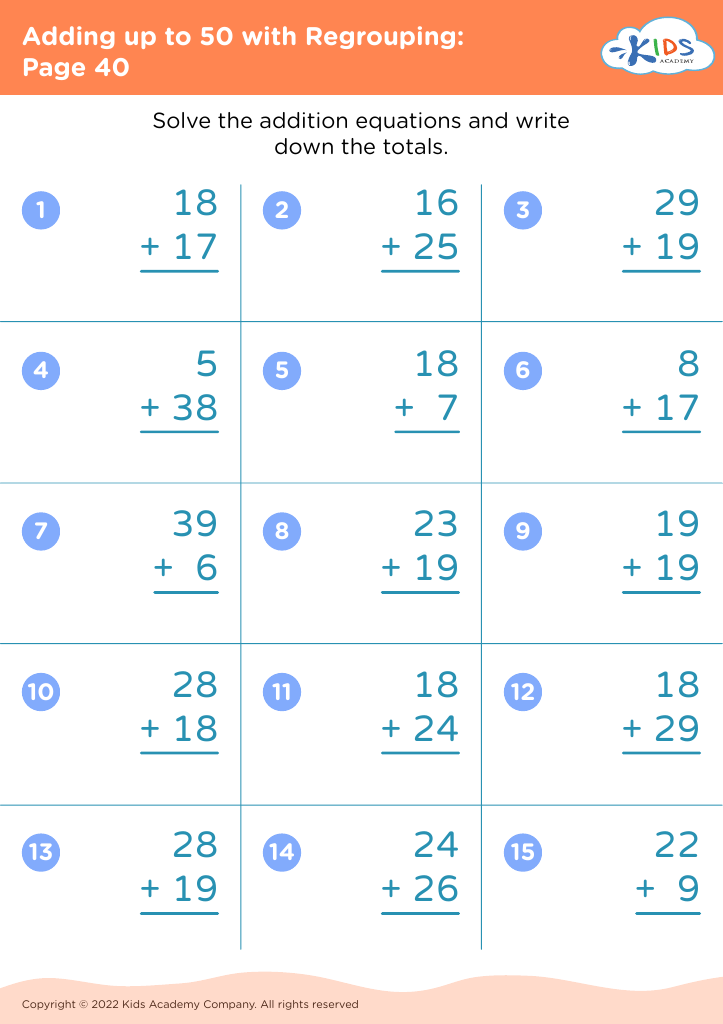
Adding up to 50 with Regrouping: Page 40
Worksheet
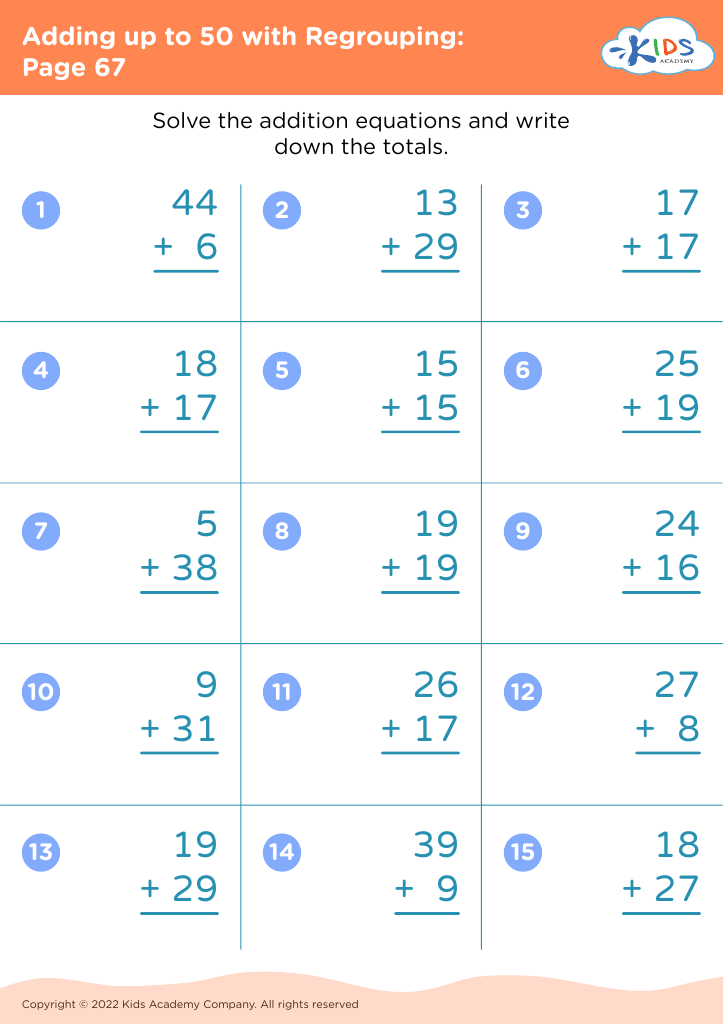
Adding up to 50 with Regrouping: Page 67
Worksheet
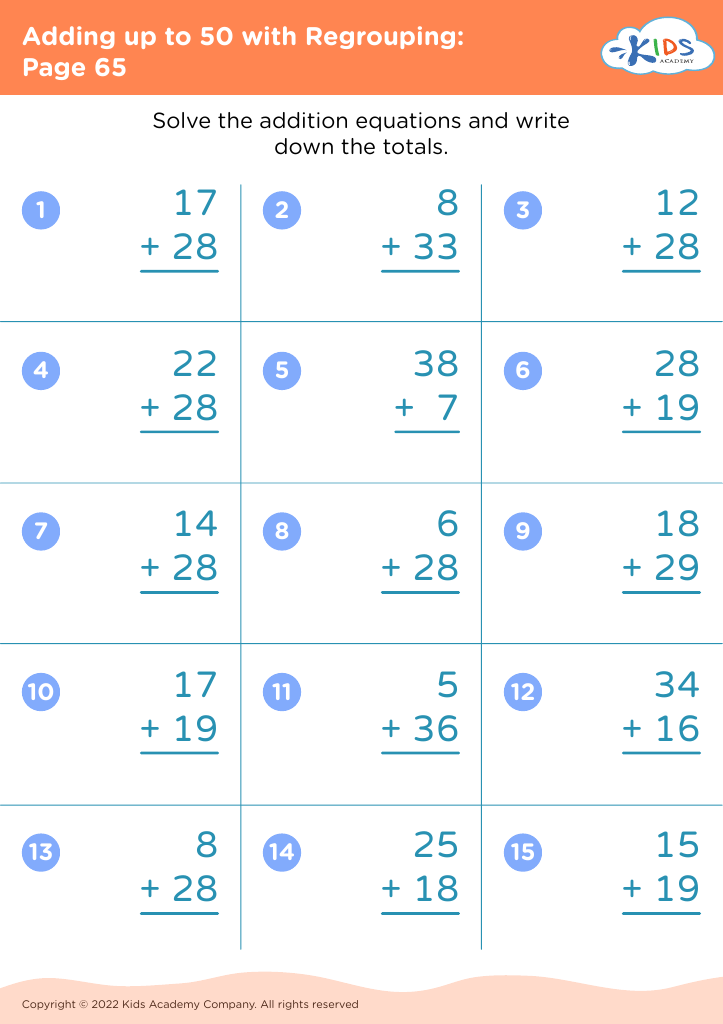
Adding up to 50 with Regrouping: Page 65
Worksheet
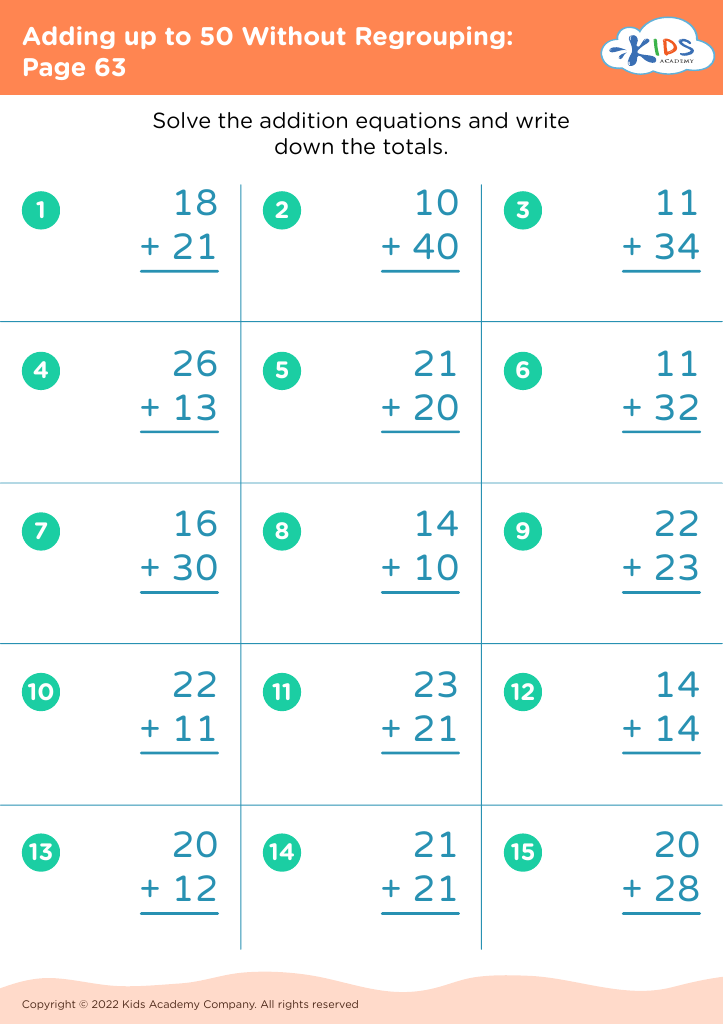
Adding up to 50 Without Regrouping: Page 63
Worksheet
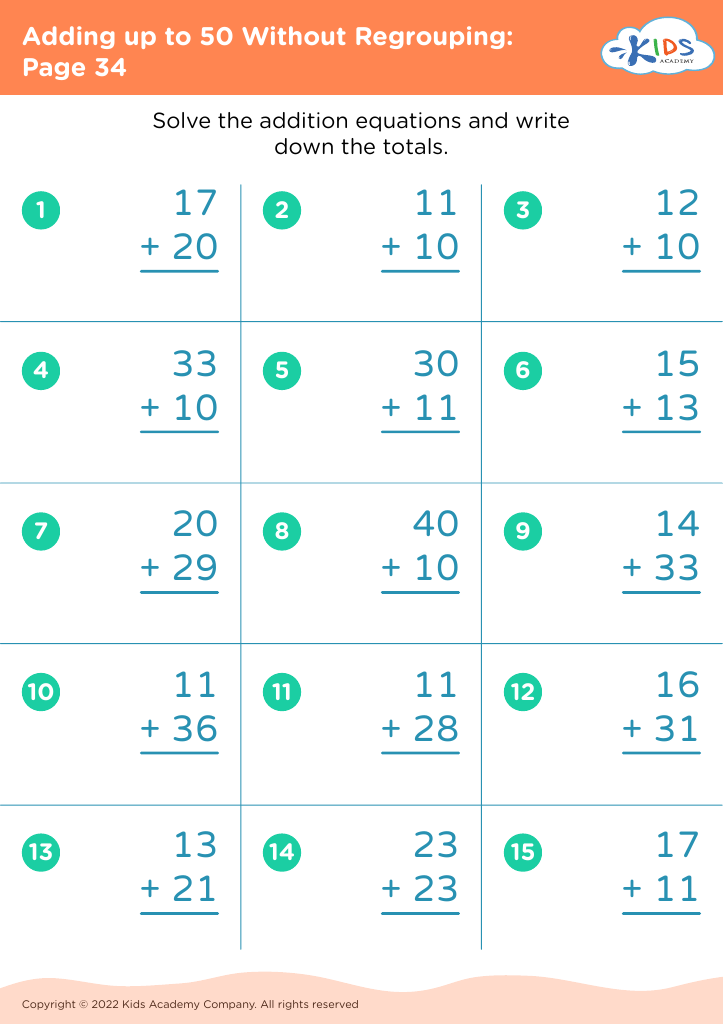
Adding up to 50 Without Regrouping: Page 34
Worksheet
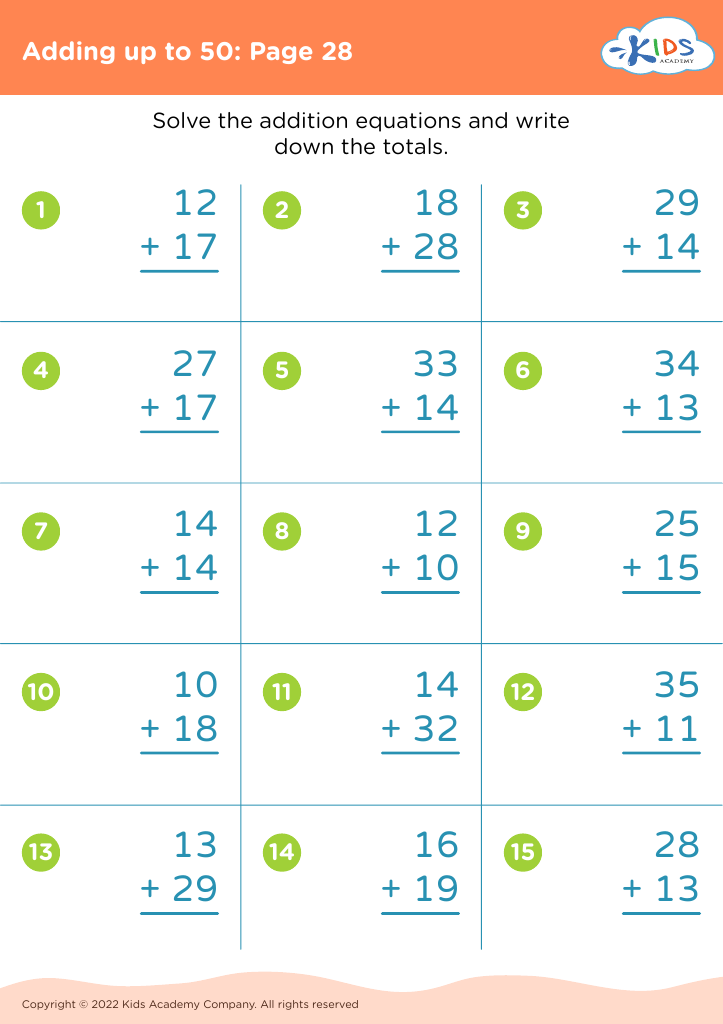
Adding up to 50: Page 28

Adding up to 50: Page 28

Adding up to 50: Page 28
Worksheet
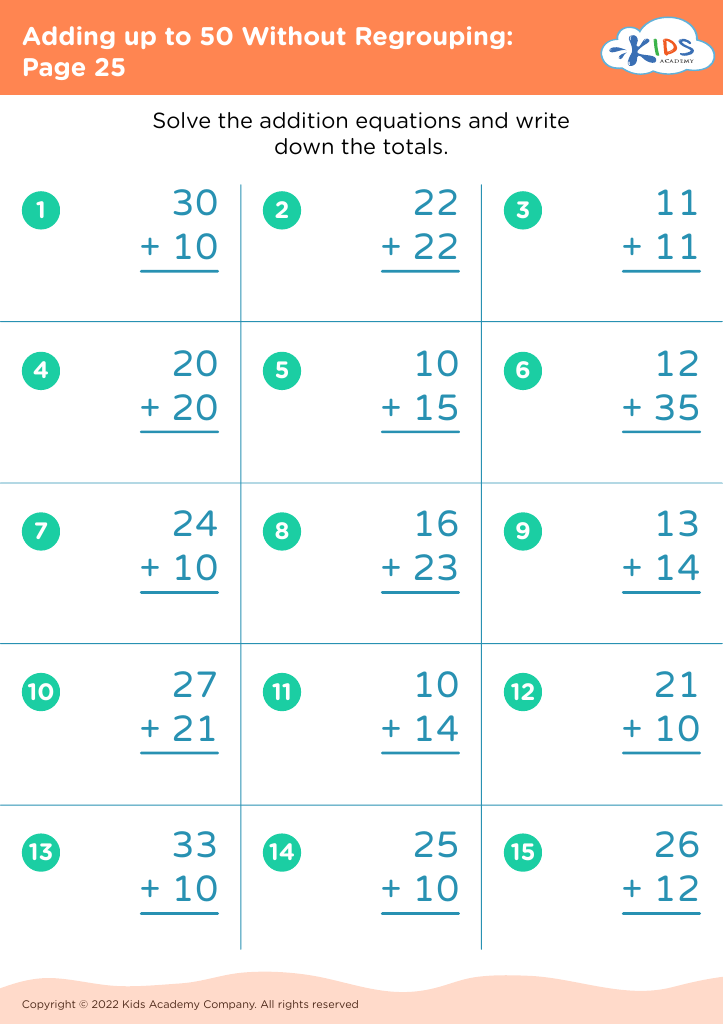
Adding up to 50 Without Regrouping: Page 25
Worksheet
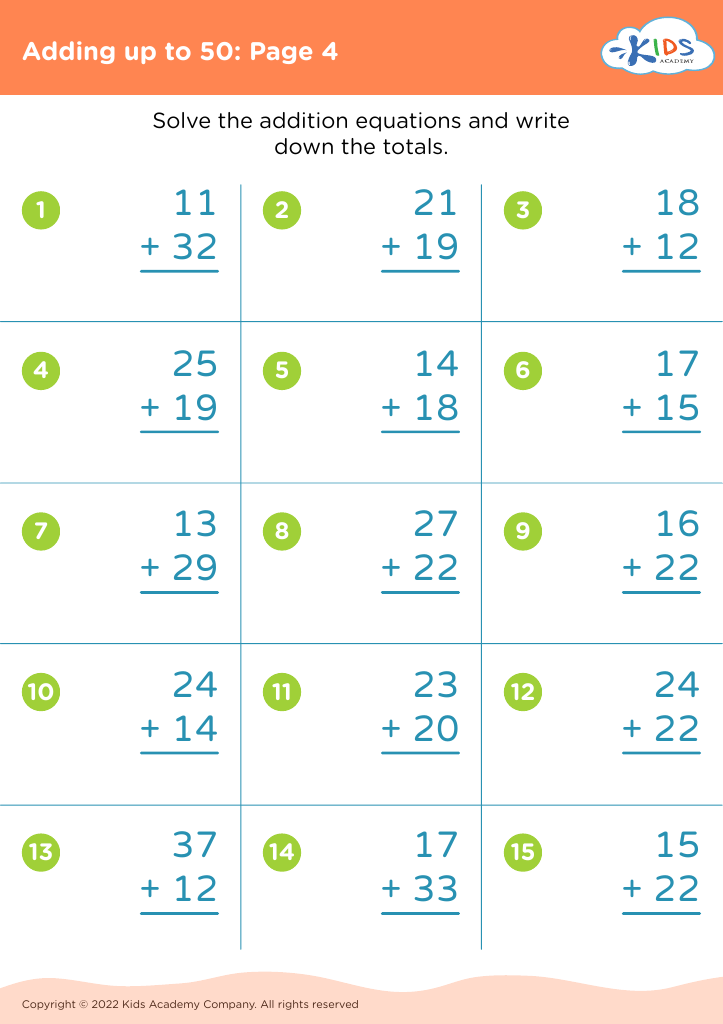
Adding up to 50: Page 4

Adding up to 50: Page 4

Adding up to 50: Page 4
Worksheet
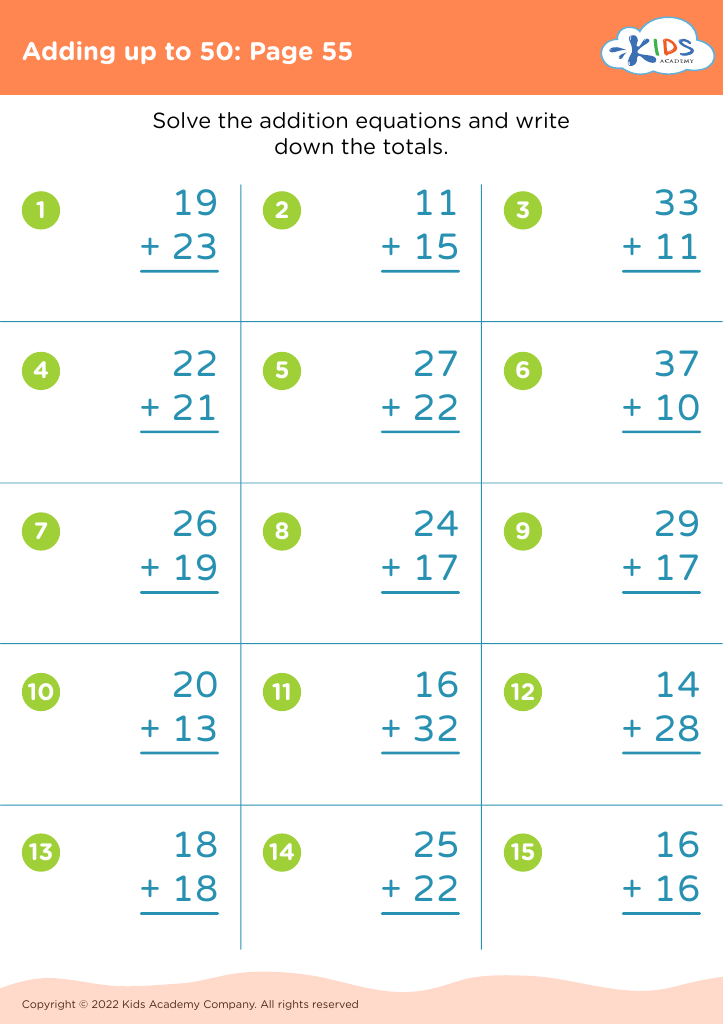
Adding up to 50: Page 55

Adding up to 50: Page 55

Adding up to 50: Page 55
Worksheet
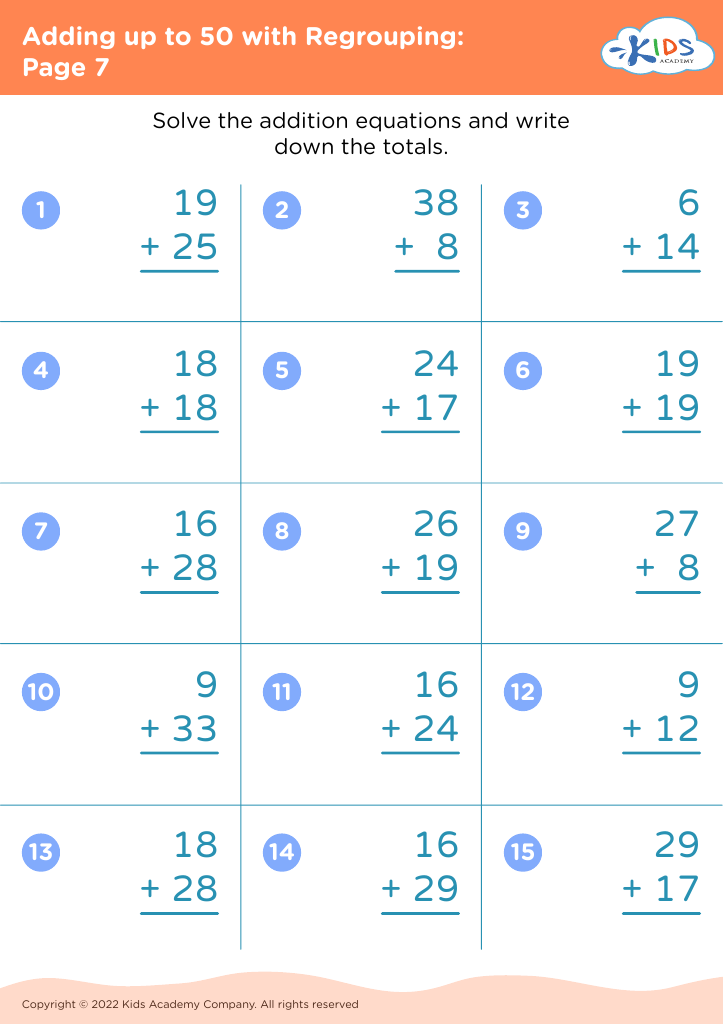
Adding up to 50 with Regrouping: Page 7
Worksheet
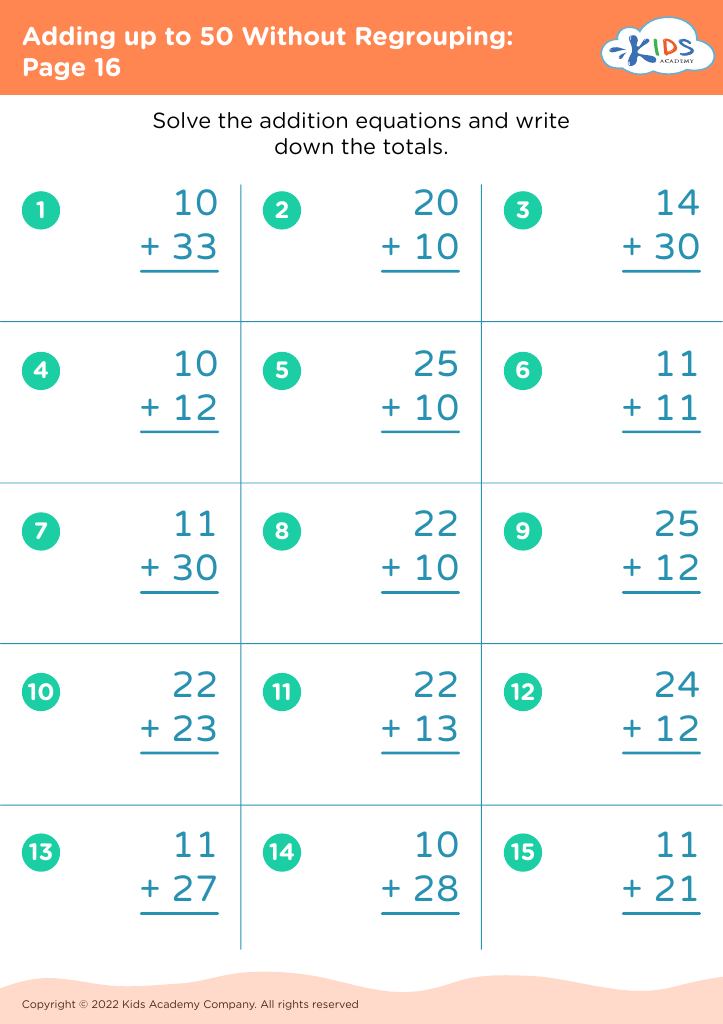
Adding up to 50 Without Regrouping: Page 16
Worksheet
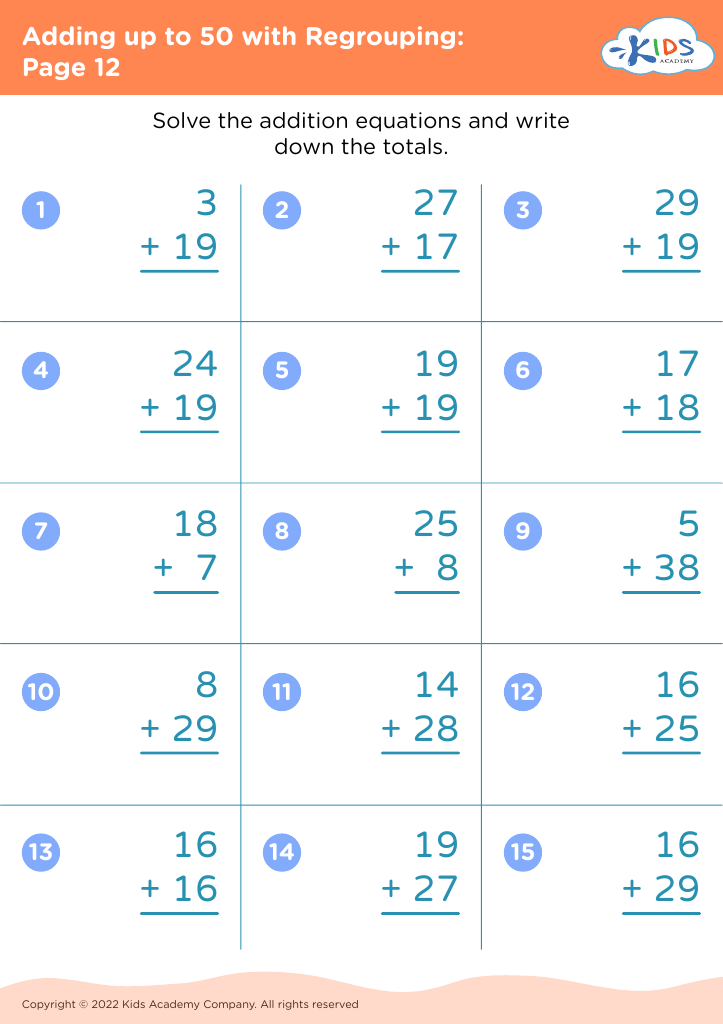
Adding up to 50 with Regrouping: Page 12
Worksheet
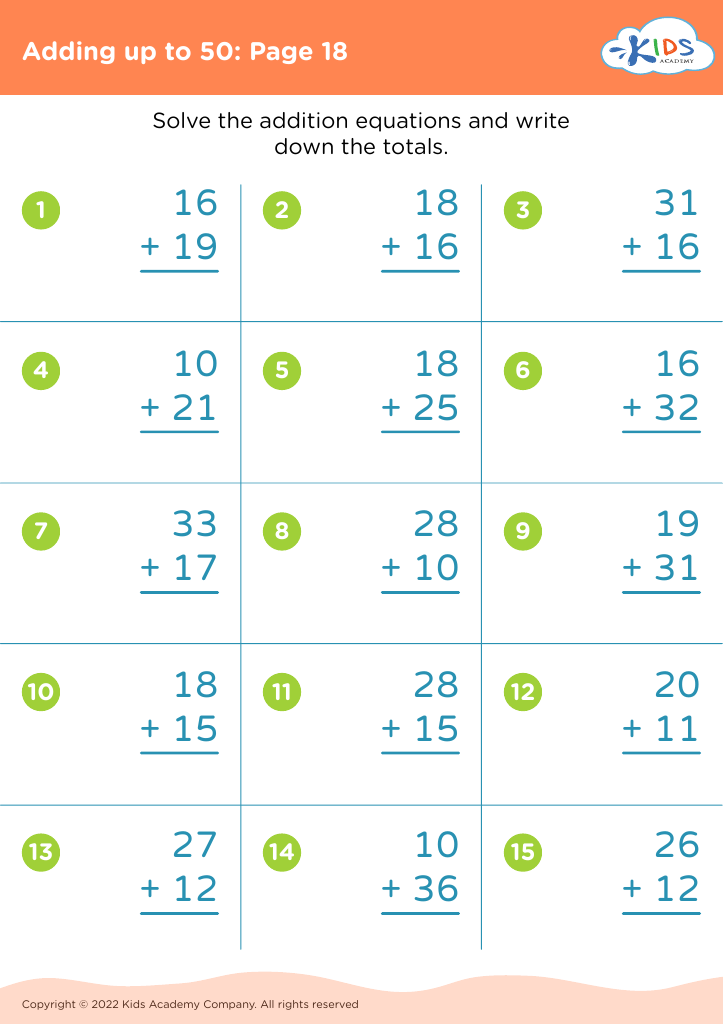
Adding up to 50: Page 18

Adding up to 50: Page 18

Adding up to 50: Page 18
Worksheet
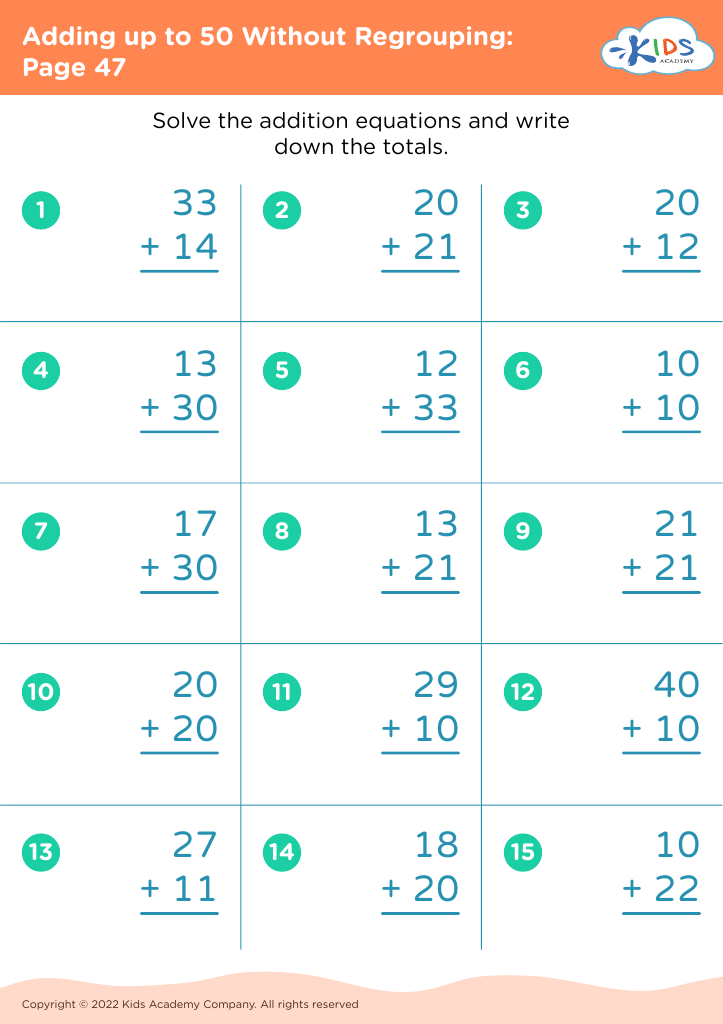
Adding up to 50 Without Regrouping: Page 47
Worksheet
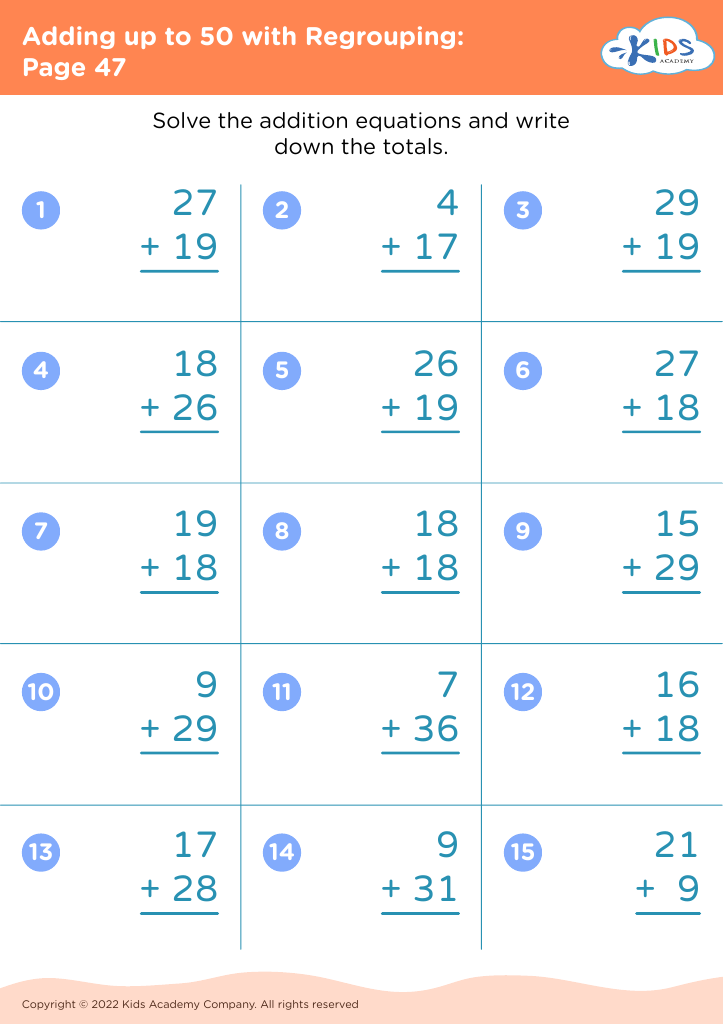
Adding up to 50 with Regrouping: Page 47
Worksheet
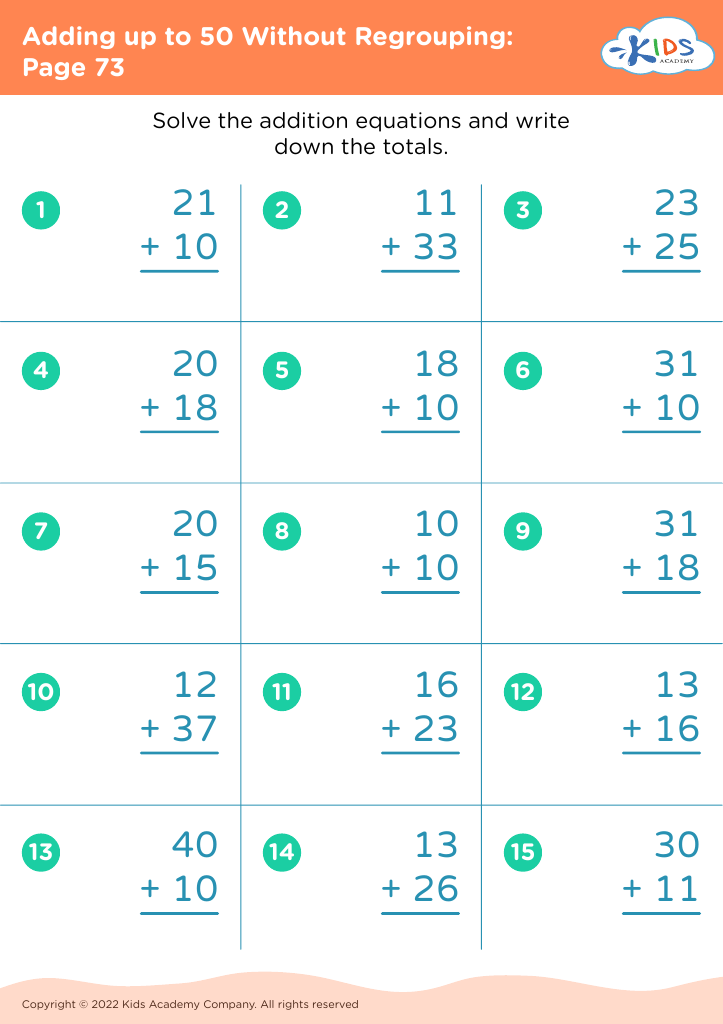
Adding up to 50 Without Regrouping: Page 73
Worksheet
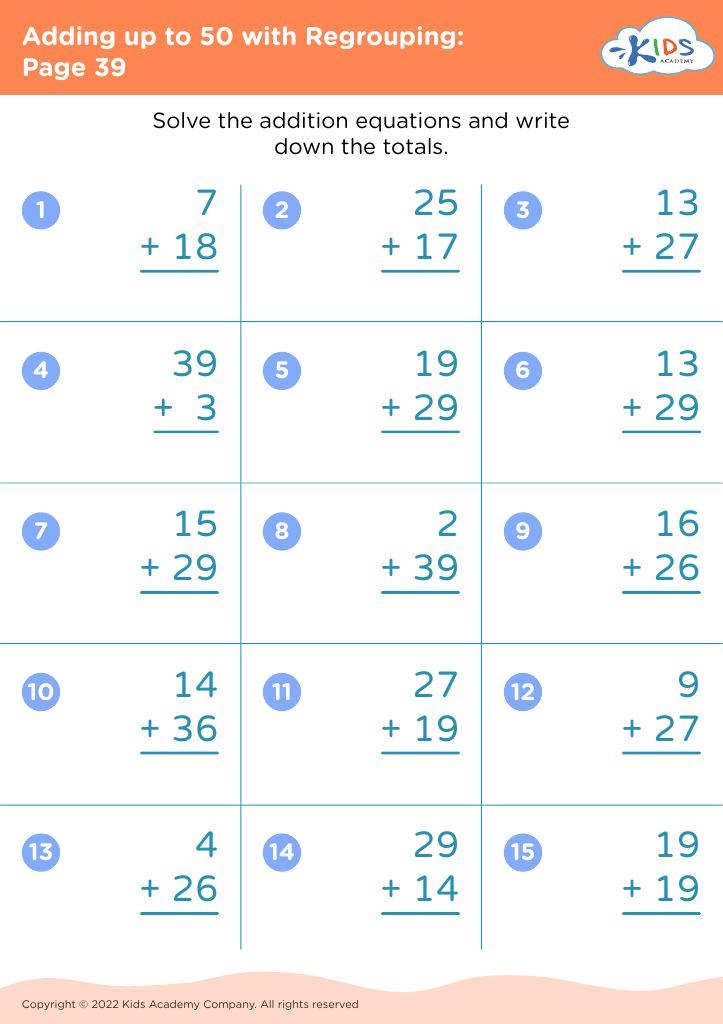
Adding up to 50 with Regrouping: Page 39
Worksheet
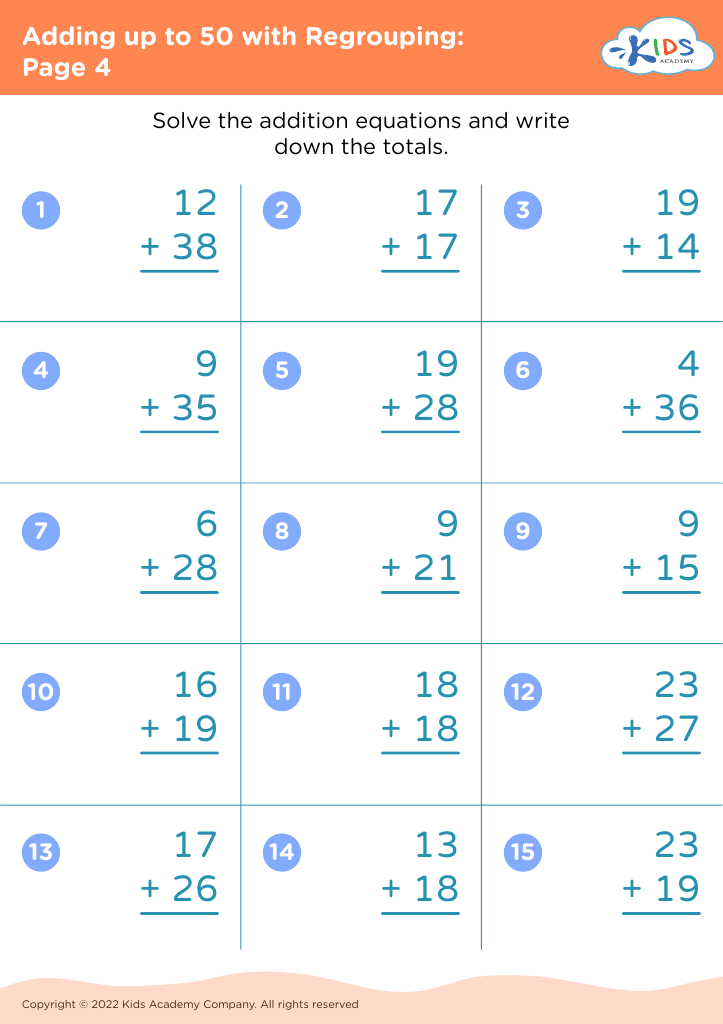
Adding up to 50 with Regrouping: Page 4
Worksheet
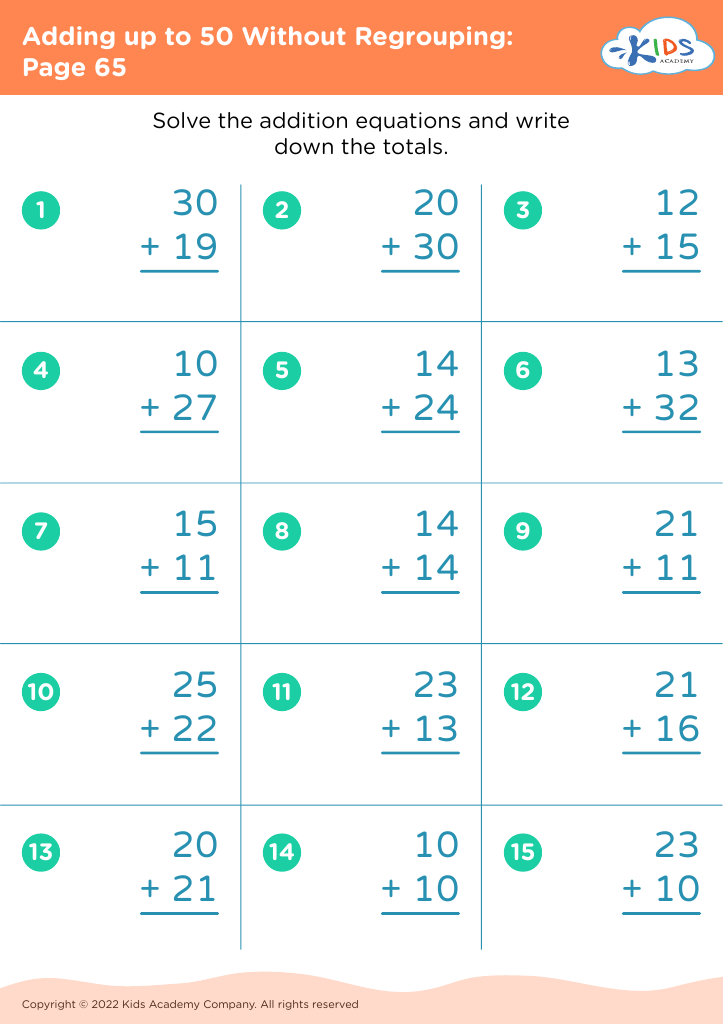
Adding up to 50 Without Regrouping: Page 65
Worksheet
Adding up to 50: Page 34

Adding up to 50: Page 34

Adding up to 50: Page 34
Worksheet


Teaching fraction simplification to children aged 7-9 is crucial because it lays the foundation for more complex mathematical concepts. Simplifying fractions helps students develop a deep understanding of the relationships between numbers, fostering critical thinking and problem-solving skills. When children learn how to simplify fractions, they start to recognize patterns and equivalent fractions, which are essential for grasping more advanced topics like algebra and ratio.

Additionally, mastering fraction simplification builds confidence as students experience the satisfaction of solving problems accurately. This self-assurance encourages a positive attitude toward mathematics, making learning more enjoyable and less intimidating. For ages 7-9, this is particularly important as mathematical concepts transform from basic arithmetic to more detailed operations.

Moreover, early competency in fractions impacts everyday life scenarios. Simplified fractions are easier to work with during real-life applications like cooking, dividing resources, and understanding measurements. It makes practical sense for teachers and parents to emphasize the importance of accurate and efficient calculation to better prepare children for such tasks.

Lastly, cognitive development during these formative years benefits greatly from the mental exercises involved in fraction simplification. It hones memory, sharpens focus, and enhances sequential processing, entire skills transferable to almost every academic subject and beyond. Therefore, ensuring that children are comfortable with these foundational skills by the age of 9 can significantly boost their overall educational trajectory.