Problem-solving abilities Adding up to 50 Worksheets for Ages 7-9
4 filtered results
-
From - To
Unlock your child's potential with our "Problem-Solving Abilities: Adding Up to 50 Worksheets" designed for ages 7-9. This resource features 100 engaging worksheets that help young learners develop essential math skills through exciting problem-solving activities. Each worksheet focuses on addition concepts up to 50, encouraging children to think critically and creatively as they tackle a variety of challenges. Perfect for parents and educators, these worksheets make learning fun while reinforcing foundational math skills. Watch your child gain confidence and competence, paving the way for future success in mathematics and beyond. Enhance their learning journey today!
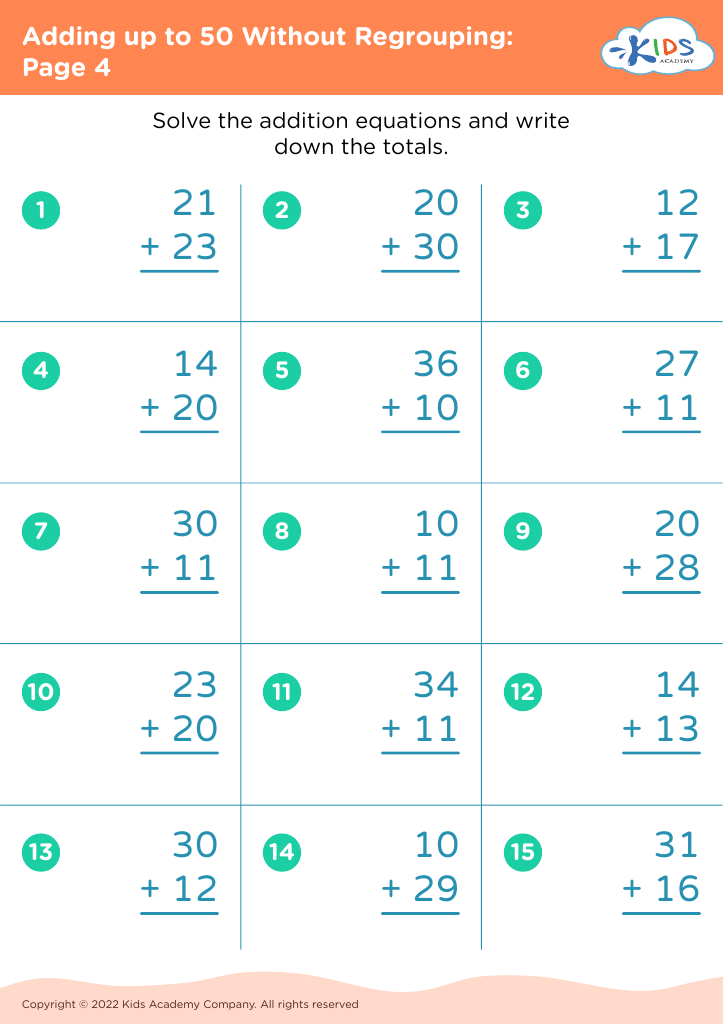
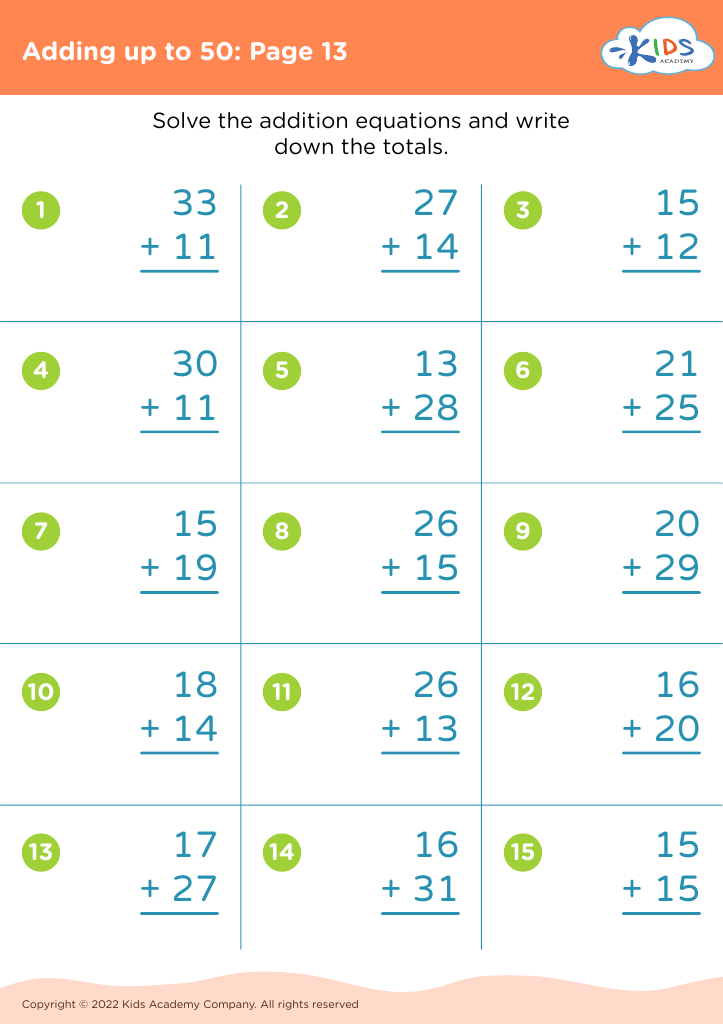
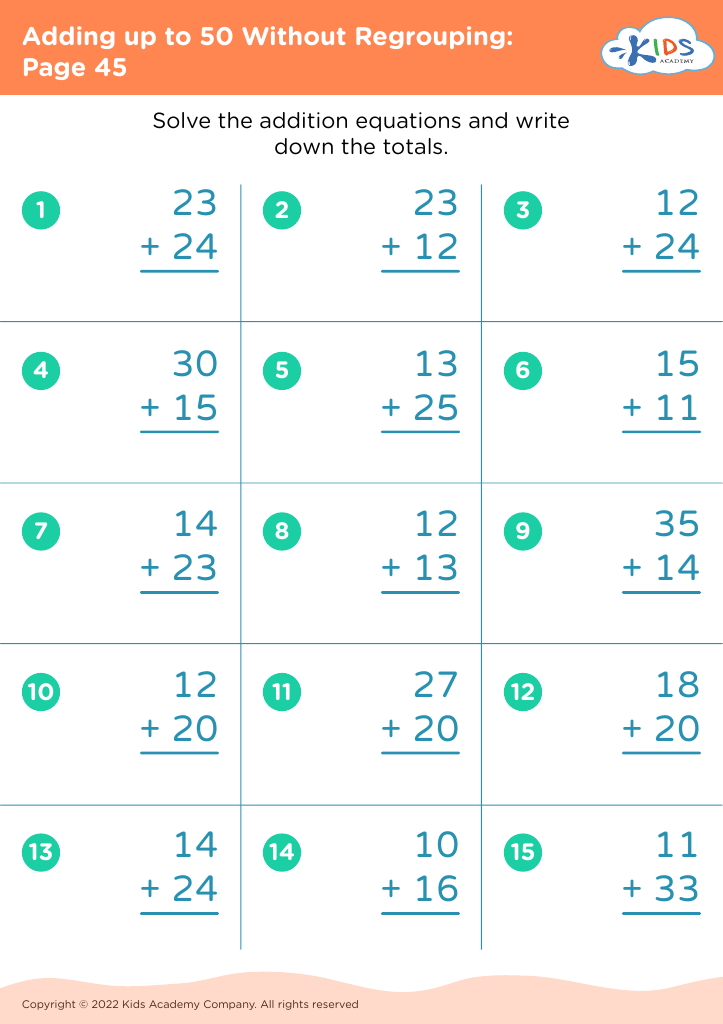
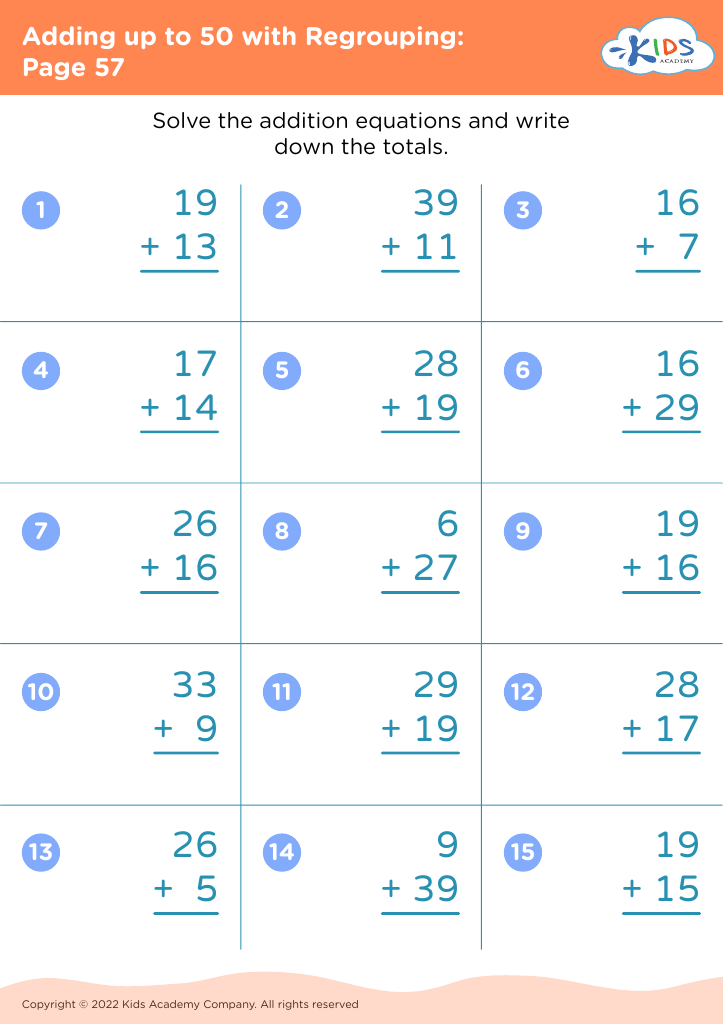




Parents and teachers should care deeply about problem-solving abilities in children ages 7-9, particularly regarding tasks like adding up to 50, as this skill lays the groundwork for foundational math understanding and critical thinking. At this age, children transition from concrete to more abstract thinking, making it vital for them to develop mathematical reasoning through practical problem-solving experiences.
Mastering addition starts to shape their confidence in tackling more complex mathematical concepts over the years. Facility with numbers enables students to engage more fully in classroom activities, contributing to a positive learning environment. These skills also enhance analytical thinking, as children learn to approach problems methodically. Encouraging problem-solving fosters resilience, teaching them that mistakes can be opportunities for growth.
Additionally, proficient problem-solvers thrive in collaborative environments, as they learn to share ideas and tackle challenges with peers. Supporting children's development in this area builds their communication skills and emotional intelligence, essential competencies in today’s world.
In essence, cultivating problem-solving abilities not only serves immediate academic goals but also prepares children for future success in all areas of life, equipping them with the tools they need to navigate challenges with confidence and creativity.








