Problem-solving practice Adding up to 50 Worksheets for Ages 7-9
3 filtered results
-
From - To
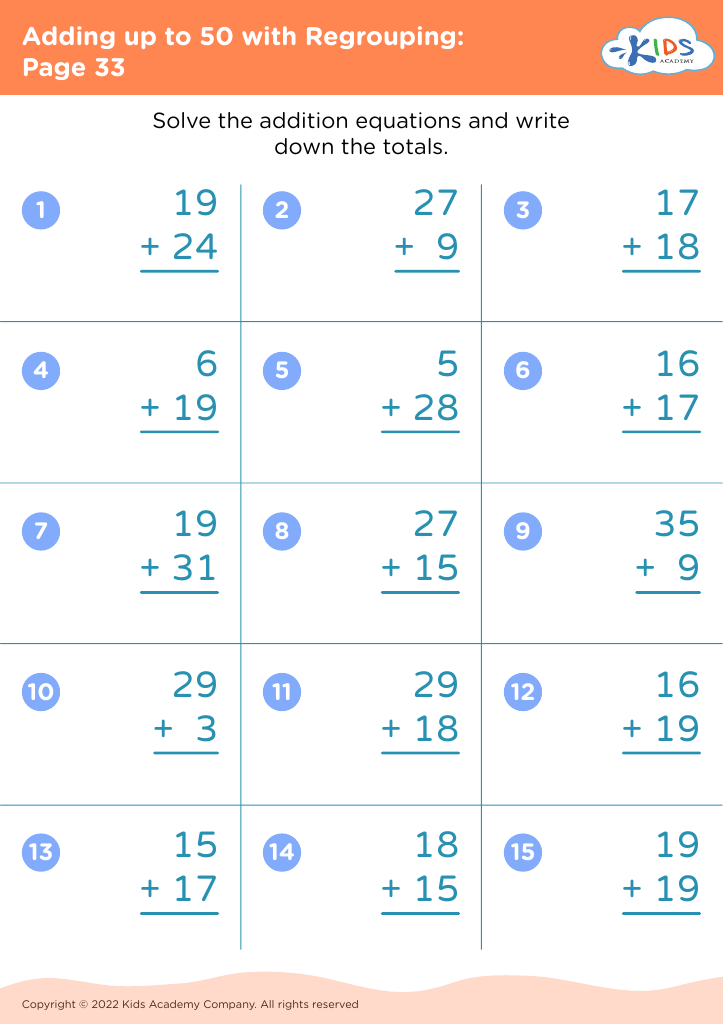
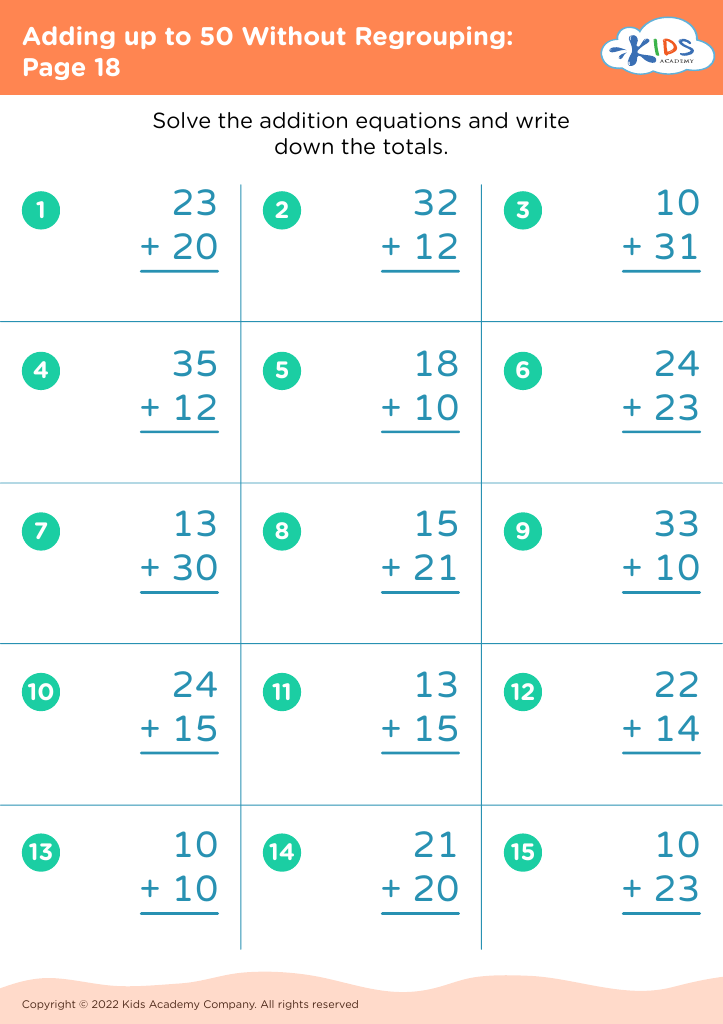
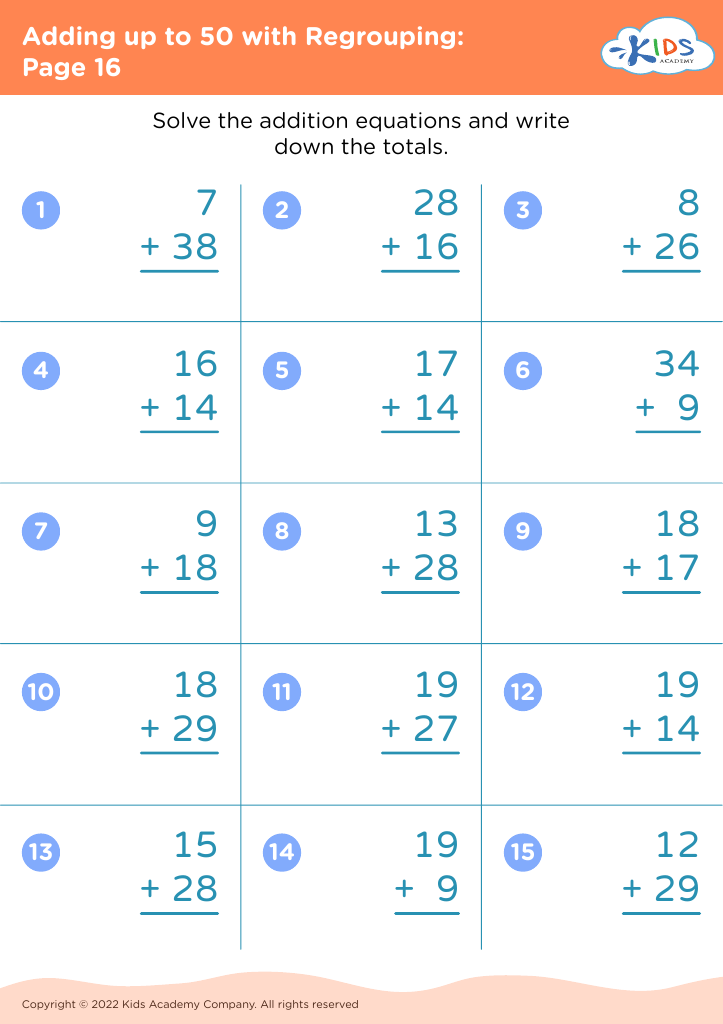
Enhance your child's math skills with our "Problem-solving Practice: Adding Up to 50 Worksheets" tailored for ages 7-9. These engaging worksheets are designed to encourage critical thinking and develop problem-solving abilities through fun math exercises. Students will work with addition problems up to 50, promoting both confidence and proficiency in mathematics. Perfect for homeschooling or classroom use, these sheets provide clear instructions and various scenarios to keep young learners motivated. Let your child master addition while enjoying a creative learning experience! Download these printable worksheets today and watch their math skills shine!




Parents and teachers should prioritize problem-solving practice, particularly with addition up to 50, for children aged 7-9 for several reasons. At this developmental stage, children are building crucial foundational math skills that support their overall academic growth. Problem-solving exercises enhance their ability to think critically and reason through challenges, not only in mathematics but across all subjects.
Engaging in addition problems helps young learners to reinforce their number sense, making them comfortable with numbers and their relationships. Solving problems encourages them to explore various strategies, fostering creativity and flexibility in their thinking. This exploration is vital as it paves the way for advanced mathematical concepts they will encounter in later grades.
Moreover, problem-solving cultivates perseverance and resilience. Children learn to approach challenges systematically, understanding that mistakes are a part of the learning process. This growth mindset enhances their confidence and pushes them to tackle increasingly complex problems.
Lastly, involving parents and teachers creates a supportive learning environment where children feel motivated and valued. Collaborative practice can strengthen the bond between home and school, ensuring a well-rounded educational experience. By emphasizing these skills, we are equipping our children with the tools they need for future success.








