Problem-Solving Skills Adding up to 50 Worksheets for Ages 7-9 - Page 2
26 filtered results
-
From - To
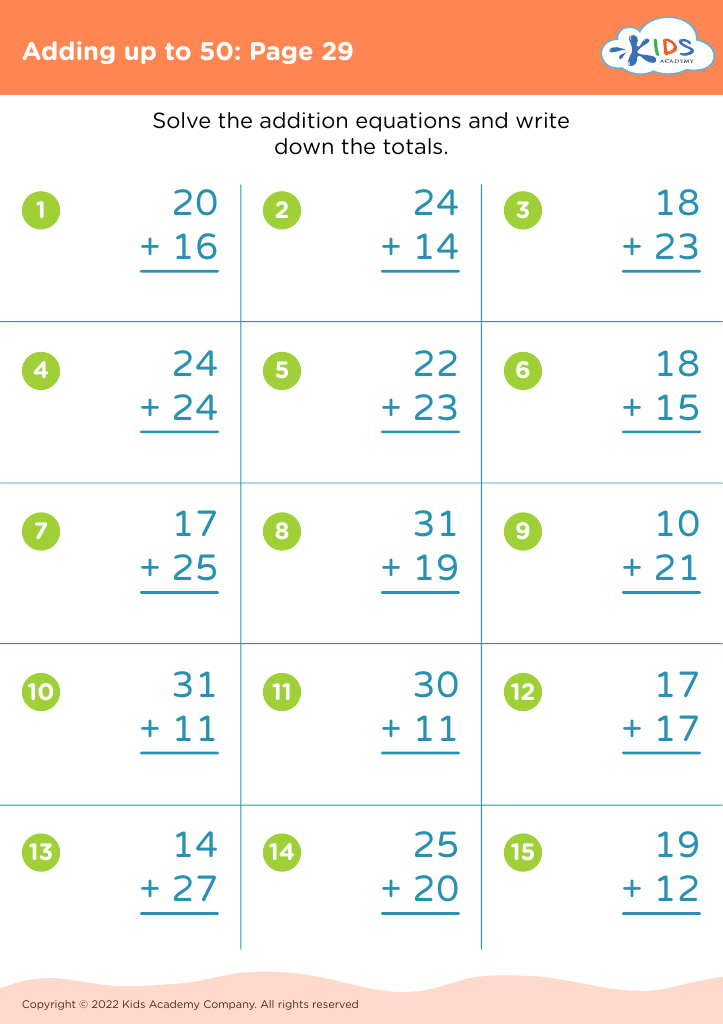
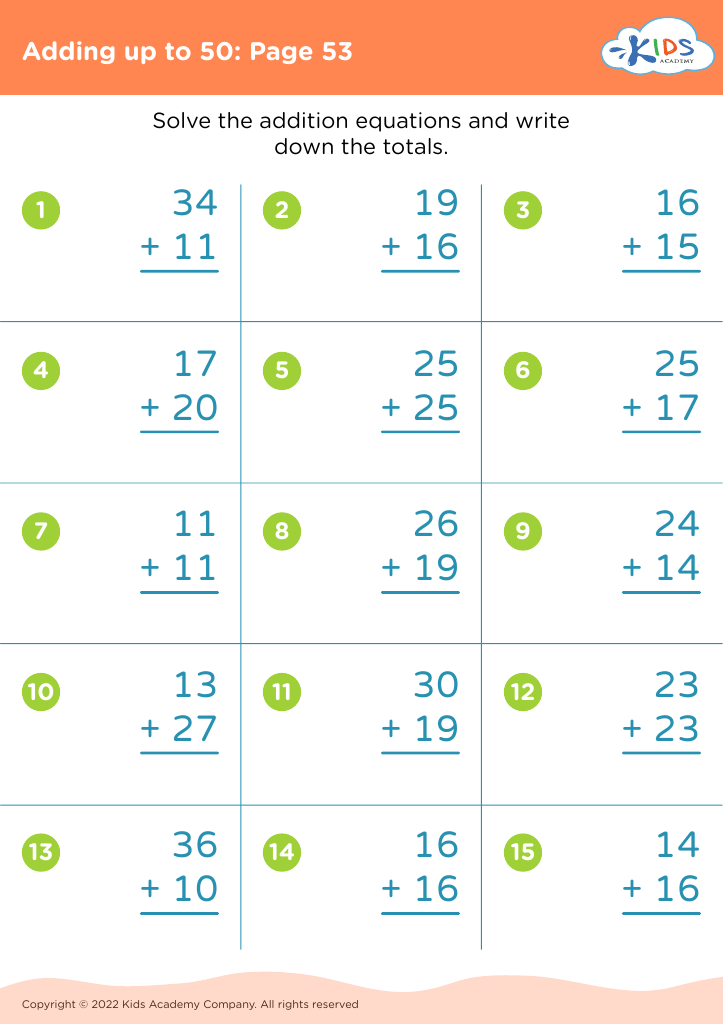




Problem-solving skills are essential for children aged 7-9, laying the foundation for future academic and life success. At this age, children are developing critical thinking and logical reasoning abilities, making it a prime time to engage them in problem-solving activities, such as those involving adding up to 50.
These skills foster independence and resilience, encouraging children to approach challenges with a positive mindset. By learning how to break problems into manageable parts, they not only enhance their mathematical abilities but also boost their confidence when tackling obstacles in everyday life. Engaging students in fun and challenging problems promotes cooperative learning, as they often work with peers or seek help from parents, building collaboration and communication skills.
Furthermore, a strong foundation in problem-solving translates to improved academic performance across subjects. As children who master these skills grow older, they are better equipped to handle complex tasks in higher education and the workplace. For parents and teachers, investing time and effort into cultivating problem-solving skills in children is vital for nurturing well-rounded, competent individuals ready to navigate the demands of the world around them. Emphasizing playful, engaging problem-solving opportunities helps make learning enjoyable and meaningful.








