Recognizing equivalent fractions Adding up to 50 Worksheets for Ages 7-9
3 filtered results
-
From - To
Discover our engaging "Recognizing Equivalent Fractions Adding Up to 50 Worksheets" designed specifically for children ages 7-9. These worksheets provide a fun and interactive way to help students grasp the concept of equivalent fractions through practical exercises and colorful visuals. As kids work through problems related to adding fractions that total up to 50, they'll enhance their mathematical skills and build their confidence. Encourage your child's love for math with these thoughtfully crafted worksheets that make learning enjoyable. Perfect for home or classroom use, these resources align with curriculum goals to support your child's fractional understanding effectively.
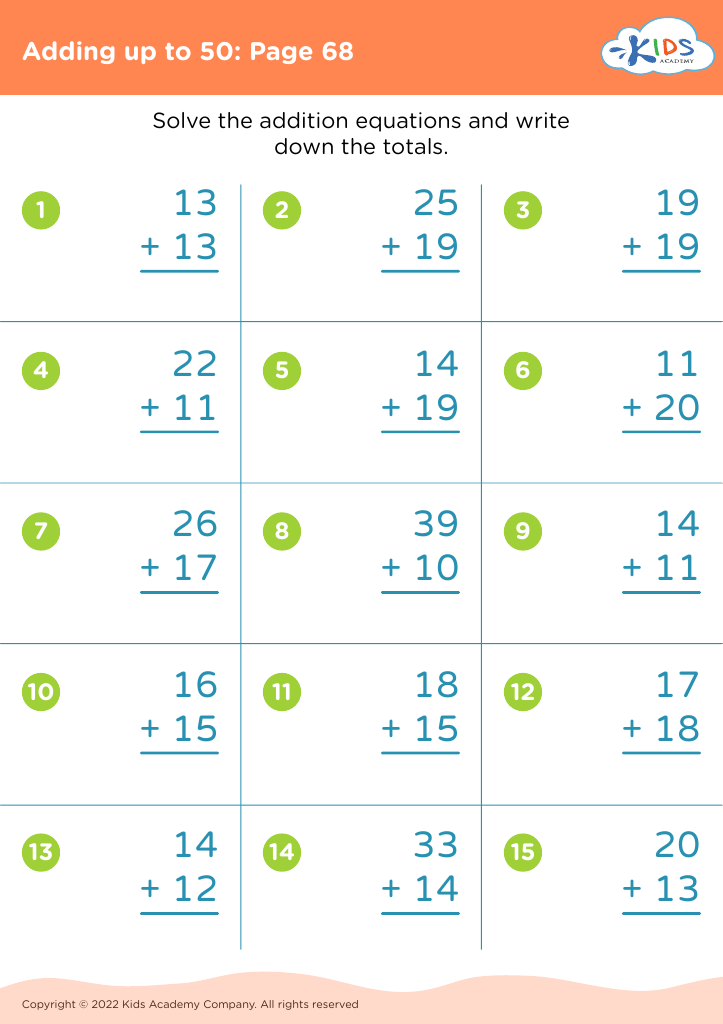
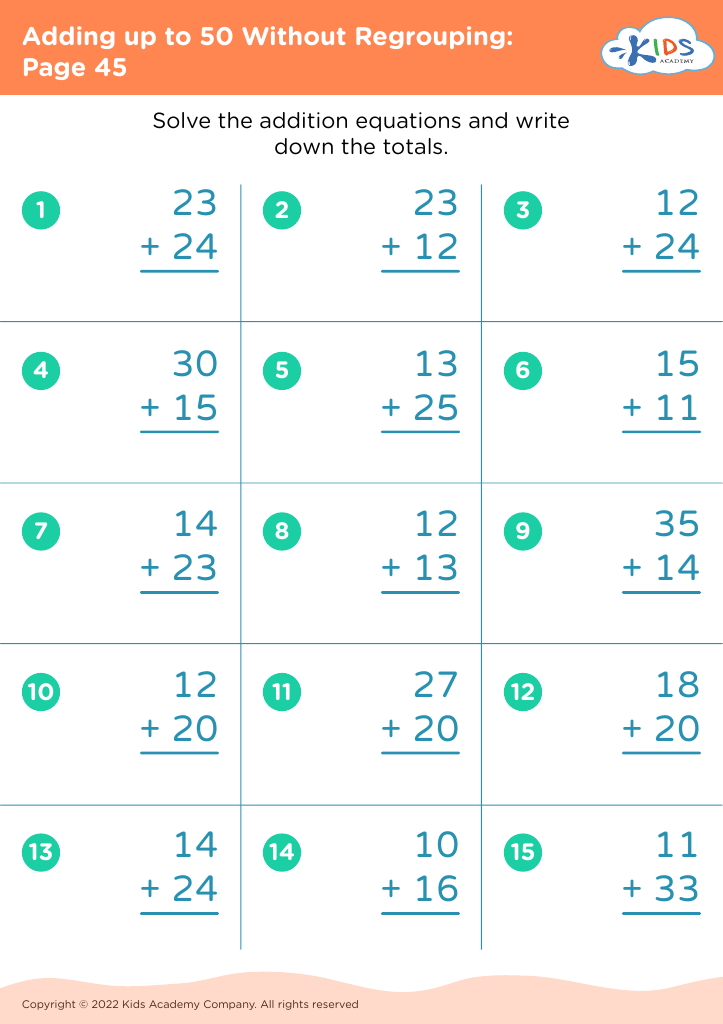
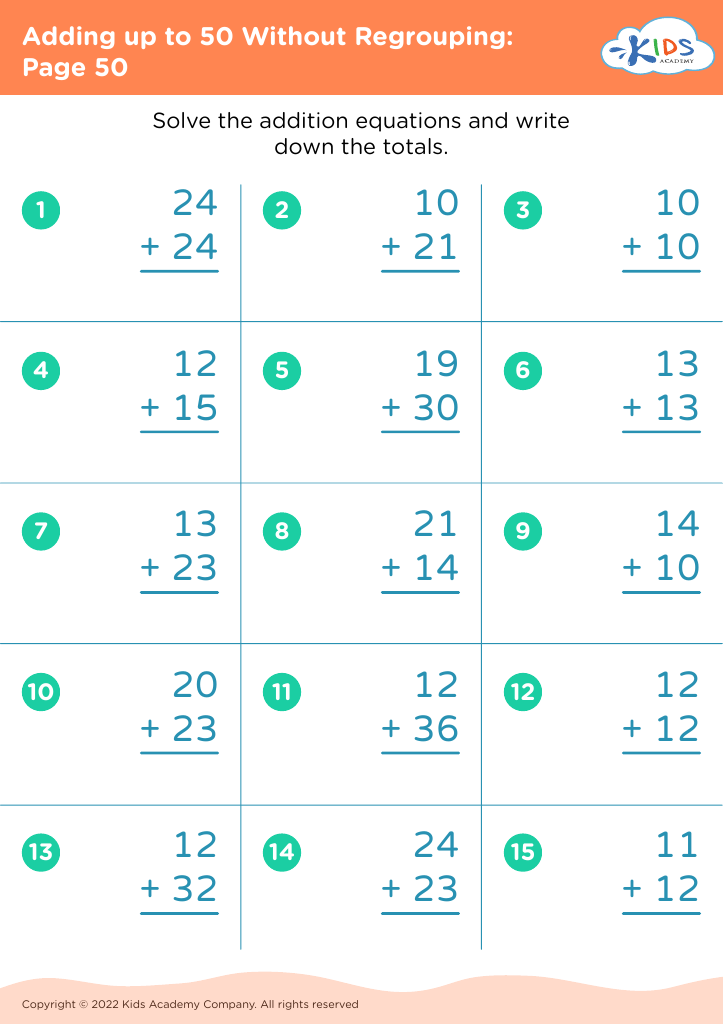




Recognizing equivalent fractions and understanding how they add up to totals like 50 is crucial for children aged 7-9 for several reasons. Firstly, this foundational concept fosters numerical fluency, allowing students to see relationships between different fractions and their equivalents, which lays the groundwork for more advanced mathematical concepts in the future. Mastering equivalent fractions enhances their problem-solving skills, as they learn to manipulate numbers and discover that different fractions can represent the same value.
Moreover, this skill enhances their ability to work with concepts like ratios, proportions, and percentages, which are vital in daily life and future academic pursuits. Why focus on adding to 50? This targeted approach helps children practice addition and reinforces their understanding of fractions in a manageable context, promoting both computational skills and logical reasoning.
Additionally, recognizing and working with equivalent fractions encourages perseverance in problem-solving. It teaches students that math isn't just about the single correct answer but involves exploration and multiple pathways to finding solutions. Engaging parents and teachers in this process fosters a collaborative learning environment where kids are excited to discover the beauty of math, ultimately equipping them with lifelong skills essential for success both in school and in everyday situations.








