Simplifying Fractions Adding up to 50 Worksheets for Ages 7-9
8 filtered results
-
From - To
Our "Simplifying Fractions Adding up to 50 Worksheets for Ages 7-9" offer an engaging and educational way for young learners to develop essential math skills. Specially designed for kids in early grades, these worksheets focus on simplifying fractions within sums up to 50. The exercises encourage a solid understanding of fractions and number operations while enhancing problem-solving skills. The colorful and motivating format keeps children captivated, making learning fun and effective. These worksheets serve as an excellent resource for both classroom and home use, guiding children to master the fundamentals of mathematics with confidence and ease.
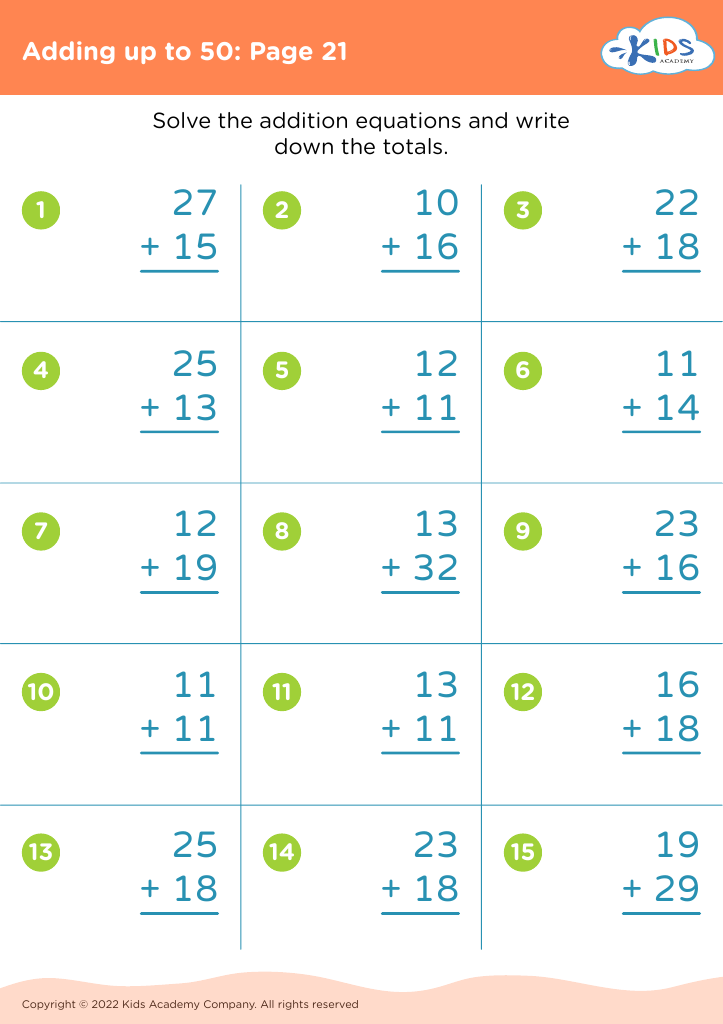
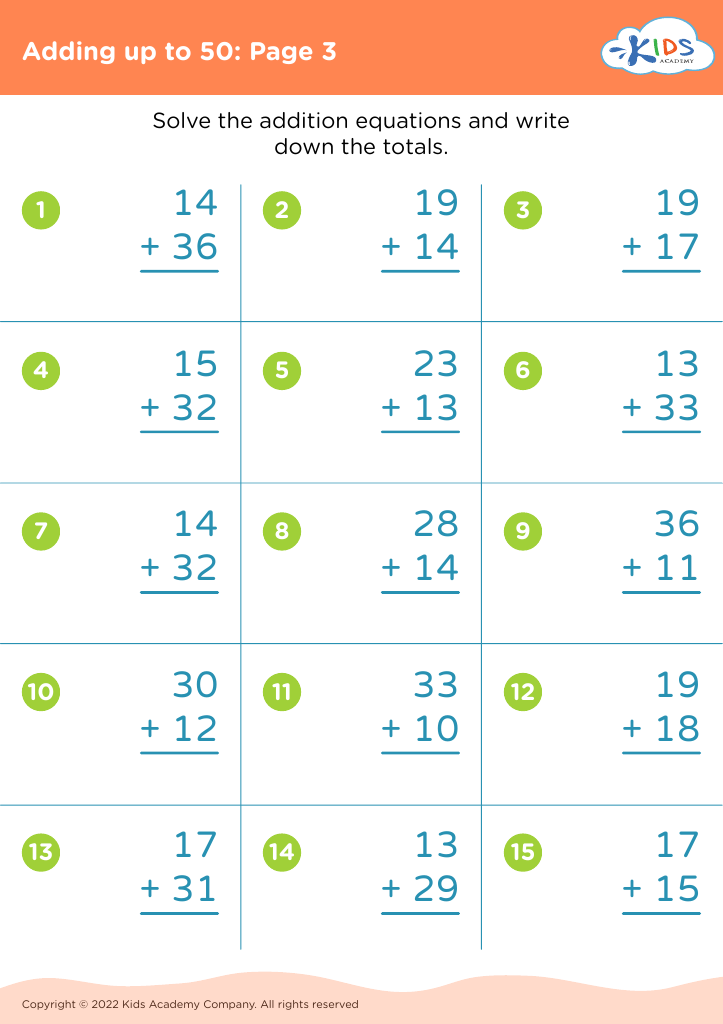
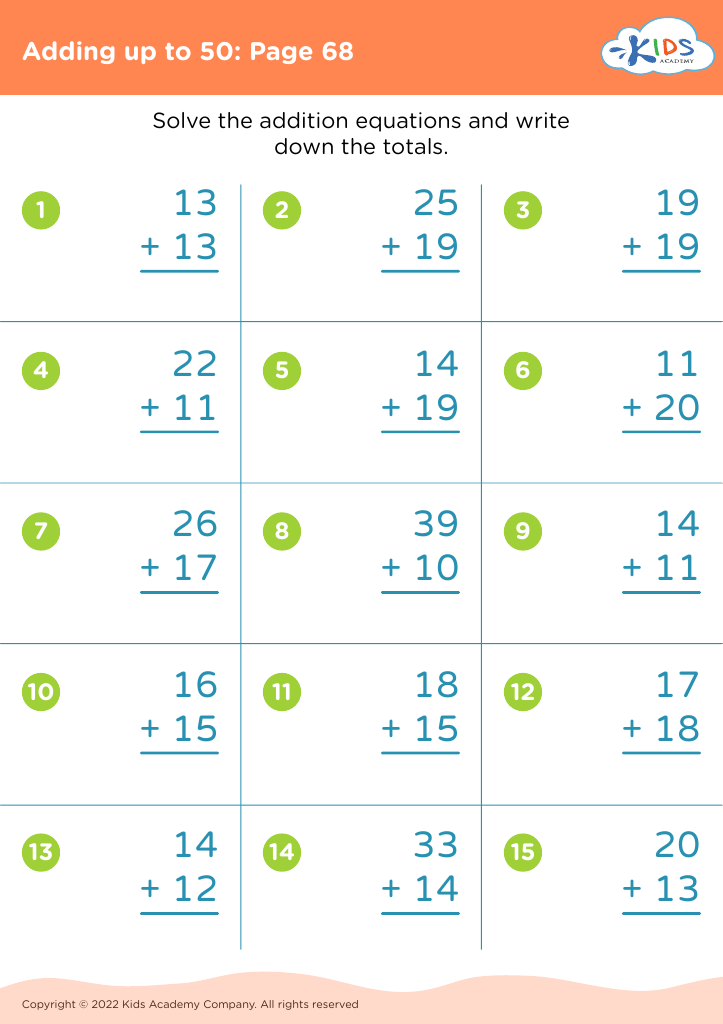
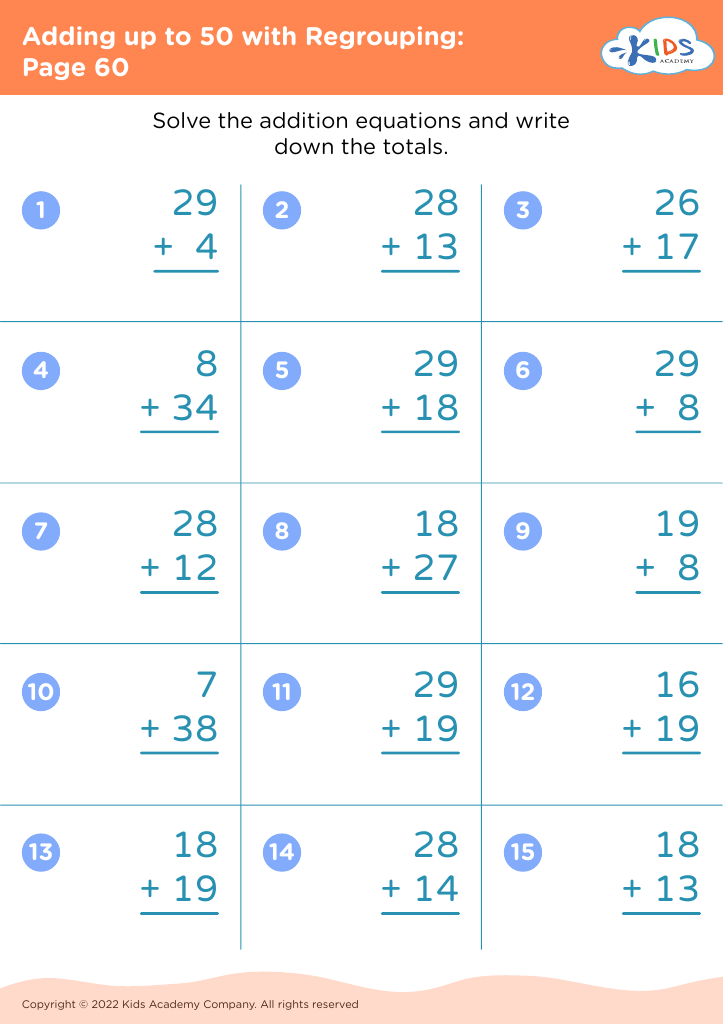
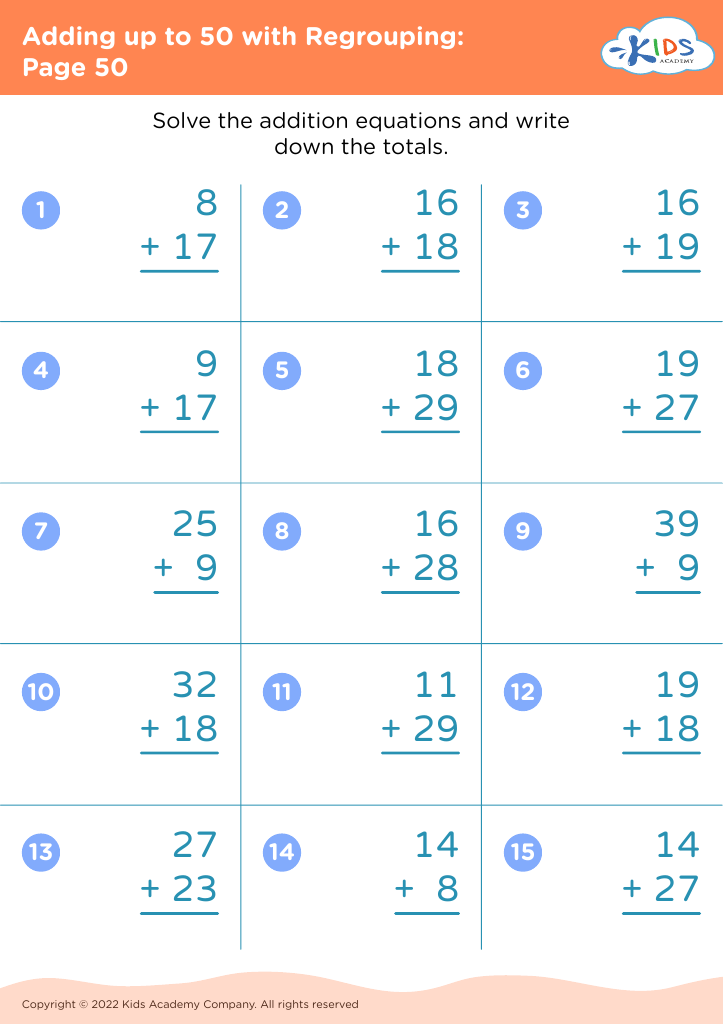
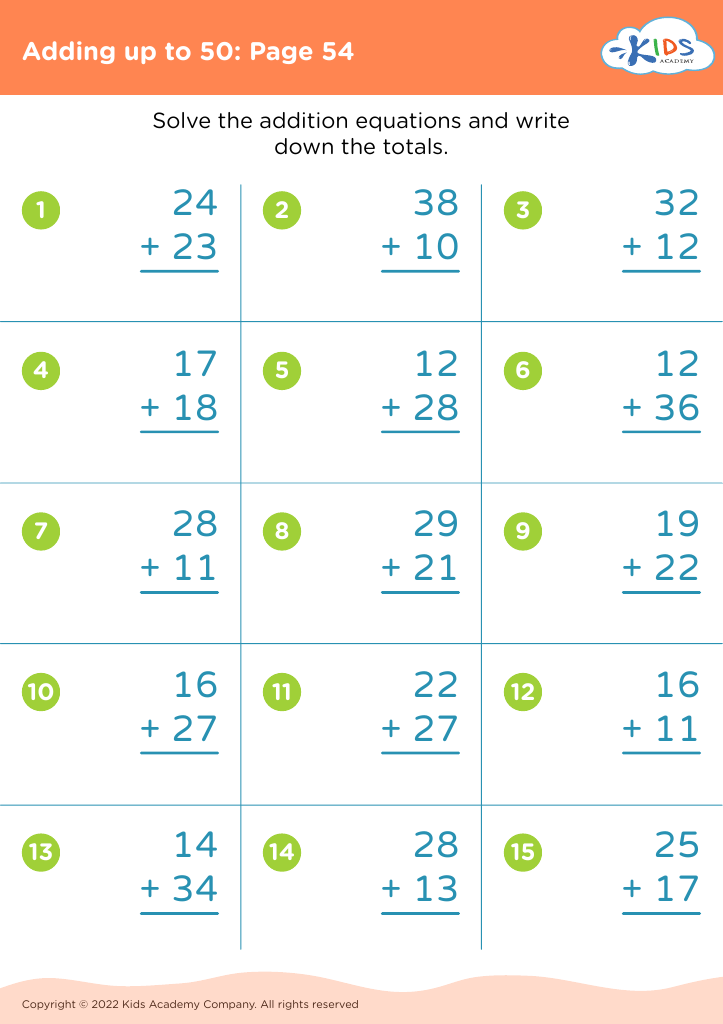
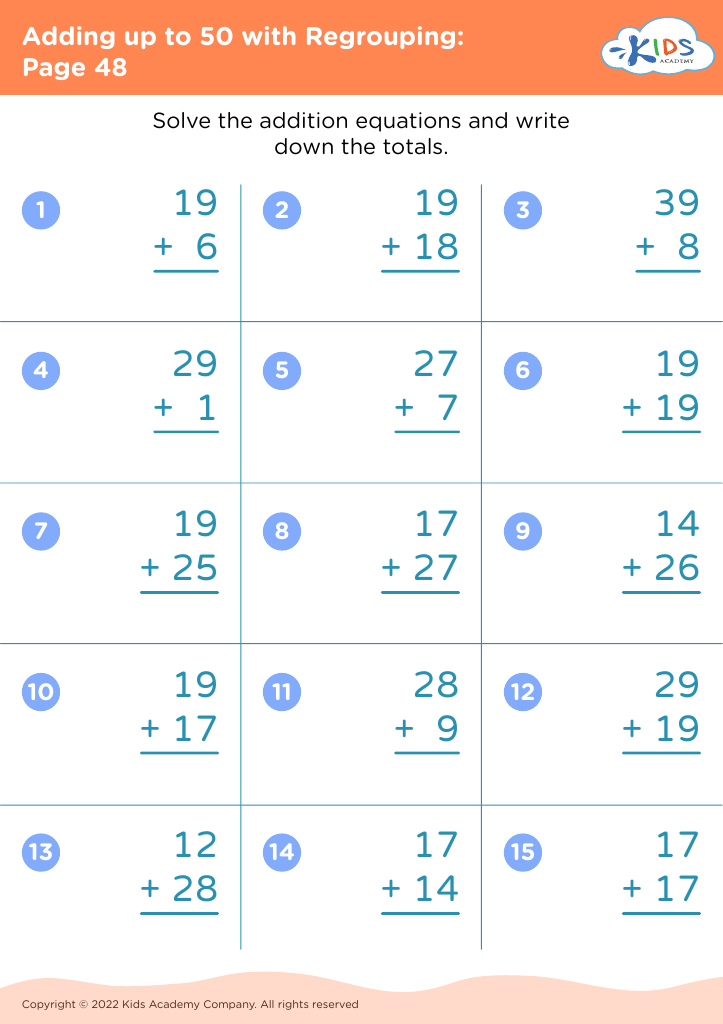
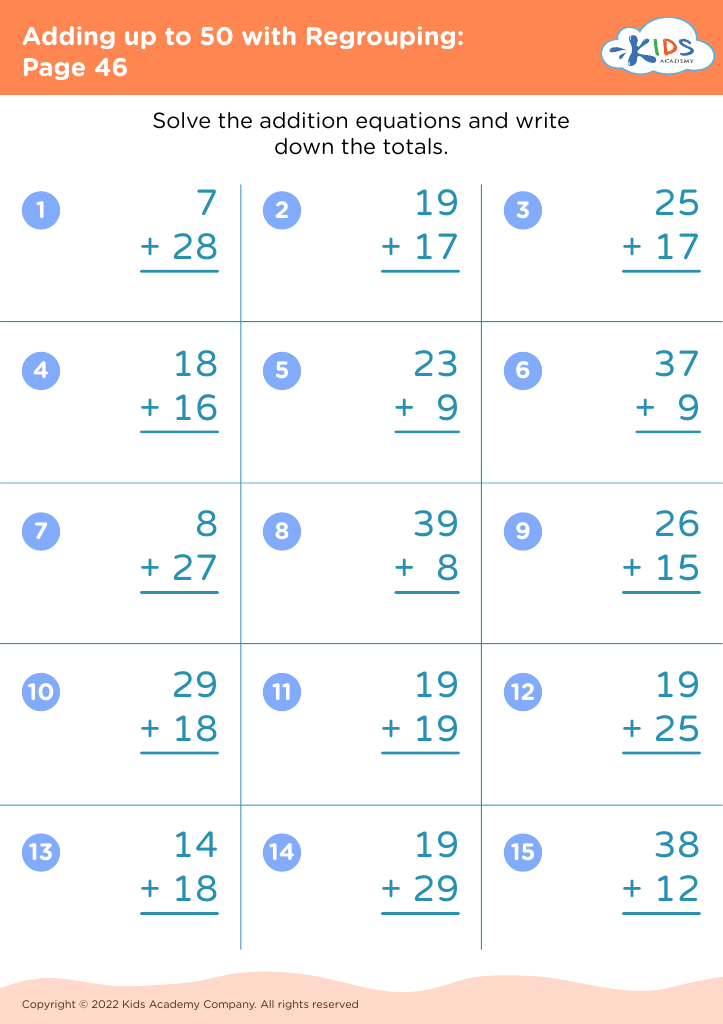




Simplifying fractions adding up to 50 is a foundational math skill that offers several key benefits for children aged 7-9. Mastery of fractions develops mathematical fluency, crucial for tackling more complex concepts in later grades, such as algebra and geometry. It promotes problem-solving and critical thinking skills, which are essential across all academic subjects and everyday life.
By negotiating fractions, children enhance their understanding of parts and wholes, decimals, and percentages, making real-world applications such as measuring ingredients in a recipe or determining portions more comprehensible. Simplifying these into sums encourages flexibility with numbers, making it less intimidating and more enjoyable for young learners. Engaging with these basic elements lays down a concrete mental groundwork, which ensures future ease as math becomes more abstract.
Parents and teachers should care because this learning phase is critical. Supporting kids ensures they grasp core principles early on, preventing difficulties and instilling confidence. Therein lies the role of establishing a nurturing and mathematical friendly environment—they must encourage practice without pressure, celebrate progress, and relate math to everyday experiences. Hence, simplifying fractions not only builds academic success, but nurtures well-rounded thinkers, equipping kids with lifelong problem-solving skills.








