
Vocabulary expansion Adding up to 50 Worksheets for Ages 7-9
3 filtered results
Difficulty Level
Grade
Age
-
From - To
Subject
Activity
Standards
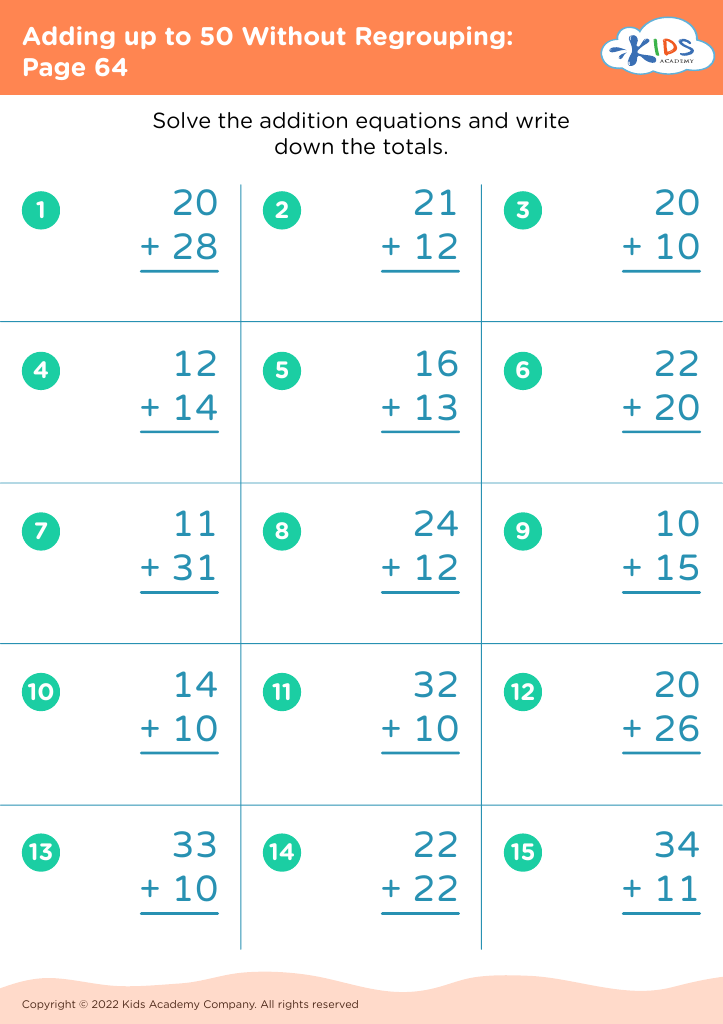
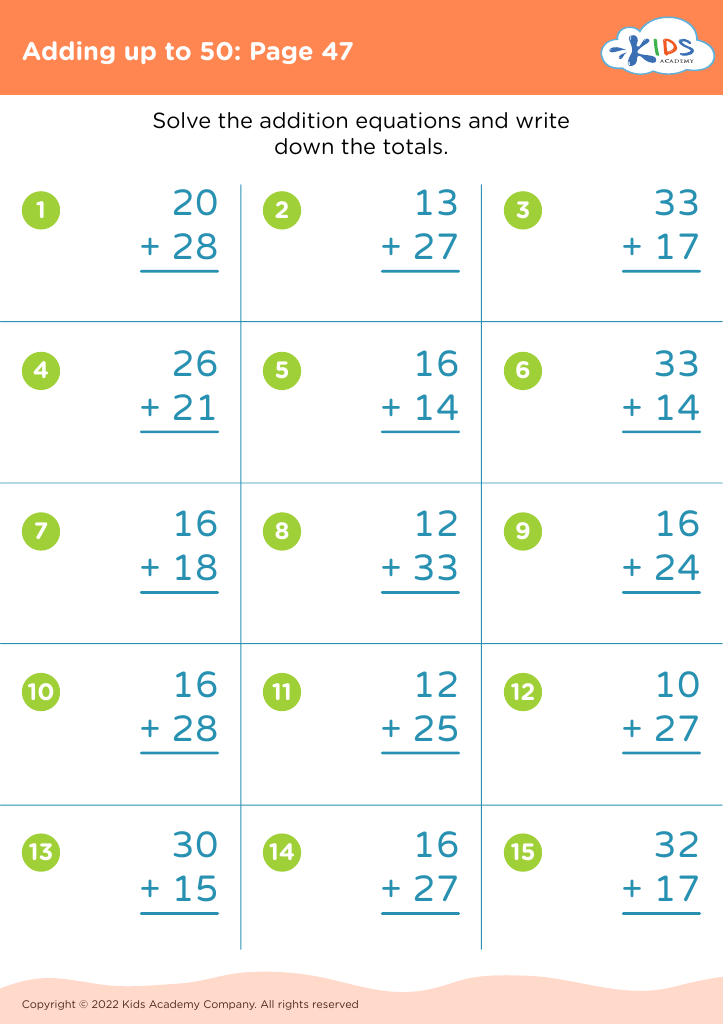
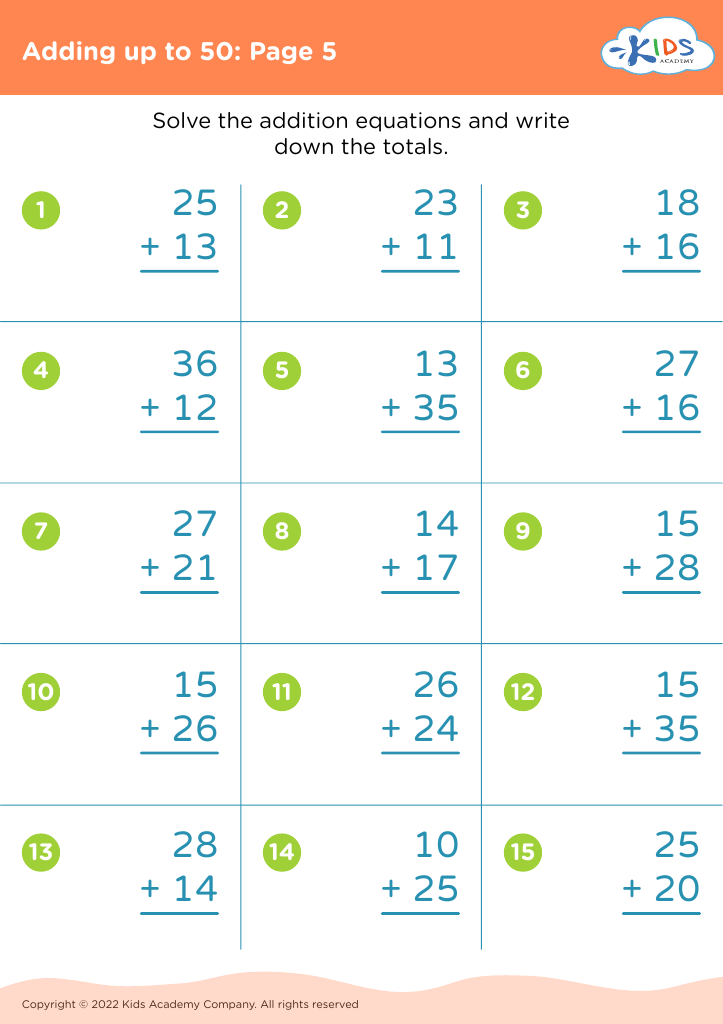
Enhance your child's vocabulary with our engaging "Vocabulary Expansion: Adding up to 50" worksheets, specially designed for ages 7-9. This collection includes 50 fun and interactive worksheets that help young learners improve their word comprehension and usage while tackling addition up to 50. Each worksheet features a mix of prompts, colorful visuals, and activities that make learning exciting and effective. Ideal for both classroom settings and at-home practice, these resources are crafted to boost language skills in tandem with math proficiency. Foster a love for learning with our worksheets and watch your child's vocabulary flourish!
Favorites
With answer key
Interactive
Join Kids Academy for Free
Who is primarily going to use this learning content?




Vocabulary expansion is crucial for children aged 7 to 9 as it plays a fundamental role in their overall development. At this stage, kids are beginning to engage more deeply with academic content, and a robust vocabulary enhances their reading comprehension and writing abilities. A strong vocabulary allows them to express thoughts clearly and articulate ideas effectively, fostering better communication skills.
Additionally, increased vocabulary supports cognitive development. When children encounter new words, they gain insight into new concepts and perspectives, stimulating critical thinking and analytical skills. This expansion also enhances their social interactions, enabling them to connect with peers and understand various social cues and contexts.
Furthermore, a rich vocabulary encourages a love for reading. When children recognize and understand more words, they’re more likely to explore different genres, nurturing their imagination and creativity. It ultimately contributes positively to their self-confidence, as they feel more competent in both academic and social settings.
Parents and teachers should actively engage in vocabulary-building activities, such as reading diverse books and playing word games. By fostering vocabulary growth, they empower children to become effective communicators, enthusiastic learners, and confident individuals, setting them up for success in and out of the classroom.








