Basic Addition Skills Addition & Subtraction Worksheets for Ages 7-9 - Page 2
27 filtered results
-
From - To
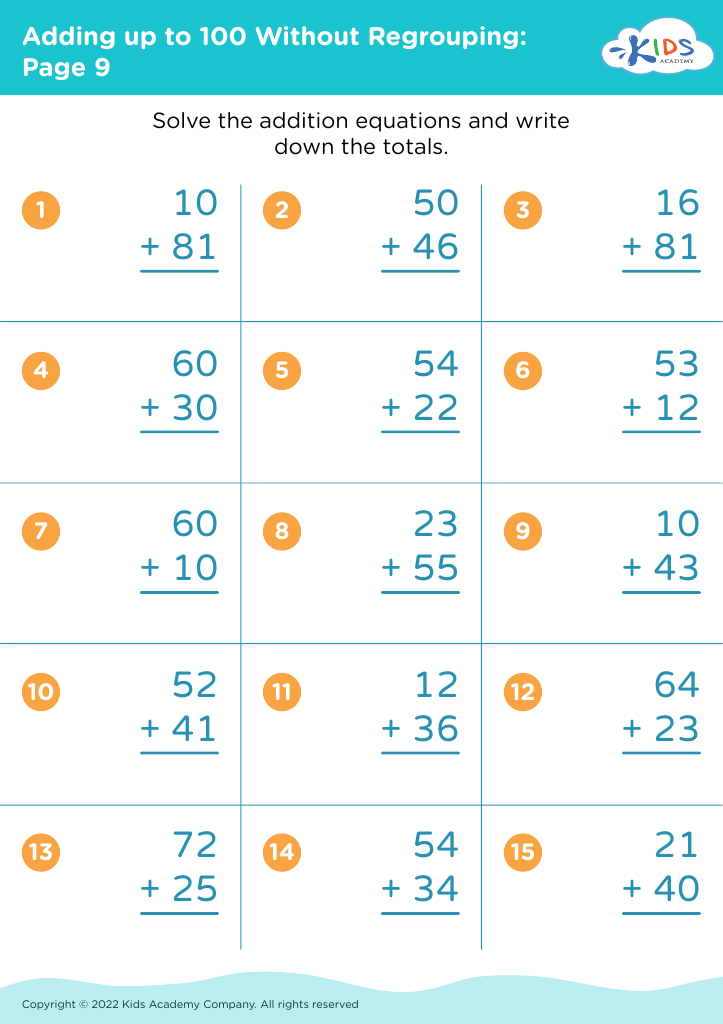
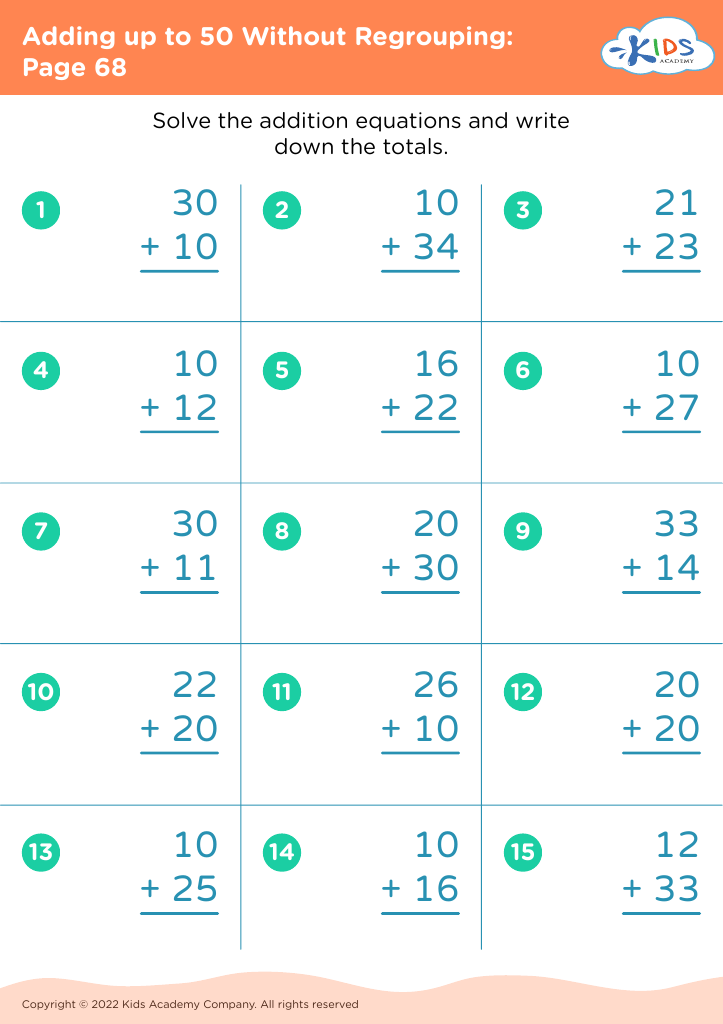
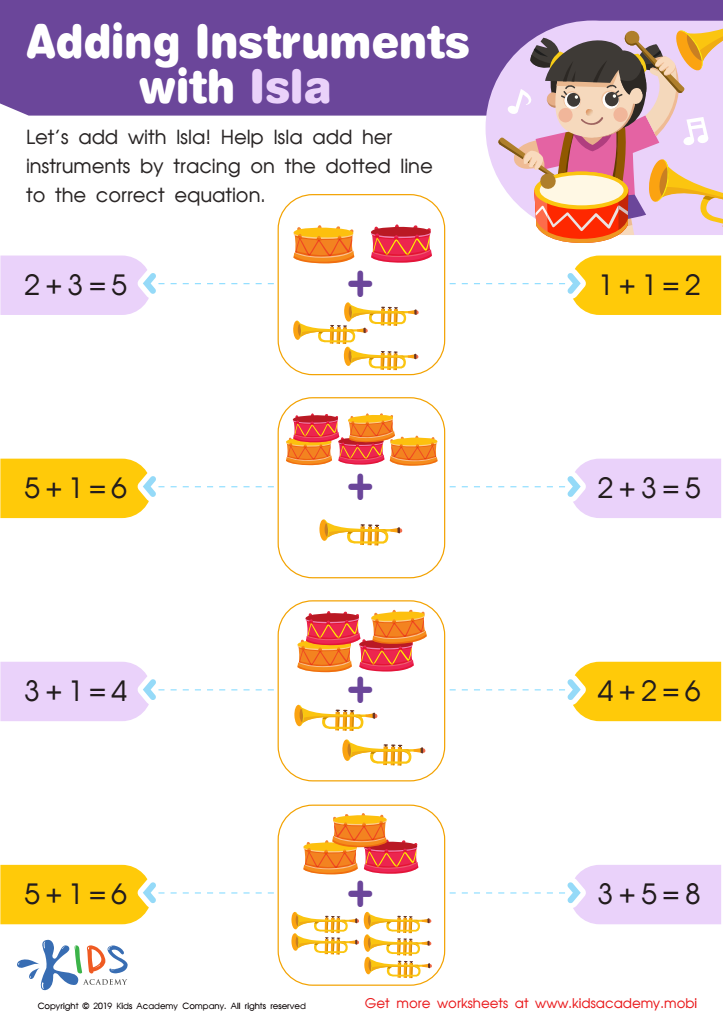
Adding Instruments with Isla Worksheet
 Assign to My Students








Basic addition and subtraction skills are foundational to a child’s academic progress, particularly for ages 7-9. These early math concepts are critical building blocks for future mathematical learning and problem-solving abilities. When children effectively grasp these skills, they develop a sense of numeracy that is essential for understanding more complex mathematical operations such as multiplication, division, fractions, and eventually algebra.
Parents and teachers should care about developing these basic skills because they boost a child’s confidence and competency in math. Mastery of addition and subtraction fosters logical reasoning and analytical thinking, abilities that apply across various life situations beyond the math classroom. These fundamental skills are incorporated into everyday tasks such as handling money, estimating distances, and managing time.
Furthermore, proficiency in basic addition and subtraction can impact standardized test performance and overall academic success. Early struggles with these concepts can lead to math anxiety, negatively influencing a child’s attitude towards the subject. Therefore, providing ample practice, engaging learning activities, and supportive encouragement in these early years can help build a solid mathematical foundation, setting children on the path to ongoing success in both their academic and everyday lives. Parents and teachers play a pivotal role in nurturing this essential aspect of a child’s education.








