Comparing quantities Addition & Subtraction Worksheets for Ages 7-9
7 filtered results
-
From - To
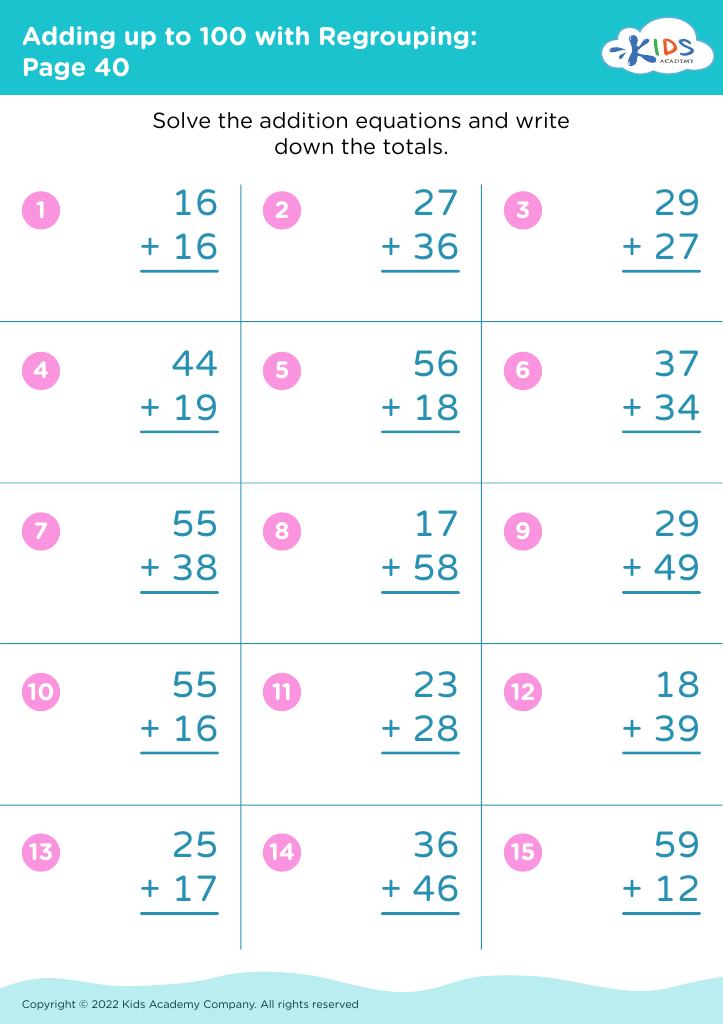
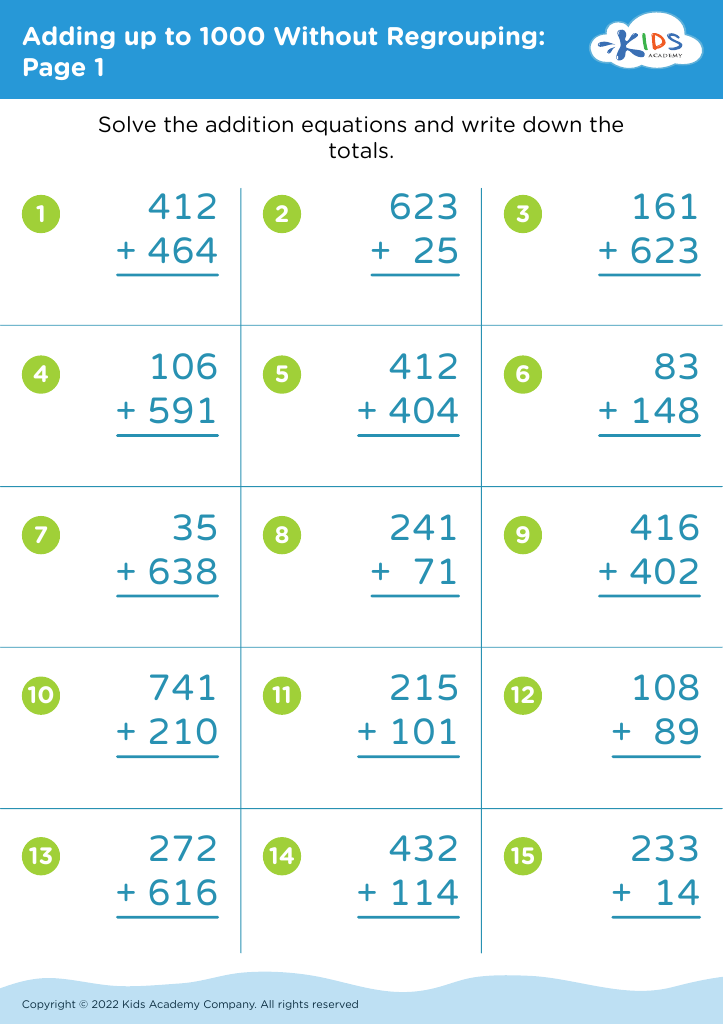
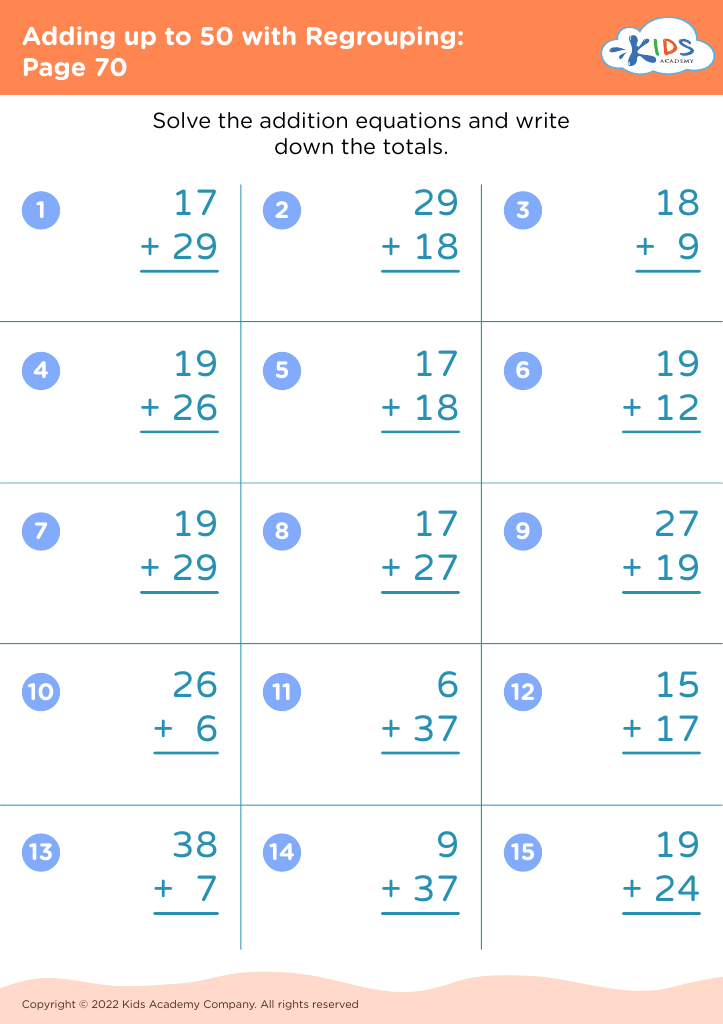
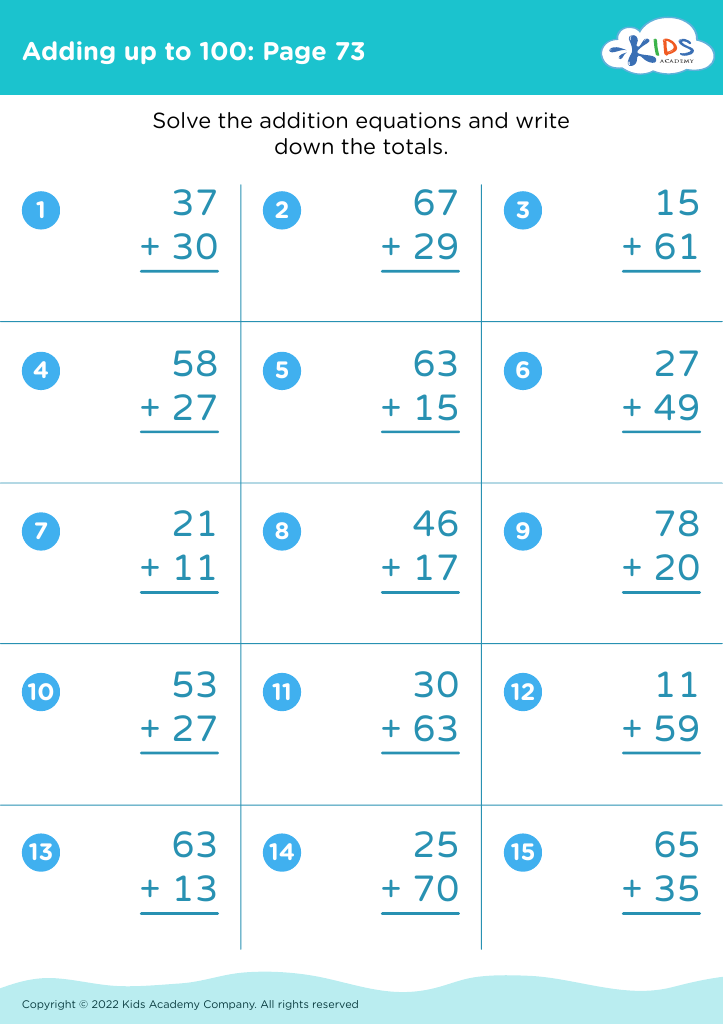
Explore our engaging "Comparing Quantities Addition & Subtraction Worksheets" tailored for children aged 7-9. These interactive resources are designed to strengthen foundational math skills by helping students understand how to compare numbers effectively. Our worksheets provide a variety of exercises that encourage critical thinking and problem-solving, fostering a deeper comprehension of addition and subtraction concepts. Each fun and colorful worksheet promotes independent learning and boosts confidence in young mathematicians. Perfect for classroom use or at-home practice, these worksheets are ideal for reinforcing essential skills and ensuring students are well-prepared for more advanced math challenges. Start your child's math journey today!
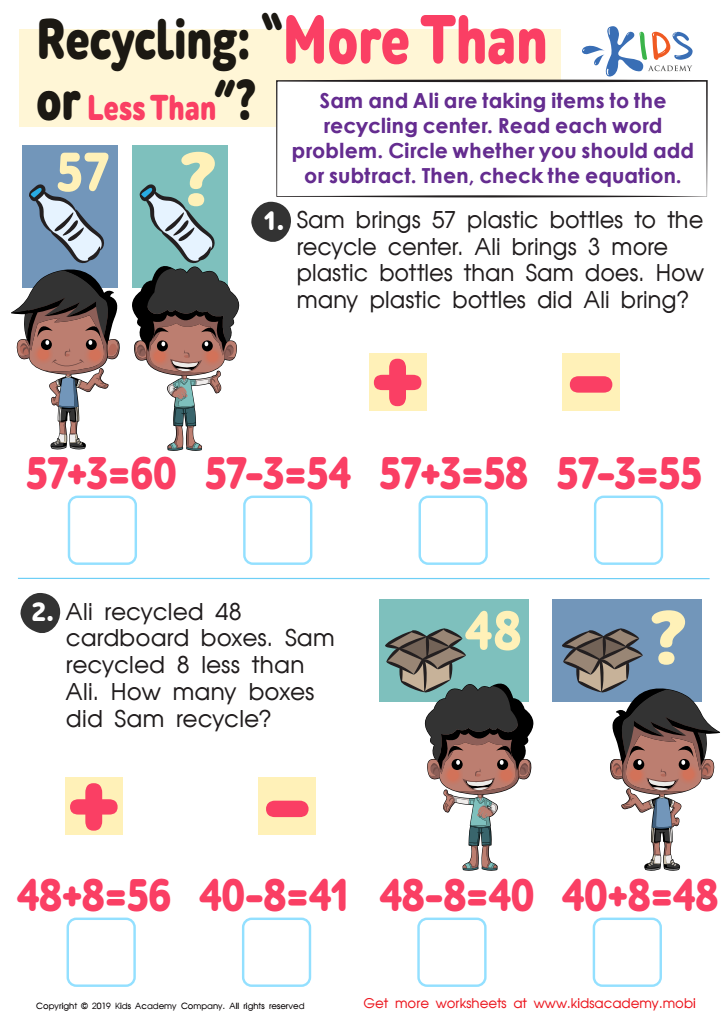
Recycling - More or Less Worksheet
 Assign to My Students








Comparing quantities through addition and subtraction is a fundamental skill that crucially impacts a child's development in mathematics, particularly for ages 7 to 9. During this stage, children transition from concrete operations to more abstract thinking, making it essential for parents and teachers to cultivate a strong understanding of these concepts. Mastering addition and subtraction helps children develop problem-solving abilities and critical thinking skills—essential tools for everyday life and academics.
When young learners compare quantities, they begin to grasp the concept of more versus less, laying the groundwork for more advanced subjects like multiplication, division, and later, algebra. Understanding these operations strengthens their ability to interpret mathematical relationships and enables them to tackle real-world scenarios, such as budgeting or measuring.
Moreover, proficiency in comparing quantities builds children’s confidence in mathematics, reducing anxiety associated with math-related tasks. When parents and teachers engage in this practice, they encourage a collaborative, exercise-based approach, making learning enjoyable and boosting a child's motivation. Ultimately, the focus on comparing quantities cultivates curiosity and a positive attitude toward mathematics, setting the stage for lifelong learning and academic success. Parents and educators should prioritize this skill to foster well-rounded, numerically literate students.








