Decision making skills Addition & Subtraction Worksheets for Ages 7-9
3 filtered results
-
From - To
Boost your child's decision-making skills with our engaging Addition & Subtraction Worksheets, specifically designed for ages 7-9! These interactive worksheets not only enhance math proficiency but also promote critical thinking and problem-solving abilities. Each activity encourages kids to analyze various scenarios, make choices, and understand the consequences of their decisions while tackling addition and subtraction problems. Perfect for both at-home learning and classroom use, these worksheets will empower young learners to build a strong foundation in math and decision-making. Watch as your child gains confidence and develops essential skills that will serve them for years to come!
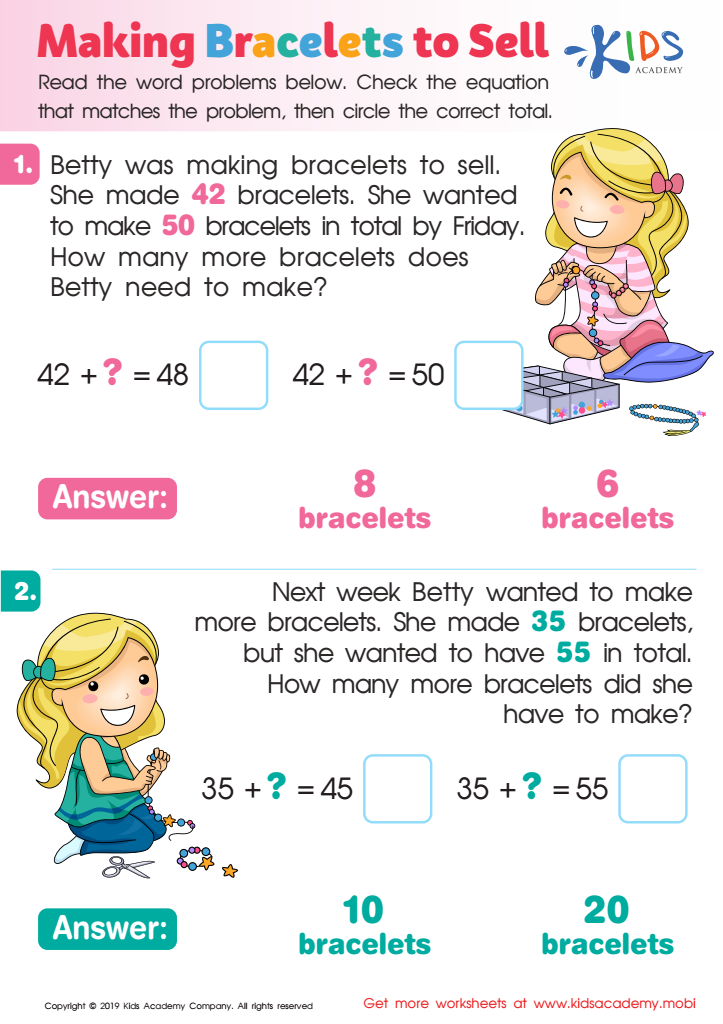
Making Bracelets to Sell Worksheet
 Assign to My Students
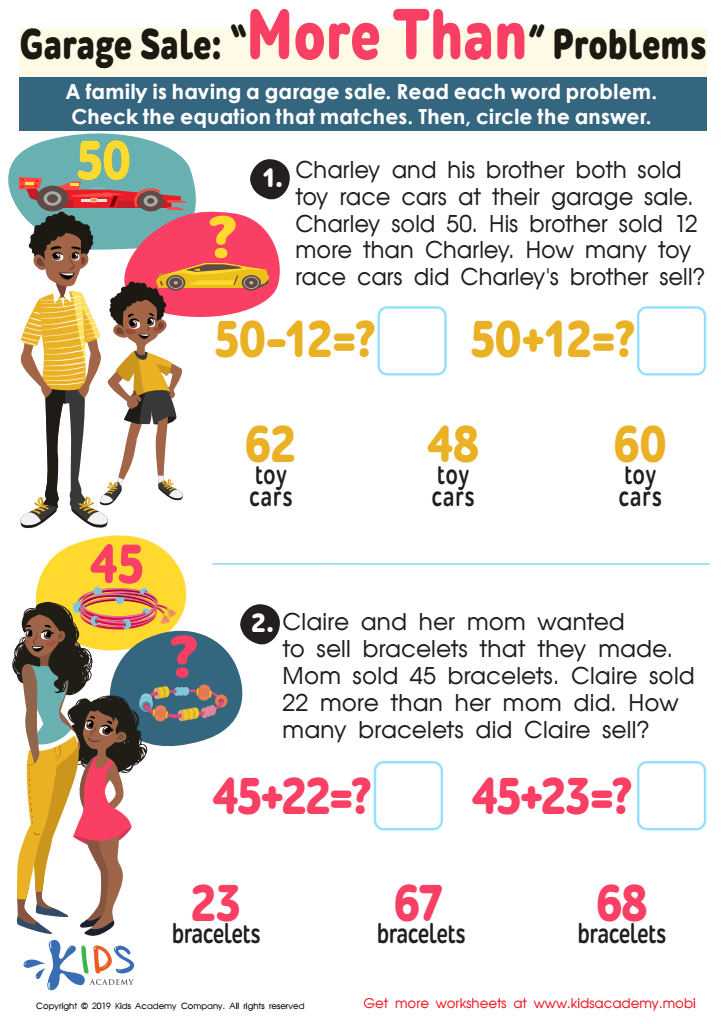
Garage Sale - More yhan Worksheet
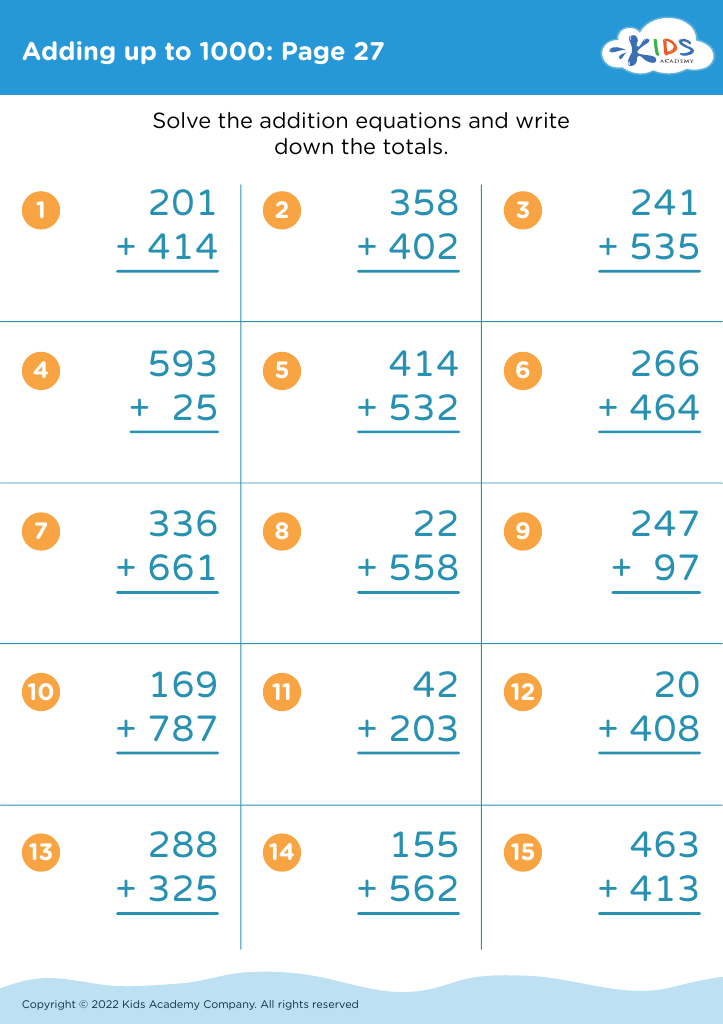








Decision-making skills in addition and subtraction are crucial for children aged 7 to 9, as they form the foundation of more complex mathematical concepts and everyday problem-solving. At this age, children begin to take charge of their learning, and fostering these skills equips them to approach math tasks with confidence and independence.
Parents and teachers should care because proficient decision-making in these areas enhances critical thinking. Children learn to evaluate different strategies for solving problems, allowing them to choose the most efficient methods. This not only boosts their mathematical fluency but also encourages a growth mindset, where they understand that mistakes are part of the learning process.
Moreover, the ability to make informed decisions about addition and subtraction helps children navigate real-life situations, such as budgeting, time management, and resource allocation. When they grasp how to weigh options and anticipate outcomes, they become better equipped to face challenges in academics and daily life.
Additionally, strong decision-making skills can lead to greater overall motivation and interest in math, resulting in sustained success in later grades. When children feel competent, they are more likely to embrace future learning opportunities, establishing a positive feedback loop of achievement and self-efficacy.








