Develop logical thinking Addition & Subtraction Worksheets for Ages 7-9
9 filtered results
-
From - To
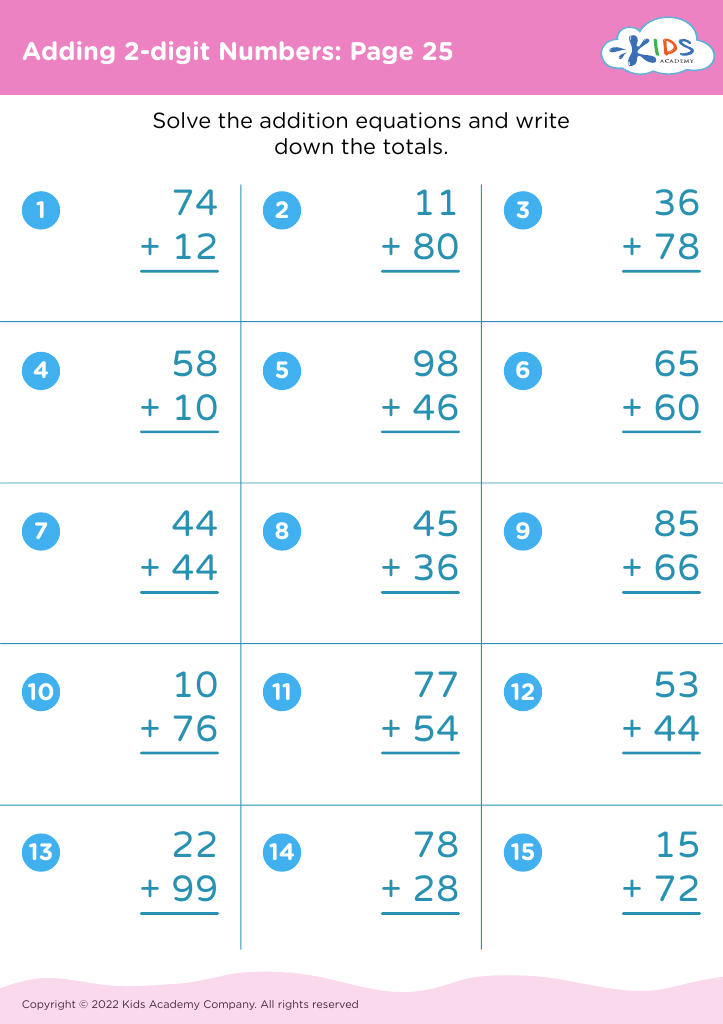
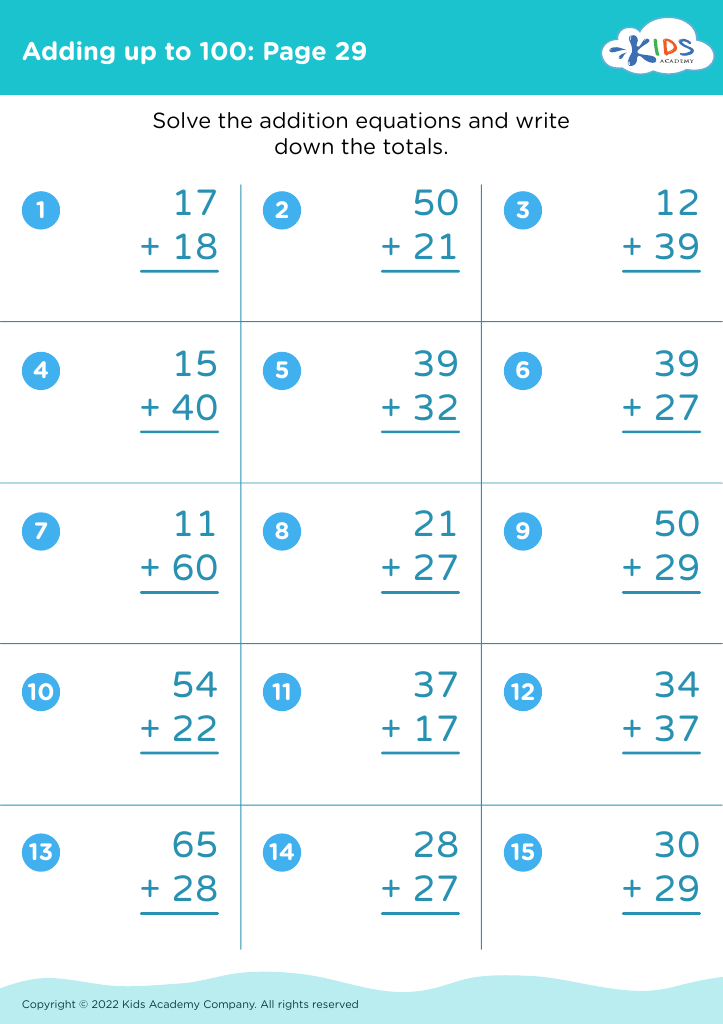
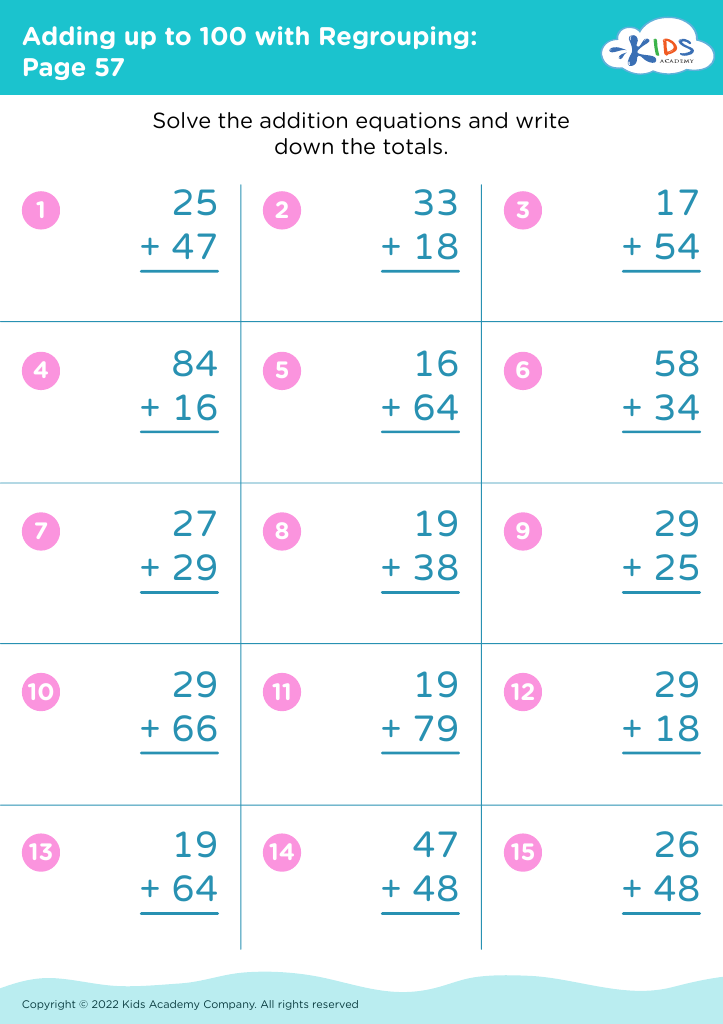
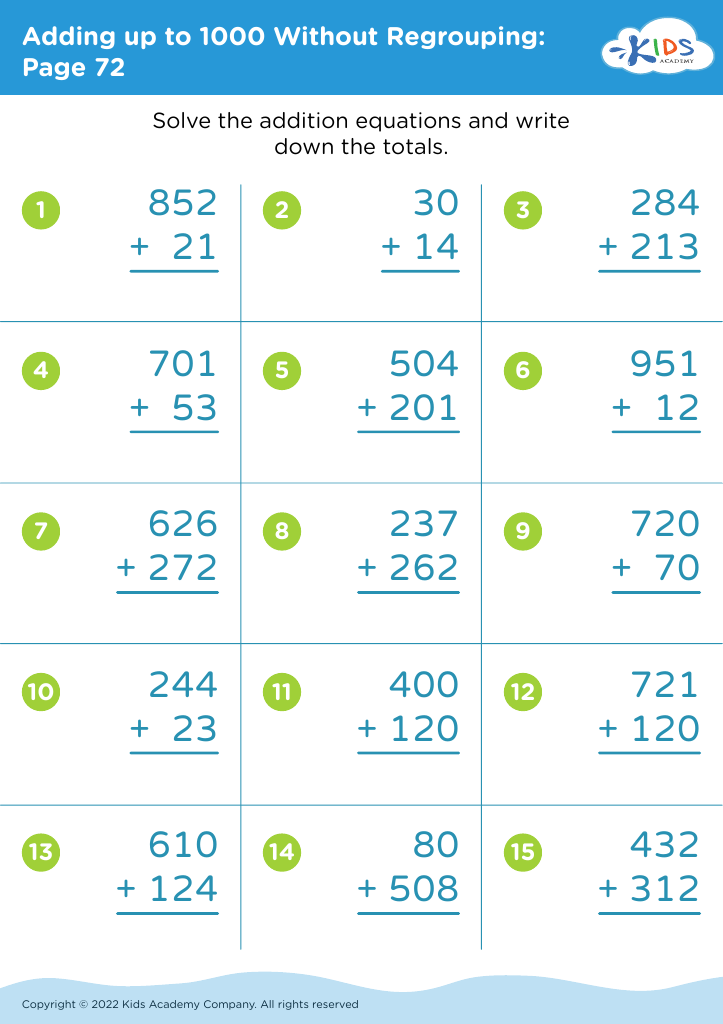
Enhance your child's logical thinking skills with our engaging addition and subtraction worksheets designed for ages 7-9. These interactive activities not only reinforce mathematical concepts but also encourage critical thinking and problem-solving. Our thoughtfully crafted exercises will challenge young learners to apply their knowledge in diverse ways, helping them grasp the fundamentals of addition and subtraction while developing strategic thinking. Perfect for classroom or homework use, these worksheets support individualized learning at an appropriate level of difficulty. Empower your child to analyze, reason, and solve math problems confidently. Start building a strong mathematical foundation today with our fun and effective resources!
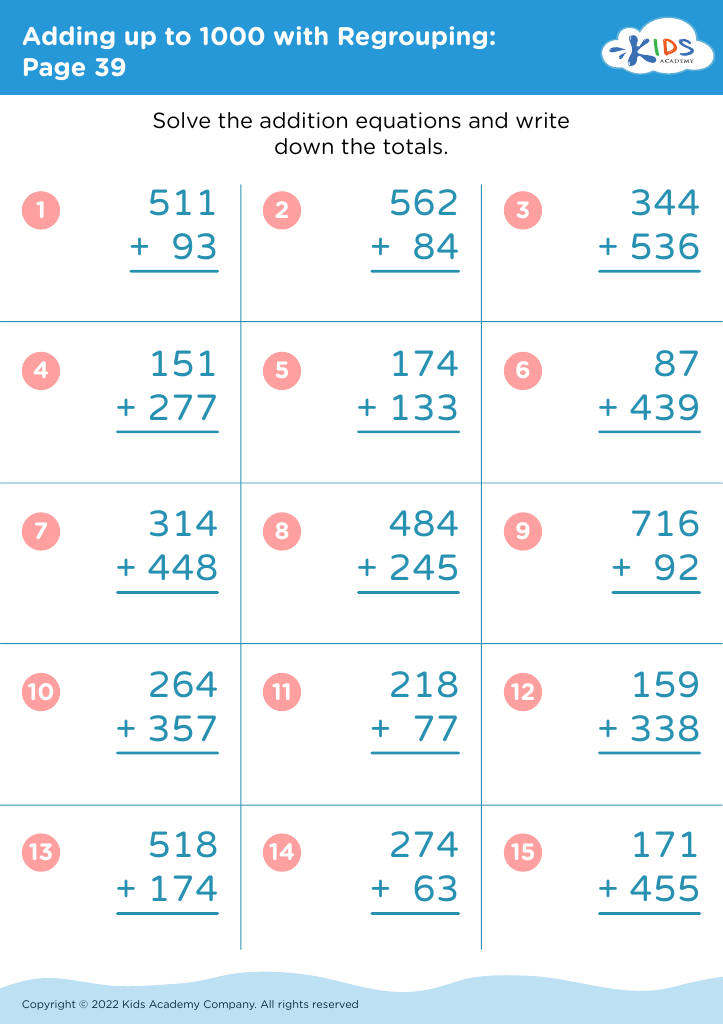








Parents and teachers should prioritize the development of logical thinking in addition and subtraction for children aged 7-9 because this foundational skill plays a crucial role in their overall cognitive development and academic success. At this age, children are not only learning basic arithmetic but also honing their problem-solving abilities, critical reasoning skills, and understanding of relationships between numbers.
Logical thinking enables children to approach problems systematically, allowing them to explore different strategies for solving addition and subtraction challenges. This fosters a deeper understanding of mathematical concepts, moving beyond rote memorization to grasp the ‘why’ behind operations. When children can logically reason through problems, they gain confidence in their abilities and develop resilience in the face of challenges.
Moreover, strong logical skills in mathematics provide a solid bedrock for higher-level topics such as algebra, geometry, and real-world problem-solving tasks. As these children advance in their education, the ability to think critically and to analyze situations means they are not merely doing math—they are understanding it.
Fostering logical thinking in addition and subtraction equips children with tools they can carry into adulthood, enhancing their decision-making skills and enabling them to navigate challenges effectively in everyday life. Therefore, parents and teachers have a vested interest in nurturing these essential competencies.








