Developing critical thinking Addition & Subtraction Worksheets for Ages 7-9
3 filtered results
-
From - To
Enhance your child's math skills with our Developing Critical Thinking Addition & Subtraction Worksheets for ages 7-9. These worksheets are designed to foster analytical thinking while mastering essential math operations. Children will encounter engaging puzzles, word problems, and challenging activities that stimulate their minds and promote problem-solving strategies. With a focus on real-world scenarios, our worksheets help students apply addition and subtraction in meaningful ways. Each activity aligns with curriculum standards, ensuring a comprehensive learning experience that builds confidence and enhances critical thinking skills. Explore our collection and watch your child's mathematical abilities and critical thinking flourish!
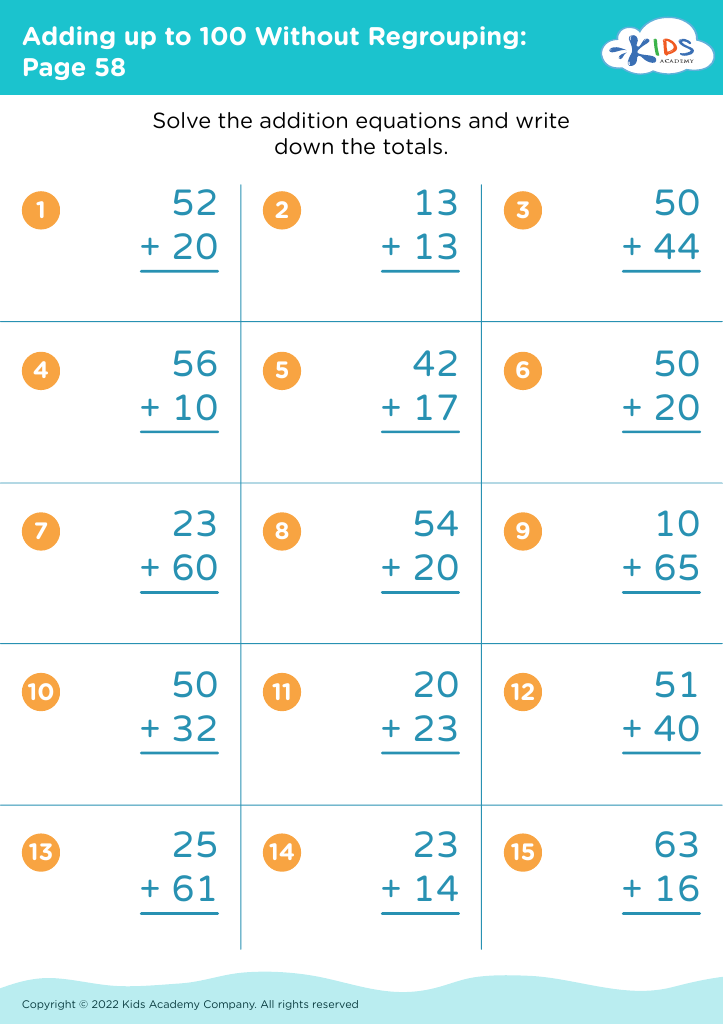
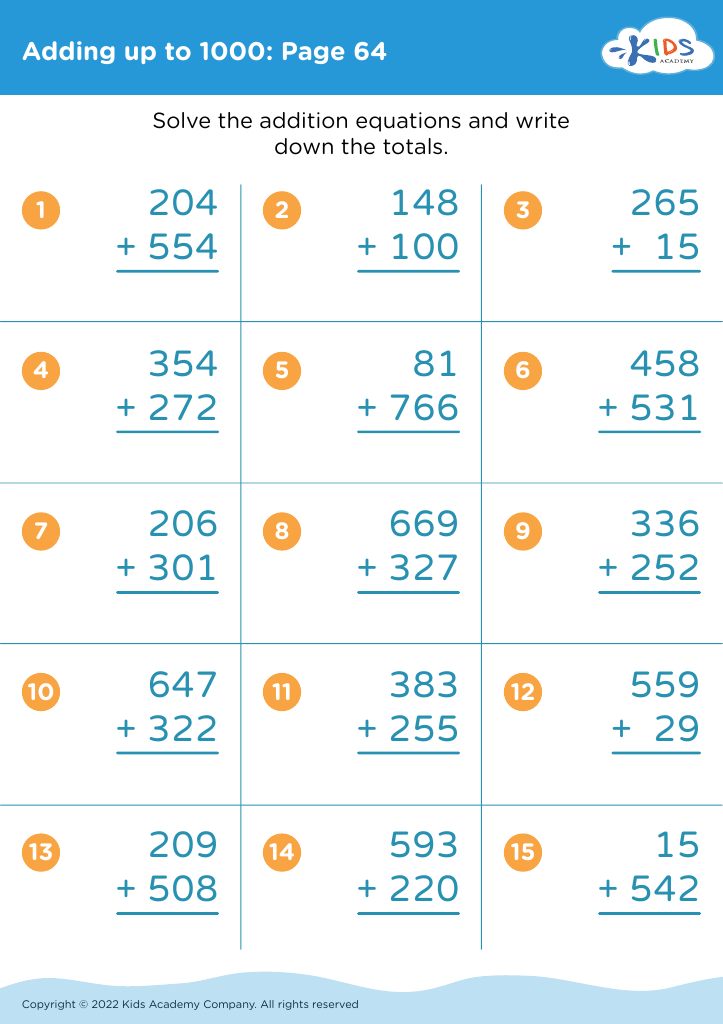
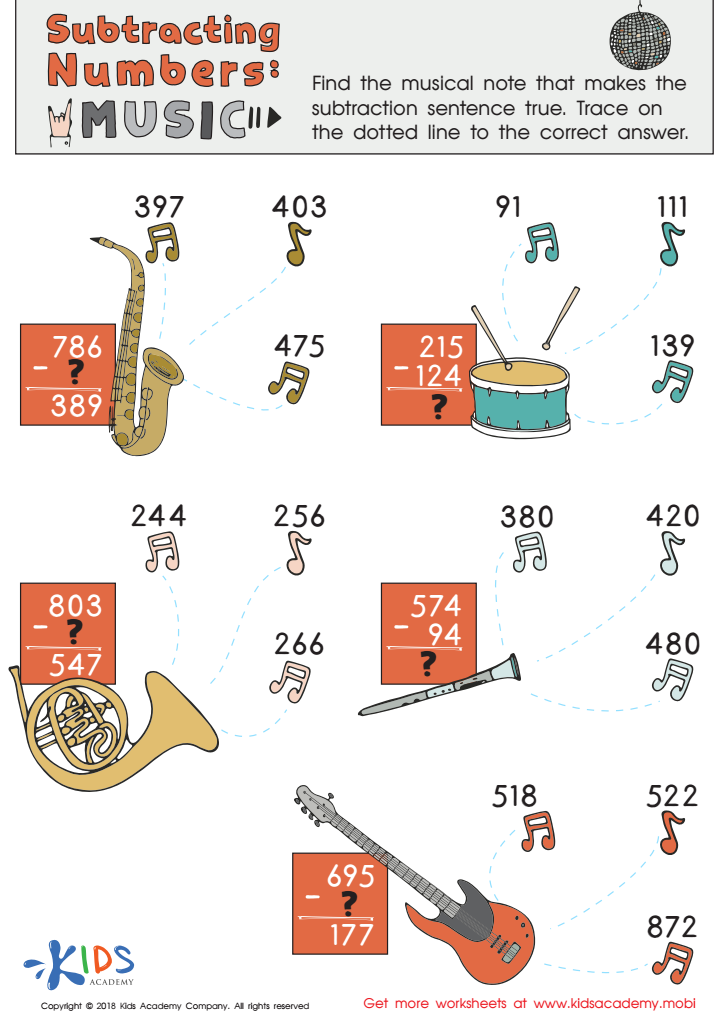
Subtracting Numbers: Music Worksheet
 Assign to My Students








Developing critical thinking skills in addition and subtraction for children aged 7-9 is essential for several reasons. Firstly, at this stage, kids transition from basic arithmetic to more complex problem-solving, laying the groundwork for higher-order thinking. By engaging in tasks that require them to analyze, evaluate, and create solutions, children not only solidify their mathematical understanding but also sharpen their overall critical thinking abilities.
Secondly, fostering these skills encourages independence and confidence in tackling mathematical challenges. When children learn to approach problems critically, they become adept at recognizing patterns, making connections, and applying their knowledge to real-life situations. This foundational understanding propels them toward higher academic achievement as they progress in their education.
Moreover, developing critical thinking around addition and subtraction teaches resilience and perseverance. Students learn that mistakes are part of the learning process, promoting a growth mindset. Collaboratively working on problem-solving also enhances communication skills and encourages teamwork, preparing them for future collaborative environments.
In summary, prioritizing critical thinking alongside addition and subtraction enriches children's overall cognitive development and equips them with crucial skills to navigate academic and everyday challenges. Parents and teachers play a vital role in nurturing these abilities during these formative years.








