Enhance vocabulary skills Addition & Subtraction Worksheets for Ages 7-9
4 filtered results
-
From - To
Boost your child’s math and language skills simultaneously with our "Enhance Vocabulary Skills: Addition & Subtraction Worksheets" designed for ages 7-9. These worksheets integrate essential math operations with vocabulary enhancement, fostering a deeper understanding of mathematical concepts while expanding word knowledge. Engaging exercises encourage critical thinking as students solve problems that also involve key terms. Perfect for in-class or at-home learning, our interactive worksheets make mastering addition and subtraction enjoyable and educational. Help your child connect math with vocabulary, setting a strong foundation for future academic success. Download our free worksheets today and watch their skills grow!
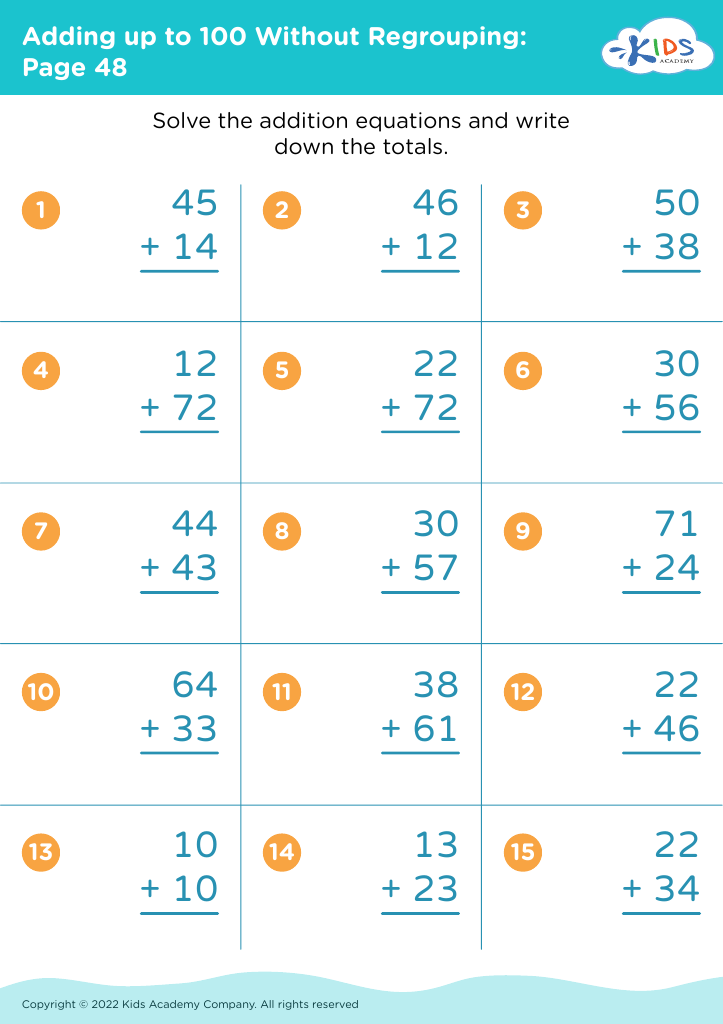
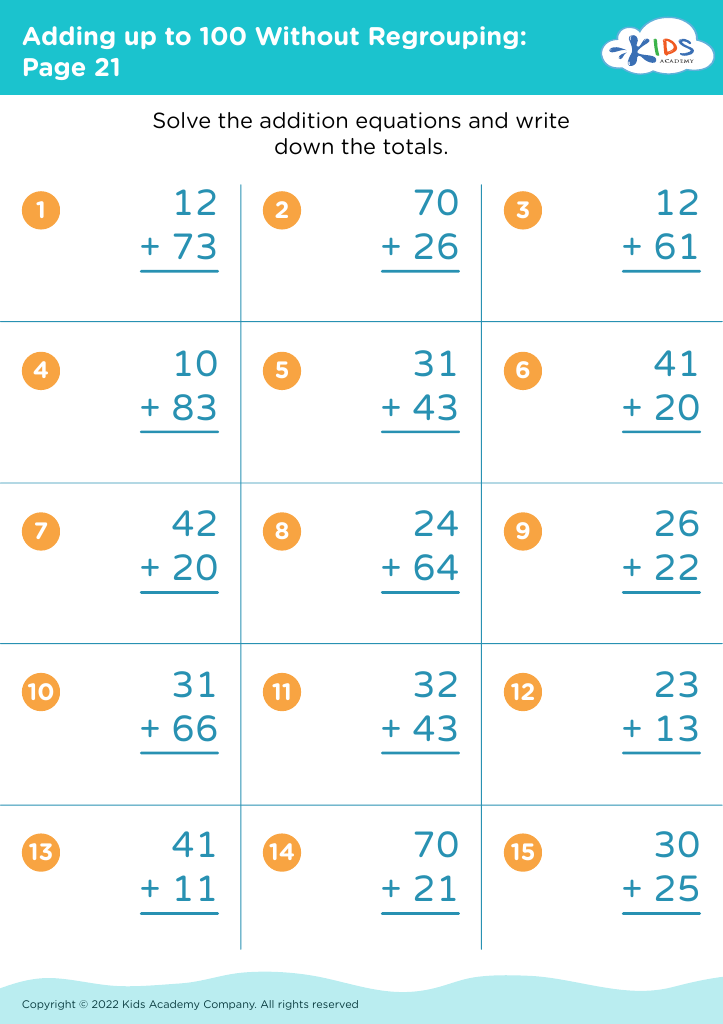
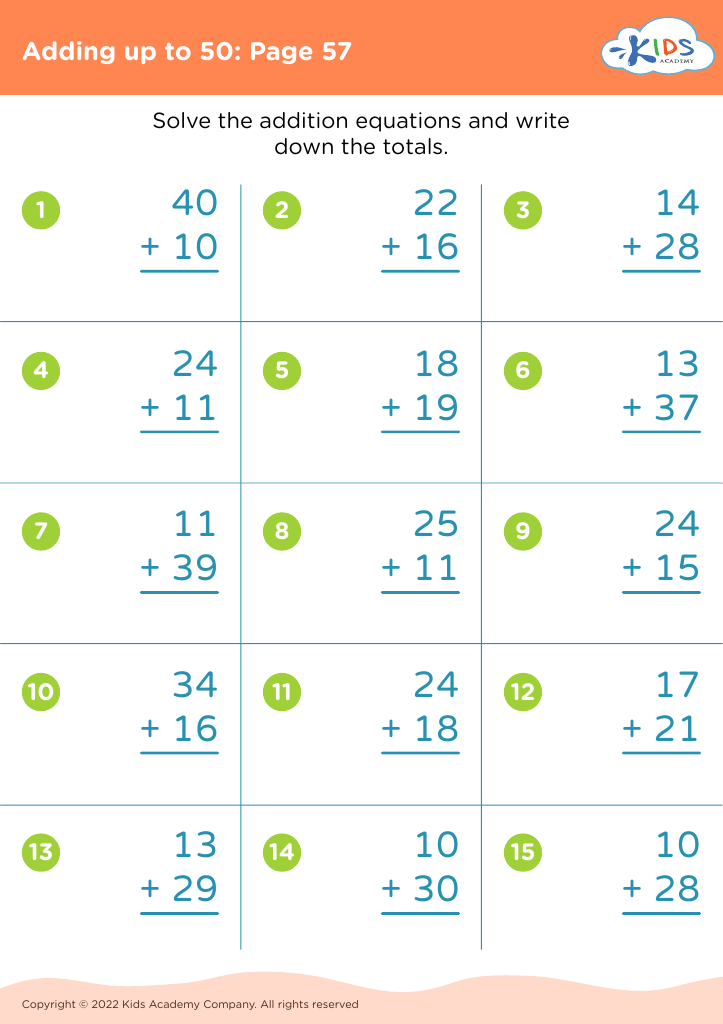
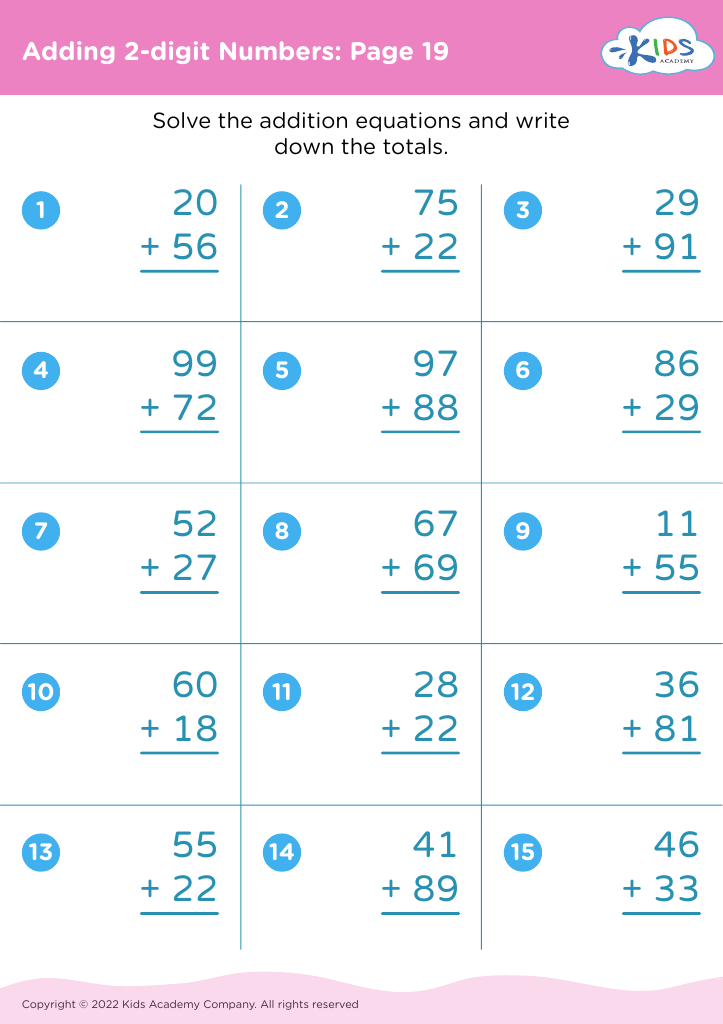








Enhancing vocabulary skills in the context of addition and subtraction for children aged 7-9 is essential for fostering a strong mathematical foundation. At this age, students are transitioning from concrete to more abstract mathematical concepts; a robust vocabulary allows them to articulate their understanding clearly. Mathematics is not merely about numbers; it encompasses language and terminology that help children comprehend and communicate mathematical ideas effectively.
Developing vocabulary related to addition and subtraction empowers children to understand instructions, solve problems, and engage in discussions about their thought processes. When children grasp words like "sum," "difference," "more than," or "less than," they are better able to engage with mathematical concepts and tackle word problems with confidence.
Moreover, vocabulary initiatives support literacy skills, making connections between language and mathematics. These skills improve critical thinking and problem-solving abilities, essential skills for academic success beyond elementary school. Teachers and parents play a pivotal role in reinforcing this vocabulary through discussions, interactive games, and purposeful reading. By investing in vocabulary enhancement, they equip children with tools for greater mathematical understanding and success, encouraging a positive attitude towards learning. Thus, vocabulary acquisition in mathematics supports comprehensive educational development for children.








