Fine motor skills (writing) Addition & Subtraction Worksheets for Ages 7-9
8 filtered results
-
From - To
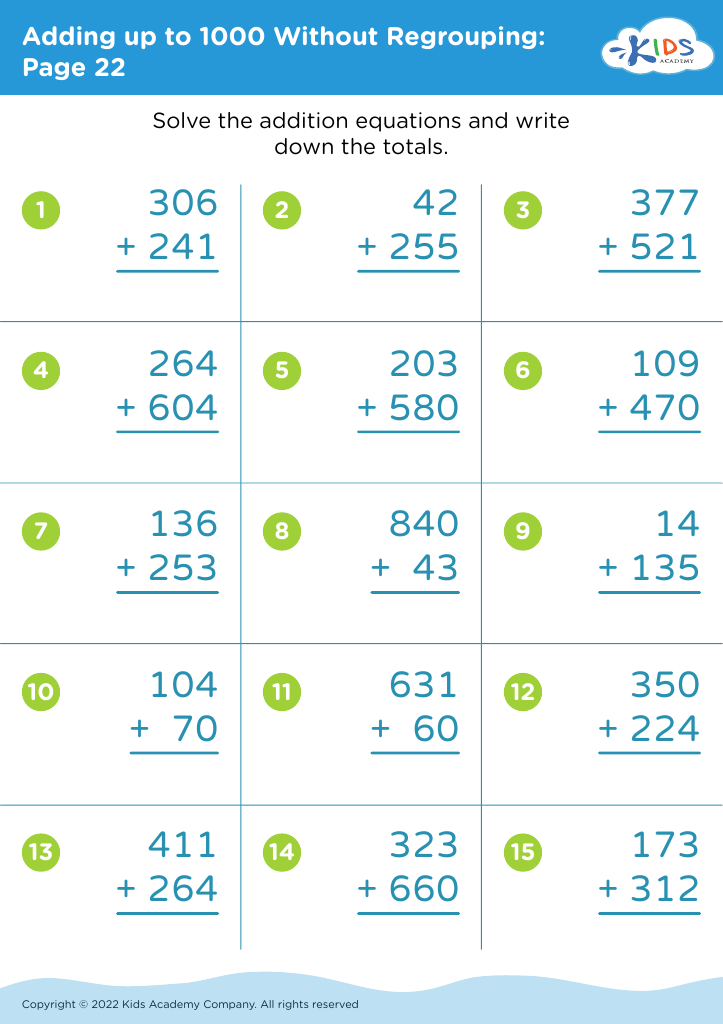
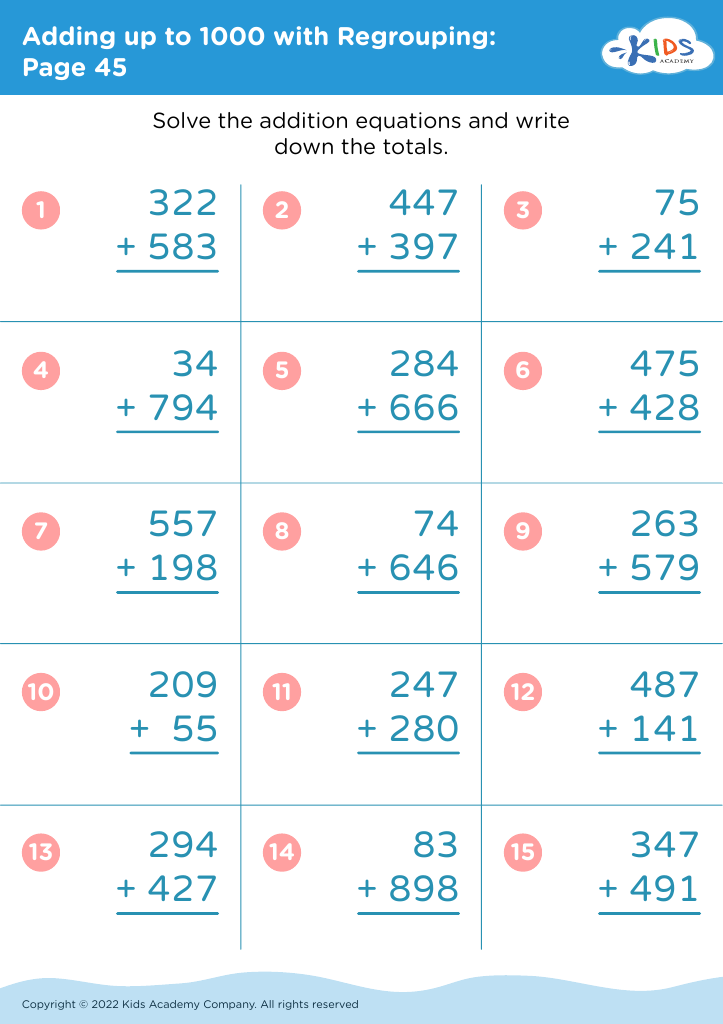
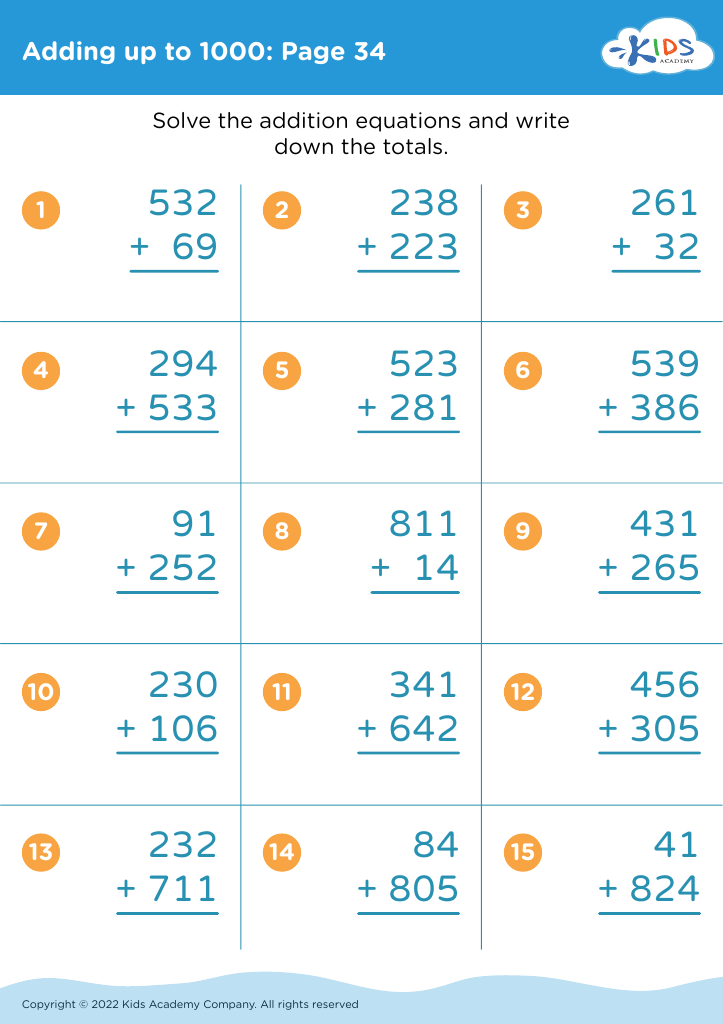
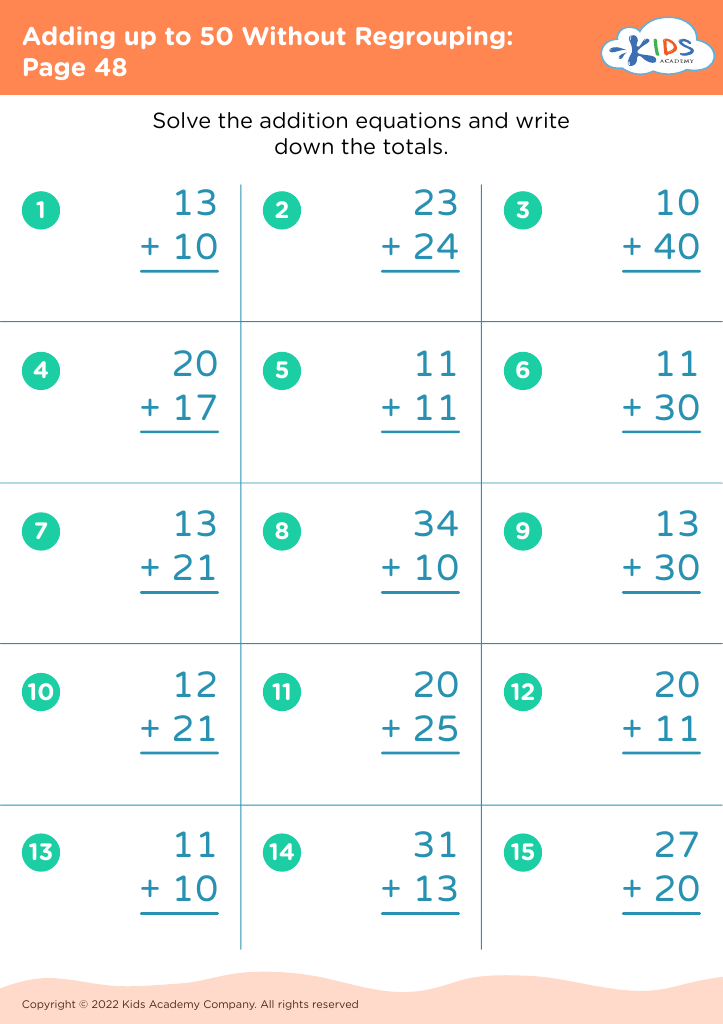
Enhance your child's fine motor skills while boosting their math abilities with our Addition & Subtraction Worksheets designed for ages 7-9. These engaging, printable resources combine essential writing practice with fundamental math concepts, helping young learners strengthen their handwriting and numerical skills simultaneously. Each worksheet is tailored to improve grip, control, and coordination, making learning fun and effective. Perfect for classroom activities or home practice, our worksheets provide a seamless blend of literacy and numeracy, ensuring a comprehensive educational experience. Encourage a love for learning today and watch your child's confidence in math and writing soar!
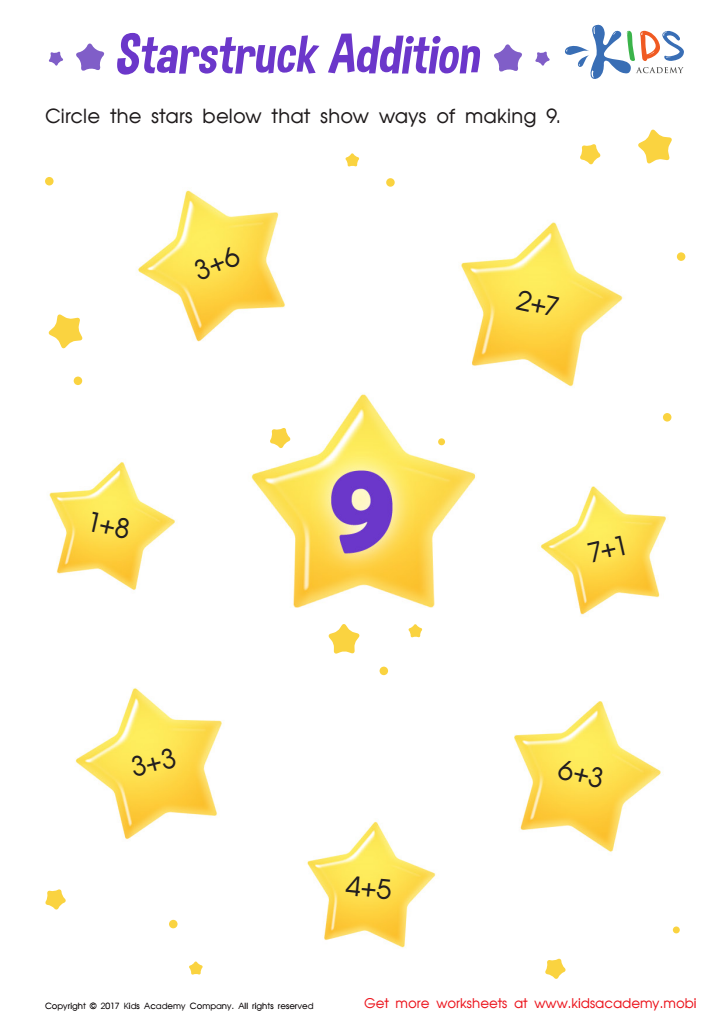
Starstruck Addition Printable
 Assign to My Students
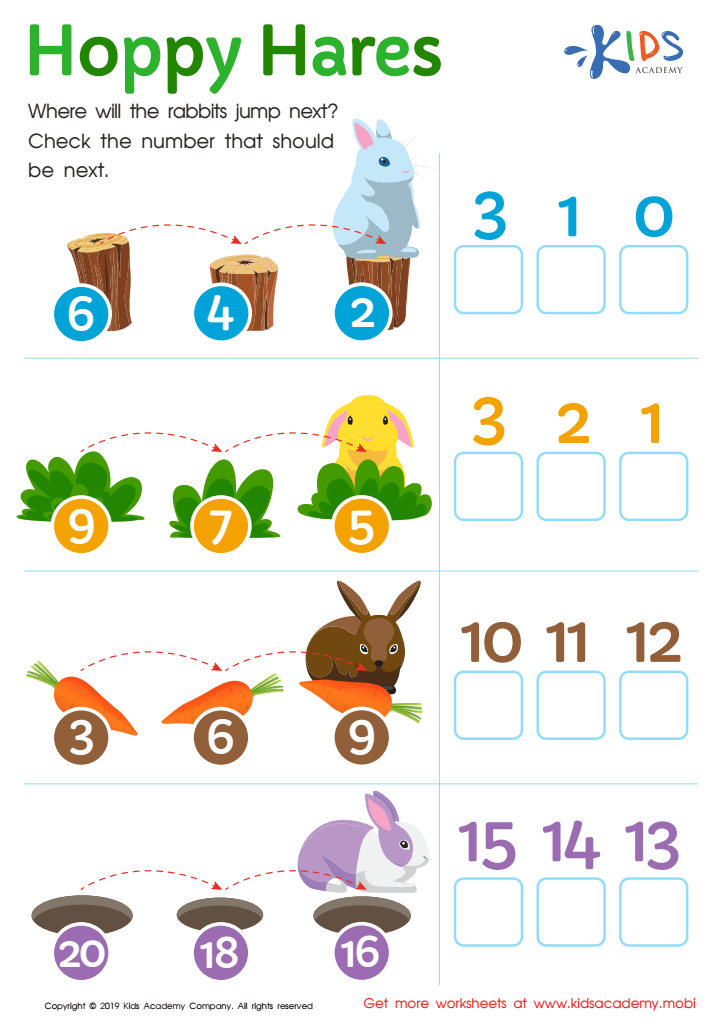
Hoppy Hares Worksheet








Parents and teachers should prioritize fine motor skills development in children aged 7-9, as these competencies are critical for academic success, particularly in writing and mathematics. At this age, children refine their ability to manipulate tools like pencils, crayons, and scissors, which directly impacts their handwriting quality and written expression. Good fine motor skills foster confidence, allowing children to articulate their thoughts clearly on paper without excessive frustration.
Furthermore, the mastery of addition and subtraction is essential to building a strong mathematical foundation. Developing these skills fosters logical thinking and problem-solving abilities. As children practice writing numbers and equations, they strengthen their coordination and control, facilitating more complex mathematical concepts in the future.
Fine motor skills intertwine with cognitive development; as children improve their dexterity, they also enhance their focus, patience, and perseverance, traits vital for successful learning. Parents and teachers can collaborate to create engaging activities—such as arts and crafts involving counting or simple mathematical games—that promote both fine motor and arithmetic skills. By emphasizing these areas, caregivers can help nurture well-rounded learners who are equipped for future academic challenges and lifelong learning.








