Filters

40 filtered results

Clear all filters
Favorites
With answer key
Interactive

40 filtered results

Difficulty Level

Grade


Check out this FREE Trial Lesson on Addition & Subtraction for age 7-9!

P

Favorites
With answer key
Interactive
  • 7-9
  • Fine Motor Skills
  • Addition & Subtraction
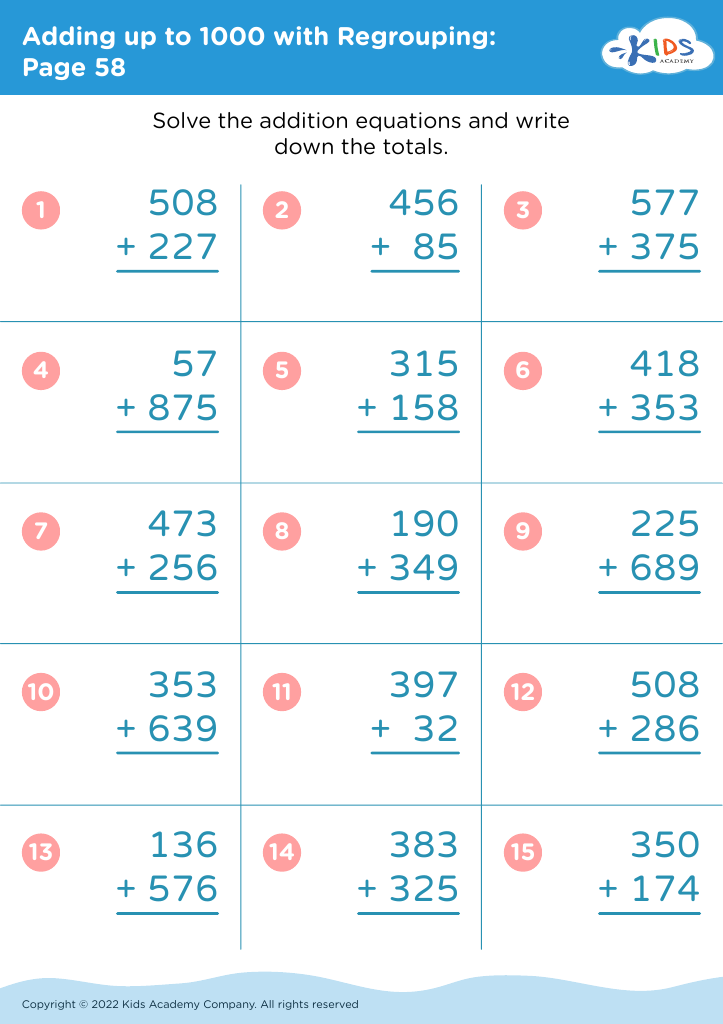
Adding up to 1000 with Regrouping: Page 58
Worksheet
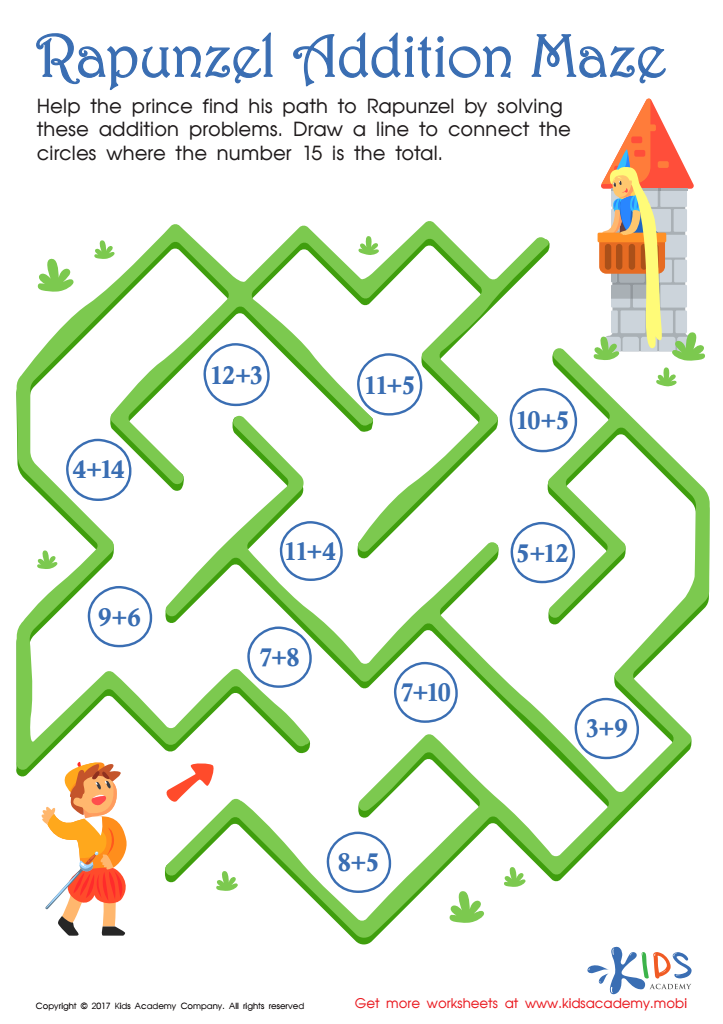
Rapunzel Addition Maze

Rapunzel Addition Maze Worksheet

Motivate your child to practice math with a fun and meaningful Rapunzel addition maze! They'll learn single and double digit addition, problem solving, and gain confidence as they complete the maze and help the prince reach Rapunzel. They'll feel proud of their accomplishment when they finish!
Rapunzel Addition Maze Worksheet
Worksheet
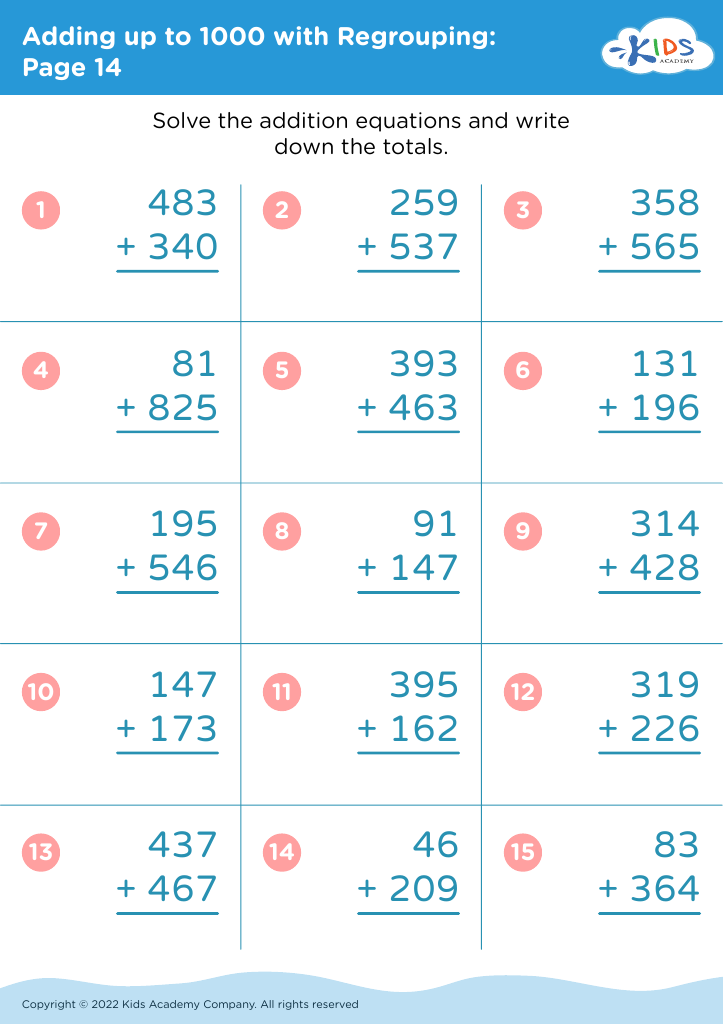
Adding up to 1000 with Regrouping: Page 14
Worksheet
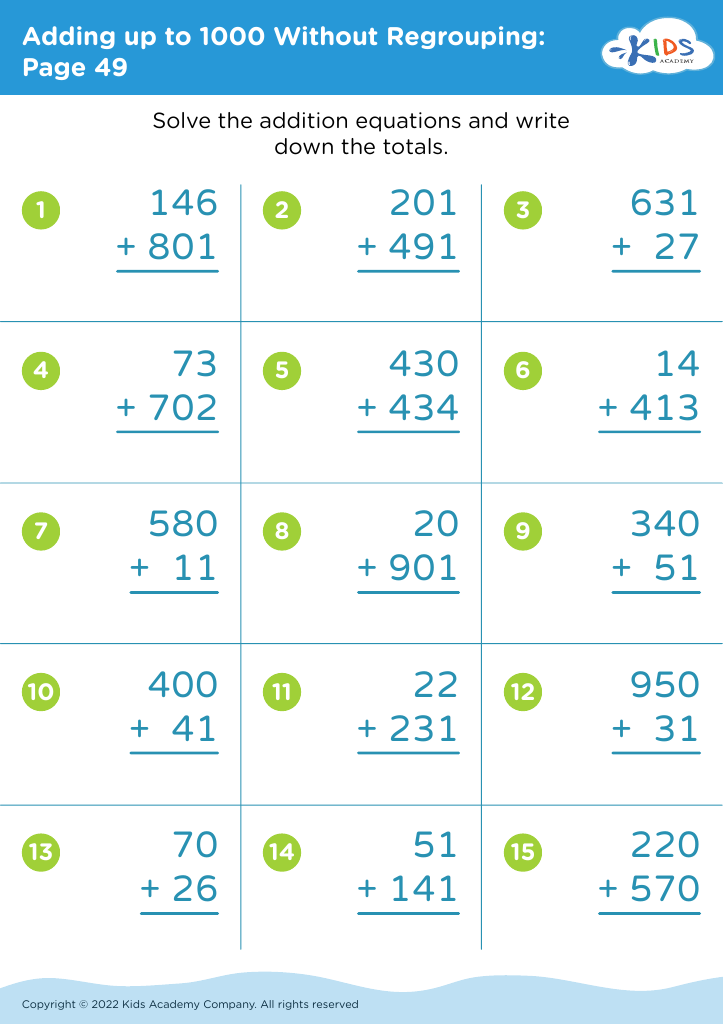
Adding up to 1000 Without Regrouping: Page 49
Worksheet
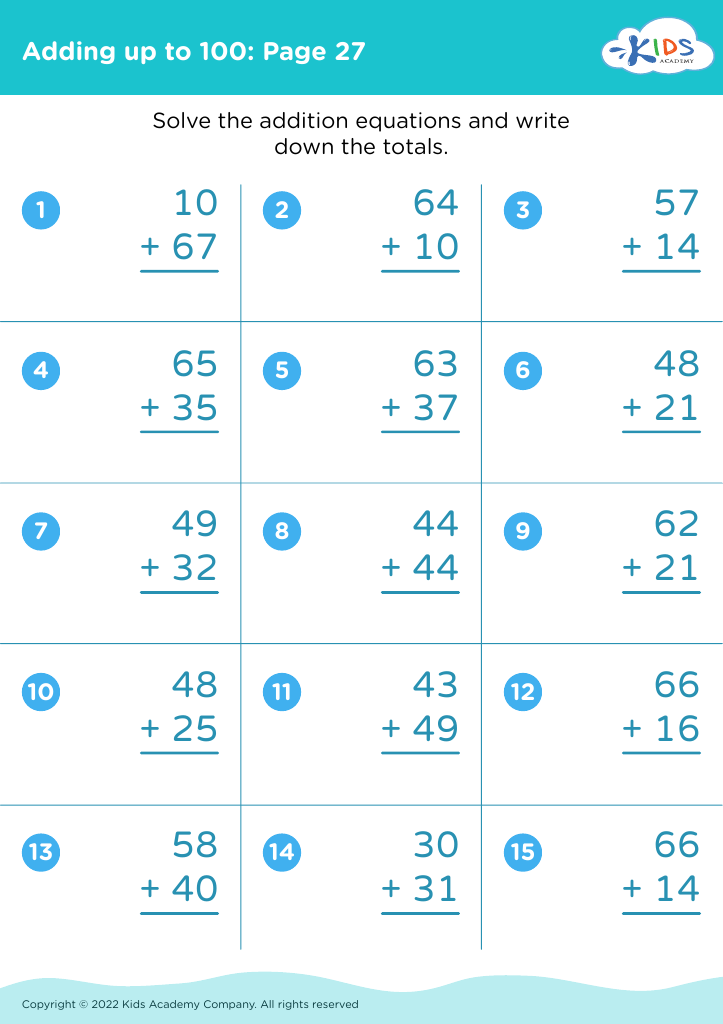
Adding up to 100: Page 27

Adding up to 100: Page 27

Adding up to 100: Page 27
Worksheet
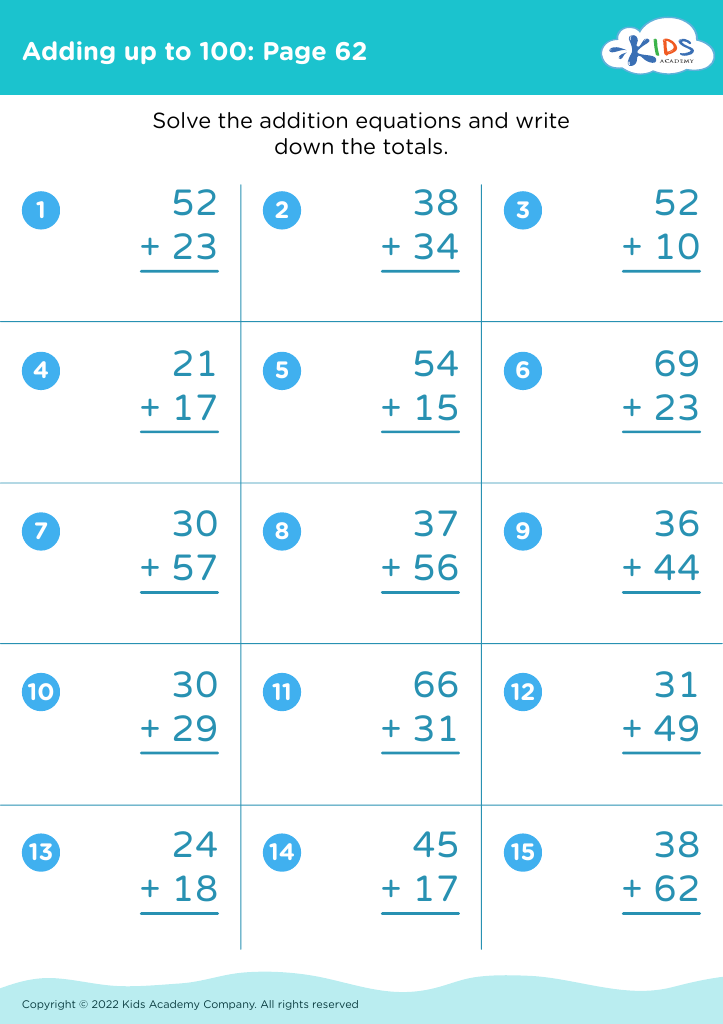
Adding up to 100: Page 62

Adding up to 100: Page 62

Adding up to 100: Page 62
Worksheet
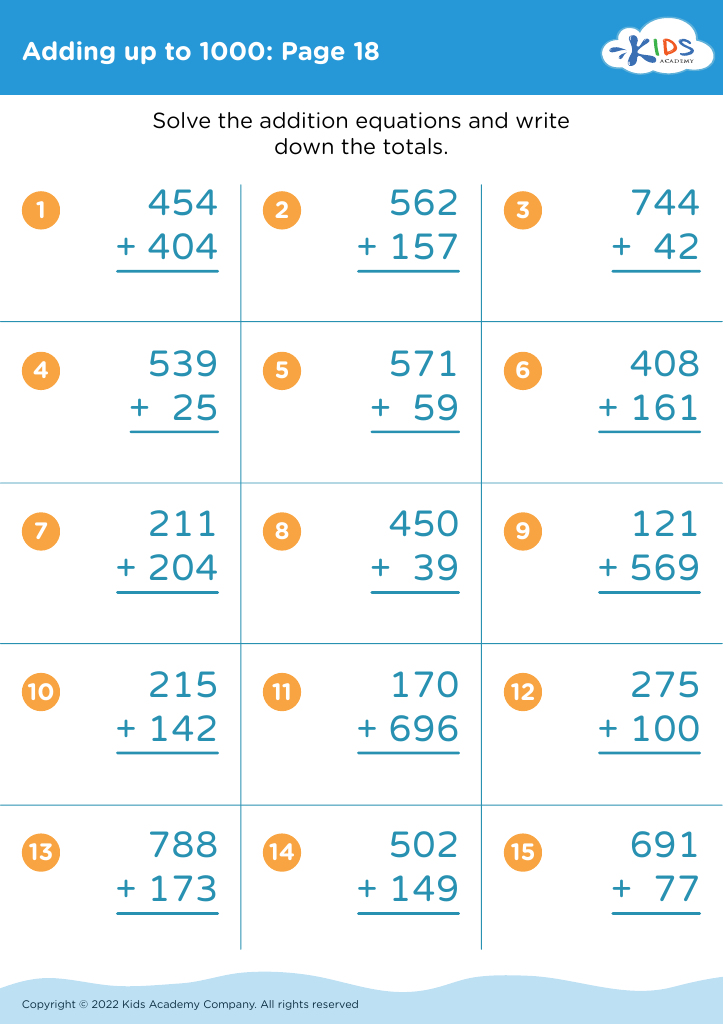
Adding up to 1000: Page 18

Adding up to 1000: Page 18

Adding up to 1000: Page 18
Worksheet
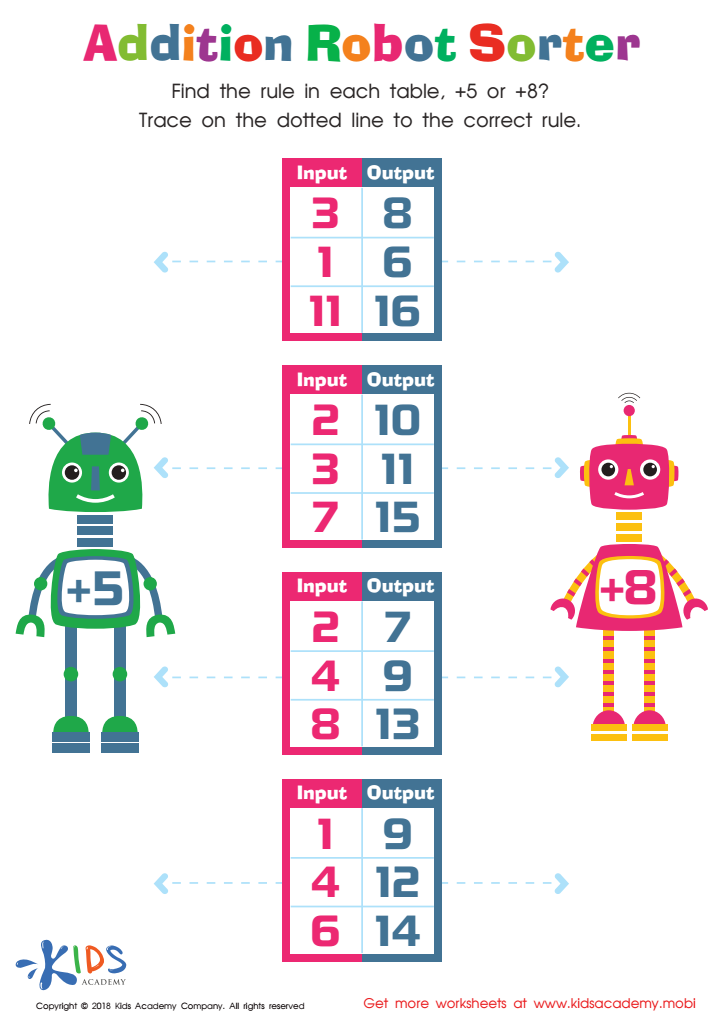
Addition Robot Sorter Worksheet
Addition Robot Sorter Worksheet
This worksheet helps your child understand addition. Have them trace the dotted lines to the correct equations: +8 and +5. It's a great way to aid their mathematical comprehension and get them comfortable with adding equations.
Addition Robot Sorter Worksheet
Worksheet
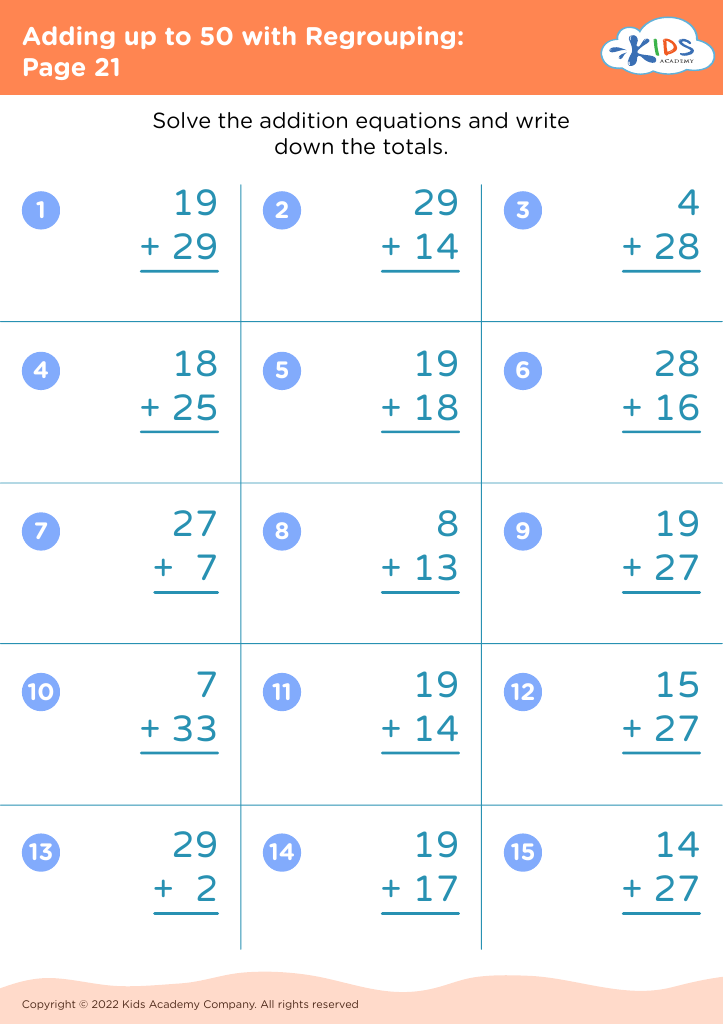
Adding up to 50 with Regrouping: Page 21
Worksheet
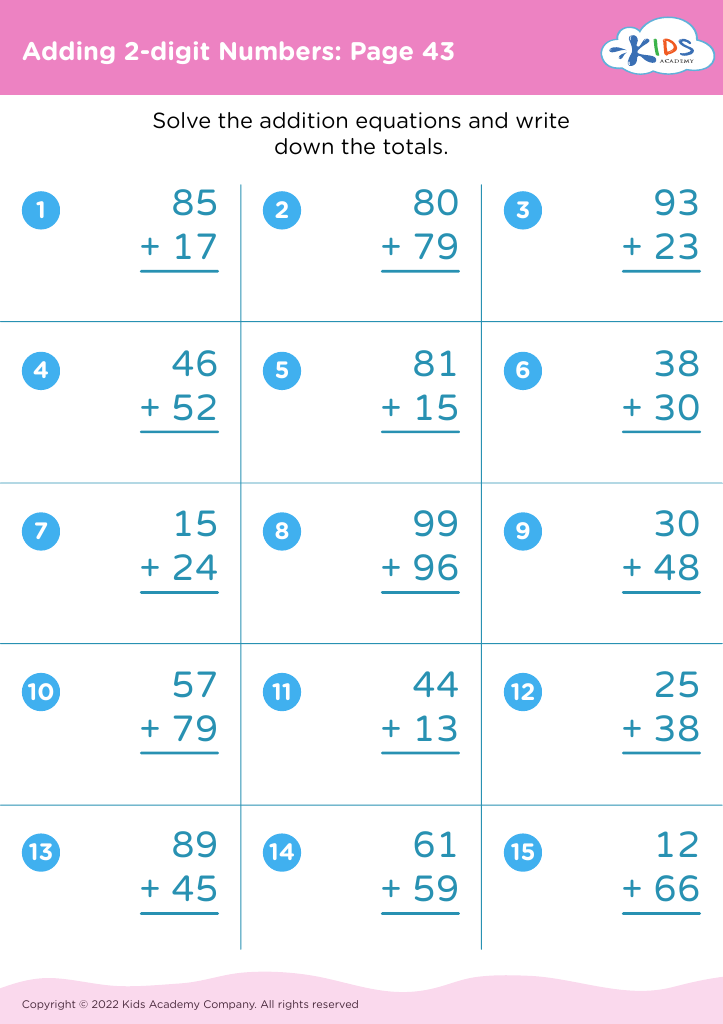
Adding 2-digit Numbers: Page 43

Adding 2-digit Numbers: Page 43

Adding 2-digit Numbers: Page 43
Worksheet
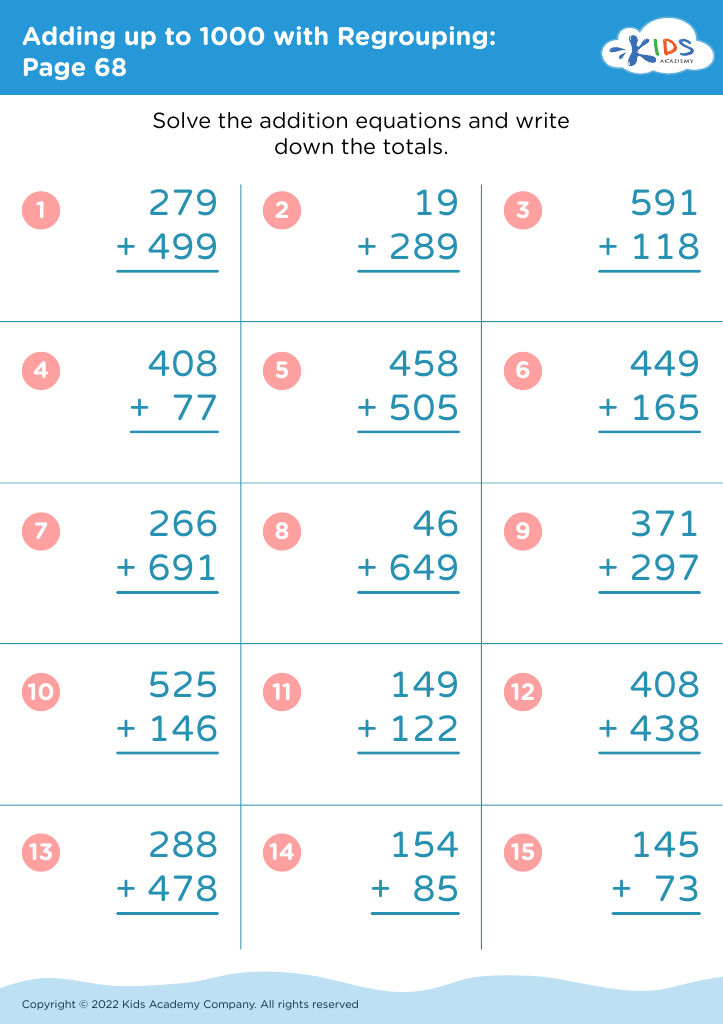
Adding up to 1000 with Regrouping: Page 68
Worksheet
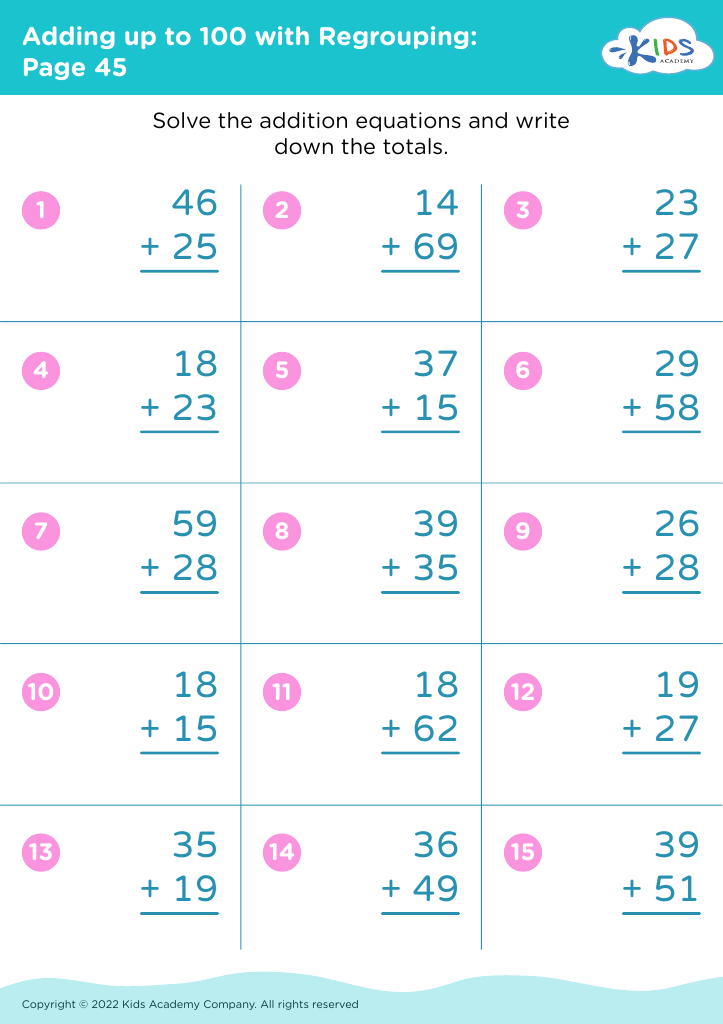
Adding up to 100 with Regrouping: Page 45
Worksheet
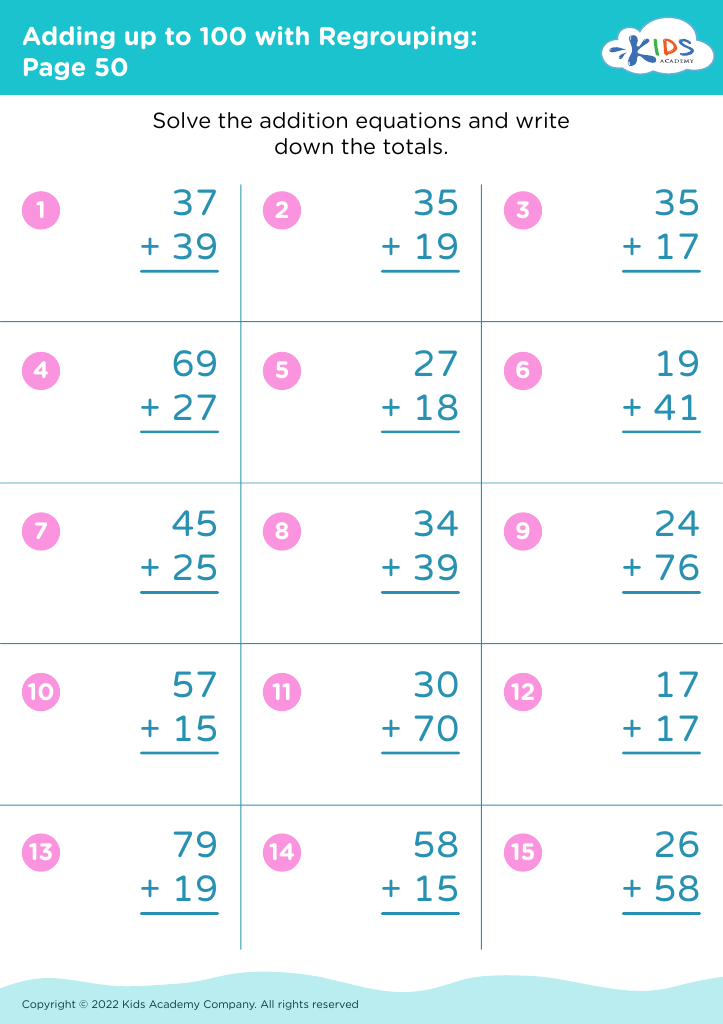
Adding up to 100 with Regrouping: Page 50
Worksheet
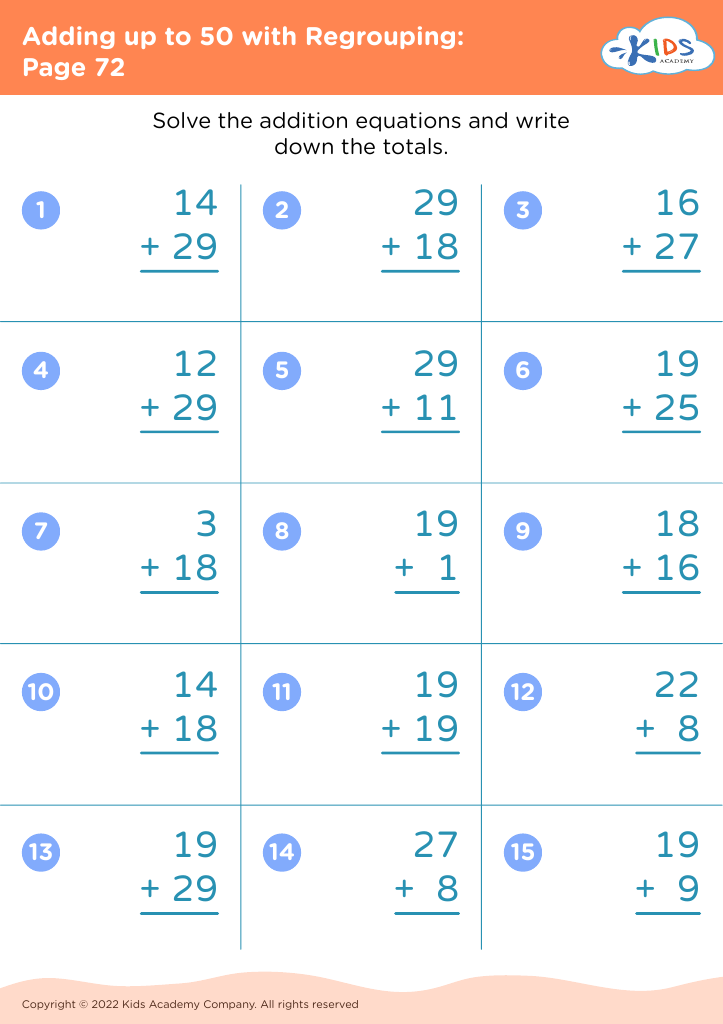
Adding up to 50 with Regrouping: Page 72
Worksheet
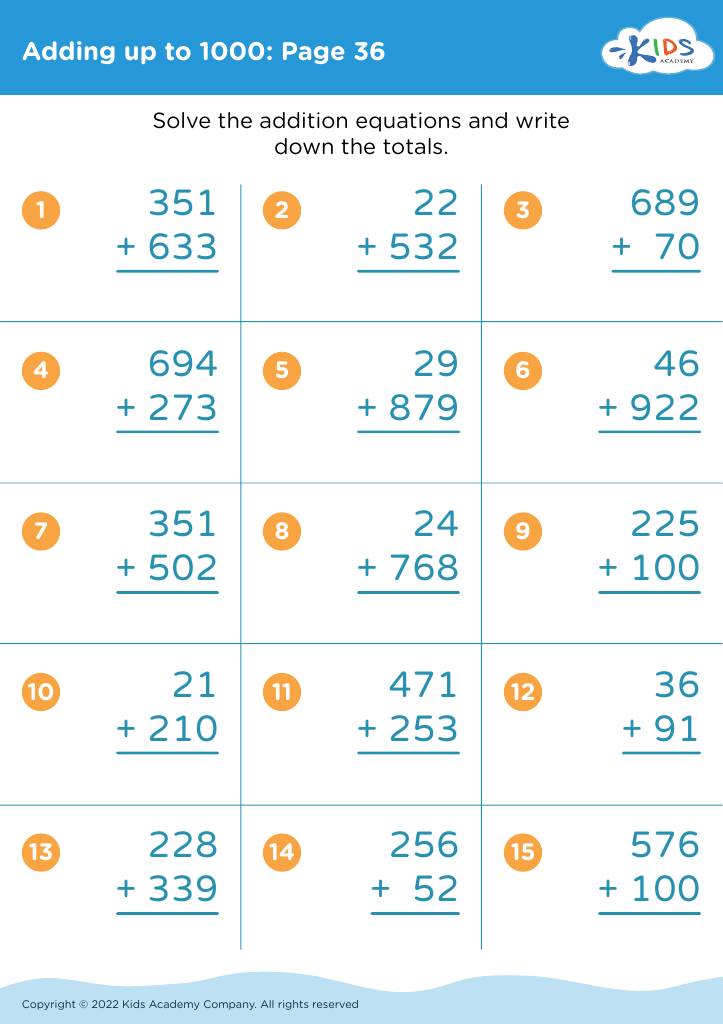
Adding up to 1000: Page 36

Adding up to 1000: Page 36

Adding up to 1000: Page 36
Worksheet
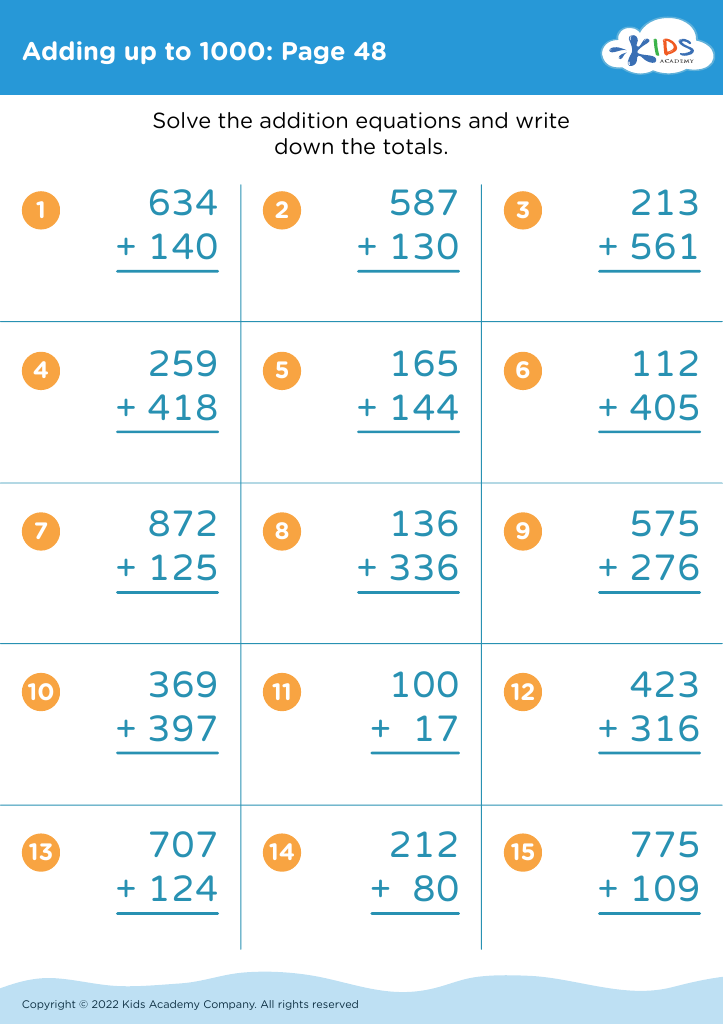
Adding up to 1000: Page 48

Adding up to 1000: Page 48

Adding up to 1000: Page 48
Worksheet


Parents and teachers should prioritize fine motor skills development during ages 7-9, especially in relation to addition and subtraction. At this stage, children are refining the dexterity needed to manipulate tools, such as pencils, scissors, and manipulatives, which are integral for accurate and confident math calculations. These skills not only impact a child’s ability to write clearly and neatly but also affect their capacity to engage in structured math tasks effectively.

Fine motor skills are crucial for supporting cognitive development. Mastery in tasks like adding and subtracting using manipulatives enhances understanding of mathematical concepts, allowing children to physically see and manipulate numbers. This tactile approach deepens their comprehension of math operations, transforming abstract concepts into concrete experiences.

Moreover, proficient fine motor skills contribute to a child’s overall academic performance and self-esteem. As they gain confidence in executing math tasks, they are more likely to participate actively in class, tackle challenges, and develop a positive attitude towards learning. Furthermore, strong fine motor skills correlate with social skills, enabling better collaboration during group activities. Ultimately, supporting fine motor development in relation to math sets the foundation for lifelong learning and success across various disciplines.