Handwriting improvement Addition & Subtraction Worksheets for Ages 7-9
4 filtered results
-
From - To
Enhance your child's handwriting and math skills with our Handwriting Improvement Addition & Subtraction Worksheets, specifically designed for ages 7-9. These engaging worksheets combine essential arithmetic practice with fun handwriting exercises, fostering neatness and clarity in written work. Your child will confidently solve addition and subtraction problems while simultaneously developing fine motor skills and proper letter formation. Ideal for both classroom use and at-home practice, these worksheets make learning enjoyable and effective. Support your young learners on their educational journey, ensuring they master essential math concepts while perfecting their handwriting. Download now and watch their skills flourish!
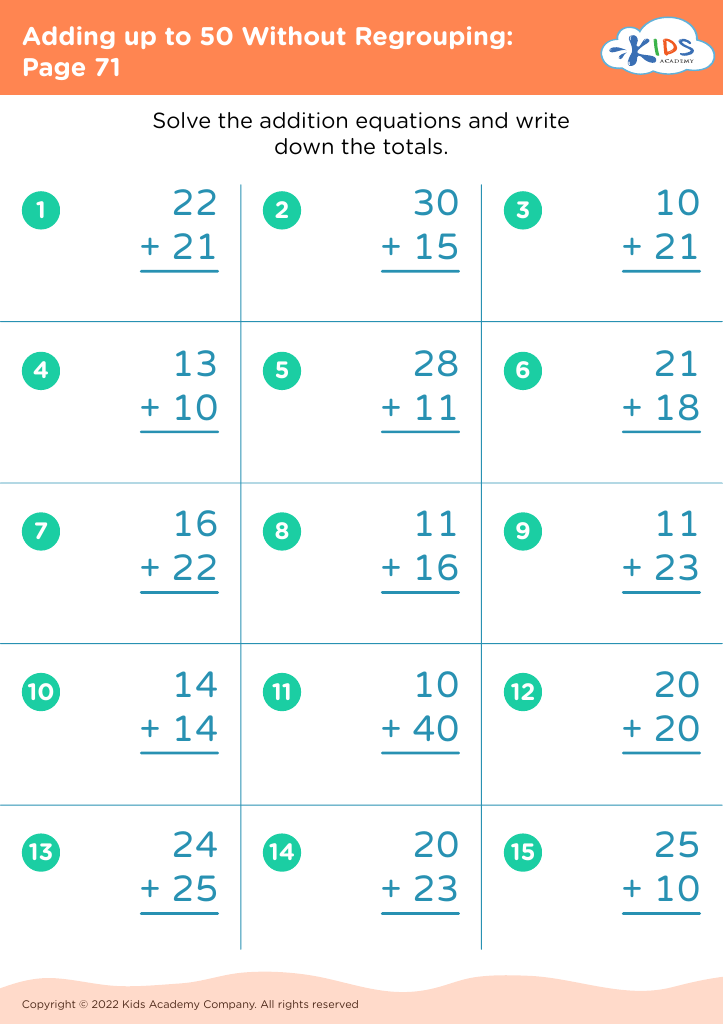
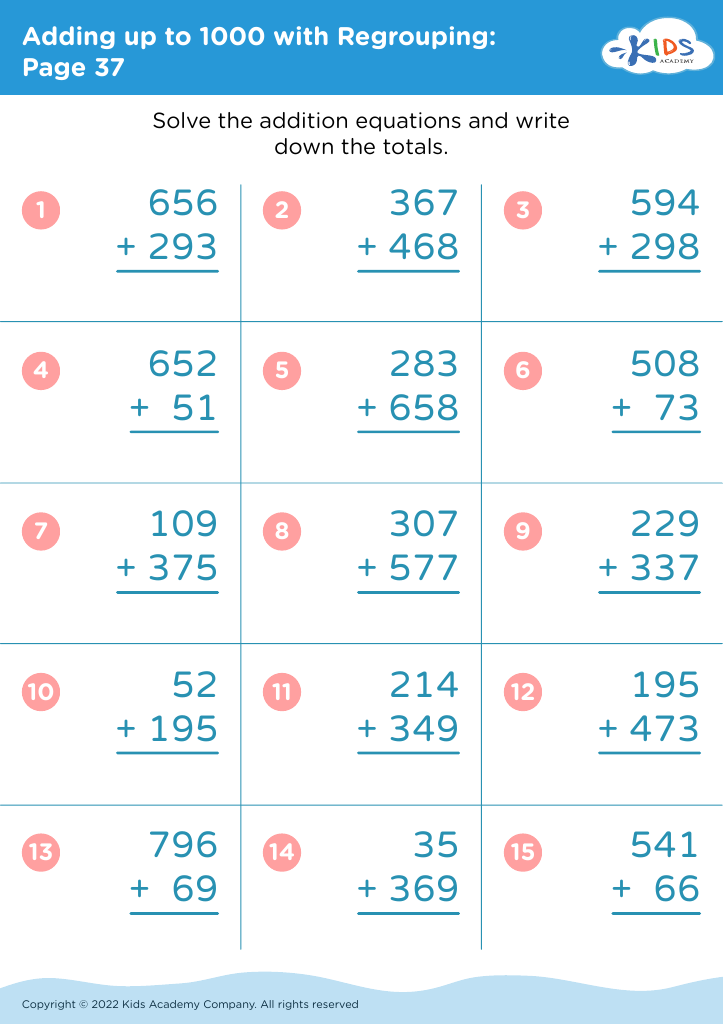
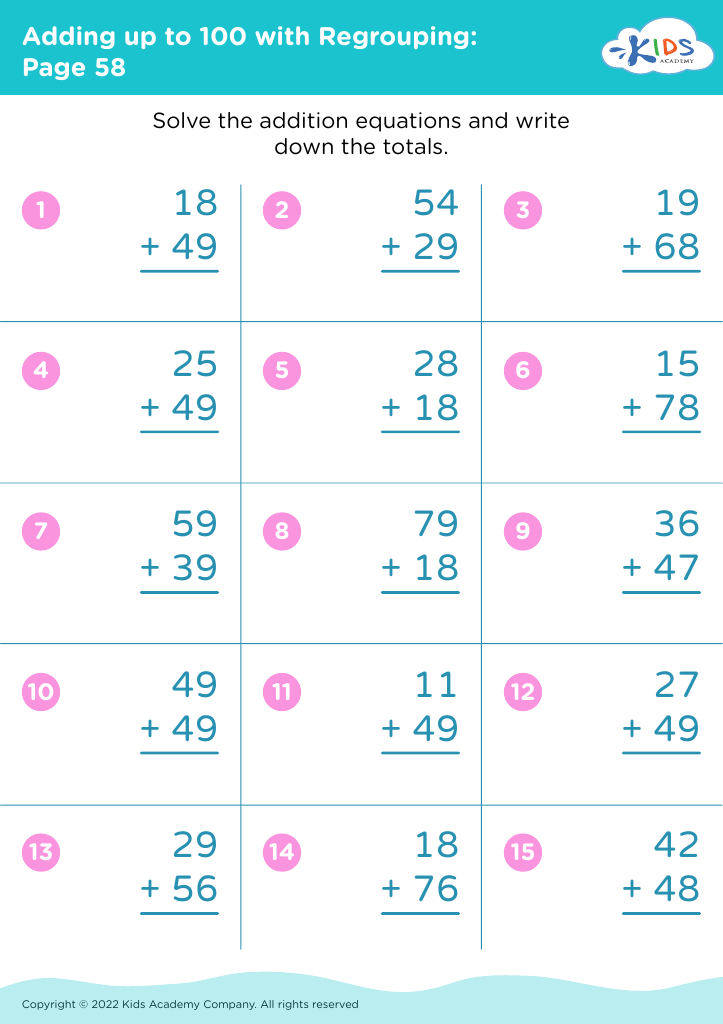
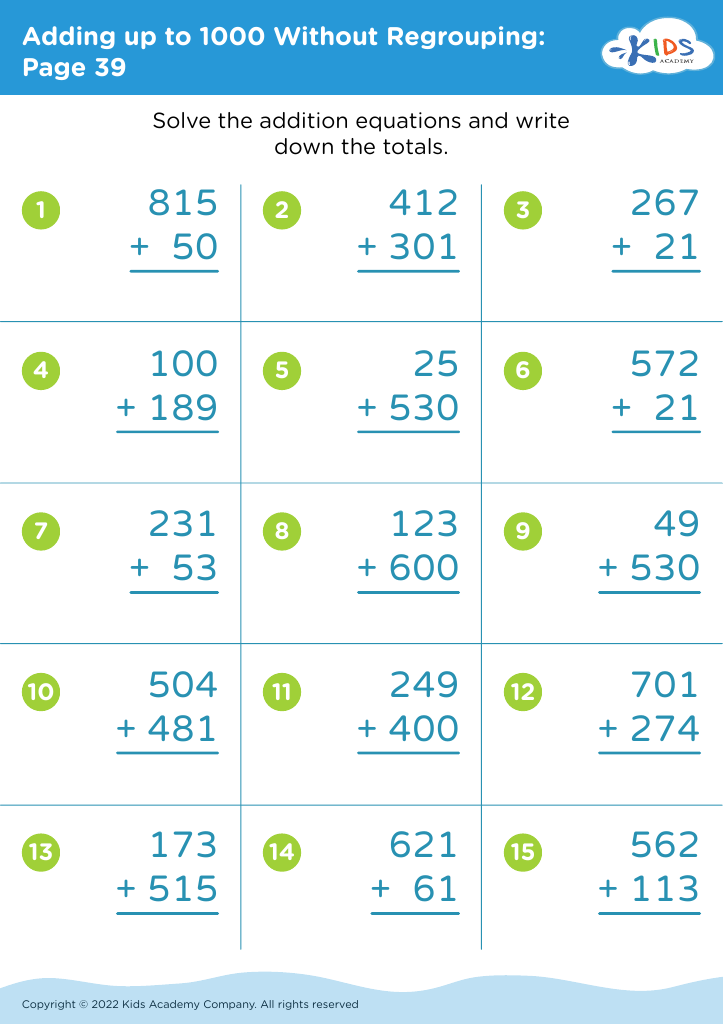








Handwriting improvement, particularly in the context of addition and subtraction for children ages 7 to 9, is crucial for several reasons. At this developmental stage, children are transitioning from learning how to write letters and numbers to expressing their understanding of mathematical concepts clearly. Legible handwriting ensures that when students solve problems, their work is organized and comprehensible, which is essential for conveying their thinking process.
Moreover, improving handwriting enhances motor skills, fostering coordination and concentration. When children focus on forming letters and numbers correctly, it develops their ability to pay attention to detail — a skill essential not just in mathematics but across all subjects. Legible handwriting reduces frustration and errors that can lead to misunderstandings about a child's capabilities in math.
Encouraging good handwriting can also boost a child’s confidence in their academic work; neat presentation reflects pride in their efforts. As parents or teachers, investing time in handwriting practices links to better performance in math tasks and overall school success. Therefore, prioritizing handwriting improvement alongside math skills lays a strong foundation for children's academic achievements and fosters a love for learning.








