Identifying equivalent fractions Addition & Subtraction Worksheets for Ages 7-9
7 filtered results
-
From - To
Help your 7-9 year-old master fraction skills with our "Identifying Equivalent Fractions Addition & Subtraction Worksheets"! These engaging resources make it fun and easy for young learners to grasp equivalent fractions, essential in understanding and simplifying fractions in addition and subtraction. With colorful illustrations and step-by-step guidance, each worksheet captivates young minds, reinforcing key concepts through engaging exercises. Perfect for classroom use or home practice, our worksheets support progressive learning, ensuring children build confidence and proficiency in fractions. Download now and watch your child’s math skills flourish! Explore a world where math meets fun—tailored just for ages 7-9.
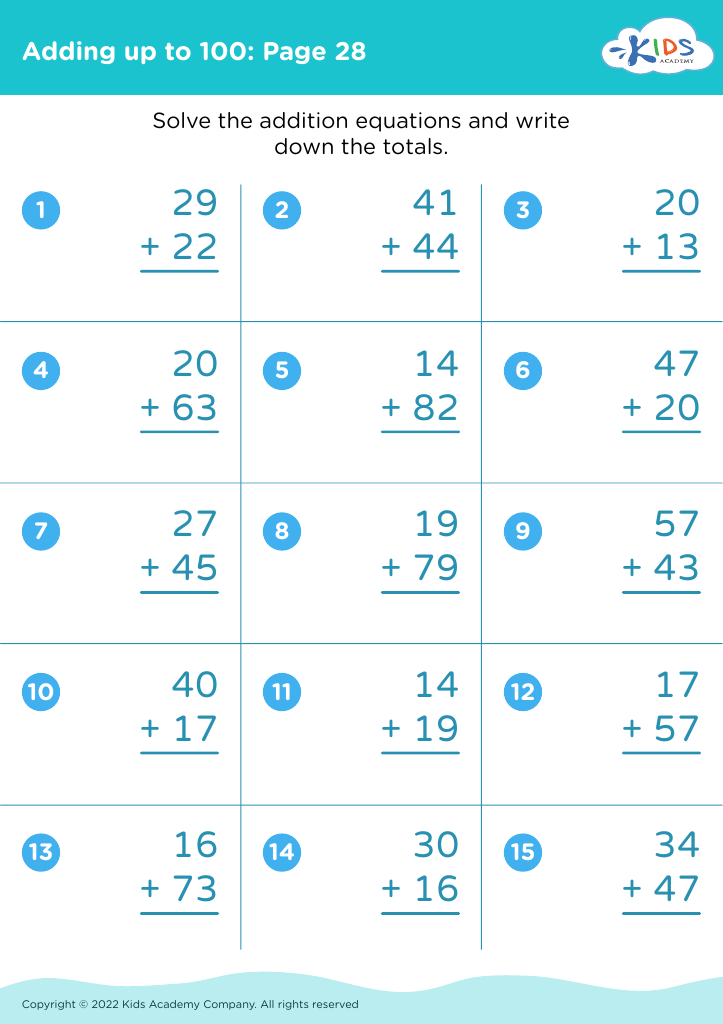
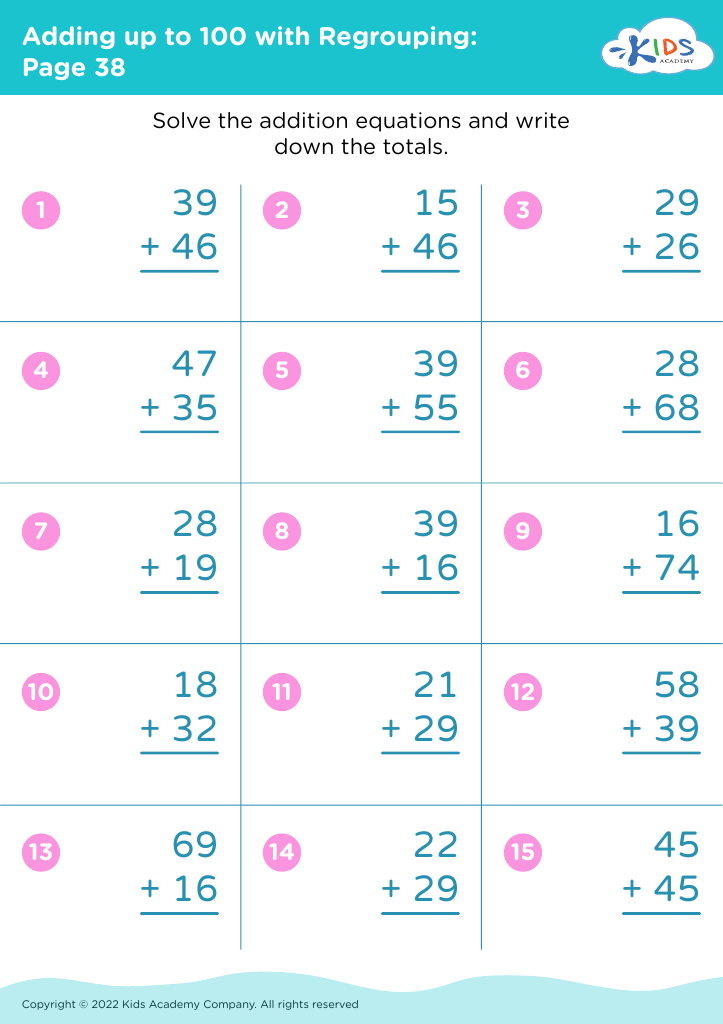
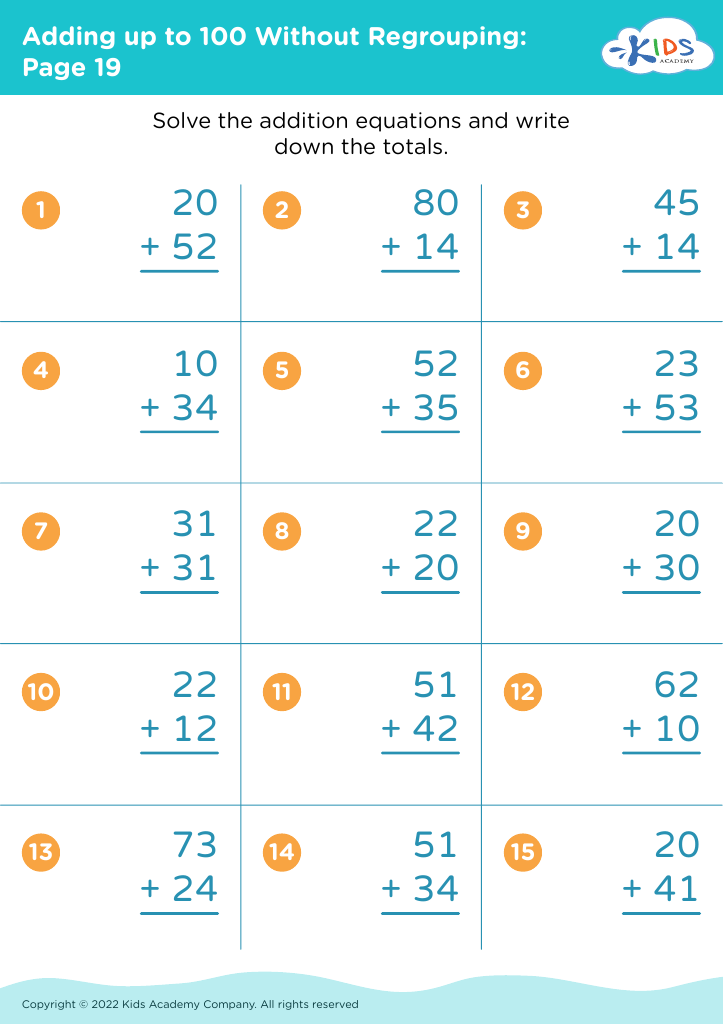
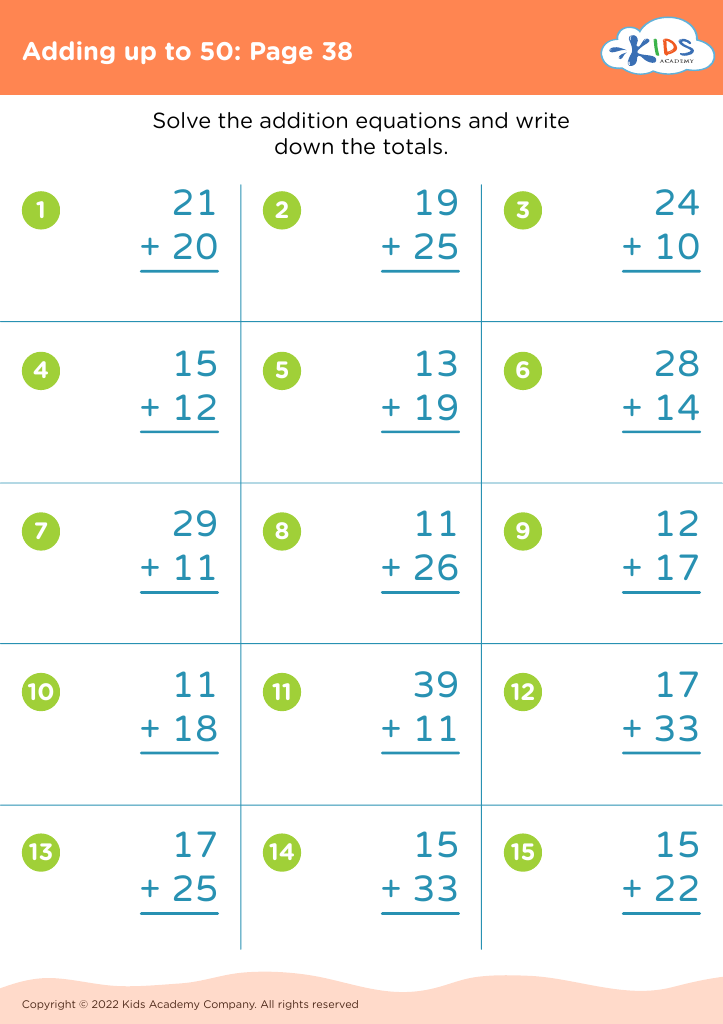
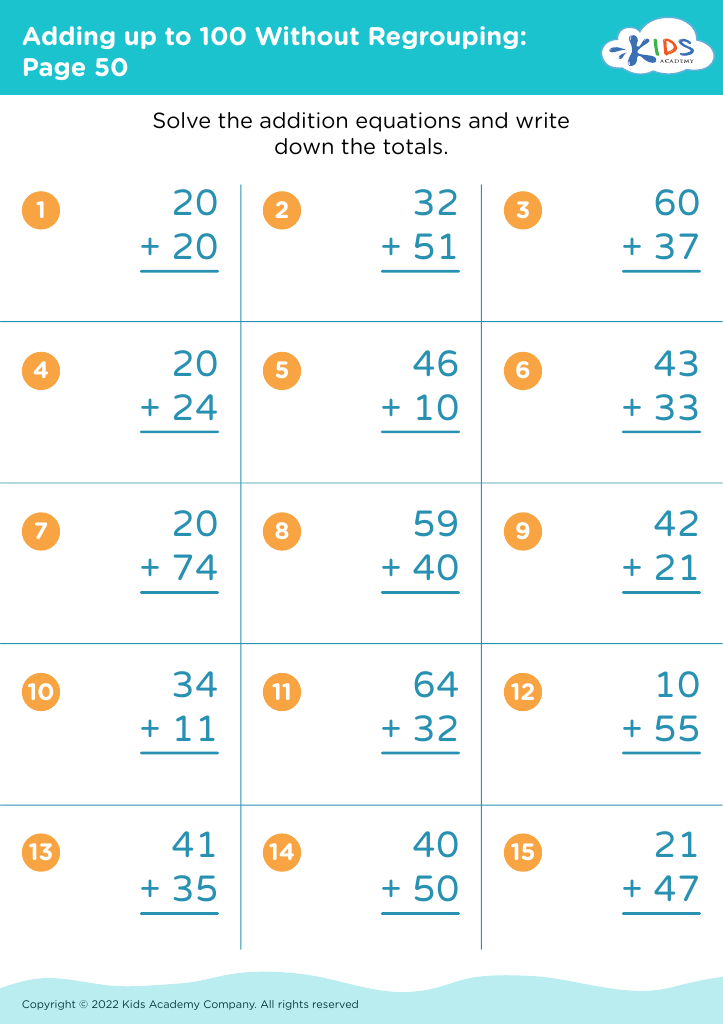
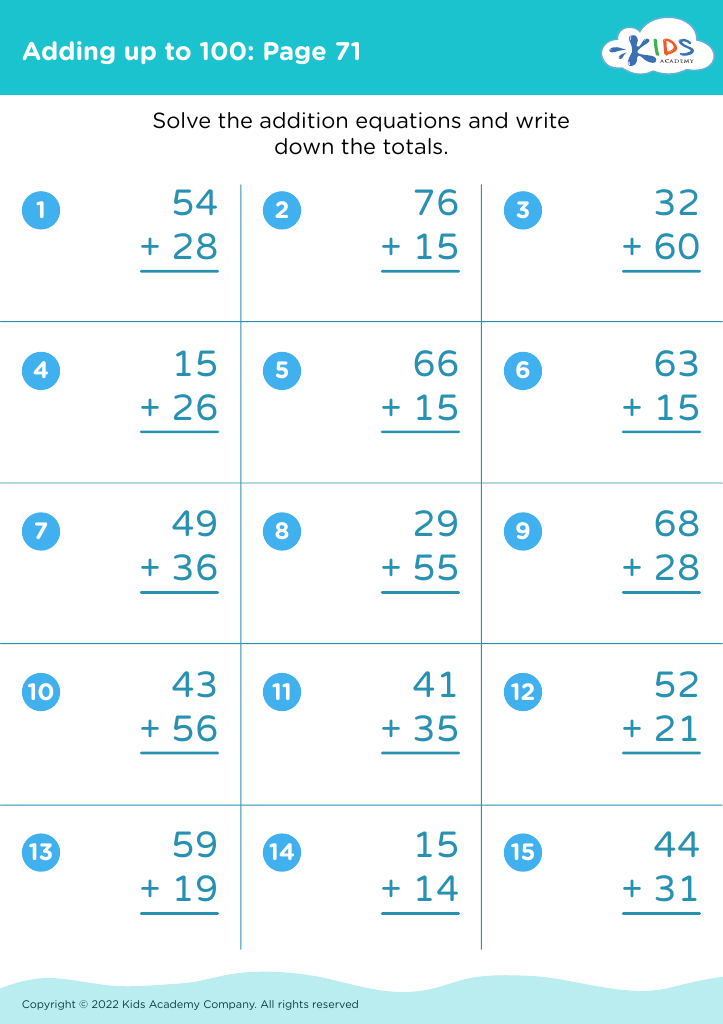
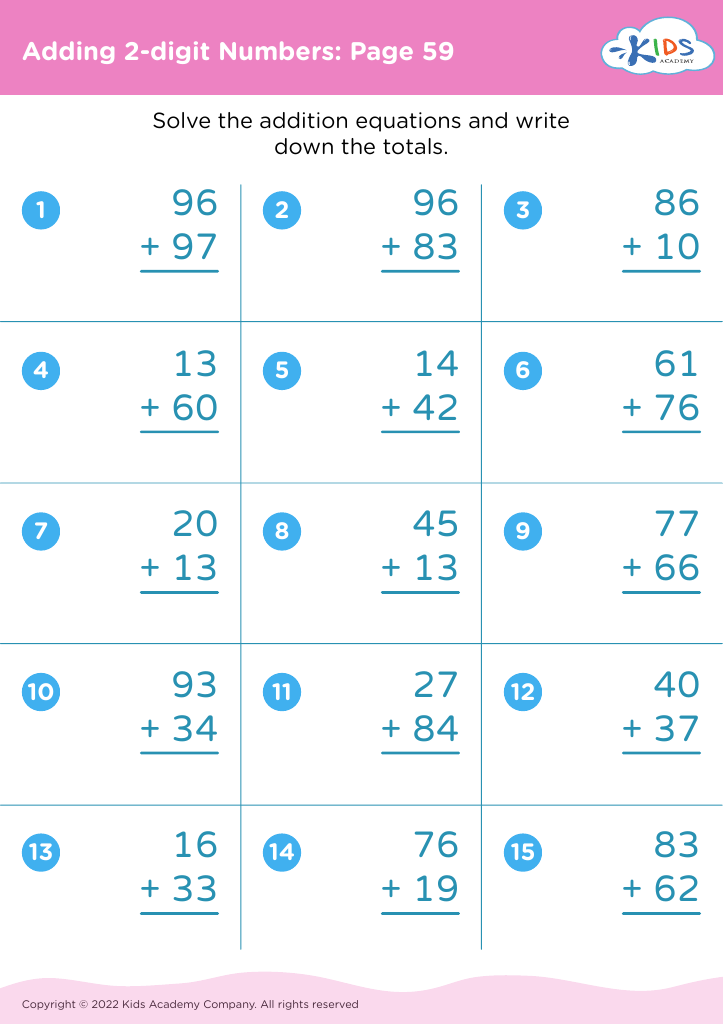








Identifying equivalent fractions and mastering addition and subtraction of fractions are foundational skills in mathematics that parents and teachers should emphasize for children ages 7-9.
Firstly, understanding equivalent fractions builds a solid base for more advanced mathematical concepts. By recognizing that ( \frac{1}{2} ) is the same as ( \frac{2}{4} ) or ( \frac{3}{6} ), children learn to see parts of a whole more flexibly, which is essential for real-world applications like measuring ingredients in cooking or dividing a pizza among friends. This fosters a deeper comprehension of numerical relationships and proportional reasoning.
Secondly, the ability to add and subtract fractions equips children with practical tools for everyday situations and further academic success. When kids understand that ( \frac{1}{2} + \frac{1}{4} = \frac{3}{4} ), they are better able to tackle problems involving parts and wholes. Early proficiency in these calculations translates into confidence in their math skills, reducing anxiety in more complex operations as they progress to higher grades.
Moreover, engaging with these concepts strengthens critical thinking and problem-solving abilities. Parents and teachers, by emphasizing these fundamental skills, can help cultivate a generation of learners who approach math with curiosity and confidence, ensuring they are well-prepared for future academic challenges and day-to-day experiences that require mathematical reasoning.








