Identifying patterns Addition & Subtraction Worksheets for Ages 7-9
3 filtered results
-
From - To
Discover our engaging "Identifying Patterns Addition & Subtraction Worksheets" designed specifically for children ages 7-9. These worksheets provide a fun and interactive way for kids to enhance their math skills by recognizing and applying patterns in addition and subtraction. Each activity encourages critical thinking and problem-solving, making learning enjoyable and effective. The exercises cater to various learning styles, helping students grasp essential math concepts while boosting their confidence. Perfect for use in classrooms or at home, these worksheets support curriculum standards and promote independent learning. Start your child's math journey today with our colorful and captivating materials!
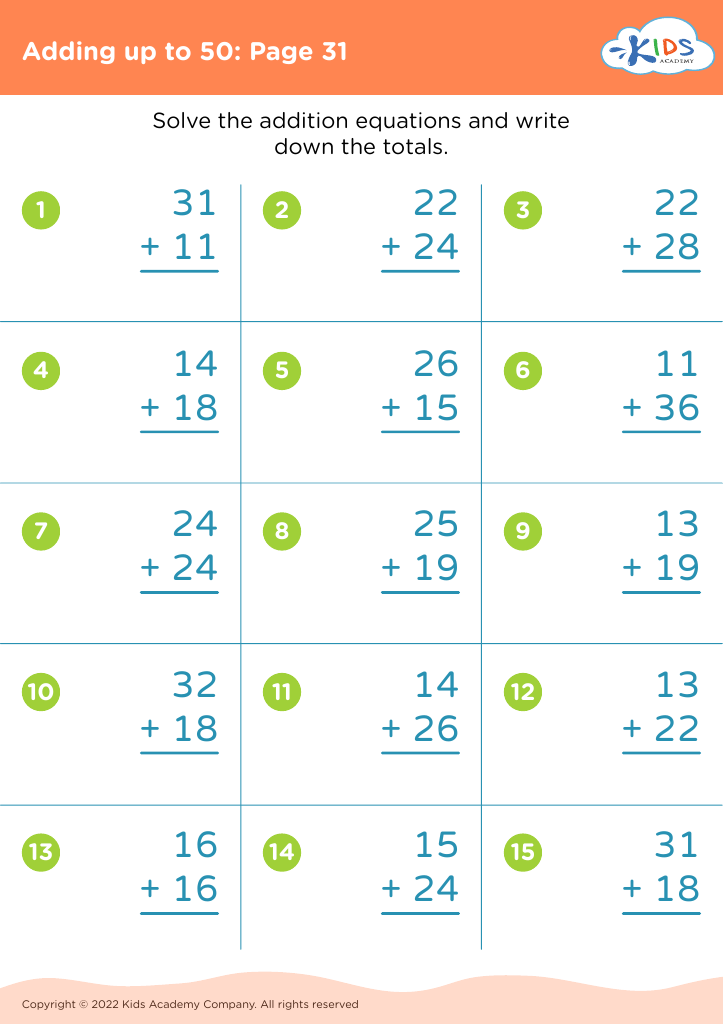
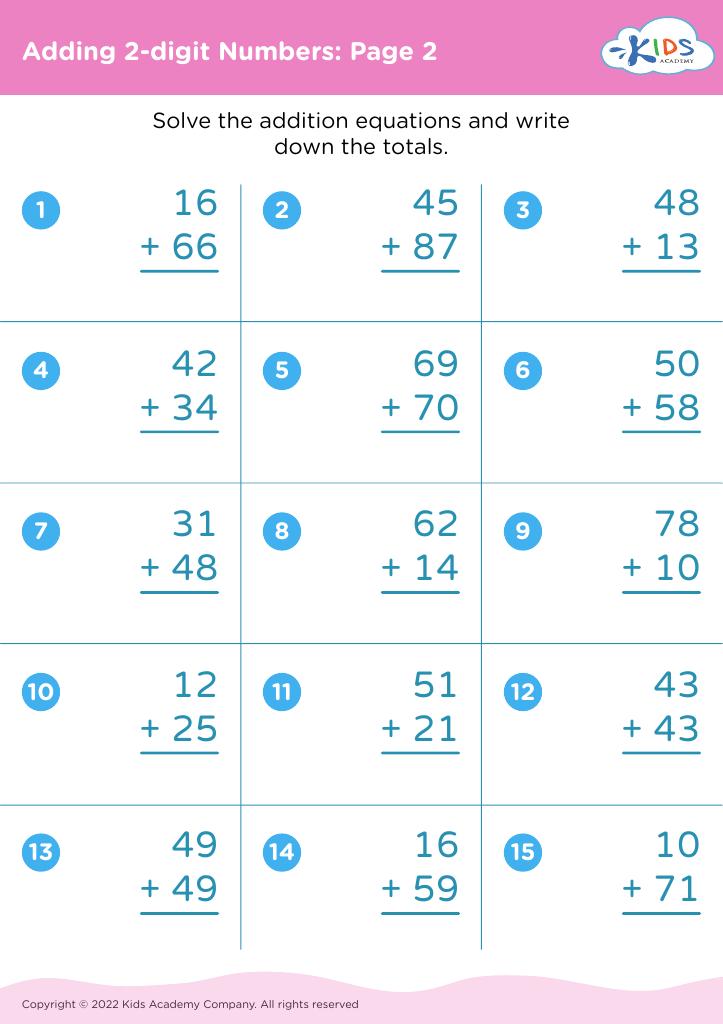
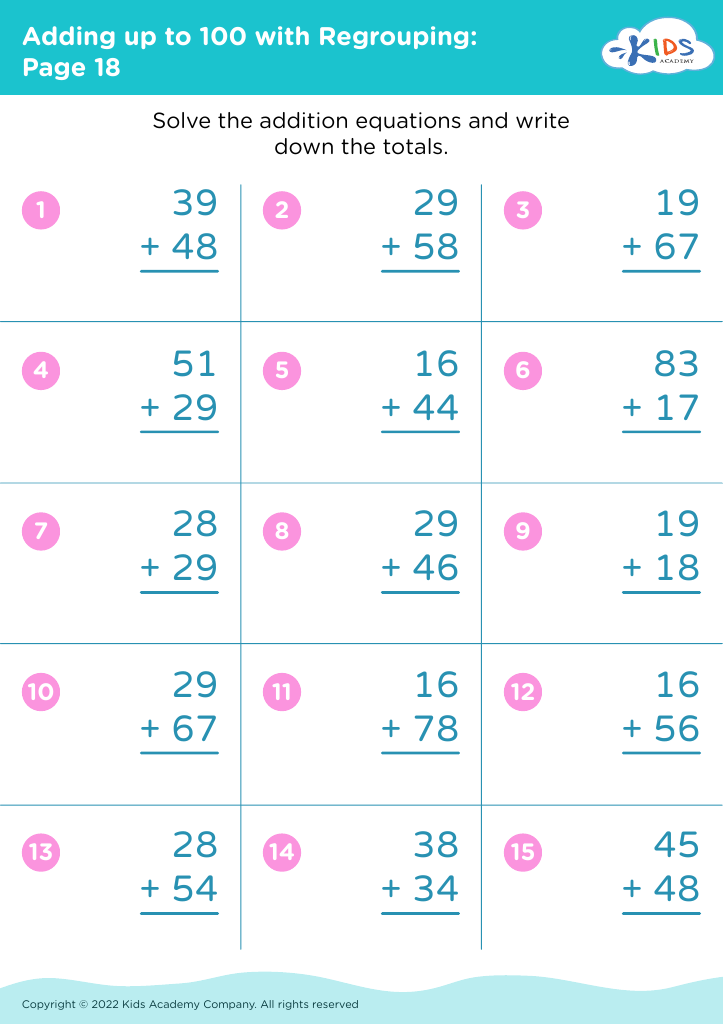








Identifying patterns in addition and subtraction is essential for children aged 7-9 as it enhances their mathematical understanding and problem-solving skills. At this developmental stage, children begin transitioning from concrete to abstract thinking; recognizing patterns aids in making this transition smoother. When students notice consistent relationships in numbers, such as how adding or subtracting the same number results in predictable outcomes, they become more adept at predicting future results, which is a foundational skill in mathematics.
Moreover, pattern recognition fosters critical thinking. Children learn to analyze situations, find solutions efficiently, and develop strategies to tackle both simple and complex problems. This not only aids in academic growth but also builds confidence in their mathematical abilities. By honing these skills early, children are better prepared for more advanced mathematics concepts in the future.
For parents and teachers, encouraging the identification of patterns in math can lead to more engaged and motivated learners. Integrating games and activities that reveal these elements creates a fun and interactive environment, making learning enjoyable and impactful. Additionally, these skills are transferable; they encompass logical reasoning and enhance everyday problem-solving, further preparing children for real-world applications beyond the classroom.








