Reading clocks Addition & Subtraction Worksheets for Ages 7-9
3 filtered results
-
From - To
Enhance your child's math skills with our "Reading Clocks Addition & Subtraction Worksheets" designed for ages 7-9! These engaging worksheets combine time-telling practice with fun addition and subtraction exercises. Kids will learn how to read both digital and analog clocks while solving interactive problems that challenge their understanding of time and basic math operations. Ideal for classrooms or home learning, these worksheets foster critical thinking and boost confidence in young learners. Perfect for parents and educators looking to reinforce important concepts, our resources are designed to keep kids motivated and excited about learning. Download your worksheets today and make math time more enjoyable!
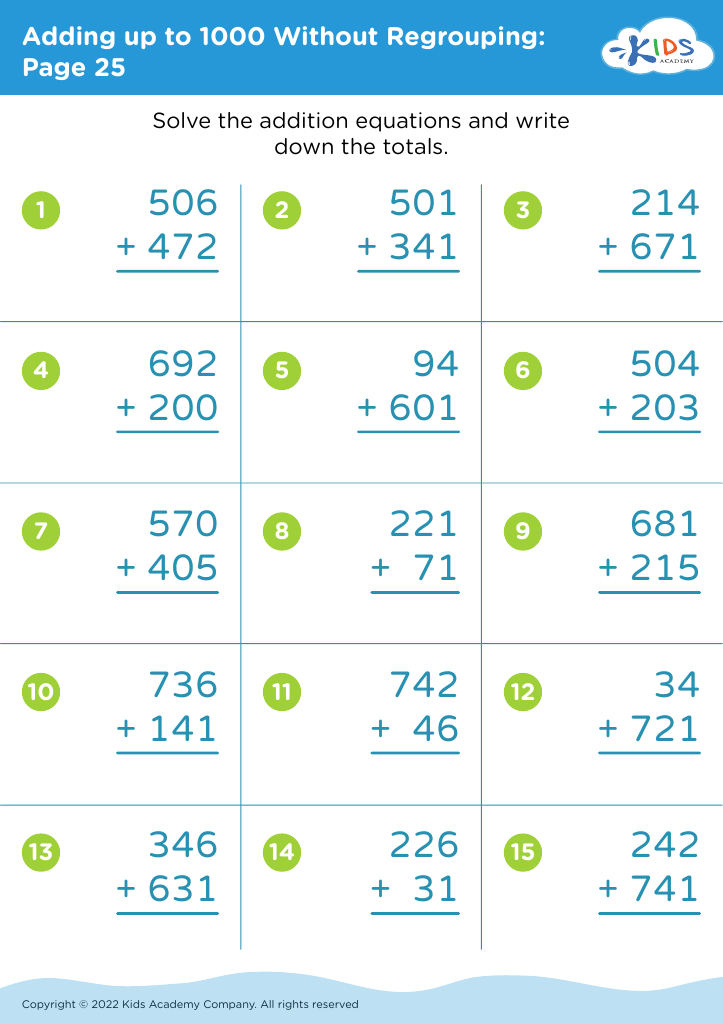
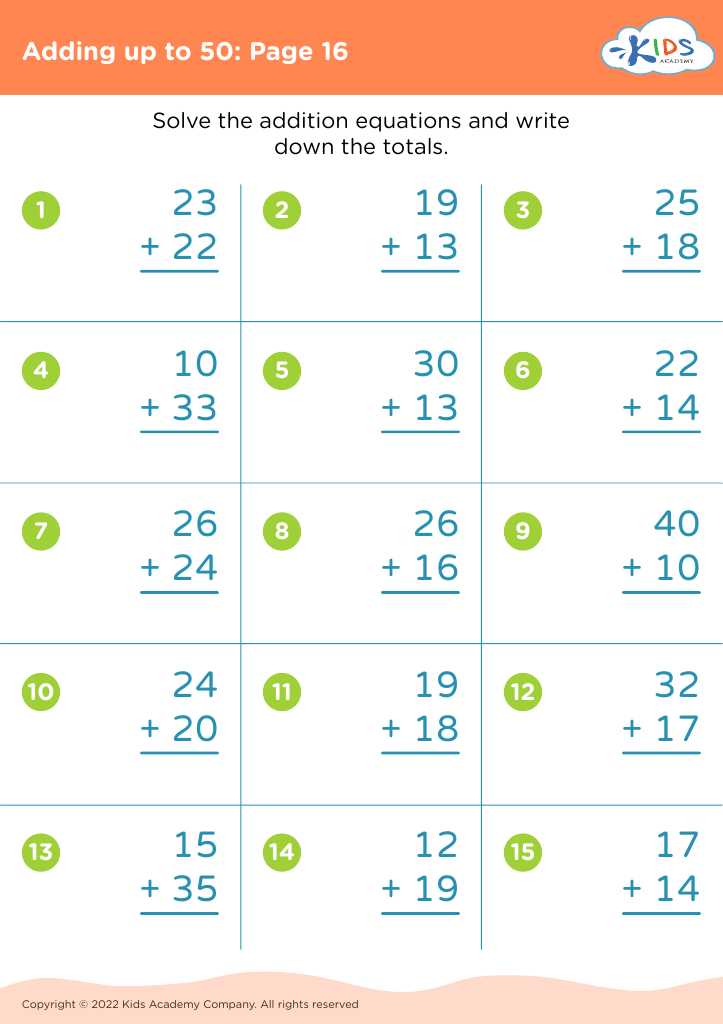
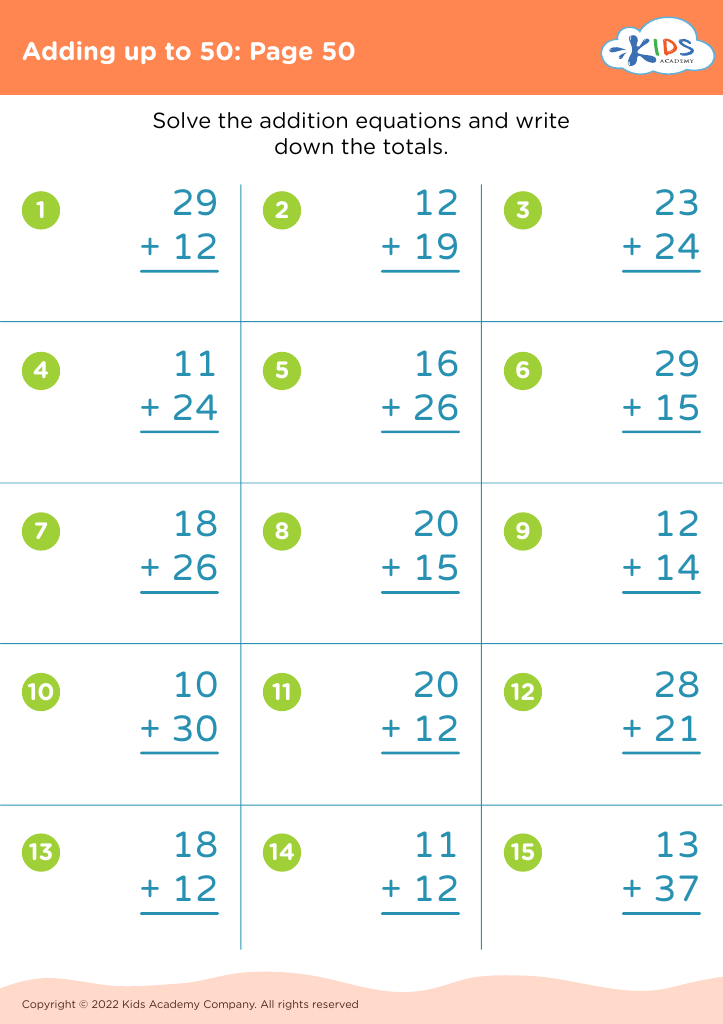








Teaching addition and subtraction through reading clocks is essential for children aged 7-9 as it intertwines crucial mathematical skills with real-life applications. At this age, children are not only mastering basic arithmetic but are also developing critical thinking skills. Understanding how to add and subtract time on clocks fosters mathematical reasoning in a practical context, enhancing their comprehension of both time management and numeracy.
Incorporating clocks into lessons engages students and makes learning interactive and enjoyable. It encourages children to relate their arithmetic skills to everyday situations—such as planning activities or understanding daily schedules. This real-world application enhances their motivation and retention of mathematical concepts.
Moreover, developing proficiency in reading clocks and using addition and subtraction to manipulate time builds a foundation for more complex mathematical skills in the future, such as fractions or algebra. For parents and teachers, fostering these skills aligns with the goal of nurturing confident, independent learners equipped to navigate the world around them.
Overall, prioritizing reading clocks and associated mathematical operations not only streamlines children's learning processes but also empowers them with essential life skills they will carry into adulthood.








