Understand number relationships Addition & Subtraction Worksheets for Ages 7-9
3 filtered results
-
From - To
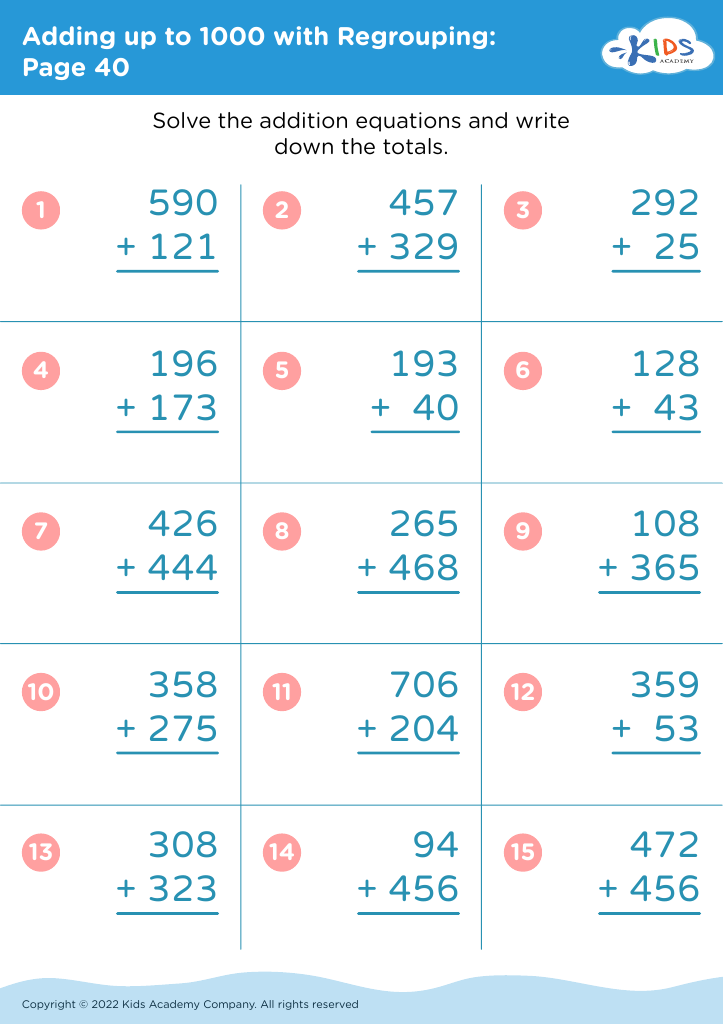
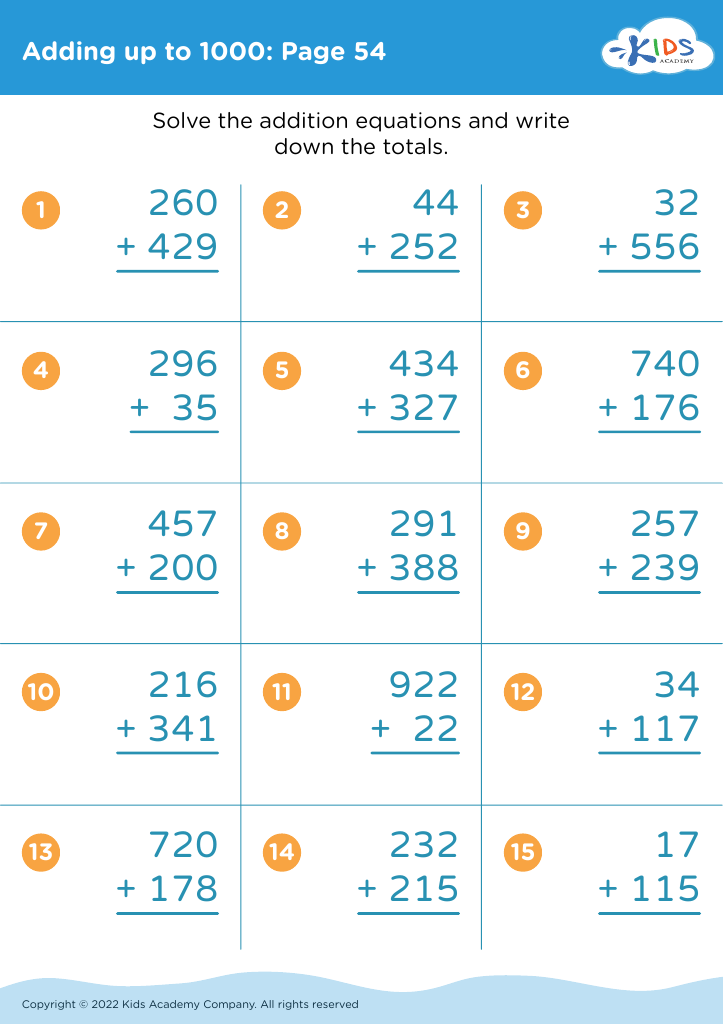
Enhance your child's arithmetic skills with our “Understand Number Relationships” worksheets designed specifically for children ages 7-9. These engaging resources focus on addition and subtraction techniques, empowering young learners to grasp number concepts deeply. Your child will explore relationships between numbers, honing their problem-solving abilities through a variety of interactive exercises. Our worksheets promote a strong mathematical foundation, fostering confidence and enjoyment in learning. Ideal for reinforcing classroom learning or providing extra practice at home, these materials make learning fun and effective. Help your child thrive in mathematics and develop essential skills with our thoughtfully designed worksheets today!
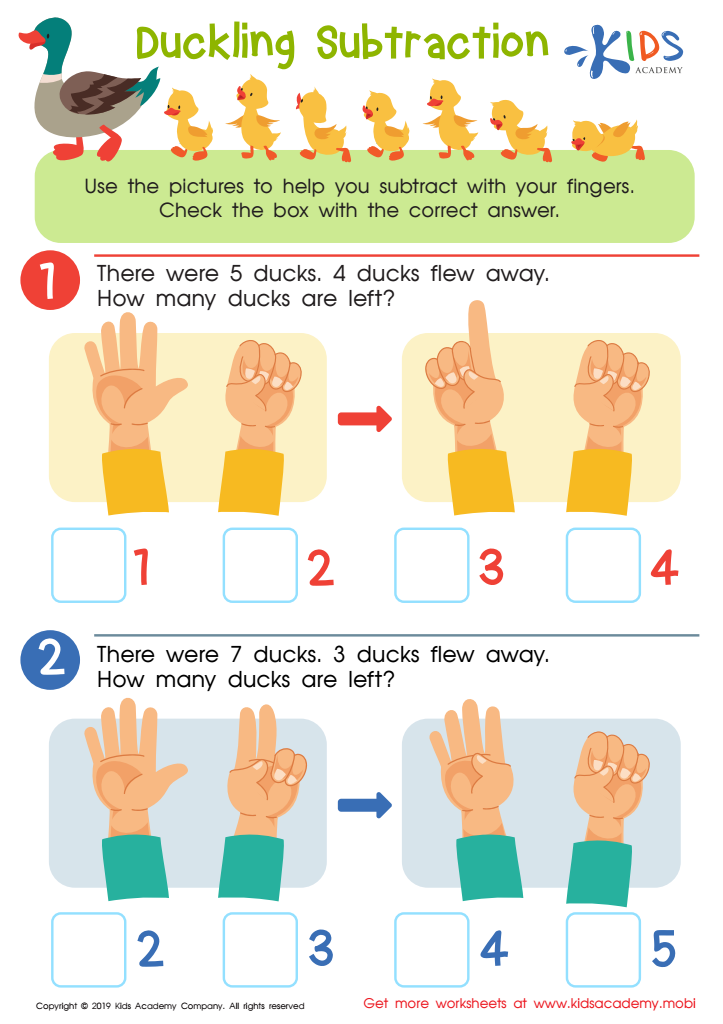
Duckling Subtraction Worksheet
 Assign to My Students








Understanding number relationships in addition and subtraction is crucial for children aged 7-9, a pivotal period for developing mathematical foundations. During these years, children's cognitive abilities grow, allowing them to grasp more complex concepts. A strong grasp of number relationships fosters not only fluency in basic operations but also enhances problem-solving skills, critical thinking, and the ability to approach mathematics holistically.
When parents and teachers emphasize number relationships, they help children understand how numbers interact. For instance, recognizing that subtraction can be seen as ’putting together what was taken away’ creates a deeper understanding of both operations. This understanding is essential as it lays the groundwork for more advanced math concepts, including multiplication, division, and fractions, which they will encounter in subsequent grades.
Moreover, children who grasp these concepts are better equipped to tackle mathematical problems confidently, reducing math-related anxiety and encouraging a positive attitude toward learning. Engaging with these relationships not only improves academic performance but fosters a lifelong appreciation for mathematics, empowering students to become proficient learners. Thus, nurturing an environment that prioritizes number relationships ultimately leads to robust math skills and enthusiastic learners prepared for future mathematical challenges.








