Understand patterns Addition & Subtraction Worksheets for Ages 7-9
6 filtered results
-
From - To
Explore our "Understand Patterns in Addition & Subtraction" worksheets, specially designed for children aged 7-9! These engaging activities focus on helping young learners recognize and understand mathematical patterns, enhancing their problem-solving skills and number sense. Our worksheets offer a variety of exercises that reinforce addition and subtraction concepts, making learning both fun and effective. With colorful illustrations and interactive challenges, students will build confidence and proficiency in math. Perfect for homeschooling, classroom activities, or additional practice, our resources cater to different learning styles and ensure a well-rounded understanding of key math principles. Start your child's journey to math mastery today!
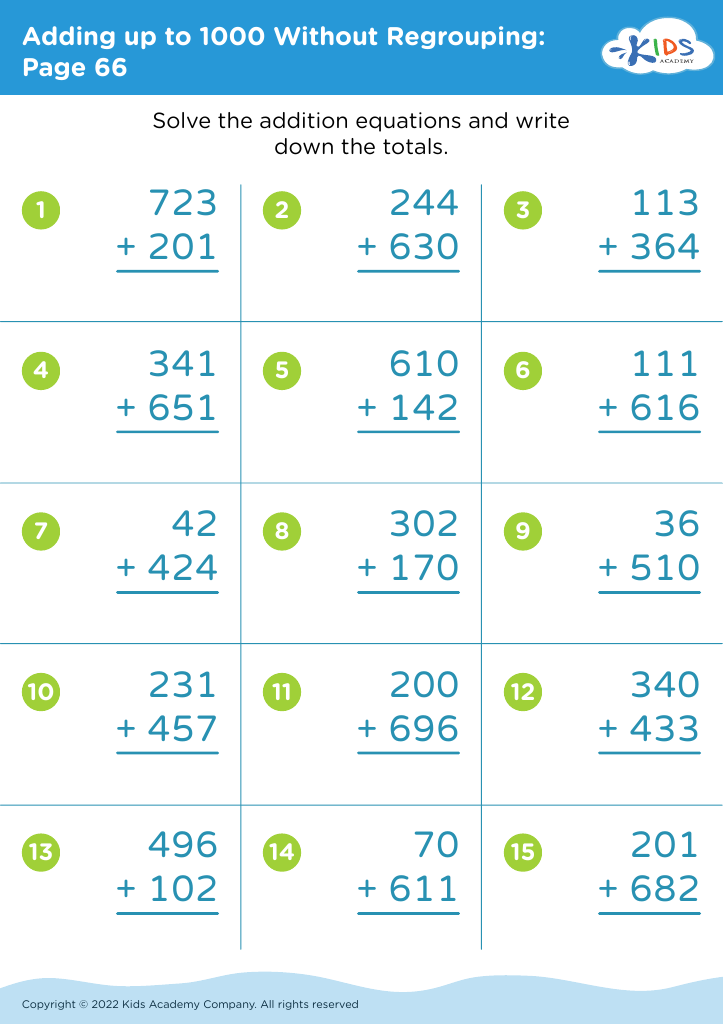
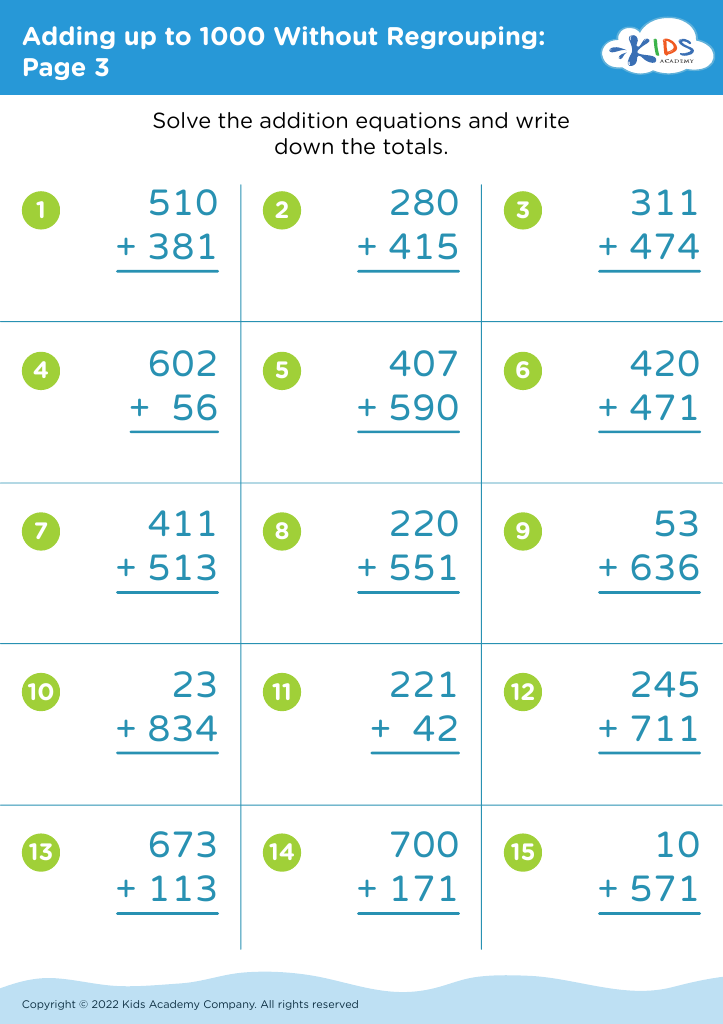
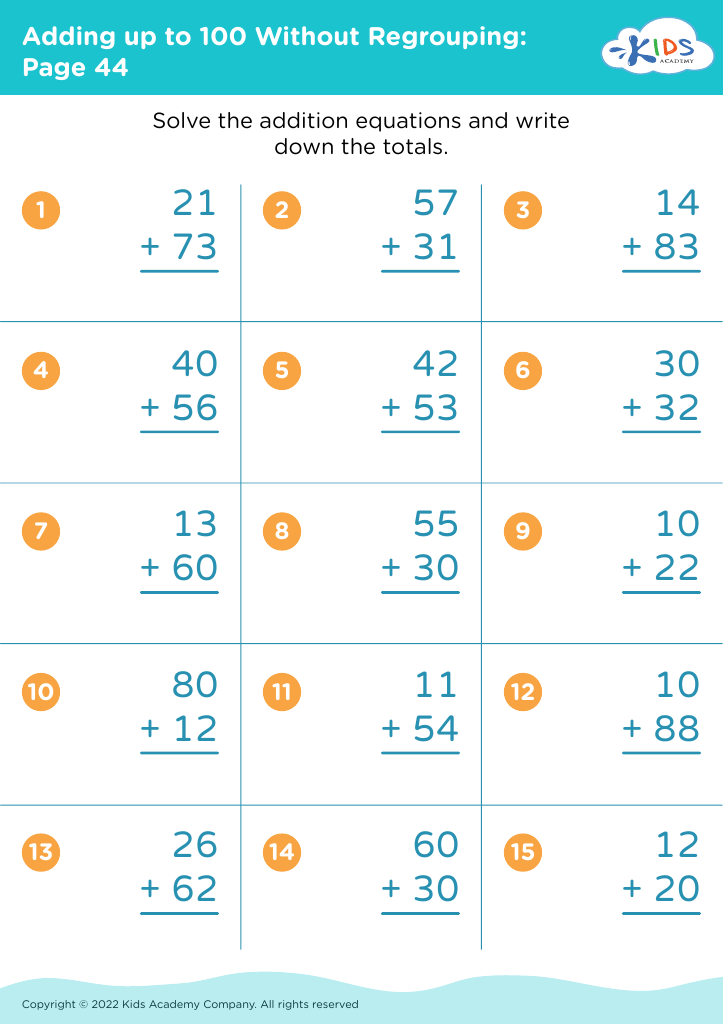
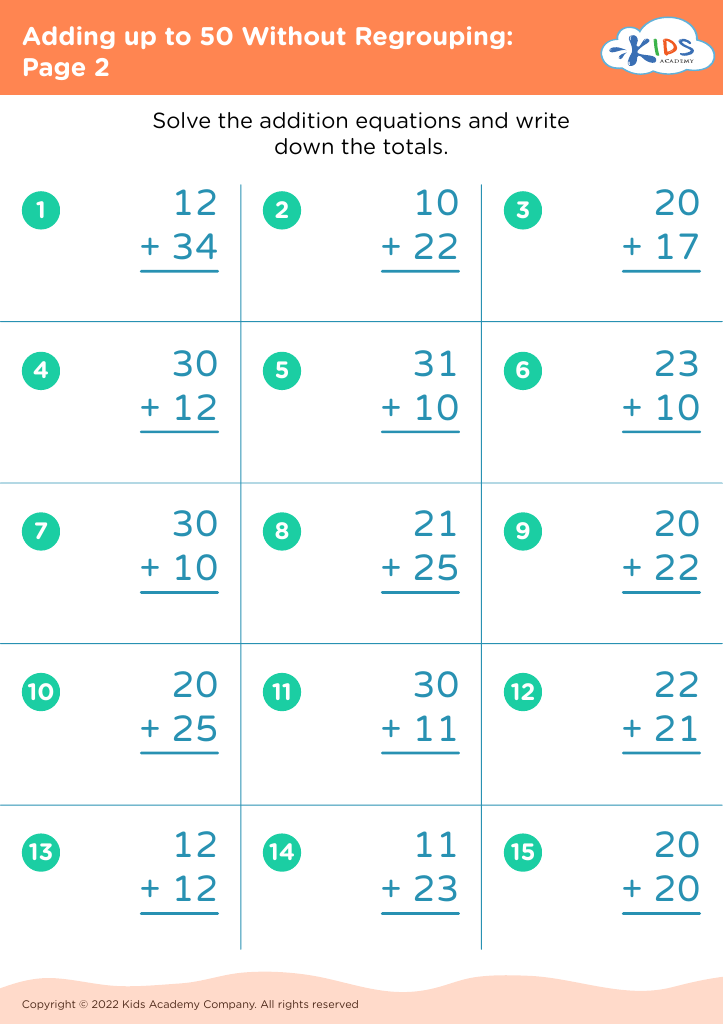
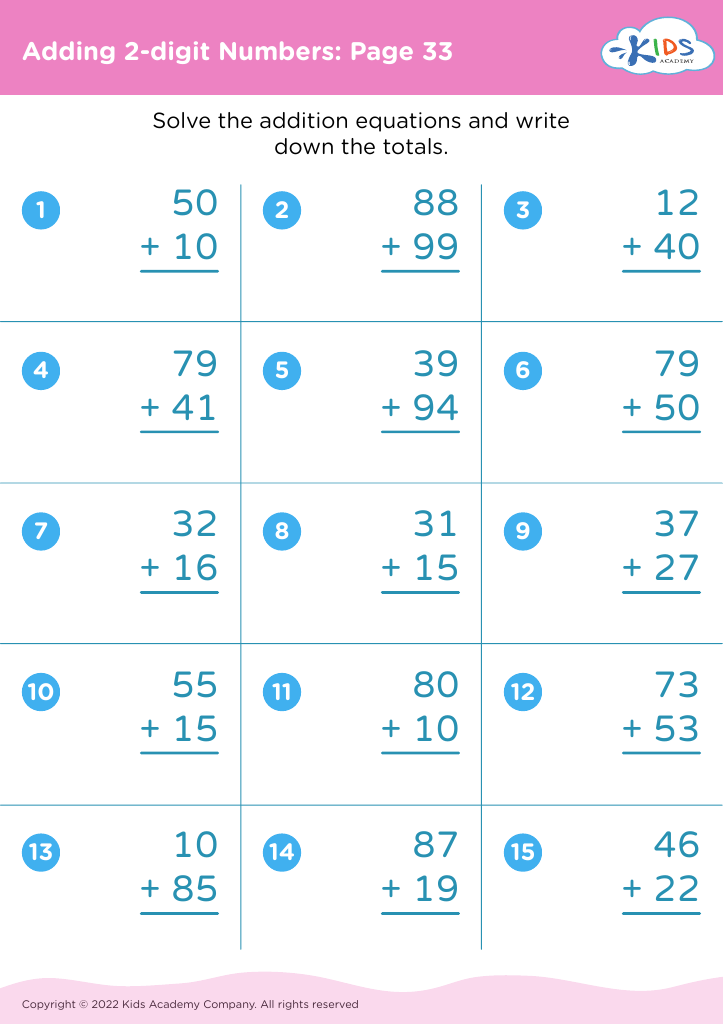
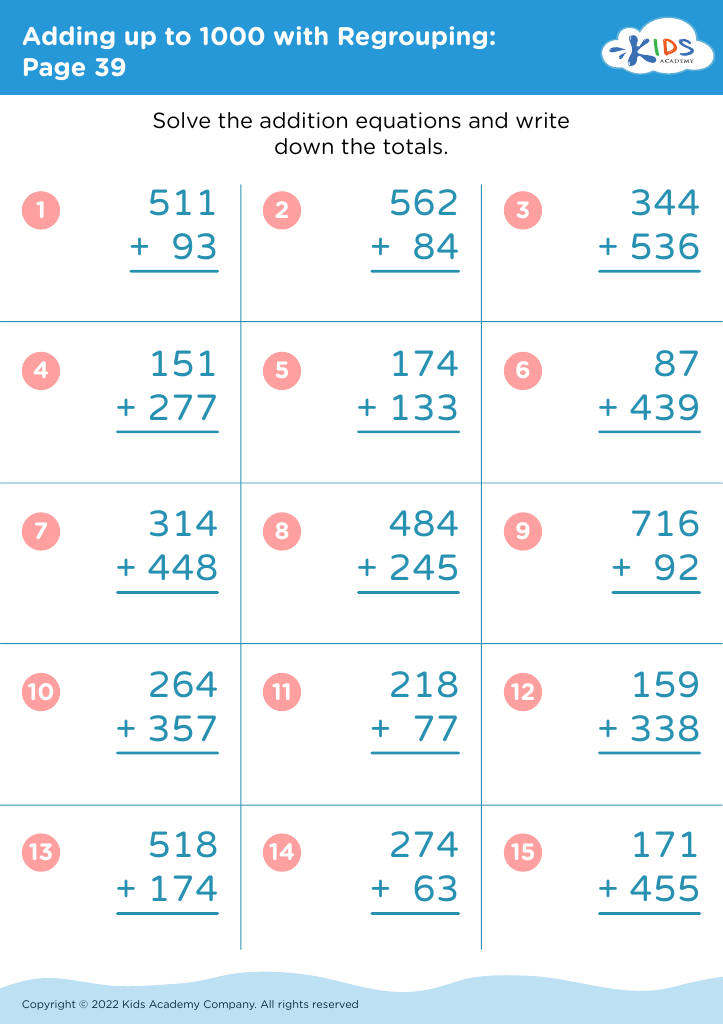








Understanding patterns in addition and subtraction is crucial for children aged 7-9 as it lays the foundation for more advanced mathematical concepts. Recognizing patterns helps students identify relationships between numbers, which enhances their problem-solving skills and boosts their overall mathematical intuition. For instance, when children notice that adding two even numbers always results in an even number, they start to develop algebraic thinking, which is essential for future math courses.
Moreover, pattern recognition fosters critical thinking. As children engage with numerical patterns, they learn to make predictions and identify possible solutions, preparing them for complex mathematical reasoning. This skill is not only integral to math but also influences data interpretation in subjects like science and economics later on.
For parents and teachers, facilitating an environment that emphasizes understanding patterns enriches a child's learning experience. It helps build a positive attitude towards math by transforming it into an engaging and fun activity. Furthermore, children who grasp these concepts early on are more likely to perform better academically in math-related subjects, leading to higher confidence levels and academic success. Ultimately, encouraging pattern manipulation equips students with lifelong skills applicable in various aspects of everyday life.








