Understanding number relationships Addition & Subtraction Worksheets for Ages 7-9
4 filtered results
-
From - To
Enhance your child's math skills with our "Understanding Number Relationships: Addition & Subtraction Worksheets for Ages 7-9". Specifically designed for young learners, these engaging worksheets help kids build a strong foundation in addition and subtraction while improving their grasp of number relationships. Our materials focus on real-world problems, patterns, and logical thinking. By practicing with colorful, simple exercises, children will sharpen their math abilities and develop confidence in problem-solving. Ideal for homeschoolers, teachers, and parents seeking supplemental resources, these worksheets make learning fun and effective. Unlock your child’s potential with our expertly crafted activities.
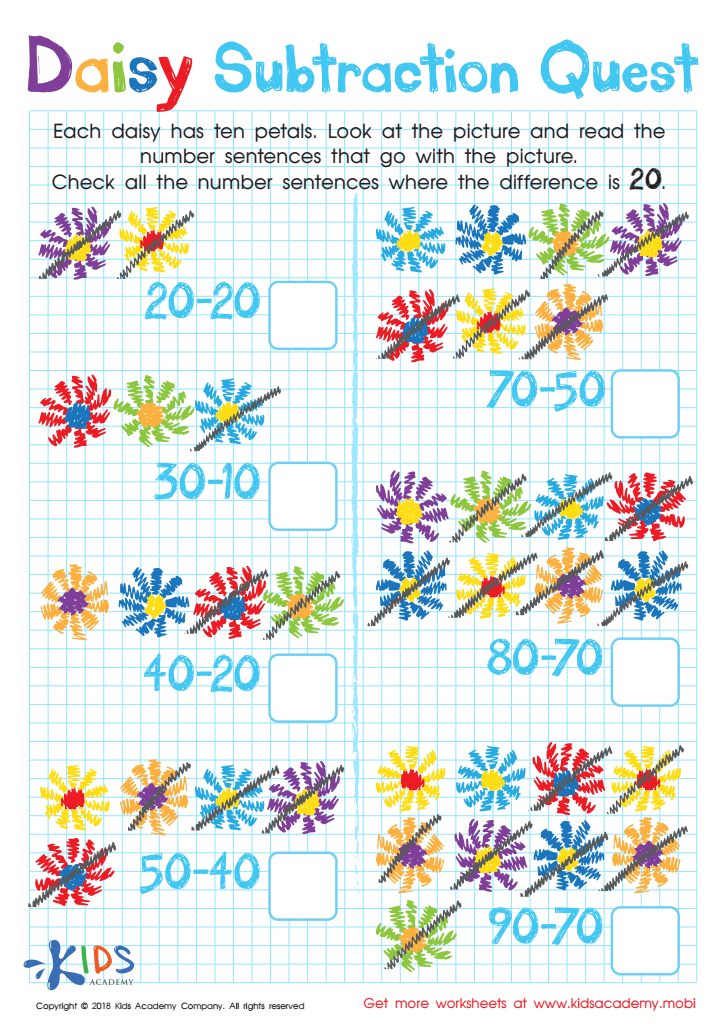
Daisy Subtraction Quest Worksheet
 Assign to My Students
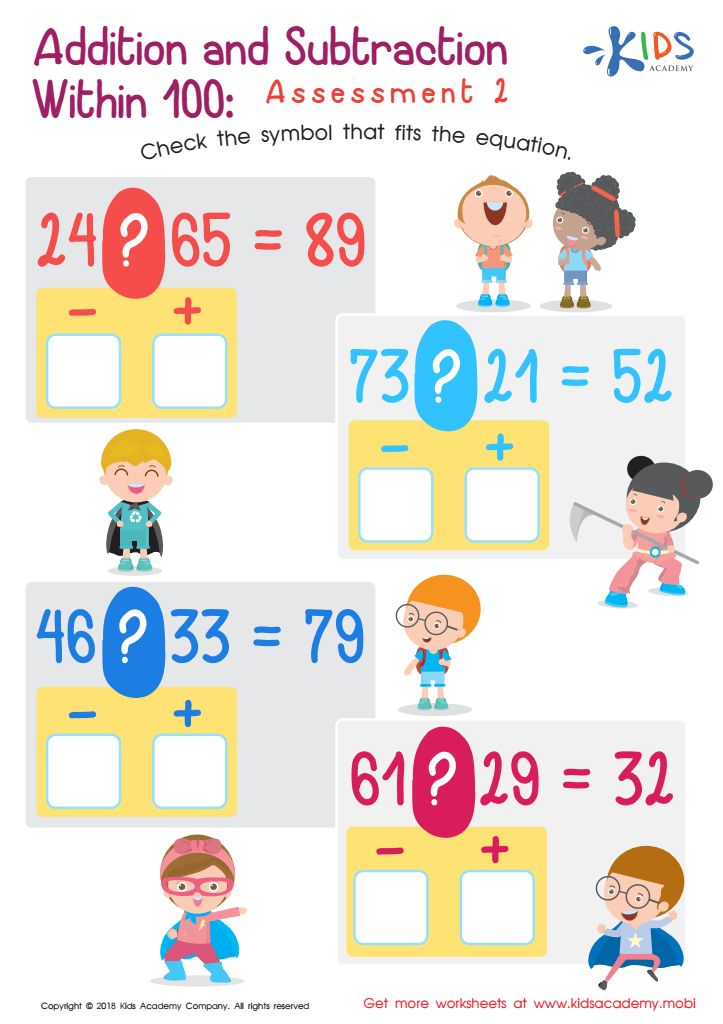
Addition and Subtraction Within 1: Assessment 2 Worksheet
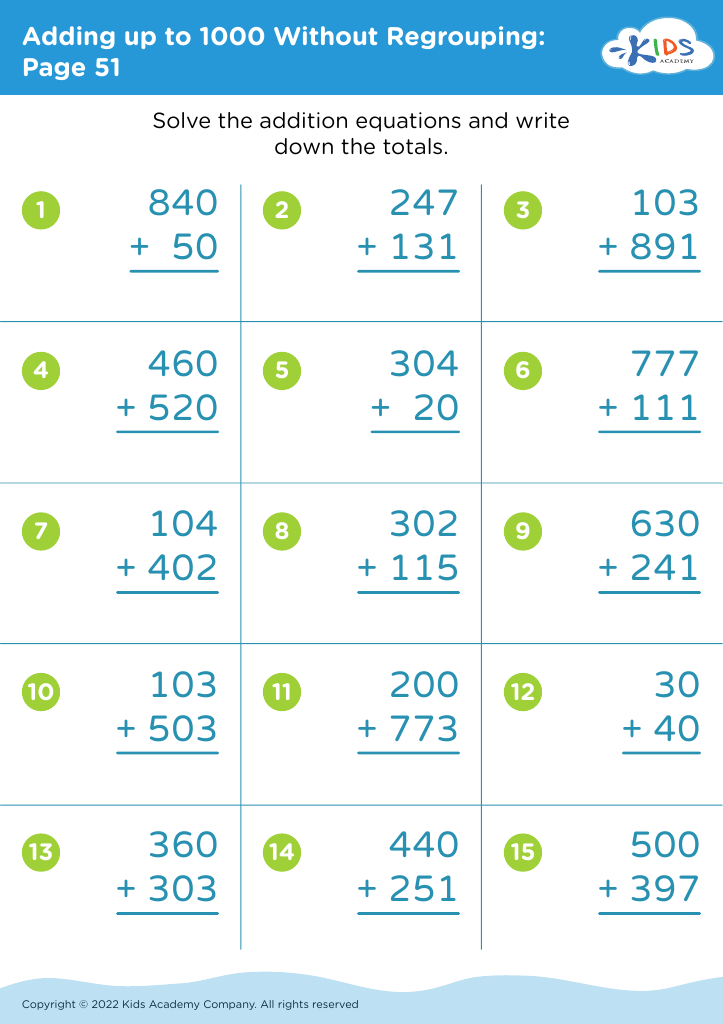
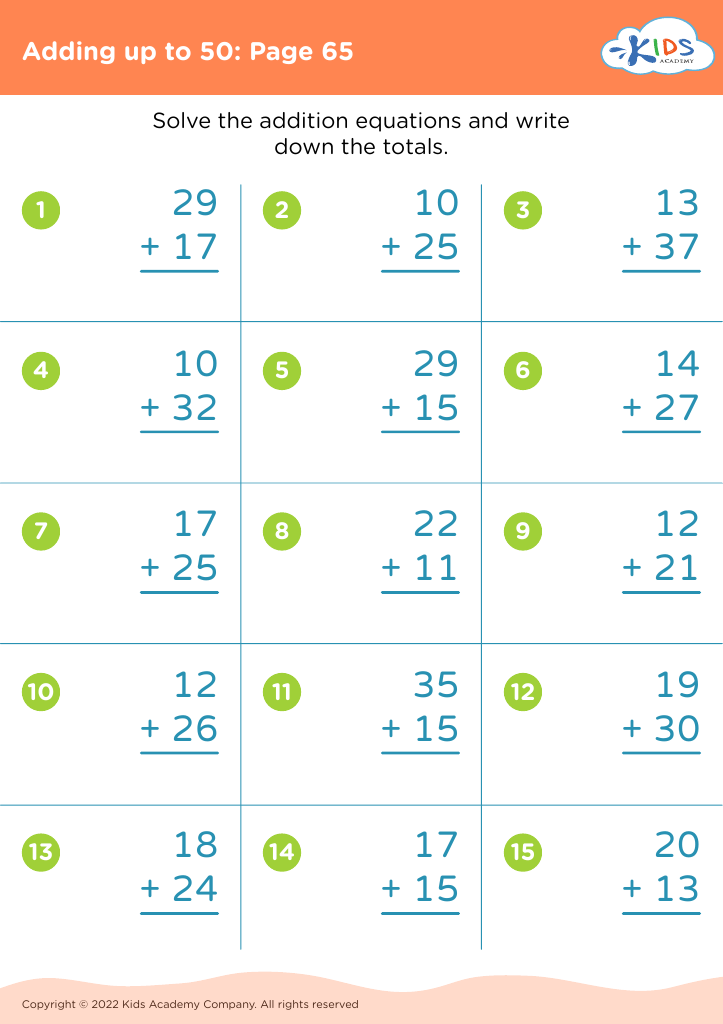








Understanding number relationships, especially addition and subtraction, is crucial for children ages 7-9, and parents and teachers should care for several reasons. At this developmental stage, children transition from simple counting to more complex mathematical concepts. Mastery of addition and subtraction forms the foundational building blocks for future math skills, such as multiplication, division, and problem-solving. By grasping these concepts early, children develop strong number sense, enabling them to understand how numbers interact and relate to one another.
Proficiency in addition and subtraction boosts children's confidence and promotes a positive attitude towards math. This confidence can foster a lifelong interest in and appreciation for the subject. Moreover, these skills are applicable in real-world situations, such as managing money, telling time, and measuring ingredients in recipes, making them practical and essential for daily life.
Furthermore, early math skills are often predictive of later academic success. By prioritizing a solid understanding of number relationships and arithmetic operations, parents and teachers equip children with necessary tools that extend beyond math, influencing cognitive development and critical thinking skills. This broad-based educational approach produces not only proficient mathematicians but well-rounded, capable individuals ready to navigate various aspects of learning and life.








