Understanding patterns Addition & Subtraction Worksheets for Ages 7-9 - Page 2
31 filtered results
-
From - To
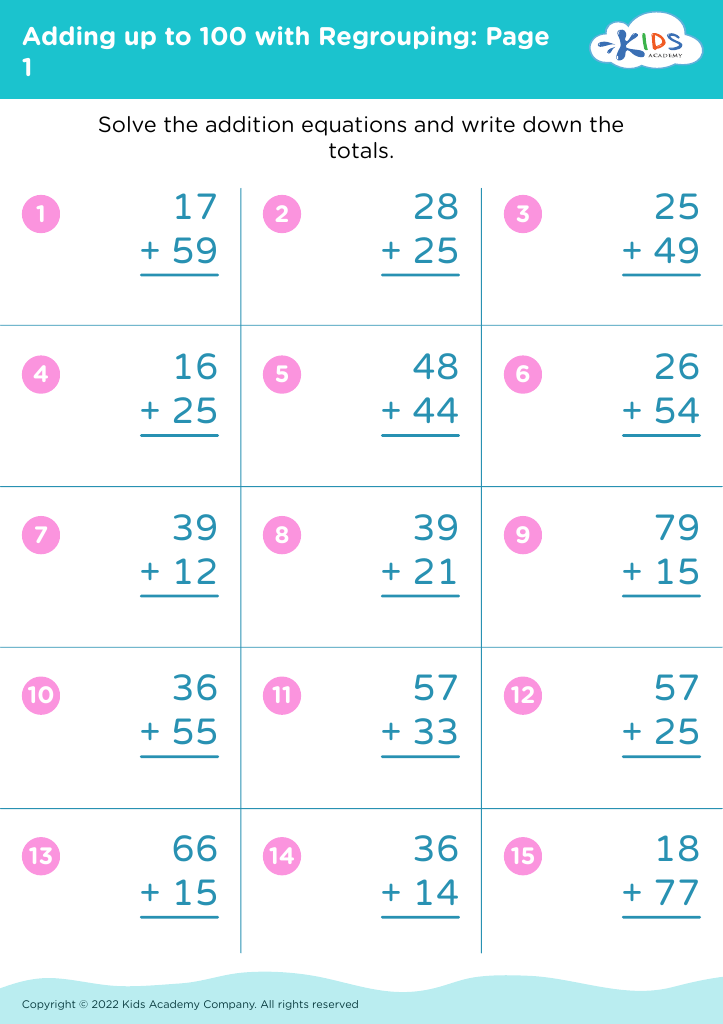
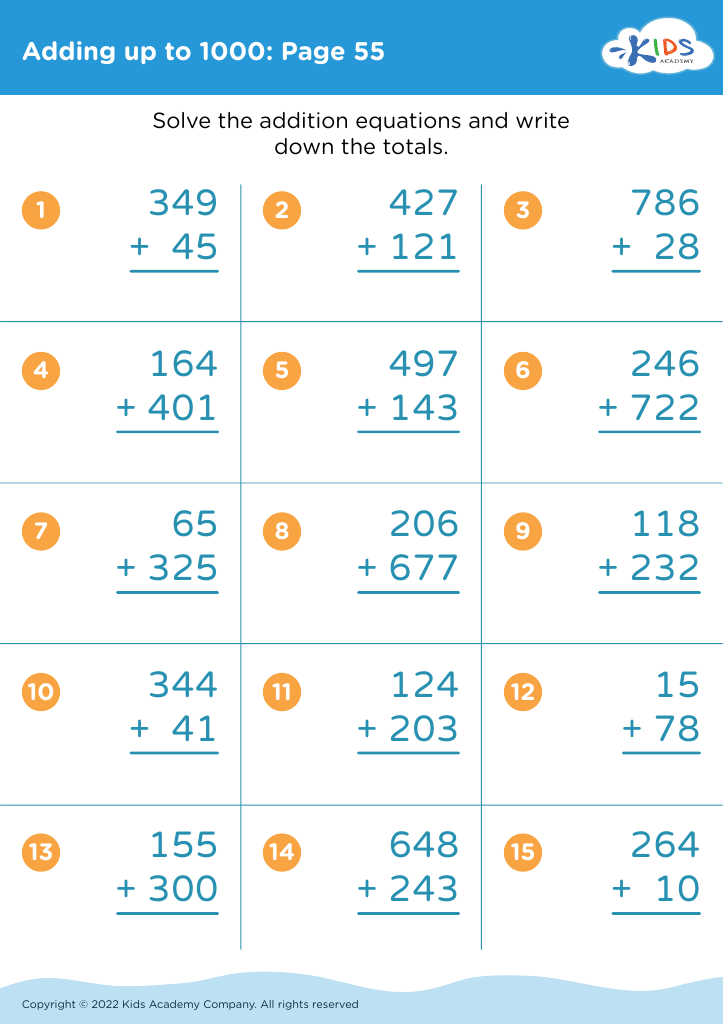
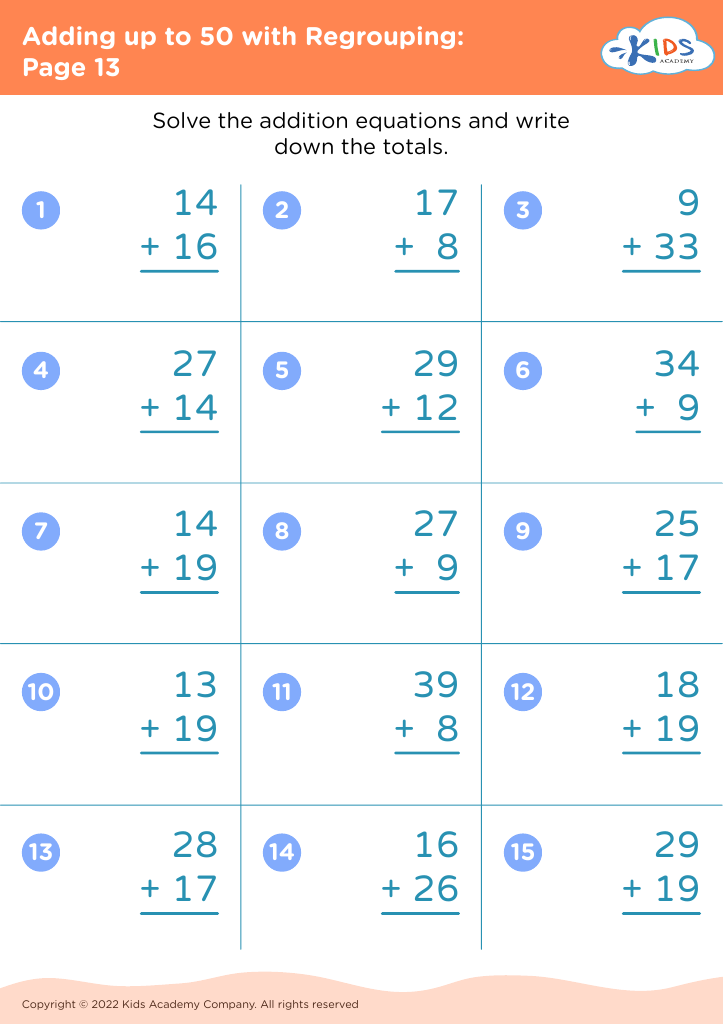








Understanding patterns in addition and subtraction is crucial for children aged 7-9 because it lays a solid foundation for their future mathematical skills. At this age, students are transitioning from basic arithmetic to more complex concepts, and recognizing patterns enhances their ability to solve problems more efficiently. When children understand mathematical patterns, they can make connections between related concepts and develop critical thinking skills that extend beyond math.
For parents and teachers, fostering this understanding helps children build confidence as they realize that math is not merely about memorizing facts or procedures, but involves identifying relationships and making predictions. This conceptual groundwork not only helps in mastering addition and subtraction but also serves as a springboard for more advanced topics like multiplication, division, and even fractions.
Moreover, engaging with patterns allows children to develop perseverance and resilience, as they learn to approach challenges using strategic thinking. Teaching this subject provides opportunities for collaborative learning, whereby students share their discoveries with peers, further enriching their experience. Ultimately, strong foundational skills in understanding patterns contribute to a child's overall success in mathematics and prepare them for real-world applications, making it vital for educators and parents to prioritize this area of learning.








