Understanding sequence Addition & Subtraction Worksheets for Ages 7-9
4 filtered results
-
From - To
Discover our engaging "Understanding Sequence Addition & Subtraction Worksheets" designed for children ages 7-9. These worksheets help young learners grasp the essential concepts of addition and subtraction through sequential problem-solving. By working through a variety of problems that involve patterns and sequences, students enhance their mathematical thinking and develop a solid foundation in arithmetic skills. Our interactive activities promote critical thinking while keeping kids motivated and excited about learning. Perfect for both classroom and home use, these worksheets support comprehensive practice to help children strengthen their understanding of numbers and operations. Empower your child's math skills today!
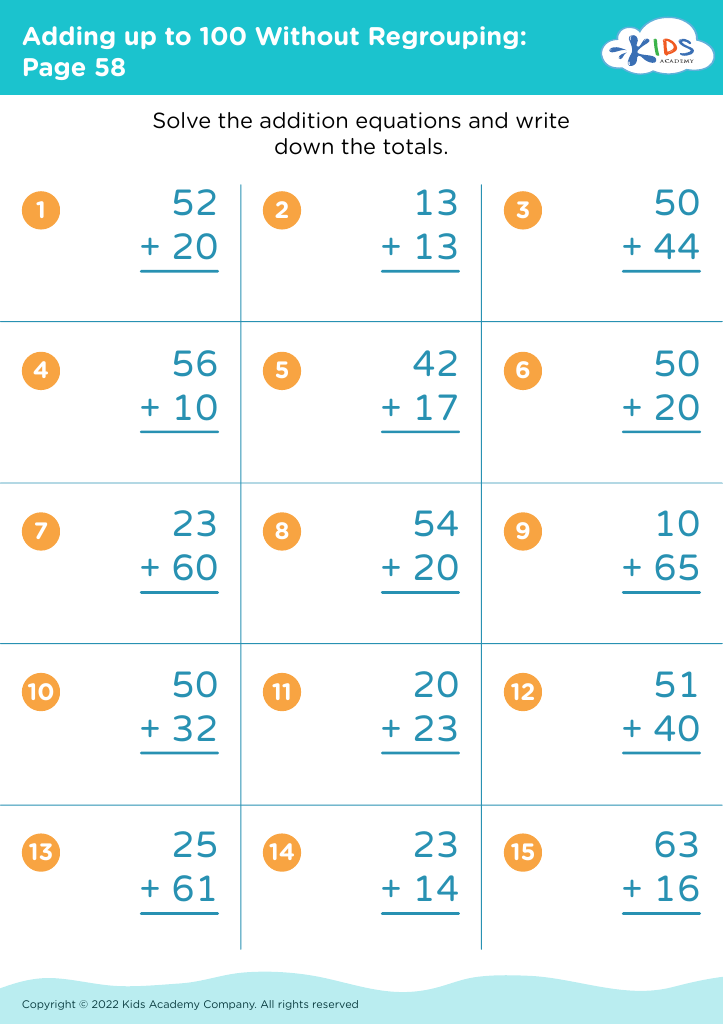
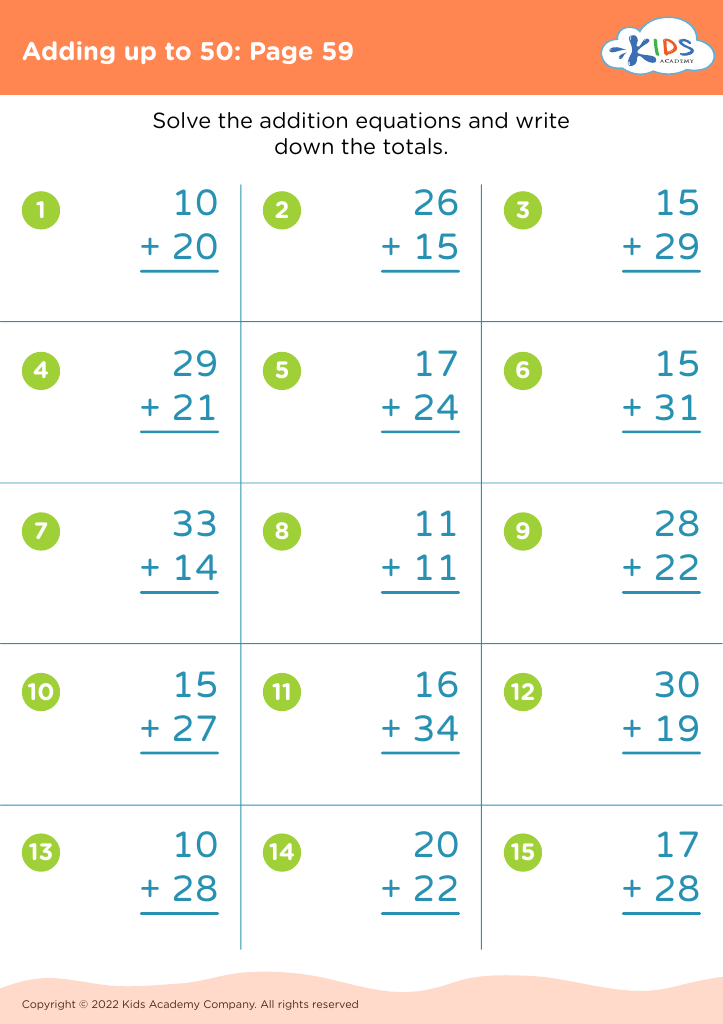
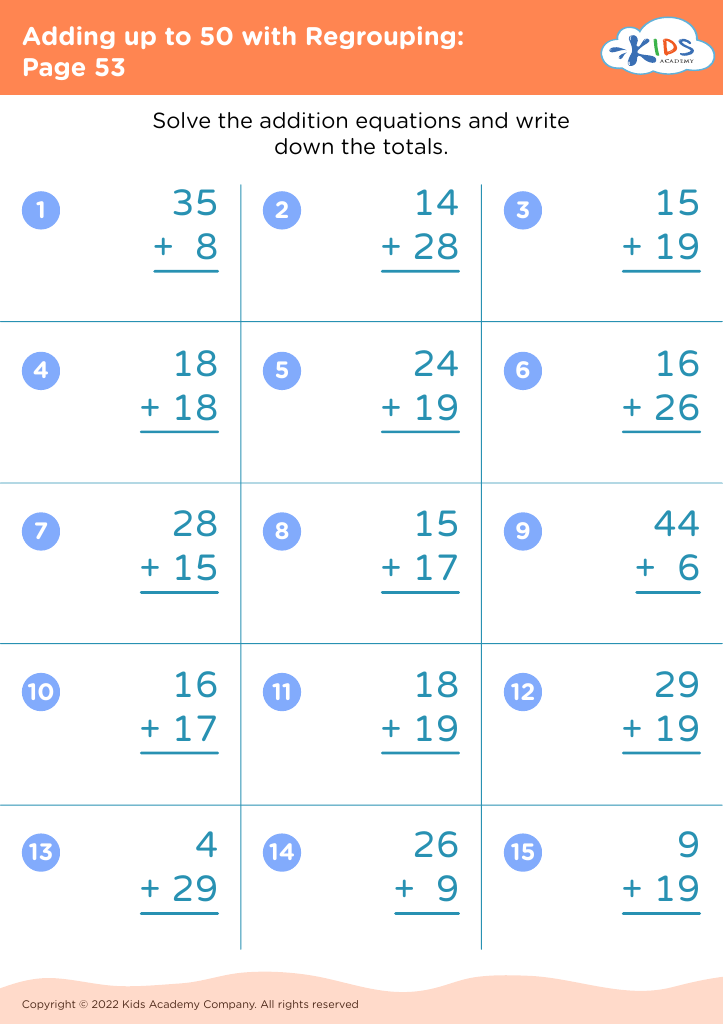
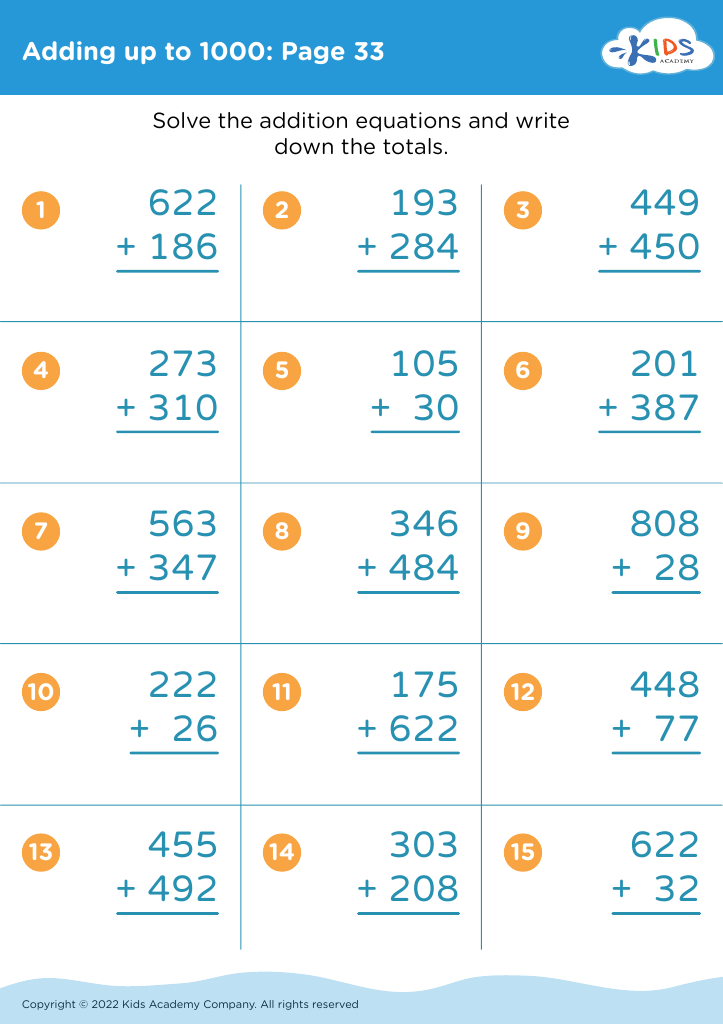








Understanding the sequence of addition and subtraction is crucial for children ages 7-9 as it lays the foundation for more advanced mathematical concepts. At this age, students are transitioning from basic arithmetic to more complex problem-solving and critical thinking skills. Grasping the sequential nature of addition and subtraction helps them recognize patterns and relationships between numbers, which is essential for mastering concepts like multiplication and division in later grades.
When children understand how operations relate to one another, they become proficient in mental math, enabling them to tackle word problems and everyday mathematical situations with confidence. Furthermore, a strong grasp of sequences helps students develop their numbers sense, fostering persistence and resilience as they learn to approach math problems methodically.
Parents and teachers must also acknowledge that struggles with addition and subtraction can affect a child's overall academic performance and self-esteem. By emphasizing the importance of understanding these concepts, caregivers encourage a growth mindset, enabling students to view challenges as opportunities for learning. Ultimately, supporting children in mastering addition and subtraction sequences can lead to greater enthusiasm for learning and developing a lifelong appreciation for mathematics.








