Understanding sequencing Addition & Subtraction Worksheets for Ages 7-9
7 filtered results
-
From - To
Discover our engaging "Understanding Sequencing Addition & Subtraction Worksheets" tailored for children ages 7-9. These expertly designed worksheets aim to enhance students' math skills by focusing on the importance of sequencing in addition and subtraction. Through fun, interactive exercises, kids will learn to arrange numbers logically, improving their problem-solving abilities and promoting conceptual understanding. Ideal for fostering early mathematical thinking, these resources support individual learning styles and provide essential practice to master foundational math concepts. Additionally, our worksheets are perfect for classroom use or at-home learning, ensuring a comprehensive approach to mastering sequencing in arithmetic. Unlock your child's mathematical potential today!
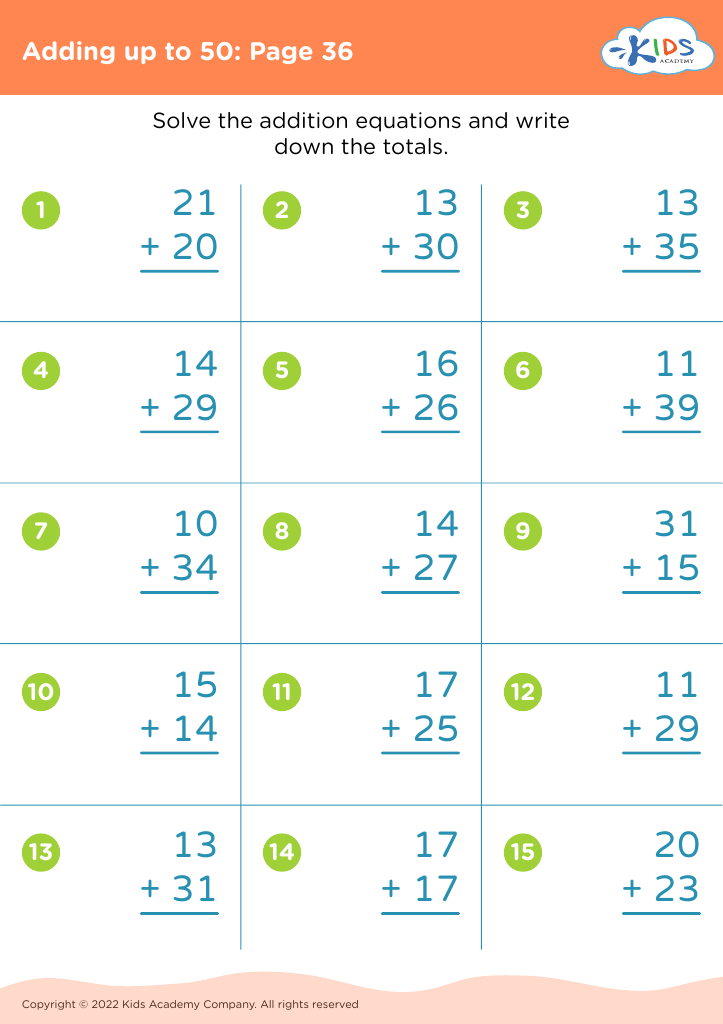
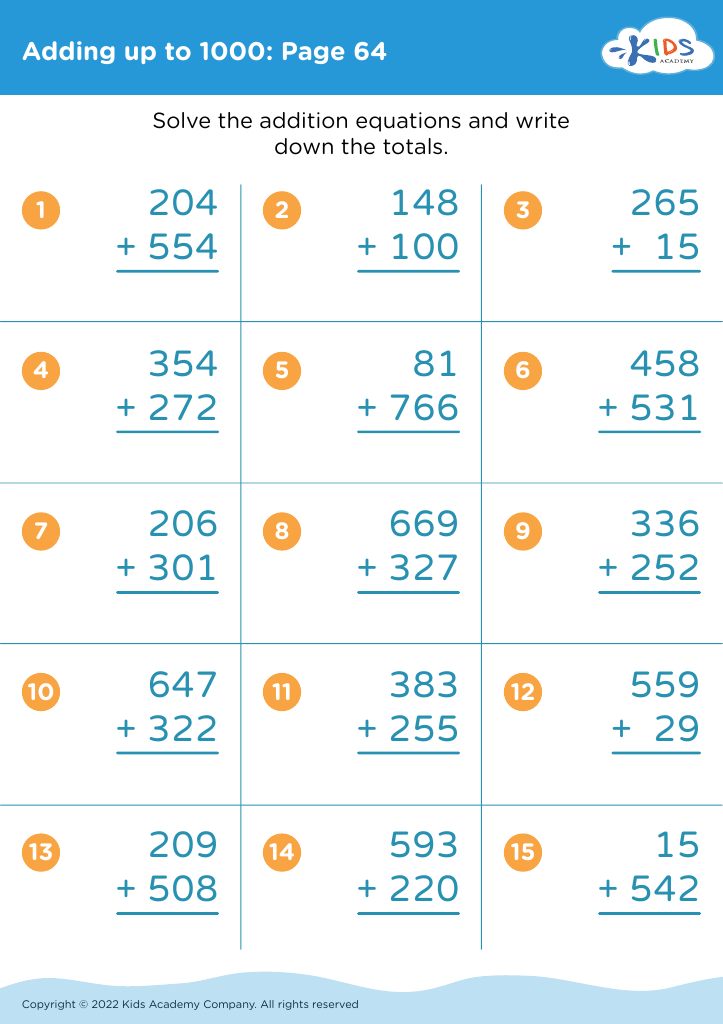
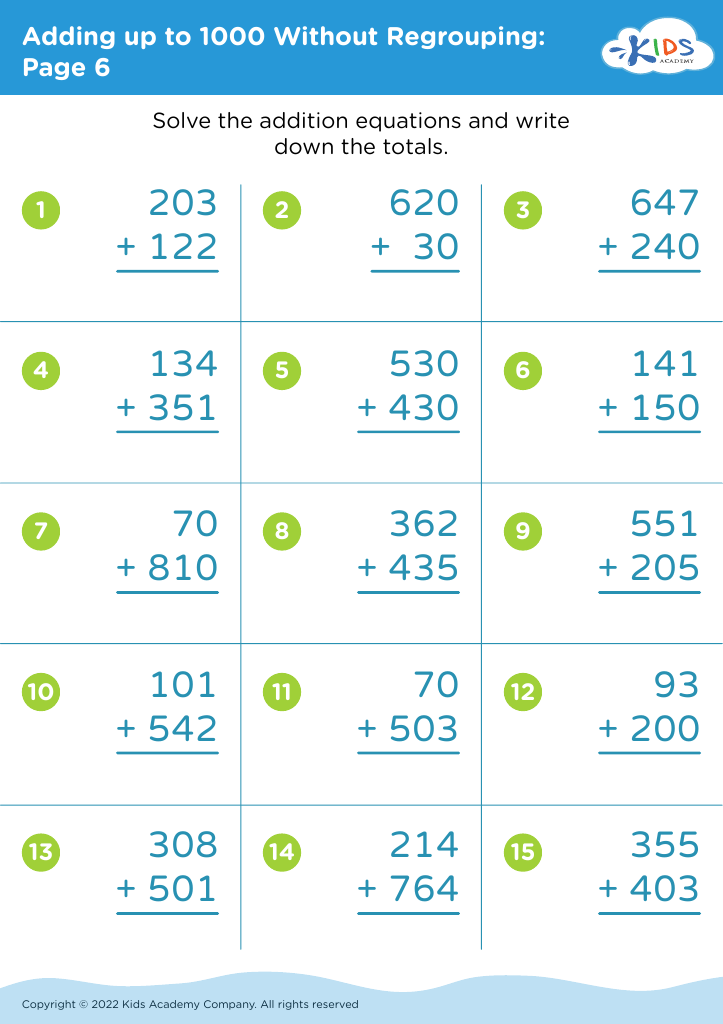
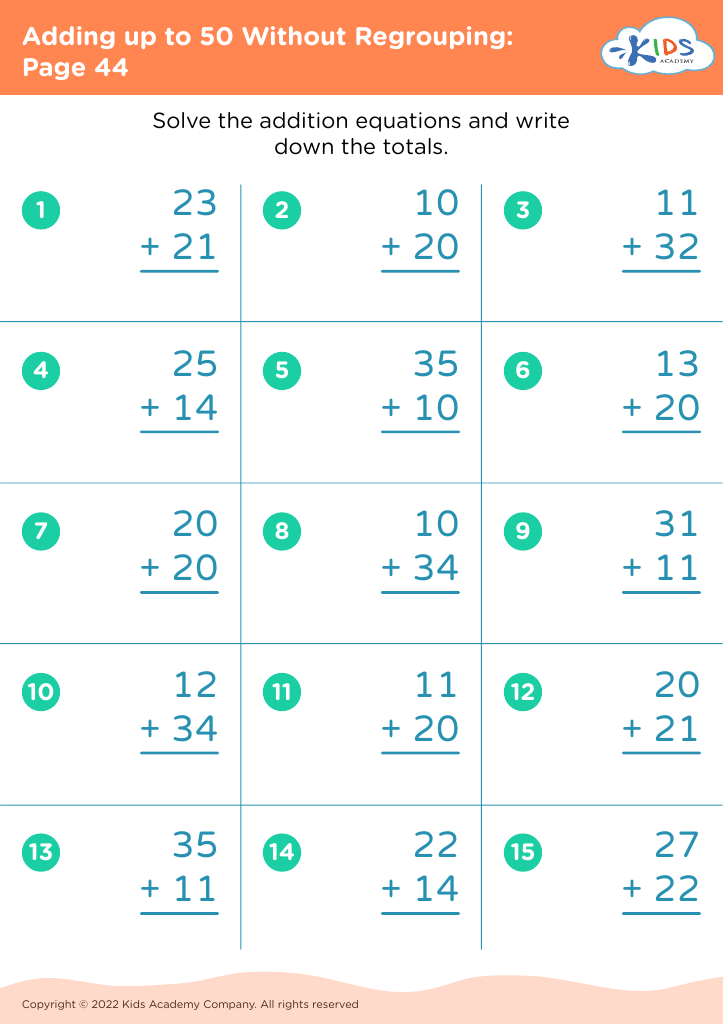
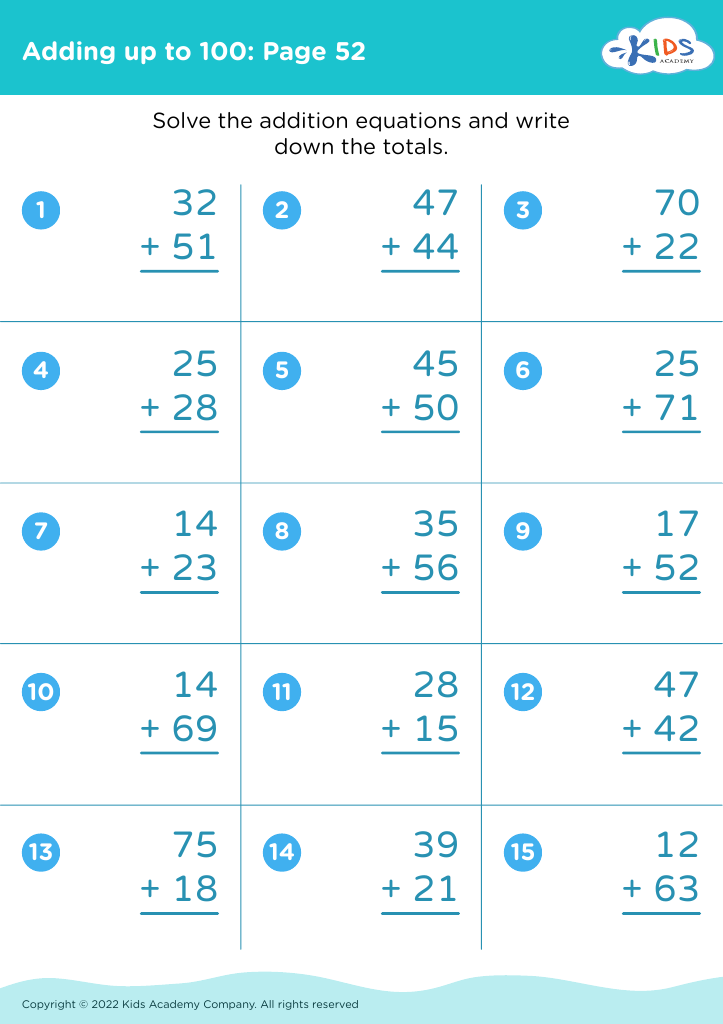
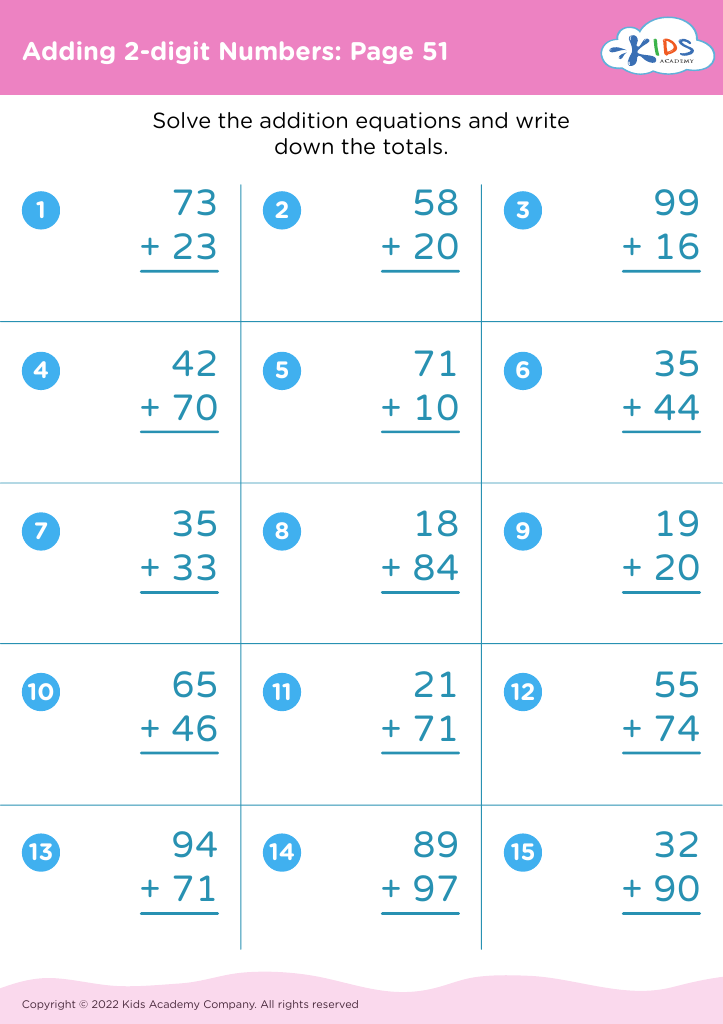
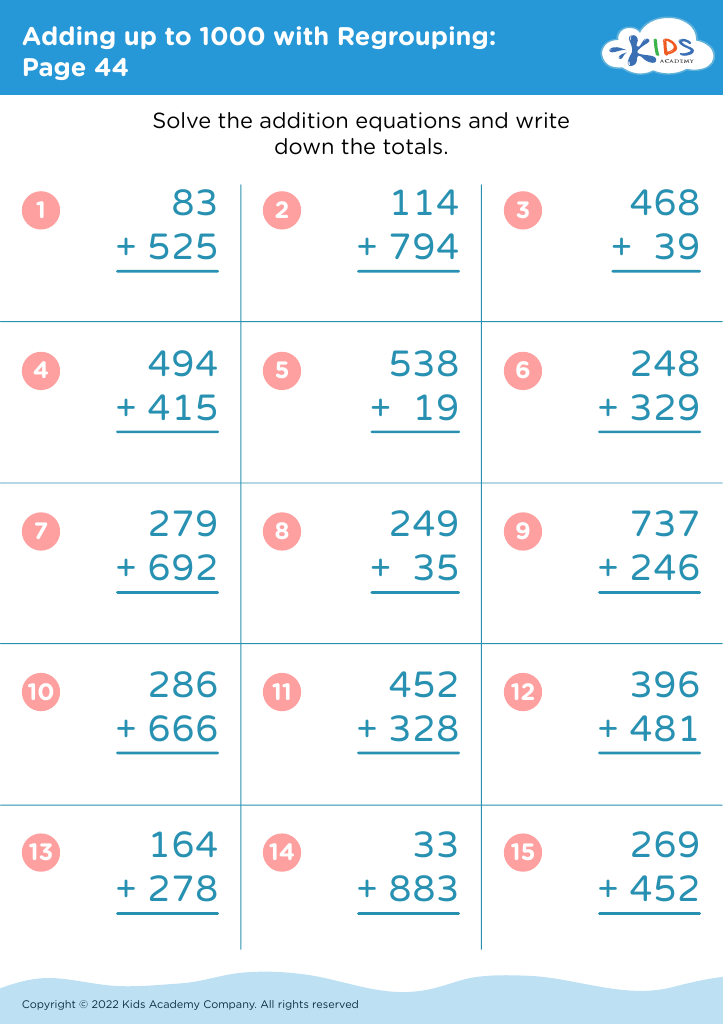








Understanding sequencing in addition and subtraction for children aged 7-9 is crucial for their mathematical development and overall academic success. During these formative years, kids transition from basic counting to more complex arithmetic, laying the groundwork for future learning. Sequencing helps children grasp the order of operations, allowing them to approach addition and subtraction systematically. This foundational skill enhances their problem-solving abilities, making complex calculations more manageable.
Furthermore, mastering sequencing in arithmetic promotes cognitive skills such as logical reasoning and critical thinking. As students learn to sequence their steps, they become more confident in tackling more challenging math problems, ensuring they're well-prepared for further mathematical concepts. Additionally, understanding the relationships between numbers aids in developing number sense, which is essential for all areas of math and practical life skills.
Parents and teachers should care about this key aspect of learning because it fosters a positive attitude toward math and minimizes anxiety associated with calculations. By emphasizing sequencing in addition and subtraction, educators can equip children with tools that promote independence and self-reliance in their learning journey. Ultimately, fostering a strong mathematical foundation enriches children's educational experiences and sets them up for future successes.








