Addition skills Addition Worksheets for Ages 7-9 - Page 2
27 filtered results
-
From - To
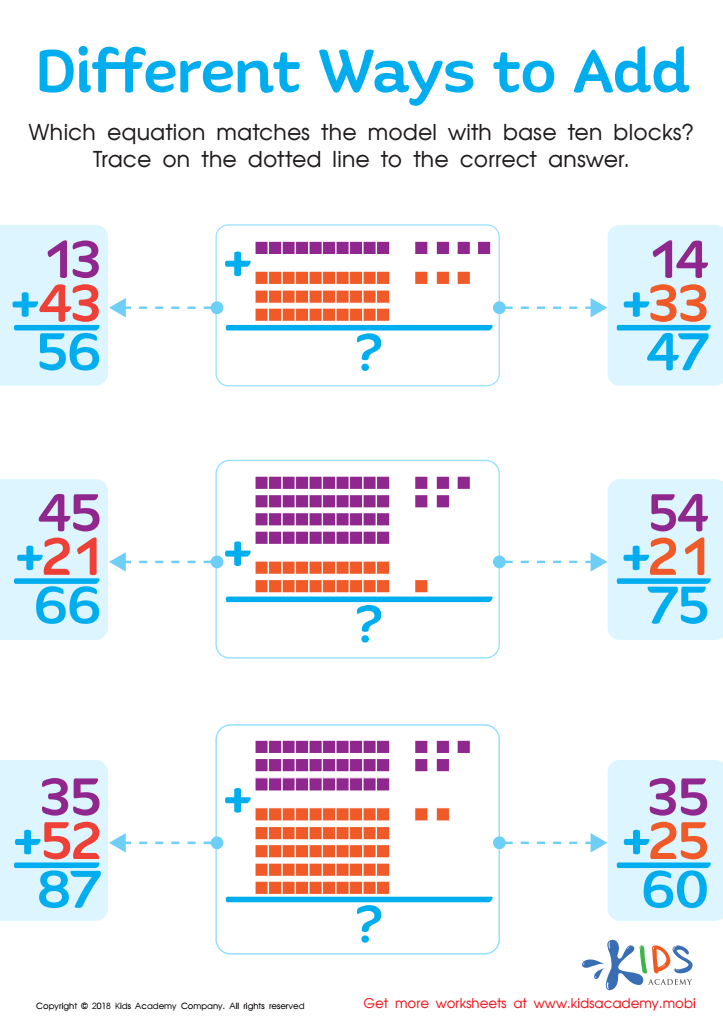
Different Ways to Add Worksheet
 Assign to My Students
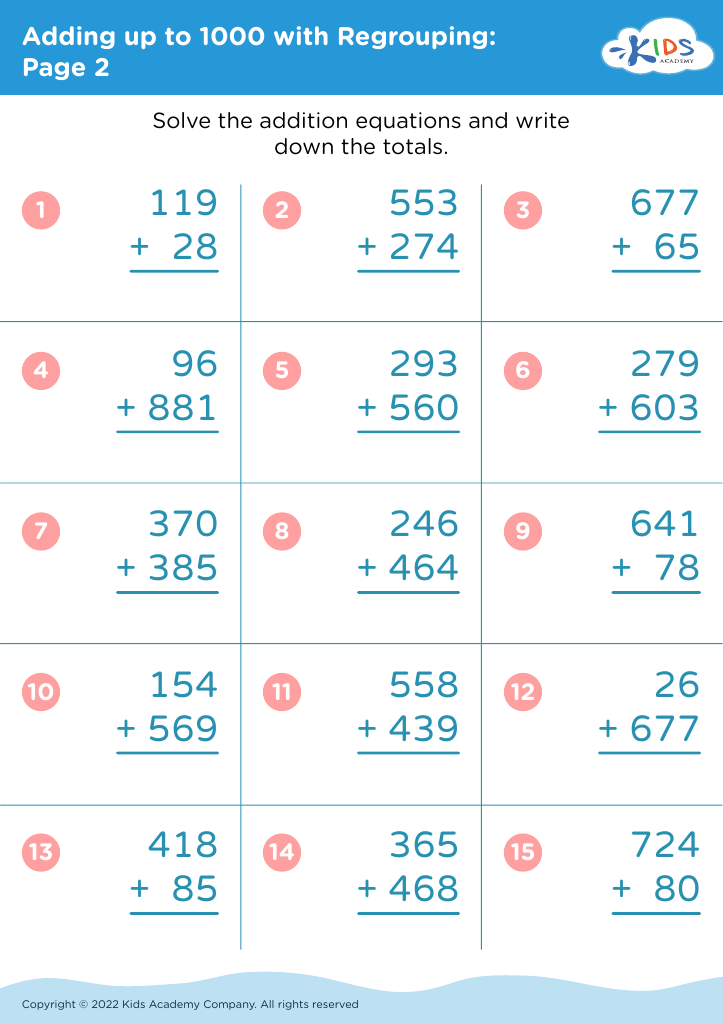
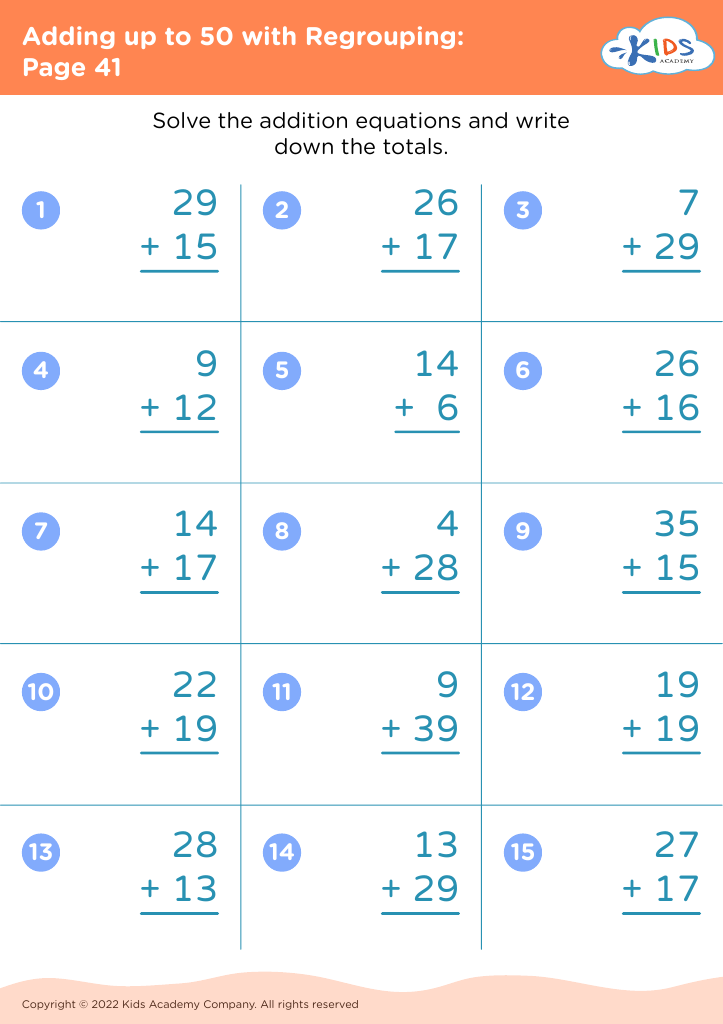


.jpg)





In the age range of 7-9, children are at a pivotal stage in their cognitive development where they are forming foundational skills that will support their future academic success. Mastery of addition skills is crucial for several reasons. Firstly, addition is a core component of arithmetic, which is essential for higher-level math concepts such as subtraction, multiplication, division, and beyond. Proficiency in addition allows children to approach more complex problems with confidence.
Secondly, addition skills enhance memory and cognitive flexibility. This age is crucial for developing a child’s working memory, which is needed for problem-solving abilities and learning tasks across other subjects. Practicing addition helps to strengthen neural pathways that improve mental calculation and reasoning skills.
Moreover, solid addition skills bolster confidence in a child's academic abilities. This confidence can lead to a positive attitude towards math and education in general, fostering a lifelong love of learning. Finally, being adept at addition prepares children for real-world scenarios such as managing money, calculating distances, and planning activities, thereby equipping them with essential life skills.
Parents and teachers play a vital role by encouraging practice, providing supportive learning environments, and recognizing the importance of these foundational math skills, setting the stage for the child's ongoing educational journey.








